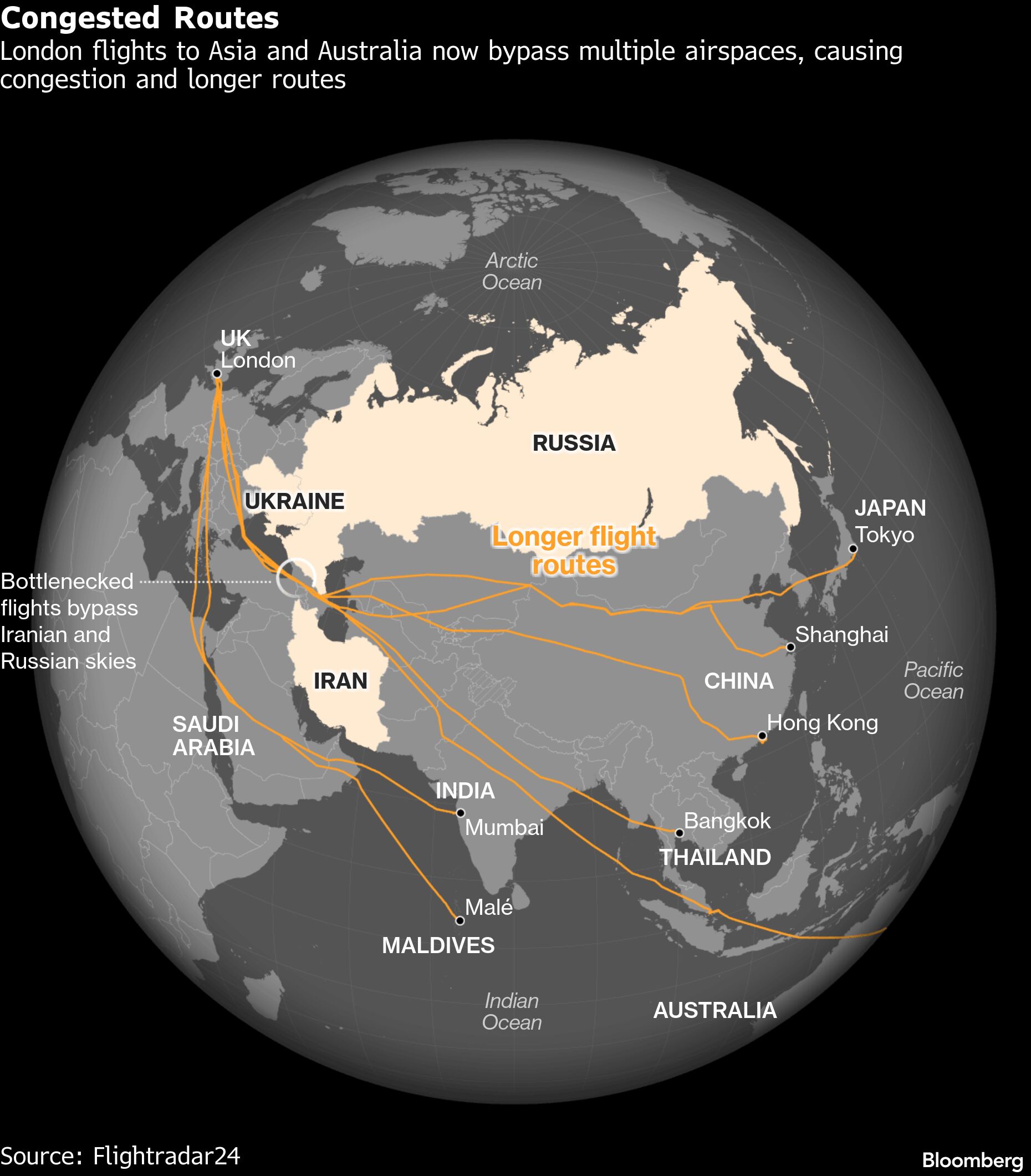
The escalating conflict in the Middle East has sent shockwaves through the global aviation industry, exposing the inherent fragility of modern air travel. Airlines are grappling with a dramatically altered flight landscape, forced to navigate increasingly restricted air corridors and facing significant disruptions to their carefully laid growth strategies.
For decades, carriers based in the Persian Gulf, such as those in Dubai, Abu Dhabi, and Doha, have strategically positioned themselves as vital hubs for international transit. This extensive network, designed for efficiency and convenience, now finds itself vulnerable. When disruptions occur, the intricate web of schedules for passengers, flight crews, and aircraft is unravelled, leaving tens of thousands of travellers and hundreds of planes significantly out of position.
The journey between Europe and Asia has become considerably more complex and, for many travellers, substantially more expensive. This is compounded by existing airspace closures, with many airlines already rerouting to avoid Russian airspace following the 2022 invasion of Ukraine. The recent escalation in the Middle East has further constrained routes, effectively forcing flights through a narrow band of airspace over Georgia and Azerbaijan, bypassing large swathes of Iran and the Gulf region.
Adding to the complexity, Azerbaijan temporarily closed its airspace over parts of its territory, leaving only a minimal corridor, approximately 50 miles wide, for aircraft to traverse. These cumulative restrictions can translate into hours of added flight time for some routes. Flights originating from India are particularly impacted, as airlines are compelled to avoid Pakistani airspace. Emirates, the world’s largest international airline, is now adding over an hour to the duration of most of its flights to circumvent the Gulf and the airspace of Iran and Iraq. This increased flight time necessitates carrying more fuel, a significant and costly burden, especially in light of the recent surge in energy prices.
Despite the challenges, the United Arab Emirates and Qatar have indicated that they have managed to establish secure air corridors amidst the ongoing hostilities.
The Oil Shock and its Ripple Effect
The ramifications of the conflict extend far beyond the aviation sector, impacting global energy markets. The Strait of Hormuz, a critical chokepoint through which approximately one-fifth of the world’s oil flows, has effectively been shut down. This has prompted major Gulf oil producers to curtail production, inevitably driving up the prices of crude oil and essential products like diesel and jet fuel.
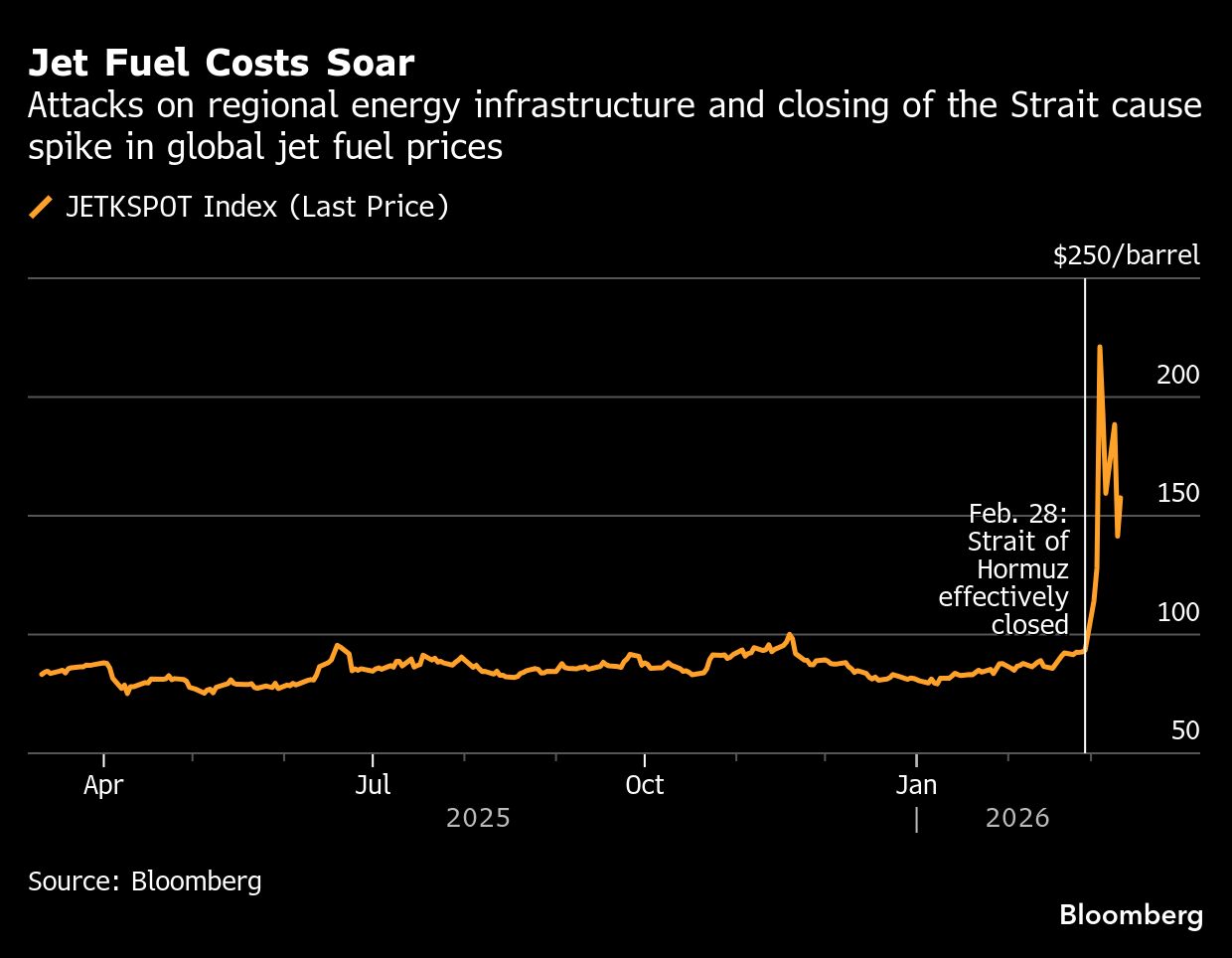
In response to these escalating costs, some airlines have been compelled to increase fares, introducing fuel surcharges to offset the ballooning expenses. Simultaneously, airlines and other large energy consumers are engaging in a form of “panic buying” of oil derivative contracts, attempting to shield themselves from extreme price volatility.
The turbulence in energy markets has also brought the hedging practices of airlines under intense scrutiny. These strategies vary considerably across the industry, with limitations particularly evident in Asia. According to insights from telligence, major carriers in China and India’s IndiGo are among those most exposed to fluctuations in fuel prices. Cathay Pacific Airways Ltd., for instance, has hedged approximately 30% of its projected near-term fuel consumption.
Stock Market Volatility and Consumer Confidence
Globally, airlines have witnessed billions of dollars vanish from their market capitalisation, a direct consequence of soaring fuel costs and the pervasive uncertainty surrounding the resumption of safe and predictable flight operations. The World Airlines Index, for example, has experienced a decline of over 11% since the commencement of the conflict nearly two weeks ago.
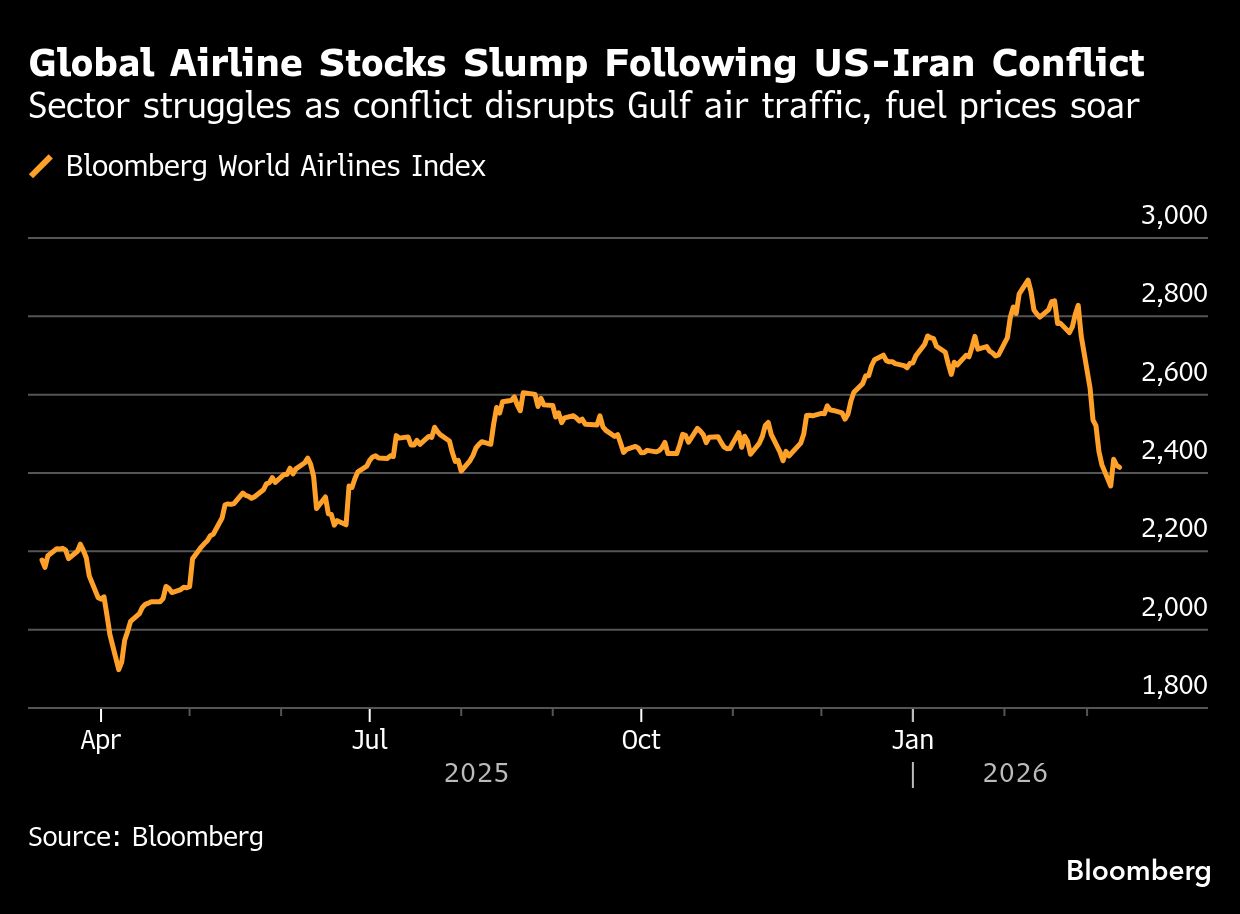
Beyond the immediate financial impact, safety concerns are likely to remain a paramount consideration for travellers. Furthermore, sustained high oil prices could fuel a broader increase in global inflation, potentially prompting passengers to re-evaluate long-haul journeys, including those with layovers in the Middle East, and instead opt for more economical holiday destinations closer to home.
Flight Cancellations and Passenger Disruptions
In the initial days of the conflict, thousands of passengers found themselves stranded. Social media platforms are replete with accounts detailing arduous and expensive journeys undertaken to reach airports in Saudi Arabia and Oman in an effort to escape the unfolding crisis. According to data from the analytics firm Cirium Ltd., over 46,000 scheduled flights to and from the Middle East were cancelled between February 28th and March 11th.
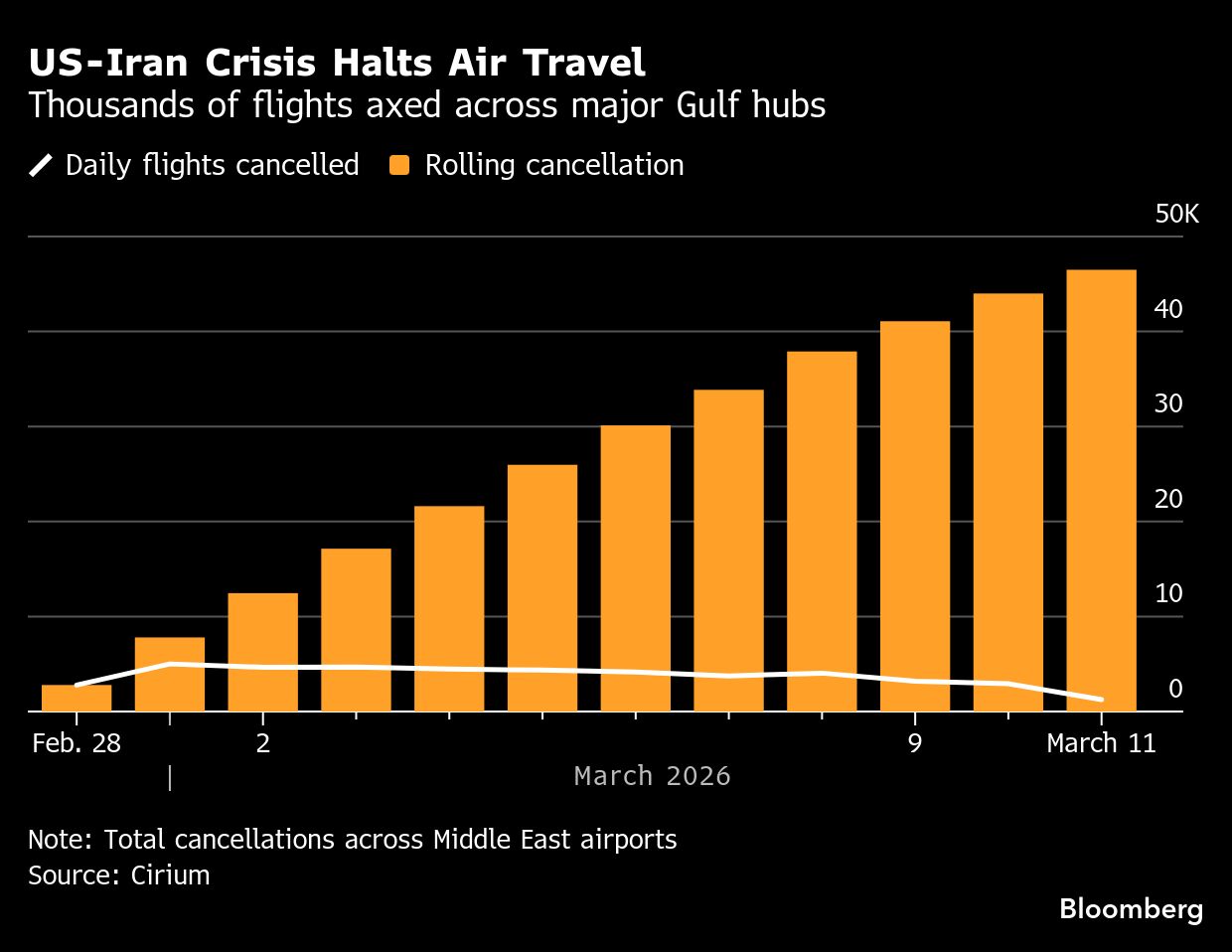
While airlines are diligently working to restore operations, the timeline for a return to normal flight schedules remains uncertain. Emirates, for instance, is currently operating a reduced schedule, serving a significantly smaller number of destinations than it typically does.
On at least four separate occasions since Dubai resumed air traffic, aircraft approaching the world’s busiest international hub were placed in holding patterns, awaiting clearance to land. This was due to incidents involving drone strikes on the airport or the interception of missiles in the skies, according to data compiled by Flightradar24. Qatar Airways and Etihad Airways are operating an even more limited number of flights. The continued closure of airspace in Kuwait and Bahrain further exacerbates the regional disruptions.
A Shift in Market Dynamics: Opportunities Arise
Paradoxically, the dislocations caused by the conflict and the subsequent airspace restrictions are presenting European and Asian airlines with a rare opportunity to reclaim market share. For years, carriers like Emirates and Qatar Airways have steadily attracted passengers by offering convenient transfer options through their respective hubs.
In neighbouring Oman, the national carrier has responded to the surging demand from travellers seeking alternative routes by increasing flight frequencies to European destinations and chartering additional aircraft. Muscat International Airport, typically a quieter destination for tourists drawn to Oman’s relaxed pace, has seen a significant uptick in activity.
Airlines such as British Airways and Deutsche Lufthansa AG are bolstering their flight offerings to Asia and Africa in response to increased long-haul demand as travellers seek alternative routes. Air France-KLM has deployed larger aircraft on routes from several Asian cities, including Tokyo, Shanghai, and Mumbai, to accommodate the heightened demand and the flight cancellations by Gulf-based airlines. Air India Ltd. and Cathay Pacific are also mounting additional services, as existing flights are quickly selling out.