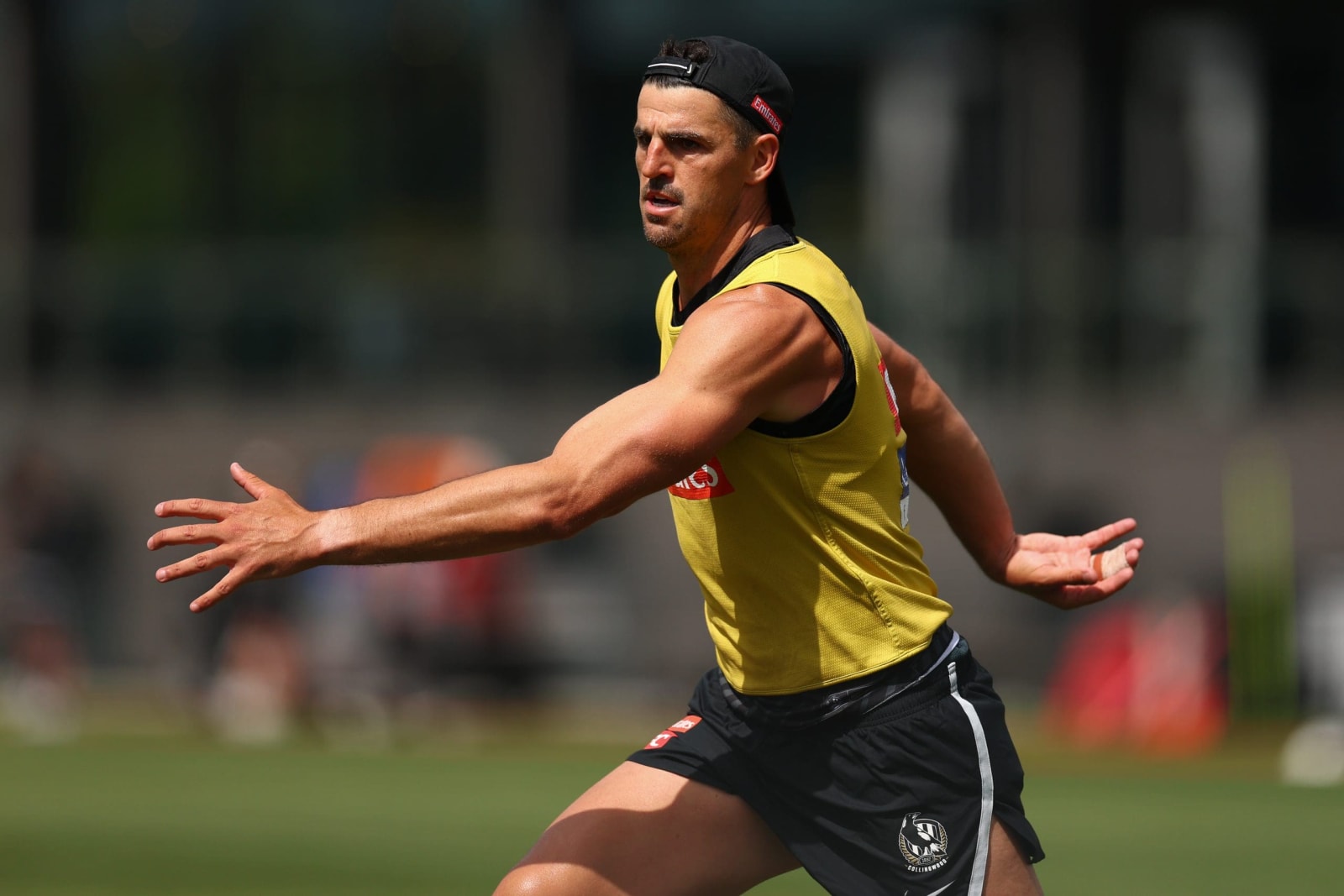
Fitness Expert Questions Collingwood’s Pre-Season Strategy Ahead of AFL Season
Collingwood’s approach to managing a significant number of their seasoned players in their final pre-season fixture has raised concerns among some fitness professionals, who suggest it could lead to a rocky start to the Australian Football League (AFL) season. David Buttifant, a former sports science director at the club, expressed surprise at the decision to rest eight key players just a week before their Opening Round clash against St Kilda.
Buttifant highlighted the importance of building game-day momentum and warned of potential consequences. “It is interesting because it takes a while to get some momentum,” he commented. “It’s risk versus reward. You’re going to see some injuries.” He specifically pointed to the increased likelihood of soft-tissue injuries, such as knee issues, in the early weeks of the season due to a lack of consistent exposure to the high-intensity demands of competitive play and a potential deficit in proprioception – the body’s awareness of its position in space.
The list of absent stars from the final pre-season match included Darcy Moore and Jeremy Howe, who were sidelined with injuries. Meanwhile, veteran leaders Scott Pendlebury, Steele Sidebottom, Jamie Elliott, and Jack Crisp were listed as emergencies. Other notable omissions were Nick Daicos, Jordan De Goey, and Tim Membrey, none of whom were named to play.
Buttifant argued that this limited game-time exposure, with many of the club’s top performers having had only one hit-out against opposition since the conclusion of the previous season, might not serve the Magpies well. “It takes a bit of time before they’re really conditioned,” he explained. “Games are an elevated intensity compared to what they do in their training. It doesn’t matter how much you do, it won’t replicate a competitive game.” He contrasted this with past practices where teams played more pre-season games, suggesting that the current strategy could lead to an uptick in injuries during the crucial opening phase of the season.
The demanding nature of the AFL season, which spans 25 weeks plus finals, naturally places a strong emphasis on player management throughout the year. Collingwood’s strategy appears to be a deliberate effort to conserve their key personnel during the warmer months, potentially aiming for peak performance later in the campaign.
Last season, Collingwood demonstrated remarkable dominance for a significant portion of the year, leading the premiership ladder by 10 points at Round 17. However, their form took a sharp downturn in the latter stages, with the team losing five of their next seven matches. They were fortunate to secure a top-four spot, qualifying by a narrow margin of seven per cent, thanks to a Port Adelaide victory over Gold Coast.
Despite an impressive qualifying final win against Adelaide, their aspirations for a second premiership in three years were ultimately dashed by a resurgent Brisbane Lions outfit. The Lions outran, outworked, and outmuscled the Magpies, a physical and mental toll that became evident by the end of the grand final.
The question now lingers: is Collingwood’s cautious approach to player availability in the pre-season a strategic move to ensure their stars are fresh and ready to withstand the rigours of another lengthy and potentially gruelling 25-week season, including the high-stakes finals series? Only time will tell if this calculated risk pays off or if it leaves them vulnerable in the early rounds.
Key Considerations for Player Management in the AFL
- Momentum and Match Fitness:
- Consistent game time helps players build rhythm and confidence.
- Match simulation is crucial for fine-tuning skills under pressure.
- Lack of game exposure can lead to slower starts and increased risk of injury.
- Injury Prevention:
- Proprioception and body awareness are developed through repeated exposure to varied movements and impacts.
- Soft-tissue injuries, like hamstring and knee strains, can be more prevalent when players are not fully conditioned for game intensity.
- Gradual build-up of intensity is often preferred over a sudden jump.
- Season Longevity:
- The AFL season is one of the longest in professional sport.
- Strategic rest and management are vital for players to maintain performance over 25+ weeks.
- Balancing immediate game preparedness with long-term player health is a constant challenge for clubs.
- Training vs. Game Intensity:
- While training sessions are rigorous, they rarely replicate the unpredictable and high-stakes nature of a competitive match.
- The physical and mental demands of a game are significantly different from those of a training drill.