A Game That Changed College Football Forever: The 1987 Fiesta Bowl
The hallowed grounds of college football history are dotted with iconic matchups, but few can claim the seismic impact of the 1987 Fiesta Bowl. This wasn’t just a battle between two undefeated titans, No. 1 Miami and No. 2 Penn State, both boasting immaculate 11-0 records. It was a contest that, in many ways, laid the foundation for the modern era of college football bowl games and championship structures, shaping decisions and fan engagement for decades to come.
The genesis of this monumental clash began with a strategic scheduling move: the game was moved to January 2nd. This deliberate decision ensured that the Fiesta Bowl would stand alone, free from the New Year’s Day competition that typically dominated the sports landscape. This foresight wasn’t just about a single game; it was a pioneering step that would ultimately pave the way for the Bowl Alliance, the Bowl Championship Series (BCS), and eventually, the highly anticipated College Football Playoff (CFP). The success of this standalone game demonstrated the immense appeal and financial viability of a dedicated championship contest, influencing how the sport would be structured moving forward.
Beyond the strategic scheduling, the pre-game atmosphere was thick with anticipation, fueled by a palpable culture clash between the two powerhouse programs. The Miami Hurricanes, led by the charismatic Jimmy Johnson, exuded an audacious swagger that contrasted sharply with the more traditional, disciplined approach of Joe Paterno’s Penn State Nittany Lions. This stylistic and philosophical divide was amplified by provocative actions from the Hurricanes. Upon arriving in Phoenix, Miami players made a bold statement by disembarking from their airplane clad in military fatigues, a visual declaration of their intent to conquer.
The tension escalated during a joint team dinner. Miami’s defensive tackle, Jerome Brown, ignited further controversy with a provocative remark that highlighted the perceived animosity between the teams. His declaration, “Did the Japanese go and sit down and have dinner with Pearl Harbor before they bombed ‘em?”, served to underscore the intense rivalry and the psychological warfare that had become a significant part of the pre-game narrative. This rhetoric, while controversial, undeniably captured national attention and heightened the stakes for the upcoming game.
An Upset for the Ages
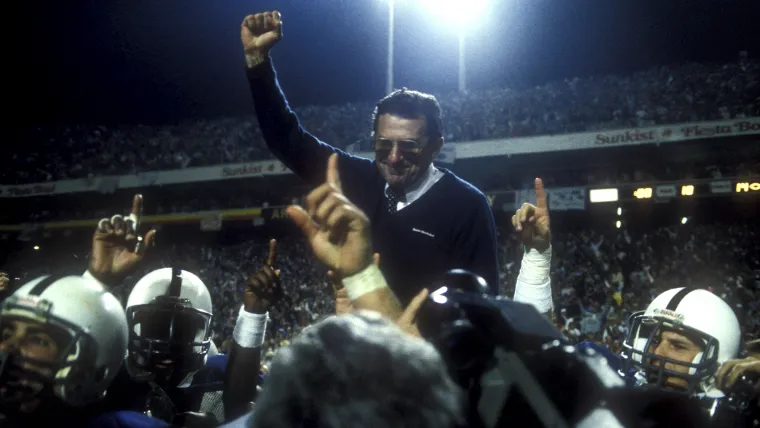
When the dust settled on the field, it was Penn State who emerged victorious, pulling off a stunning 14-10 upset over the heavily favoured Hurricanes. The Nittany Lions’ defence proved to be the deciding factor, orchestrating a masterful performance that stifled Miami’s potent offense. A key element of their success was their ability to force turnovers, particularly through the air.
The Hurricanes’ Heisman Trophy-winning quarterback, Vinny Testaverde, was the target of Penn State’s defensive prowess. He suffered the indignity of throwing five interceptions throughout the game, a testament to the Nittany Lions’ relentless pressure and strategic play-calling. The final interception, a crucial pick by Pete Giftopoulos at the goal line with a mere nine seconds left on the clock, sealed Penn State’s improbable victory and cemented their place in college football lore.
The Enduring Impact: Ratings and Rivalries
The significance of the 1987 Fiesta Bowl extended far beyond the scoreboard. The game garnered an impressive 24.9 Nielsen rating, a figure that unequivocally validated NBC’s decision to invest in the event and showcase it as a standalone championship. This remarkable viewership demonstrated the immense appetite for a definitive college football championship and proved that such games could command a massive audience, rivaling even professional sports broadcasts.
The success of this broadcast had a ripple effect throughout the sport. The high ratings served as a powerful indicator of the commercial potential of championship games, influencing future scheduling decisions, media rights negotiations, and the overall business model of college football. The strategic positioning and compelling matchup of the 1987 Fiesta Bowl provided a compelling blueprint for subsequent championship formats.
The legacy of this game continues to resonate today. The strategic scheduling, the intense pre-game drama, and the thrilling on-field upset all contributed to a spectacle that captivated the nation. It was a watershed moment that not only delivered an unforgettable championship but also fundamentally altered the trajectory of college football, shaping the way championships are conceived, broadcast, and celebrated. The echoes of that January night in 1987 can still be felt in the modern era of playoff football, a testament to the enduring power of a game that truly changed the landscape.