Bob Tullius: The Visionary Who Rekindled Jaguar’s Le Mans Flame
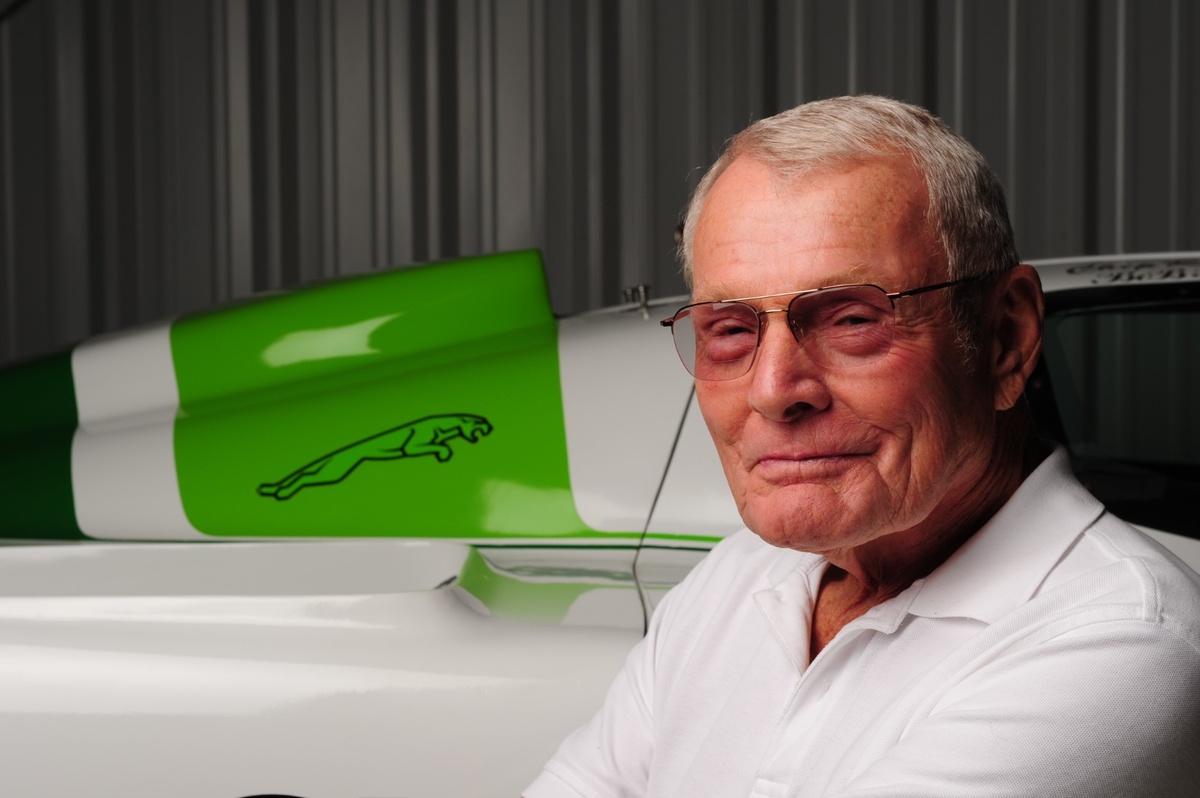
The late Bob Tullius, a figure synonymous with motorsport innovation and a deep-seated connection to the British automotive industry, began his storied career in an unlikely fashion: with a Triumph TR3 purchased for his wife. What started as a casual decision to enter a rarely-used car into a local race school over two decades later evolved into a remarkable journey, culminating in Tullius steering sister marque Jaguar back to the legendary 24 Hours of Le Mans. This chapter in his life set the stage for Jaguar to build upon its illustrious five wins from the 1950s, a feat achieved without his direct involvement in later years.
Tullius’s initial foray into motorsport in the early 1960s with the Triumph TR3 was met with immediate success, solidifying a strong bond with the British manufacturer. By 1962, he was gifted a TR4 by its US importer. Two years later, in Winchester, Virginia, he founded his renowned Group 44 team. For the next decade, Tullius and his team campaigned Triumph machinery with considerable success.
The Shift to Jaguar and a Vision for Le Mans
The landscape of British motoring shifted dramatically in the 1970s, with Triumph and Jaguar both falling under the umbrella of the British Leyland conglomerate, a period marked by increasing government intervention. As British Leyland began to withdraw its brands from the North American market in the early 1980s, only Jaguar remained. It was at this critical juncture that Group 44, then actively campaigning the Triumph TR8 in Trans-Am and IMSA’s GTO class, was tasked with a monumental project: a GTP prototype programme in the IMSA GT Championship, designed to revitalise British Leyland’s sole remaining marque on the continent.
The pivotal deal was struck with Jaguar boss John Egan, a man credited with spearheading the company’s revival and later knighted for his efforts. Egan, in a conversation with Tullius recounted years later, laid out a clear mandate. “I want you to know two things,” Egan reportedly told Tullius. “First, you are going to take us back to Le Mans. Second, one day we are going to do this ourselves from the factory.”
Egan’s first prophecy proved remarkably accurate. Just three years into the programme, which commenced in 1982, Group 44 found itself on the grid at the Circuit de la Sarthe with their Jaguar XJR-5, a potent machine powered by Jaguar’s V12 production engine.
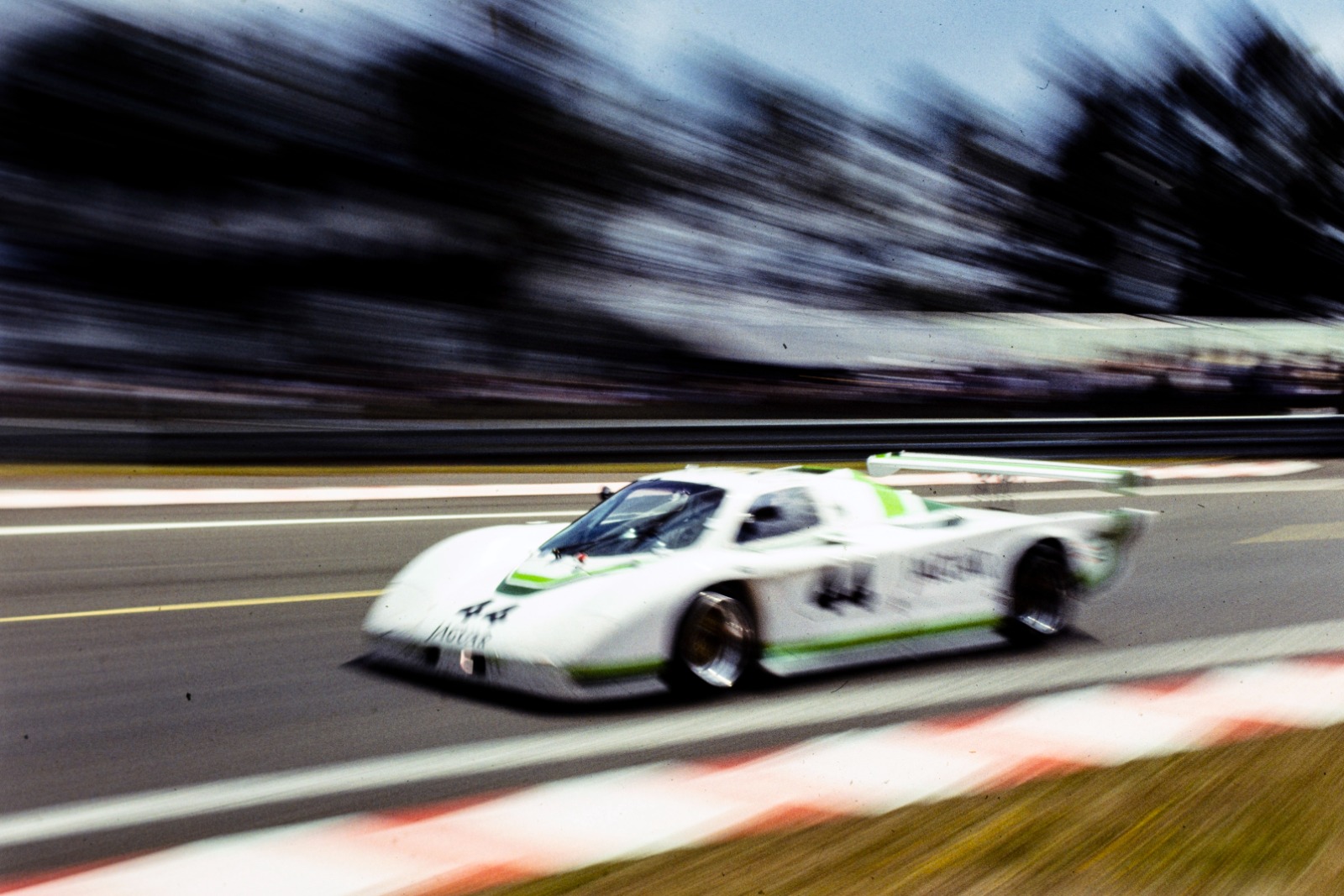
However, the second part of Egan’s vision, the idea of Jaguar undertaking a Le Mans campaign directly from its Browns Lane factory in Coventry, never materialised in the way Tullius initially interpreted it. He believed Egan’s foresight pointed towards a partnership with a British-based operation, a prediction that eventually came true with Tom Walkinshaw Racing (TWR). It was TWR, not Group 44, that would go on to secure further victories for Jaguar at the gruff French endurance race in 1988 and 1990, adding to the marque’s storied legacy.
Group 44’s Le Mans Campaign: Moments of Promise, Lingering Frustration
Group 44’s Jaguars, while representing a significant return for the marque, were not front-running contenders during their two-year stint at Le Mans in 1984 and 1985. In their debut year, the team’s fastest car, piloted by Tullius himself, Brian Redman, and Harry ‘Doc’ Bundy, qualified a respectable 14th, albeit 18 seconds adrift of the pole-sitting Lancia. Despite this, the team experienced a fleeting moment of glory. A strategic short-fuel at the start, followed by a swift top-up at the first pit stop, propelled the car into the lead as faster competitors pitted. The two Jaguars, the second driven by John Watson, Claude Ballot-Lena, and Tony Adomowicz, frequently occupied positions within the top six before succumbing to technical issues. Neither car managed to reach the chequered flag.
The team’s second and final attempt at the gruelling 24-hour race proved equally challenging. Tullius consistently attributed the engine problems to “two-star” fuel contamination. The sole car that managed to finish the race crossed the line with one of its 12 cylinders rendered inoperable due to a hole in a piston. The car, shared by Tullius, Ballot-Lena, and Chip Robinson, was classified 13th overall. While this represented a class win in the GTP category, the car was a considerable 50 laps behind the winning Porsche.
By the time of the 1985 Le Mans event, TWR was already deep in testing its new XJR-6, which would make its debut at the Mosport World Endurance Championship round just two months later. Although Group 44 continued to race in IMSA, they eventually lost their exclusive mandate to represent Jaguar in North America to the burgeoning British team. TWR assumed control of the IMSA programme for 1988, a move that heralded success with a pair of victories at the Daytona 24 Hours.
Strategic Compromises and Unfulfilled Potential
Tullius himself maintained that Group 44’s Le Mans efforts were significantly hampered by the necessity to design a car that could perform effectively on both the tight, twisty IMSA circuits and the demanding, high-speed Circuit de la Sarthe. Adding to the pressure, the programme was signed off late in 1980, with Jaguar’s ambitious plan requiring a racing presence the following year. This led to a premature return to Trans-Am with the XJS, which Tullius always felt diluted their focus on getting the XJR-5 race-ready.
Despite these challenges, Group 44 achieved considerable success with Jaguar in the IMSA series. Their inaugural full season in 1983 saw four victories, with Tullius sharing wins with Bill Adam on three occasions and with Bundy once. This impressive performance was enough to secure Tullius the runner-up position in the championship standings. The team added a further five victories through to the end of 1987, with the last three of these triumphs achieved with the new XJR-7 model.
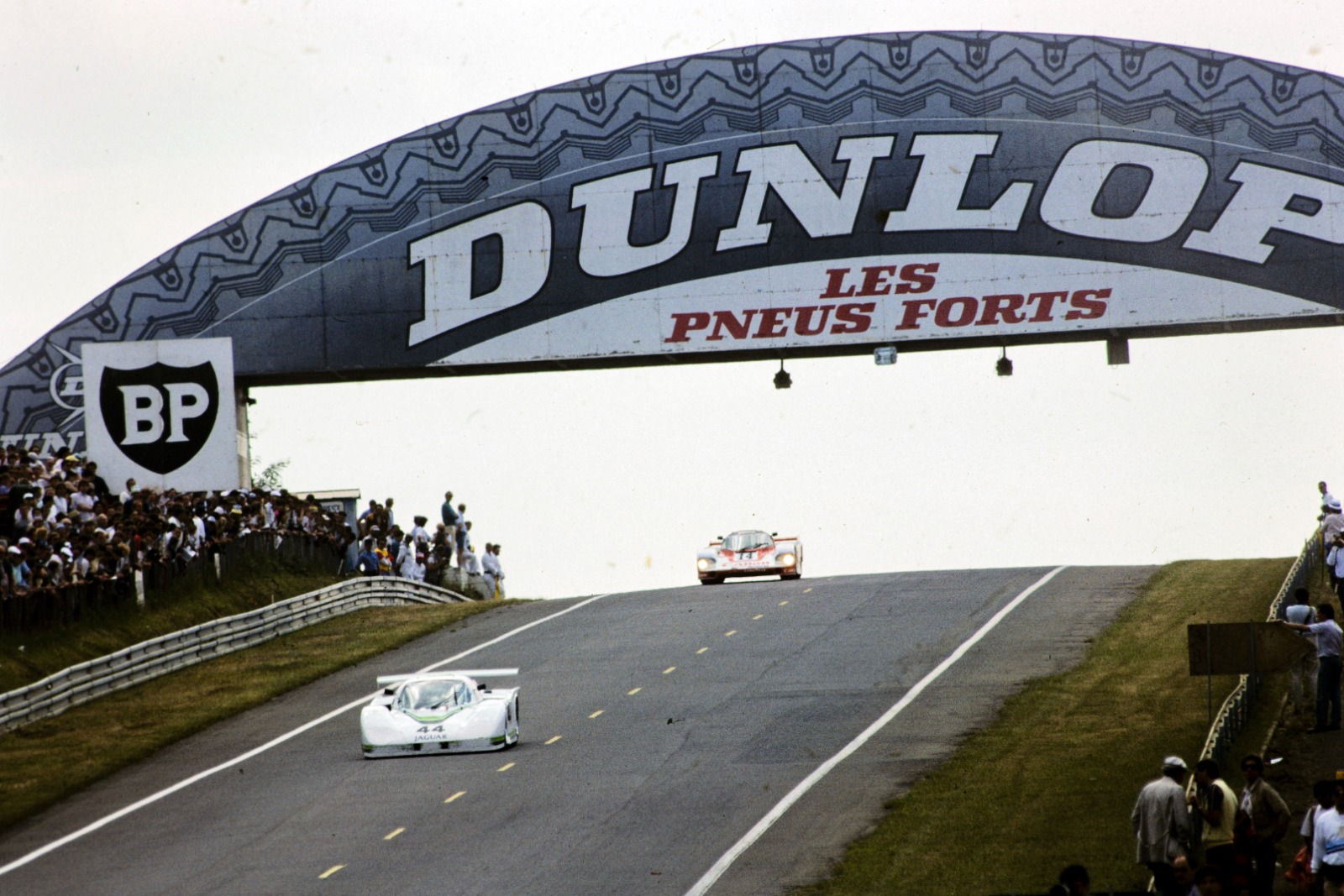
Tullius remained convinced that he was not afforded a fair opportunity at Le Mans. “I’m egotistical enough to believe that we could have won the 24 Hours at Le Mans,” he stated. “It was clearly going to take some time for us to become competitive because we came from a different environment. It would be like sending the New York Yankees over to play England at cricket.”
His sentiment was echoed by Bill Adam, who joined Group 44 for the TR8 programme in 1980. “I do think Bob would have been able to win Le Mans, because he brought such a high level of professionalism to everything he did,” Adam remarked. “He set entirely new standards that were met only years later by Roger Penske. Bob was so far ahead of his time. The cars were spotless and so well prepared – it gave you added incentive not to damage them.”
Adam further elaborated on the team’s stringent ethos: “Everyone had to be so on the job, always dressed immaculately in the white Group 44 shirts and pants. You’d better not have any dirt on them, or you’d be sent to change. One guy from the team once said to me that Bob had missed his calling. He told me that he should have been a drill sergeant. Bob would have made a good drill sergeant.”
Tullius’s background included service in the US Air Force before his career in sales and his eventual full dedication to Group 44. The team amassed an impressive 14 national titles in the Sports Car Club of America. At a higher level, they secured two Trans-Am drivers’ championships in 1977 and 1978, with Tullius himself at the helm of a Jaguar XJS.
Further success came when Group 44 was enlisted to manage Audi’s Trans-Am programme with the 200 quattro in 1988, resulting in Hurley Haywood claiming the title. However, Tullius subsequently lost the Audi deal when the manufacturer shifted its focus to the IMSA GTO ranks with the 90 quattro the following year. The Group 44 team continued its operations until 1990, after which Tullius transitioned to a career in public relations and promotions, while also indulging in his other profound passion: aviation.