RISSA: A Rising Star from Western Sydney
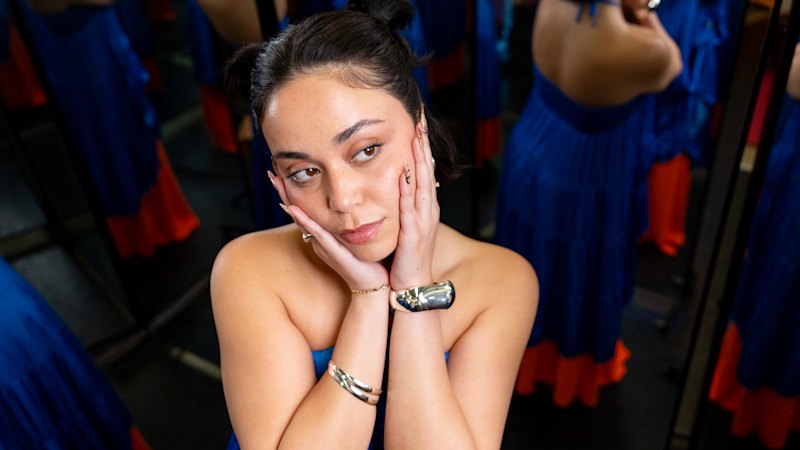
RISSA is low-key as she arrives at the creative studio in Glendenning, near Blacktown in Sydney, dressed in slouchy black clothing. But as soon as the 28-year-old singer dons her trademark layered neon maxi-skirts – bought for as little as $6 from op-shops – and steps in front of our photographer’s camera, she comes alive.
She may not be a household name (yet), but the star quality that has taken her on her first Australian tour through to booking a London show next month is apparent. RISSA, whose real name is Larissa Lilley, grew up in Liverpool and Campbelltown and has Tongan, Fijian Rotuman and Australian heritage.
One of western and south-western Sydney’s new generation of rising talents, she has an impressive 200,000 monthly listeners on Spotify for her melodic R&B tunes infused with soaring gospel vocals. Her 2023 song Doubt has had more than 23.5 million streams.
Like many of the area’s R&B, hip-hop and gospel-inspired musicians, RISSA started singing with her fellow “Polynesian kids” at church and in school. “It wasn’t weird for someone to start playing guitar, and someone else would sing, and we just all started singing together,” she says. “It felt normal because that’s how it is at home and with our families.”
Being raised on African-American music such as ’90s R&B and hip-hop, the spiritual experience of singing with others, of “being surrounded by a feeling of connectedness and joy”, helped her find her sound.
The Rise of Western Sydney’s Music Scene
RISSA is far from a one-off. Her manager, Cathy Nguyen, founder of the western Sydney artist development company New Gen Artistry, says the area is becoming a hotspot for R&B, hip-hop and gospel-inspired music.
Around her day job as a high school teacher, the 31-year-old from Canley Vale mentors up to 80 aspiring musicians each year from suburbs such as Mount Druitt, Campbelltown and Liverpool. Most of them are R&B artists.
“The artists that I manage that perform R&B, they come from all parts of Africa,” Nguyen says. “I have artists who are Ghanaian, Zimbabwean, Nigerian, Ethiopian [and Polynesian]. That’s the music that they grew up listening to, and that’s the music that they perform.”
A wave of hard-drill music produced out of Mount Druitt and the greater west by OneFour, Hooligan Hefs and other artists was dominant in the late 2010s. While the pandemic stalled the next evolution of western Sydney musicians, RISSA is joined by rising talents such as hip-hop rappers Zion Garcia and Sollyy, as well as Grentperez, whose career has skyrocketed.
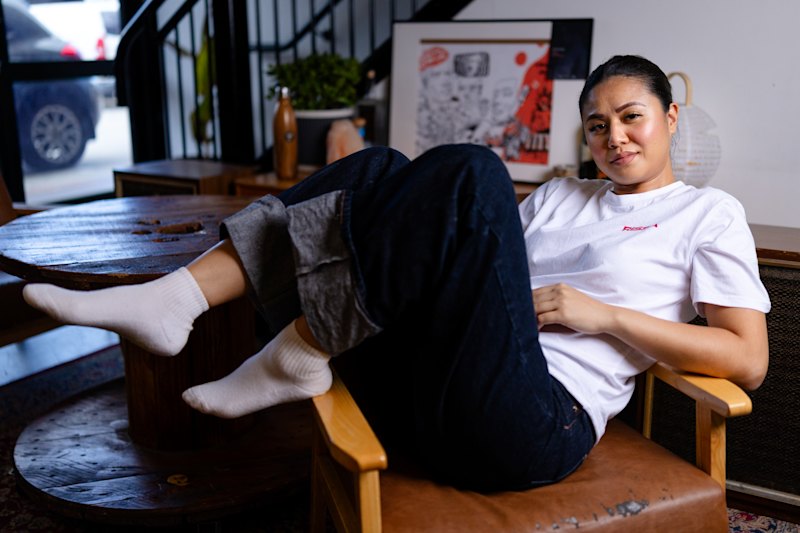
The 24-year-old Filipino-Australian pop singer from St Marys, whose real name is Grant Perez, began posting covers of songs from Billie Eilish, Olivia Rodrigo and the like on YouTube when he was 13. Now, his original songs reel in 1.8 million monthly Spotify listeners, while his 2021 track Cherry Wine boasts more than 214 million streams. In June, he is doing a show in New York.
“There are a lot of talented individuals out here,” Nguyen says.
Challenges and Opportunities in Western Sydney
But there is a lack of resources for musicians from western Sydney. Nguyen says they often find success training and performing in the inner city. RISSA trained at the Australian Institute of Music in The Rocks and says she was often the only student in her class from the west.
“I’d meet so many kids who are based in the inner west or the eastern suburbs,” she says, “and there was always this weird sense of like, ‘Oh, I feel like an outsider’. There’d [also] be moments where I would meet other western Sydney kids, and to be honest, half the time they were Polynesian, so it was kind of cute.”
But there are moves to address the resourcing issue. Gerard Cabellon and Eric Atienza are co-founders of Common House, an eclectic artists’ studio in Glendenning – previously a barbershop – where RISSA is having her photo taken.
The founders, who met in high school, say there are four similar studios in western Sydney providing artists with creative spaces, resources and industry connections. Every quarter, they host a showcase for upcoming talents.
“There’s a concentration of creative spaces in the inner west and inner city,” says Atienza, 29, who works in retail to support his studio. Cabellon, a 28-year-old professional breakdancer, agrees: “Growing up, there was no space, no staple venue or facility [in the west] that was synonymous with the creative scene.”
The Importance of Community and Identity
“What we see here now is a lot of young people in uni, getting into uni … or getting into a creative career, who don’t necessarily know what they want to do. But they know that if they come here, hang around this area or precinct, then that increases their likelihood of meeting creative people and fostering the beginnings of a creative career.”
The region also lacks performance venues, Atienza, Cabellon, Nguyen and RISSA point out. However, they note that Blacktown, Liverpool and Campbelltown councils fund regular events where local creatives can upskill and perform.
“Those are government-subsidised spaces,” Cabellon says. “Obviously, they’re serving a really great purpose, and they have a pretty good program, but I think there was nothing that was independently run by people who look like us, people who speak like us [migrant children from western Sydney].”
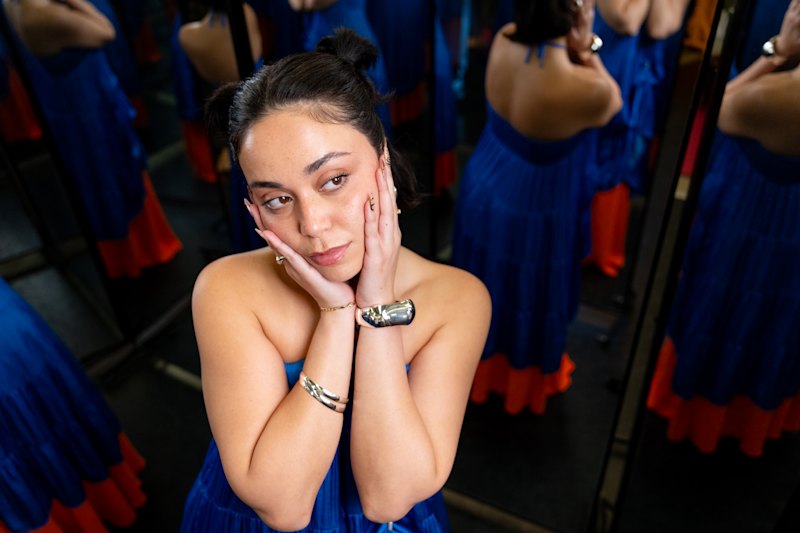
The advantage that musicians from the area have is often described as a “Blacktown edge”.
“The communities around here, you’ve got Filipinos, a lot of Pacific Islanders as well as Africans. We all had very similar upbringings; our parents moved here to start a new life,” Atienza says.
“In high school … we all had the same shared experiences [and] passions … That was the early signs [because when] you go outside of that, you don’t see it.
“The camaraderie behind those shared experiences, having that chip on their shoulder, as well as that sort of underdog mentality to be like, ‘Yo, we gotta do something out here’. Our parents came here for a reason.”
Embracing Her Roots
For RISSA, it has taken time to come to terms with her western Sydney origins. Once embarrassed about saying she travelled from Campbelltown to music school, she is now proud of where she is from.
“I had to come back to that moment of realising how much my family, who have lived here, across Campbelltown and Liverpool, have influenced my art, how much my friends from this area have influenced my art,” she says.
“My raw/realness, the way I communicate … I feel like having that part of my set and just speaking my mind and all of that energy is kind of what makes [me] different.”