A New Chapter in the Kitchen
Brin Pirathapan has found a new sense of happiness and contentment since leaving his career as a veterinarian to pursue cooking full-time. He now shares his culinary journey as a chef and content creator, having won BBC’s MasterChef in 2024. His success was driven by bold, innovative flavors, technical skill, and a deep connection to his Tamil Sri Lankan heritage.
As a vet in Bristol, Pirathapan often found himself stressed and looking forward to the weekend. Food became his escape, whether it was lunch with leftovers or spending time in the kitchen at home. “I remember doing these 13-hour shifts and coming home decompressing [by cooking],” he recalls.
After finishing filming the 20th series of MasterChef, he made the decision to leave his job and focus on cooking. This change led him to amass over 200,000 followers on Instagram, where he shares recipes and home cooking hacks. “I feel like the new self is the person I’m meant to be,” he says, emphasizing that he can now realize the potential of his happiness and contentment.
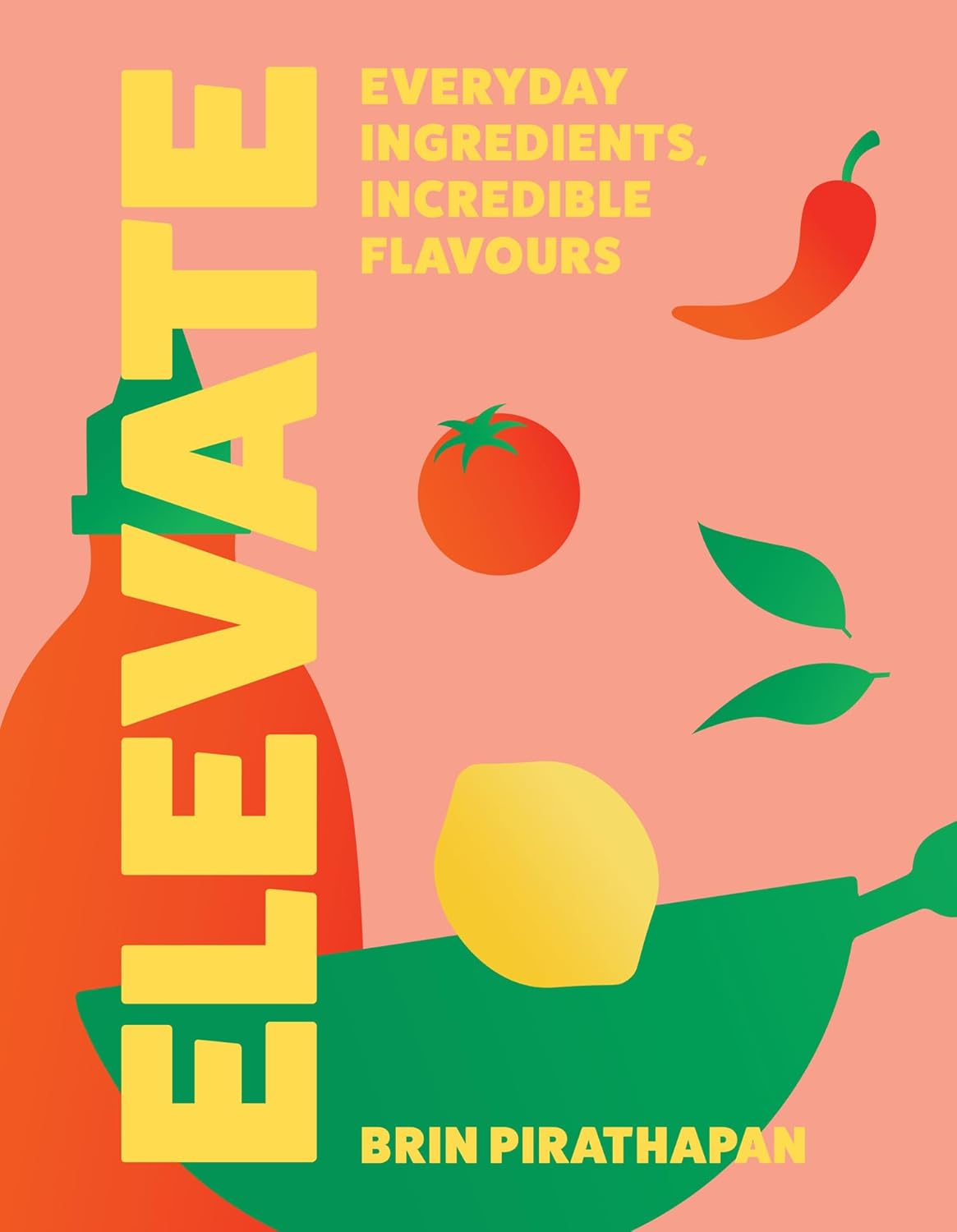
Pirathapan has released his debut cookbook, Elevate, which aims to help home cooks elevate basic ingredients, improve their cooking techniques, and enhance their mood through food. While Tamil food is a significant part of who he is, he draws inspiration from his British upbringing and global travels. This eclectic mix defines the cuisine he creates and shares with his followers today.
“I just love flavor – flavor that is bold from all over the world,” he says. “I haven’t restricted myself to any geographical or cuisine-based boundaries, it’s just what works together.” From Sri Lankan street food like mutton rolls and Tamil chicken curry pie, to comforting sambal mac and cheese and duck leg lasagne, alongside global influences such as Brazilian fish stew or peanut butter chicken udon soup, his food truly reflects his diverse background.
The Influence of Tamil Cuisine
Sri Lanka is made up of many different cuisines, and Pirathapan explains that even within the Tamil culture, different villages have unique variations. However, what unites them is the richness and depth of the flavors, which can be spicier than what you might find in Northern India.
One key lesson from Tamil cuisine was learning how to handle big flavor profiles. He would often put an array of dishes on the table that could easily clash but managed to balance them without thinking about it. “This is something the culture does well,” he says. “It taught me so many lessons in how to balance flavors.”
Spice, of course, is a huge influence. Pirathapan finds it very easy to work with spice, not just from his culture, but from all over the world. “That’s something you can’t necessarily teach,” he says. “I’m really, really lucky to have that kind of basis.”
Cooking with Humble Ingredients
Pirathapan’s main passion is taking humble ingredients that we all have in our cupboards or buy regularly at the supermarket and making something special out of them. It’s a skill he picked up while learning to cook at university, without the budget to buy gourmet food.
“You’d bring home those ingredients and think, what should I do with this? I’d do a bit of research into different cuisines and try something new,” he says. After five years of doing that, he was loving cooking so much.
Lots of the recipes in his book are influenced by early memories of food. “My favourite dish my mum makes is a tinned fish curry,” he says. Tins of pilchards can cost around 90p – “but it was my favourite curry growing up.”
“And thakkali kulambu, which is a tomato curry – just so basic in terms of ingredients, like taking tomatoes, and you make them great. It’s the best representation of elevation I think.”
Elevating Everyday Ingredients
“There’s so much out there that we could be doing with the most basic ingredients to ensure everyone’s eating really vibrantly and really deliciously,” he says. “But I don’t think everyone has the means or the knowledge.”
It’s fantastic, he says, if you do have the ability to buy high-quality ingredients, but he’s “worried this is alienating a population that might not be able to do that, and then saying, oh you can’t create good food if you don’t [have] the best produce every time.” It’s an agenda he doesn’t want to push.
“I want everyone to know that whatever background you’re from, whatever part of the population you’re in, with the most basic ingredients, you can still create really vibrant, delicious food, that elevates those days where you’ve been working really bloody hard to get whatever you can and then you go and buy whatever ingredients with this.”
Cauliflower can be transformed into jerk cauliflower wedges; a ratatouille of basic veg can be baked into a tarte tatin; and even bread can be the star of the show – roti can be used in a salad, like the Italians do, for his kothu panzanella.

The Healing Power of Cooking
The act of cooking itself can be calming, Pirathapan says. Making a curry is “very meditative if you’ve had a rubbish day, because instead of doing a million things at once, you’re thinking about one pit that you’re trying to build from the bottom up. And at the end, after you’ve done each step, almost like a breathing exercise, you have this really delicious, warming, comforting [dish].”
But ultimately, colorful food can lift the mood. “The world is so rubbish at the moment, but if you take this book into your kitchen, the vibrancy itself, I think it’s impossible to ignore. I like to think it brings a bit of happiness. If you get a recipe that’s bring, enjoyable and playful, I like to think we can change a lot of things.”
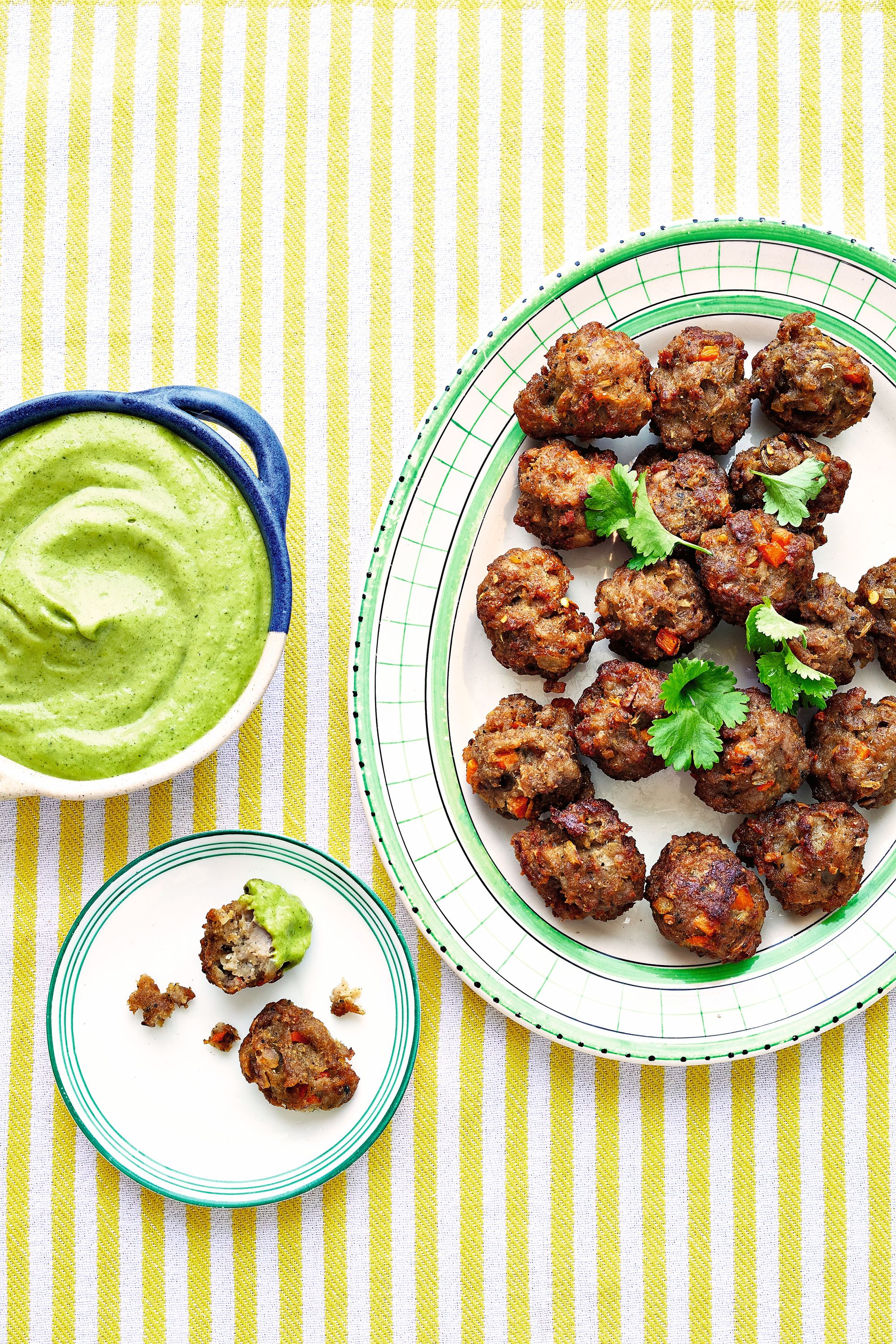
Sausage Pakoras with Mango and Coriander Chutney
“I love using sausage meat in a whole range of recipes – it provides a bit more flavour and structure to whatever you’re creating,” says Pirathapan.
“The heavy fennel notes in these bites goes perfectly with the pork, and the slightly fiery but sweet chutney packs a moreish punch. A great snack for any spread or a crowd-pleasing start to a dinner party.”
Makes: 20-24
Time: 45 minutes
Difficulty: 2/3
Ingredients:
For the sausage pakora mixture:
– 8 sausages of your choice (about 450–500g)
– 1 red onion, diced
– 1 carrot, diced
– 2 garlic cloves, grated
– 2.5cm of fresh ginger, peeled and grated
– 3 tbsp gram flour
– 1 tbsp cornflour
– 2 tsp sea salt
– 1 tsp fennel seeds
– 2 tsp ground cumin
– 2 tsp ground coriander
– 1 tsp chilli flakes
– ½ tsp ground fenugreek
– Vegetable or sunflower oil, for deep-frying
For the mango and coriander chutney:
– 1 ripe mango, peeled, stoned and roughly chopped
– 2 tbsp Greek-style yoghurt
– Finely grated zest and juice of 1 lime
– 1 green chilli
– 30g fresh coriander leaves
– 1 tsp sea salt
Method:
1. Make the pakora mixture. Slice open the sausage skins and scrape out the meat into a mixing bowl. Add all the remaining pakora ingredients, except the oil for frying, then get your hands stuck in to mix.
2. Leave the sausage mixture to sit for about 10 minutes – the onion and carrot will start to release some water and help to bind everything together. If there’s not enough water to bring the flours together after 10 minutes, add 2 tablespoons of water and mix it in.
3. Shape the pakora mixture into 20-24 small rounds, about the size of a small meatball.
4. Heat enough vegetable or sunflower oil in a deep-fat fryer (if you have one) or in a heavy-based saucepan (don’t fill the pan more than two-thirds full) to 180C (or until a small piece of bread browns in 30 seconds).
5. Deep-fry the pakoras in batches for about 8 minutes until golden brown and crisp. Use a slotted spoon to remove them and place on kitchen paper to absorb the excess oil while you deep-fry the rest.
6. Alternatively, to cook the pakoras in an air fryer, spray them with oil and then air-fry in batches at 180C for 15 minutes until cooked.
7. To make the chutney, add all the ingredients to a blender and blend together well to form a vibrant green chutney. Serve with the warm pakoras.
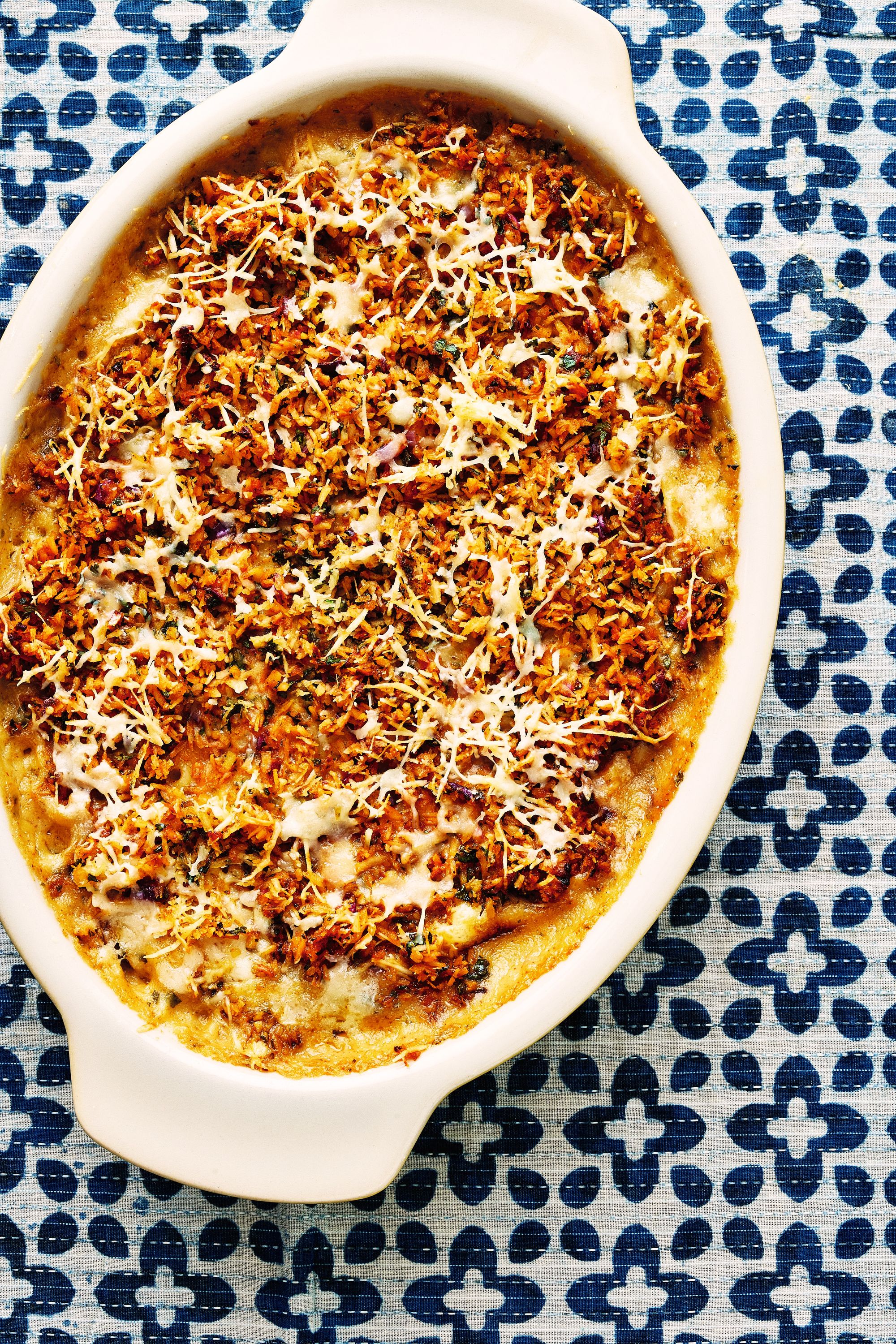
Sambal Mac ‘n’ Cheese
“All the hearty naughtiness of a classic mac ’n’ cheese but with the moreish, spicy flavours of a coconut sambal,” says Pirathapan. “The sambal is folded through the pasta, as well as topping it with a spicy crust. Sambal was always a staple in our household, as it’s a great accompaniment for most Tamil Sri Lankan dishes, but especially string hoppers and egg hoppers.
“Growing up, I’d begun stirring it through all sorts of dishes and realised it elevated anything you put it in, be it a sandwich or a bowl of noodles, and that’s what gave me the idea for this number.”
Serves: 4
Time: 1 hour
Difficulty: 2/3
Ingredients:
– 100g desiccated coconut
– 1 tbsp boiling water
– 3 tsp medium chilli powder
– 3 tsp sea salt
– 1 red onion, finely diced
– 20g fresh coriander leaves, finely chopped
– Juice of 2 limes
– 250g dried macaroni
– 60g butter
– 60g plain flour
– 600ml whole milk
– 150g Cheddar cheese, grated, plus a little extra for the top
– 25g Parmesan cheese, finely grated, plus a little extra for the top
Method:
1. Preheat the oven to 180C fan/200C gas mark 6. Add the desiccated coconut to a bowl with the boiling water. Mix well, cover and leave for 5 minutes.
2. Meanwhile, add the chilli powder and salt to a pestle and mortar and grind to a fine powder.
3. Add the red onion and coriander to the desiccated coconut, along with the chilli salt powder and the lime juice. Mix well and set aside.
4. Cook the macaroni in a pan of boiling water until al dente, then drain and set aside.
5. Place a large saucepan over a medium heat and add the butter. Let it melt and then turn to a very slightly brown colour – this will bring out a nutty flavour. Once the butter is ready, turn down the heat to low, stir in the flour and mix well – you’re looking for a wet sand-like consistency.
6. Gradually add the milk, stirring constantly, and cook until the sauce is thickened and smooth, then simmer for a couple of minutes. Now go in with both cheeses and stir over a low heat until they have melted. Add about two-thirds of the coconut sambal mixture to the cheese sauce, along with the cooked macaroni. Stir everything together until it’s all evenly mixed in.
7. Pour everything into an ovenproof dish and top with the remaining coconut sambal mixture and an extra grating of Cheddar and Parmesan. Bake in the oven for 30 minutes until golden and bubbling, then rest for 10 minutes before serving.
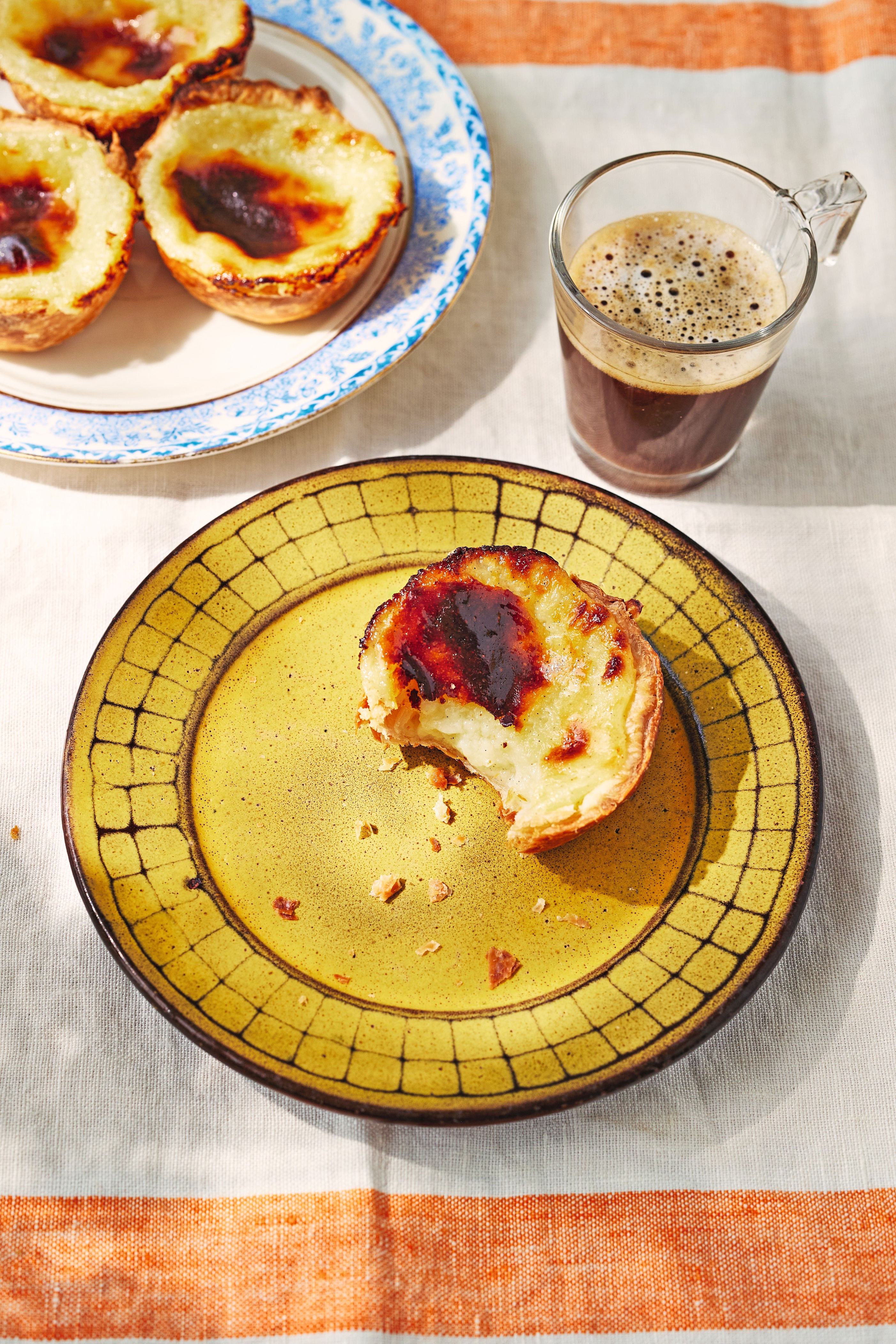
Paratha de Nata
“It’s fair to say I’ve just taken two of my big culinary loves and combined them to create this recipe,” says Pirathapan.
“My wife Anna and I head to Portugal fairly regularly and my pastel de nata count is usually embarrassingly high by the second afternoon. It’s not rare to find me sneaking off for secret PDNs while we’re out and about, or taking myself off to breakfast before anyone else so I can sneak in a couple without judgment.
“Naturally, I’m also a big fan of parathas – there’s always an industrial-sized pack in the freezer ready to mop up any curry I make. However, their buttery, flaky texture makes them perfect for this intercontinental fusion that none of us realised we needed.”
Makes: 6
Time: 50 minutes plus cooling
Difficulty: 3/3
Ingredients:
– 125g caster sugar
– 4 green cardamom pods, roughly bashed
– 3 egg yolks
– 25g cornflour
– 300ml whole milk
– ½ vanilla pod, seeds scraped out
– 3 frozen parathas, defrosted
Method:
1. Add the sugar, 125ml of water and the cardamom pods to a saucepan and place over a low heat until the sugar dissolves. Then increase to a high heat and cook, without stirring, until the syrup reaches 115C, which will take about 5-10 minutes. Keep checking the temperature as you don’t want it to go much higher than that.
2. While the sugar syrup comes up to temperature, combine the egg yolks, cornflour, milk and vanilla seeds in a heatproof mixing bowl. Whisk together until fully combined.
3. Once the sugar syrup gets to temperature, remove it from the heat and slowly drizzle it into the milk mixture, whisking continuously, until everything is dissolved and combined. Pass through a sieve into a clean saucepan to remove the cardamom pods.
4. Cook over a medium-high heat, stirring, until the mixture starts to thicken. This will take a few minutes but will go quickly once it starts – you want it to easily coat the back of a spoon. Decant it into a heatproof bowl and set aside to cool.
5. Preheat the oven to max – ideally 220C fan/240C/gas mark 9.
6. Cut each paratha into 2 rounds using a 10cm diameter biscuit cutter (or the rim of a suitable-sized bowl). Press the 6 paratha rounds into 6 cups of a non-stick muffin tray (press one into each cup). Use a knife to clean up the edges, then evenly fill with the custard to 1cm below the edge.
7. Bake in the oven for 15-20 minutes until the tops start to develop dark spots. Remove from the oven and let them cool completely in the tray before turning them out and tucking in!
Tip: Don’t waste the paratha trimmings! Fry them off as you normally would and dip them into leftover curries for a little mid-bake snack.
‘Elevate: Everyday Ingredients, Incredible Flavours’ by Brin Pirathapan (Pavilion, £22).