In the golden era of Hollywood, when movies were grander and stars shone brighter, the very medium on which they were captured was as dangerous as it was revolutionary. The celluloid used in early cinema, known as nitrate film, was highly flammable and often led to devastating fires. This is why the United States Library of Congress has taken extraordinary measures to protect these cinematic treasures.
Nestled in a fireproof vault in Virginia, near Washington, DC, the Library of Congress safeguards some of the most fragile and valuable pieces of film history. This facility, located at the National Audio-Visual Conservation Center in Culpeper, Virginia, is home to an extensive collection of nitrate films that date back to the dawn of cinema in the 1890s and continued until the early 1950s. While the public rarely gets to see these reels, they are preserved with meticulous care, ensuring that lost movies can be rediscovered and enjoyed again.
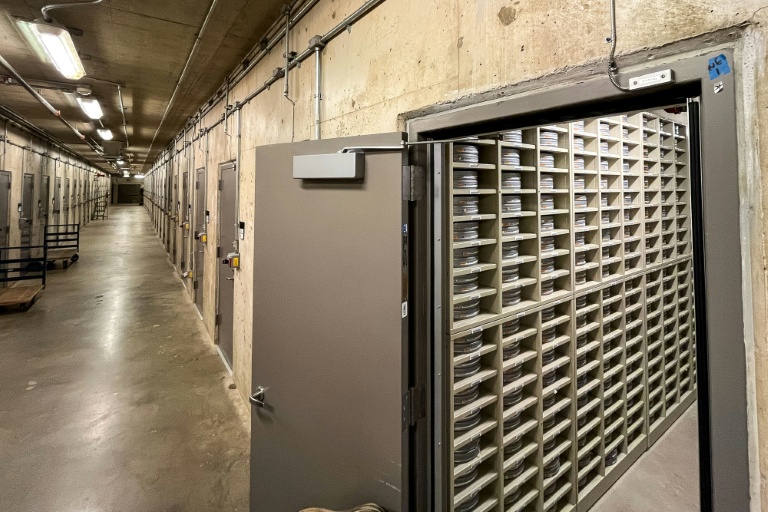
Inside this vast, chilly vault, approximately 145,000 film reels are stored under strictly controlled conditions. These reels hold cinematic masterpieces that evoke memories of a time when movies dominated entertainment. George Willeman, the vault’s leader, lists some of the iconic films housed there: “Casablanca,” Frank Capra’s “Mr. Smith Goes to Washington,” and “The Great Train Robbery” from 1903, considered one of the first action films.
As Willeman walks through a long, spartan corridor, he unlocks a series of steel doors, each leading to a cell-like storage area. Inside these 124 cells, floor-to-ceiling cubbyholes hold film canisters containing negatives and prints. Every reel is carefully arranged—packed tightly to prevent the canisters from opening, yet spaced apart to minimize the risk of fire. Since its establishment in 2007 within a former US Federal Reserve building in the foothills of the Blue Ridge Mountains, the vault has maintained a perfect record with no incidents of fire.
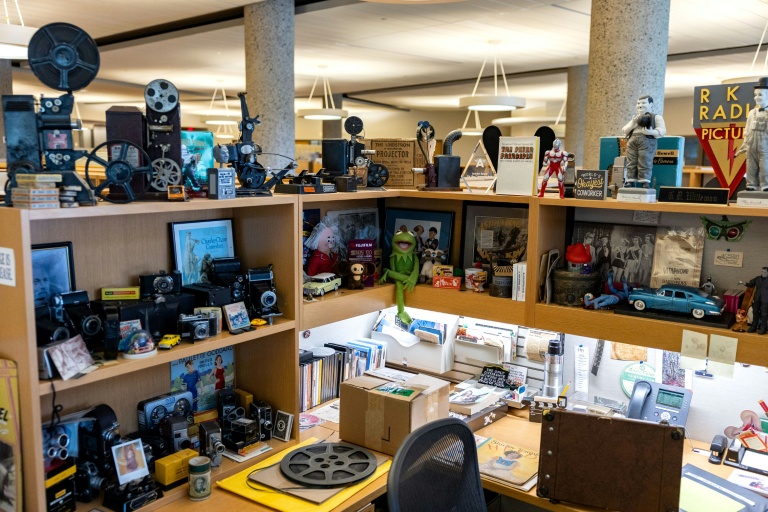
For film enthusiasts, the vault is a treasure trove. It houses more than six million items, including moving images and recorded sound, along with supporting materials such as scripts, posters, and photographs. Willeman, who wears a button badge reading “Experience Nitrate,” explains that the Library of Congress began preserving nitrate film in the 1960s after realizing how much was being lost due to fires and discarded negatives.
Working alongside the American Film Institute, the library collected and copied nitrate film from major Hollywood studios like RKO, Warner Brothers, Universal, Columbia, and Walt Disney. They also acquired personal collections from film pioneers such as Mary Pickford, a silent-era star, and Thomas Edison, whose early studio produced hundreds of films.
“We’ve been working on this for over 50 years, and the collection keeps growing,” Willeman said.
With the rise of digital media, the mission of the center has expanded beyond preservation for historians and purists. Now, old films are being digitized and made available online, allowing a wider audience to experience these cinematic gems. “It’s amazing to make them accessible to everyone,” Willeman added, reflecting on his lifelong passion for film.
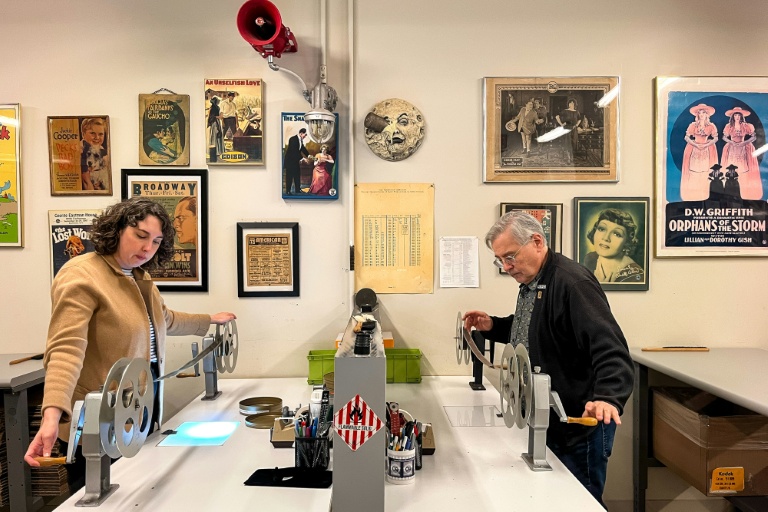
Courtney Holschuh, a nitrate archive technician, explained that nitrate film often preserves better than later safety film. At a workstation free of light bulbs or exposed batteries—both potential fire hazards—she recounted how she recently examined a cache of 10 vintage reels donated by a retired schoolteacher. Among the reels were 42 different titles, 26 of which had been identified. One of the lost films was “Gugusse and the Automaton,” a work by French cinema pioneer Georges Méliès.
“The early film history we have is still waiting to be discovered and experienced,” Willeman said.