A Journey Through Fear and Love in Leviticus
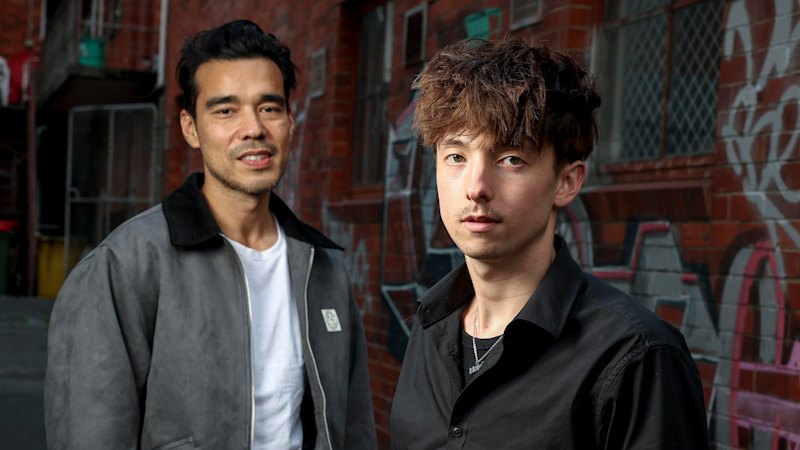
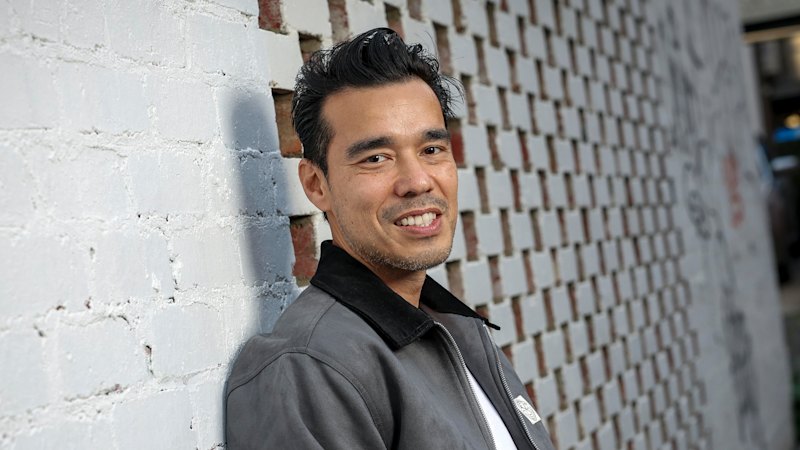
Adrian Chiarella, a gay writer-director, has witnessed the remarkable progress Australia made leading up to the legalisation of same-sex marriage in 2017. This milestone allowed him to marry his partner, Michael Lucas, a writer-producer known for creating The Newsreader and co-creating Five Bedrooms. However, as he reflected on this progress, Chiarella noticed a subtle shift in the national climate.
“I noticed things starting to regress,” he explains. “I noticed little microaggressions of homophobia in day-to-day life. And then I noticed that there was a lot of rhetoric in public space and political talk. I thought, ‘did homophobia become OK again? When did all this become acceptable?’.”
This realisation sparked an idea that would eventually become the horror film Leviticus, which made waves at the Sundance Film Festival this year. The film’s worldwide distribution rights were acquired by Neon, the indie distributor behind acclaimed titles like Parasite, Anora, and The Secret Agent.
A Horror Film with a Powerful Message
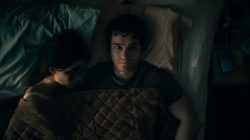
Leviticus follows 17-year-old Naim (played by Joe Bird from Talk To Me), who finds hope in a drab, religious, industrial town when he kisses schoolmate Ryan (Stacy Clausen from Scrublands) in an abandoned mill. Their budding romance takes a dark turn when a “deliverance preacher” (Nicholas Hope) is brought in to “cure” same-sex attracted teenagers. A violent entity emerges, taking the form of the person Naim and Ryan most desire — each other.
Shot across Victoria, including Geelong and suburban Melbourne, the film is a visually stunning and emotionally powerful piece. It uses the entity as a metaphor for the trauma of gay conversion in a community where homophobia and fear of difference persist, even among seemingly caring parents (Mia Wasikowska and Ewen Leslie).
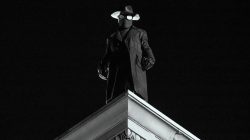
Since Jennifer Kent’s groundbreaking The Babadook in 2014, elevated horror — films that tackle social issues rather than just aiming to scare — has proven successful for Australian directors. Filmmakers like Danny and Michael Philippou (Talk To Me, Bring Her Back) and Michael Shanks (Together) have paved the way.
Chiarella saw horror as the perfect genre to explore homophobia. He collaborated with Samantha Jennings and Kristina Ceyton at Causeway Films, the production company behind The Babadook, Talk To Me, Of An Age, The Moogai, and Bring Her Back, to develop the script.
“It doesn’t matter if you’re making a slasher movie or a psychological horror or a supernatural horror, they’re always about fear,” he says. “At some point you understand what it is that the main character is really scared of. I thought, well, homophobia is a type of fear. I played around with that idea for a long time: how can I make a horror movie about homophobia?”
A Unique Perspective on Culture and Cinema
Chiarella brings a rich cultural background to his filmmaking. His father is Italian, and his mother is Chinese. While his mother wasn’t involved in the film industry, she introduced him to cinema through her love of Chinese films in the 1990s.
“My mum used to watch a lot of Chinese cinema,” he recalls. “She rented poor quality, probably bootleg VHS tapes from a store next to a Chinese grocery. While I lived in Melbourne now, I grew up in Greenwich on Sydney’s lower north shore.”
Despite not understanding the dialogue due to the lack of subtitles, Chiarella was captivated by the imagery. “It wasn’t till I grew up that I realised those films were by filmmakers like Wong Kar-wai and Hou Hsiao-hsien. I had absorbed a lot of what the potential of cinema can be just through the sounds and images.”
Chiarella’s journey into filmmaking began during work experience on the ABC drama GP as a nervous teenager. He later gained editing skills while volunteering in post-production houses during a trip to the UK. His first proper job in the industry came while working on Baz Lurhmann’s Australia (2008) at Iona, a grand Italianate manor in Darlinghurst.
A Debut Feature That Captures the Heart
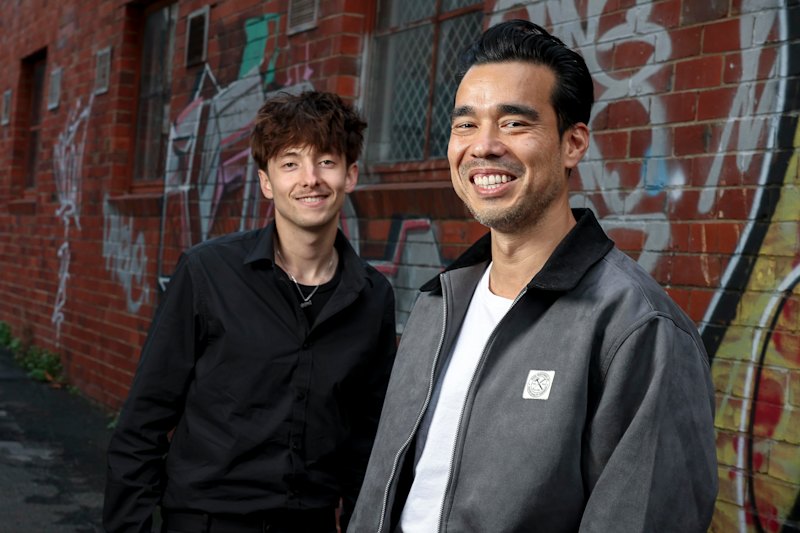
Chiarella went on to study editing at the Australian Film, Television and Radio School and directed shorts and episodes of Totally Completely Fine (2023) and Five Bedrooms (2023).
Joe Bird, who plays Naim, believes Leviticus is more than just a horror film. “At the end of the day, the message of it is that [homophobia] can kill,” he says. “You have that romance part of the film, the coming-of-age part of the film, the dramatic side, then you have the horror. What’s so great about this script is that there are so many different things you can take from it.”
Chiarella employed unique methods to help his lead actors bond during pre-production. “He took me and Stacey on the drive down to Geelong, where we filmed the majority of the film,” Bird explains. “He just dropped us in two separate areas and said ‘turn your locations on to each other [on their phones] and try to find each other’.”
In June, Leviticus will be the sole Australian selection in the $60,000 competition for “audacious, cutting-edge and courageous” cinema at the Sydney Film Festival. “Some of my absolute filmmaking heroes are in that competition, people like Hirokazu Kore-eda and Cristian Mungiu,” Chiarella says. “It’s incredible to be screening a film next to them — a real dream come true.”
Leviticus screens in competition at the Sydney Film Festival and in general release from June 18. The competition includes films that dominated the awards at this month’s Cannes Film Festival, such as Mungiu’s Palme d’Or winning Norwegian drama Fjord, Zvyagintsev’s Grand Prix-winning thriller Minotaur, Pawlikowski’s Thomas Mann drama Fatherland, and Dusabejambo’s Rwandan reconciliation drama Ben’Imana, which won the Caméra d’Or for best first feature film.