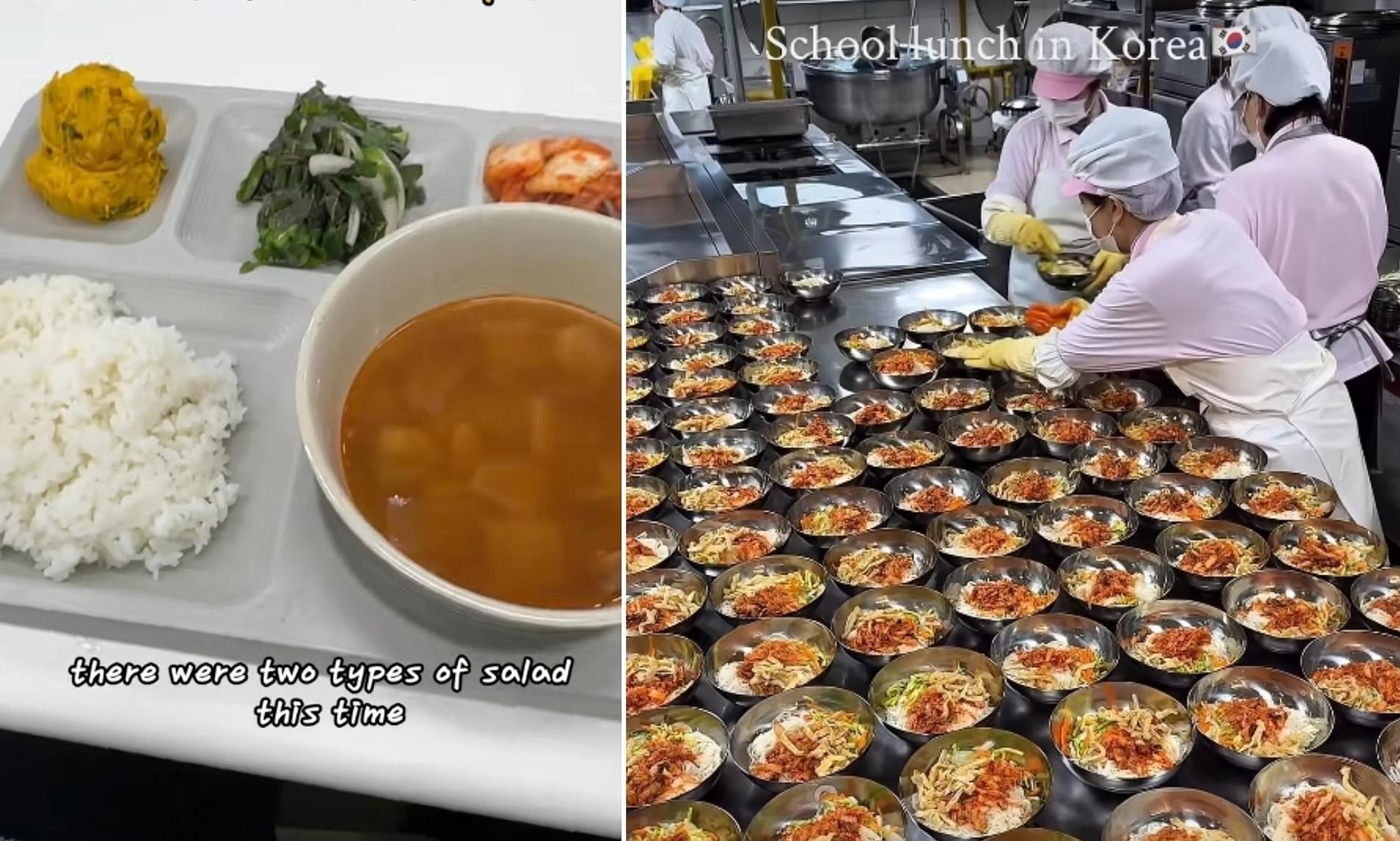
The Rise of South Korean School Dinner Culture on Social Media
Social media has recently been abuzz with videos showcasing the unique and healthy school dinner culture in South Korea. These clips are capturing the attention of people around the world, especially as schools in England prepare to phase out deep-fried foods from their menus by 2027. This move is part of a broader effort to tackle childhood obesity in the UK.
In contrast, South Korean students are enjoying meals that are not only nutritious but also rich in flavor and variety. Their daily school dinners often include dishes like noodles, salads, hearty broths, and an array of side dishes known as ‘banchan’. These meals are carefully prepared and presented, reflecting a strong emphasis on quality and balance.
- The meals are not just about health; they are also a culinary experience. Students can be seen loading their metal trays with freshly cooked curries, multi-grain rice, and a wide range of side dishes.
- Some meals even feature up to six courses, including customised dessert buns, fruit, and flavoured milk.
- Unlike the chaotic scenes often seen in other countries, many South Korean students are shown politely waiting their turn and bowing to the staff as a sign of respect.
A Glimpse into South Korean School Meals
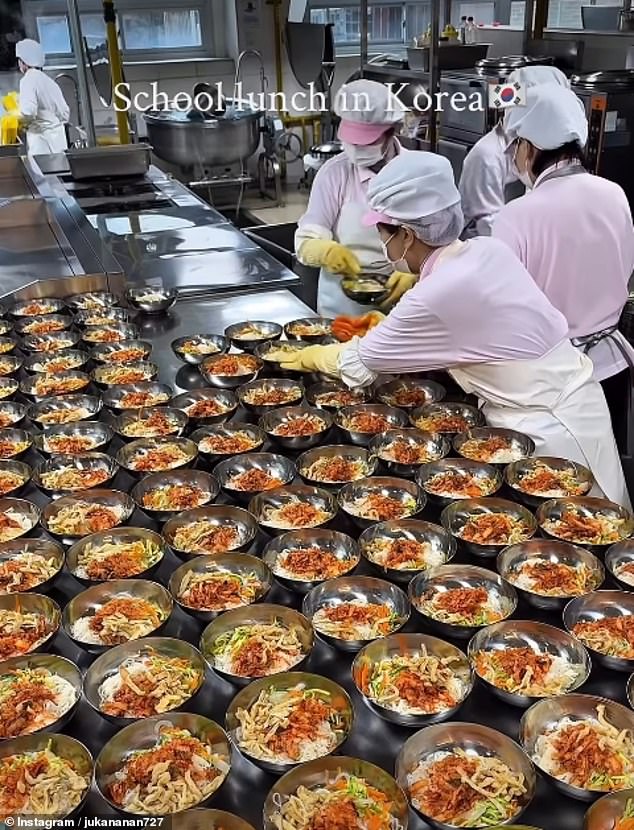
Japanese influencer jukananan727, who shares videos of ‘food culture around the world’, posted about her visit to an all-boys’ high school in Yongin-si, a city south of Seoul. Her videos highlight the dedication of the cooks, who carefully present and plate the meals, tasting them to ensure quality.
The menu for that day included Anchovy Rice Balls, ‘Janchi’ Noodles with broth, Beef Meat Pancakes, Gyoza Dumplings, Stir-fried Square Fish Cakes, Cabbage Kimchi, and Fruit Mini Cupcakes. These meals are not only visually appealing but also nutritionally balanced.
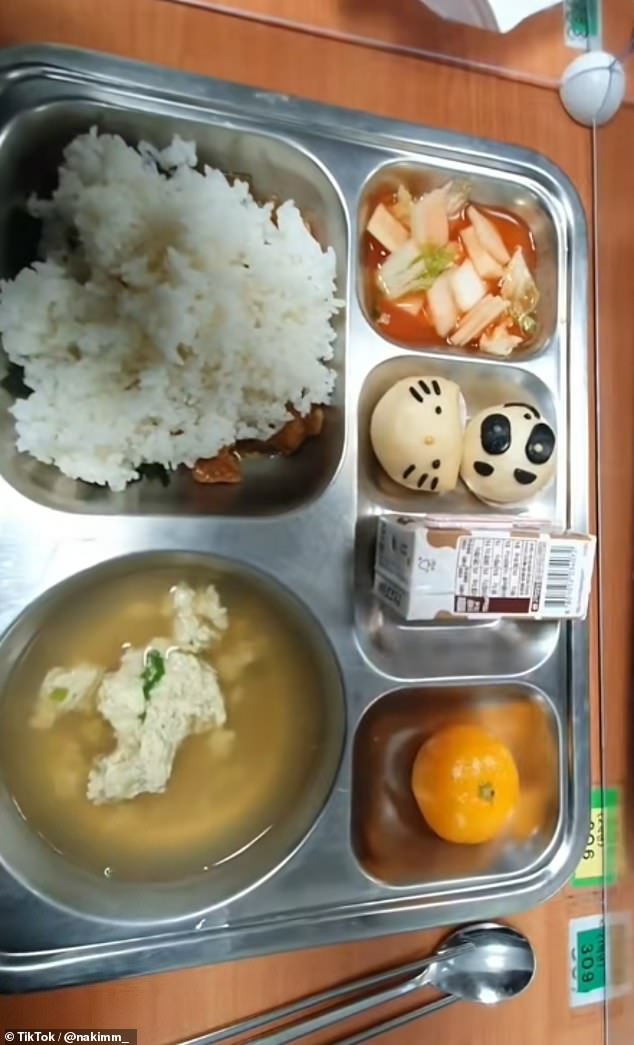
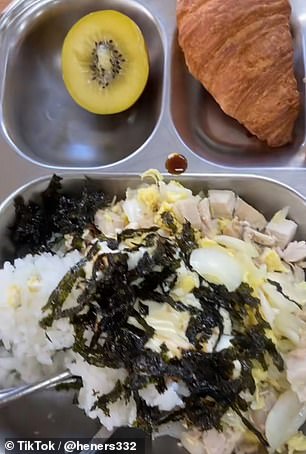
On TikTok, South Korean student @nakimm_ has shared clips of her high school lunches, showing a hearty serving that includes rice, soup with chicken, kimchi, steamed buns, chocolate milk, and an orange. Similarly, @heners332, a Brit living in Korea and working as an English teacher at an elementary school, shared his meal, which featured a chicken mayo and rice dish, seaweed, and miso soup.
Beyond Schools: University Canteens Also Shine
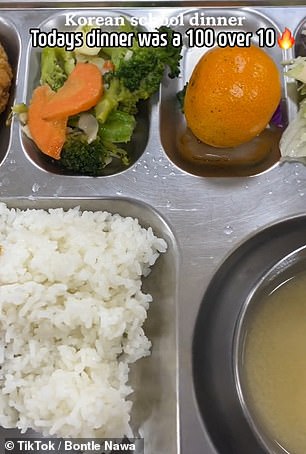
The impressive food culture isn’t limited to schools alone. University canteens in South Korea are equally praised, with many students sharing their meals and giving them high ratings. Botswana-born Bontle Nawa, based in Seoul, shared a spread that included a fresh salad and fried cutlet, while French student Mimi revealed that her meal, which included rice, curry, three side dishes, soup, and a drink, cost around £2.75.
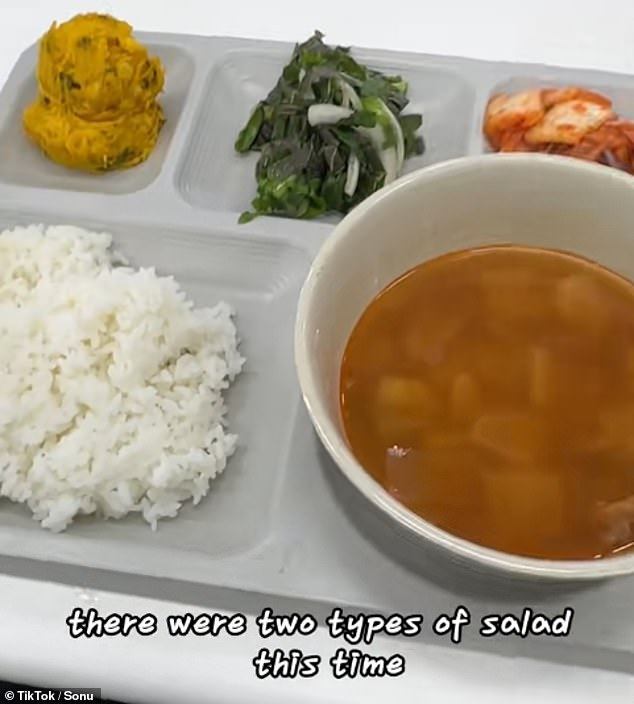
Sonu, a student at Seoul National University, shared his meal, which cost less than a dollar and consisted of radish soup with beef, rice, and two types of salad. These examples highlight the affordability and nutritional value of school meals in South Korea.
The History and Impact of South Korea’s School Meal Program
South Korea’s school meal program has its roots in the aftermath of the Korean War in 1953. Initially, it began with donated milk powder at elementary schools to address the food crisis during the conflict. Over time, this initiative has evolved into a comprehensive system that prioritizes nutrition and healthy eating habits.
According to the School Meals Coalition, led by Brazil, Finland, and France, the program has continued to be a government priority. Nutrition experts are placed in all schools to instil healthy eating habits through the meals provided.
- The state also connects local farmers and suppliers with schools, ensuring a steady supply of fresh produce.
- The focus on food processing and storage facilities helps maintain the quality and safety of the meals.
As of 2024, the Republic of Korea provides free school meals for five million students in almost 12,000 primary and secondary schools across the country, supporting 99.8 per cent of children in public and private schools.
The Shift in England’s School Food Policies
While South Korea continues to set a high standard for school meals, England is preparing to implement significant changes to its school food policies. From September 2027, deep-fried foods such as battered fish and chips, fried chicken nuggets, and jam doughnuts will be banned in schools. This move is aimed at addressing the UK’s childhood obesity crisis.
The new standards will also require all desserts to contain at least 50 per cent fruit, marking the end of traditional favorites like chocolate sponge cake and jam roly-poly. Current standards already limit schools to no more than two portions of deep-fried food each week, along with at least one portion of vegetables or salad every day and at least one portion of fruit.
These changes represent the biggest overhaul of canteen menus since the introduction of the School Food Plan in 2013. The government aims to introduce these new standards before expanding free school meals to all pupils in England whose families claim Universal Credit. This expansion, starting in 2026, is expected to benefit half-a-million more children and lift 100,000 children out of poverty.