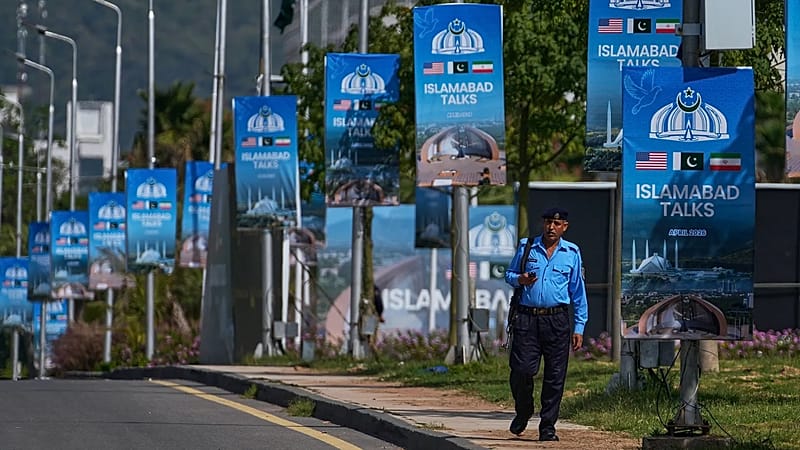
US special envoy Steve Witkoff and Jared Kushner are scheduled to travel to Pakistan on Saturday for a second round of peace negotiations with Iran, according to White House Press Secretary Karoline Leavitt. The delegation is set to depart Washington in the morning, as reported by Fox News.
Vice President JD Vance will not be present during these talks but will remain on standby in case his involvement becomes necessary. Leavitt emphasized that Vance is deeply engaged in the process and is prepared to fly to Pakistan if required. She added, “Everyone will be on standby to fly to Pakistan if necessary.”
On Friday evening, Pakistan’s government announced that Iran’s Foreign Minister Abbas Araghchi had arrived in the country. However, shortly after his arrival, Iran clarified that any discussions would be indirect, with messages being conveyed to Pakistani officials rather than direct talks.
Araghchi met with Pakistan’s Foreign Minister Ishaq Dar and Army Chief Field Marshal Asim Munir late on Friday. On Saturday morning, he also met with Munir and Pakistan’s Interior Minister Mohsin Naqvi, according to officials.
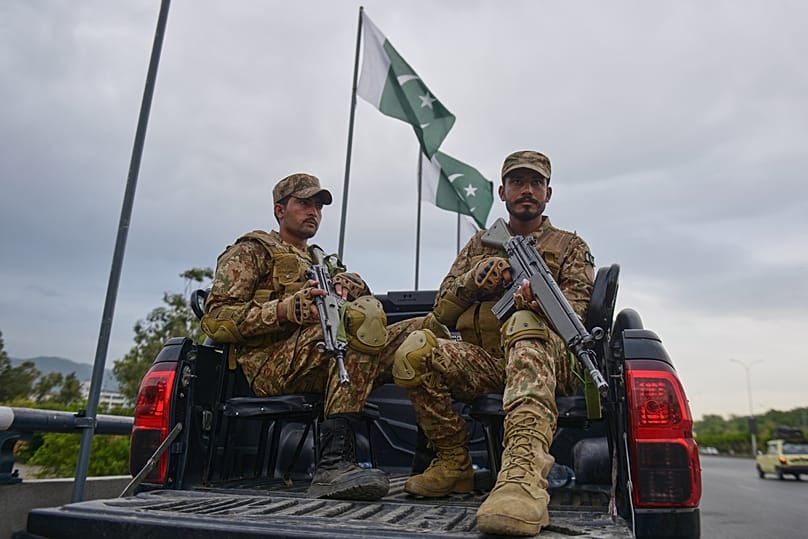
Islamabad was under heightened security on Friday, with checkpoints throughout the city and road closures in the “red zone” around the expected negotiation venue. Pakistan has taken on the role of mediator in efforts to end the ongoing conflict. However, following a long session of talks on 11 April, Tehran has yet to send a delegation to Islamabad for a second round of discussions.
It remains unclear whether US Vice President JD Vance or other senior US administration officials will return to Pakistan, weeks after Vance announced he was leaving without reaching an agreement. According to a Pakistani official source, US logistics and security teams are still present in Islamabad.
On Friday, Iran confirmed that Araghchi had held phone calls with Pakistan’s army chief Asim Munir and Foreign Minister Ishaq Dar, both of whom played significant roles in previous mediation efforts.
Ongoing Tensions and Diplomatic Efforts
Meanwhile, US Secretary of Defence Pete Hegseth warned Iran to “make a good, wise deal” ahead of a potential second round of peace talks between Washington and Tehran, which could take place in Pakistan on Friday night. His comments echoed those of US President Donald Trump, who recently stated that Washington is not “anxious” to reach a peace deal, adding, “We have all the time in the world.”
Speaking at the Pentagon, Hegseth reiterated that the US blockade of Iranian shipping will continue “as long as it takes” to achieve Washington’s “bold and dangerous” mission to neutralize Tehran’s threat to global security. He claimed that the blockade has so far turned back 34 ships, although ship-tracking data indicates that Iran has managed to move some of its sanctioned oil.
Lloyd’s List Intelligence reported a steady flow of shadow fleet traffic in and out of the Persian Gulf, including 11 tankers with Iranian cargo that have left the Gulf of Oman outside the strait since 13 April.
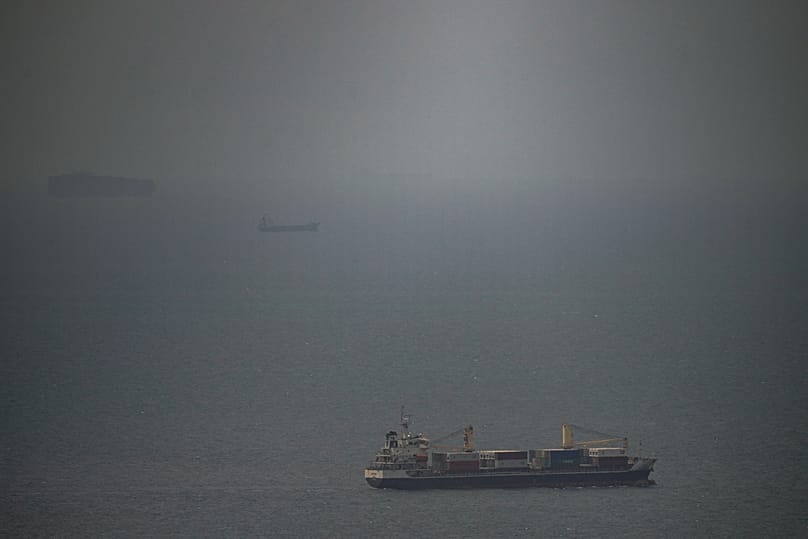
Hegseth also criticized US allies in Europe for what he described as “freeriding” by not using their own forces to open the Strait of Hormuz, which has been closed since the Iran war began on 28 February. He argued, “We are not counting on Europe, but they need the Strait of Hormuz much more than we do.”
He dismissed a recent European summit in Cyprus, suggesting that US allies “might want to start doing less talking” instead of holding “a silly conference.”
Iran’s actions to block the strait have disrupted global energy supplies, particularly in Europe, and caused energy prices to rise worldwide. French President Emmanuel Macron stated that the US cannot complain about a lack of support “in an operation they chose to undertake alone.”