South Carolina’s measles outbreak, the most significant in the United States in 35 years, has finally come to an end, according to public health officials. The outbreak affected 997 individuals, with the majority being unvaccinated children aged between 5 and 11. This trend was also observed across the country, where the majority of measles cases were reported among unvaccinated people.
Vaccine hesitancy and the spread of misinformation have played a key role in these outbreaks, putting America’s long-standing elimination status of measles at risk. Dr. Edward Simmer, the interim director of the South Carolina Department of Public Health, emphasized that without the support of a diverse group of dedicated individuals, the number of cases could have been much higher, potentially leading to more hospitalizations or even deaths.
He described the state’s response as “textbook,” but also assured that the department is prepared for any future outbreaks. An outbreak is considered over after 42 days without new infections. Simmer warned that while the outbreak has ended, measles remains a threat, and the best way to prevent it is through the measles-mumps-rubella (MMR) vaccine, which is safe and 97% effective.
Of the 997 cases, 932 individuals were unvaccinated. However, during the outbreak, which spanned from October 2025 to March 2026, more than 81,000 vaccinations were administered—representing a 31.3% increase compared to the previous year, according to the department.
Health officials credit this rise in vaccination rates for helping to bring the outbreak under control. Dr. Brannon Traxler, the department’s deputy director and chief medical officer, highlighted the effectiveness of vaccination combined with other public health measures in combating highly contagious viruses.
Similar efforts were seen in West Texas, where officials declared the end of their outbreak in August. They emphasized the importance of vaccination as part of a comprehensive response that included testing, disease monitoring, and public education through awareness campaigns.
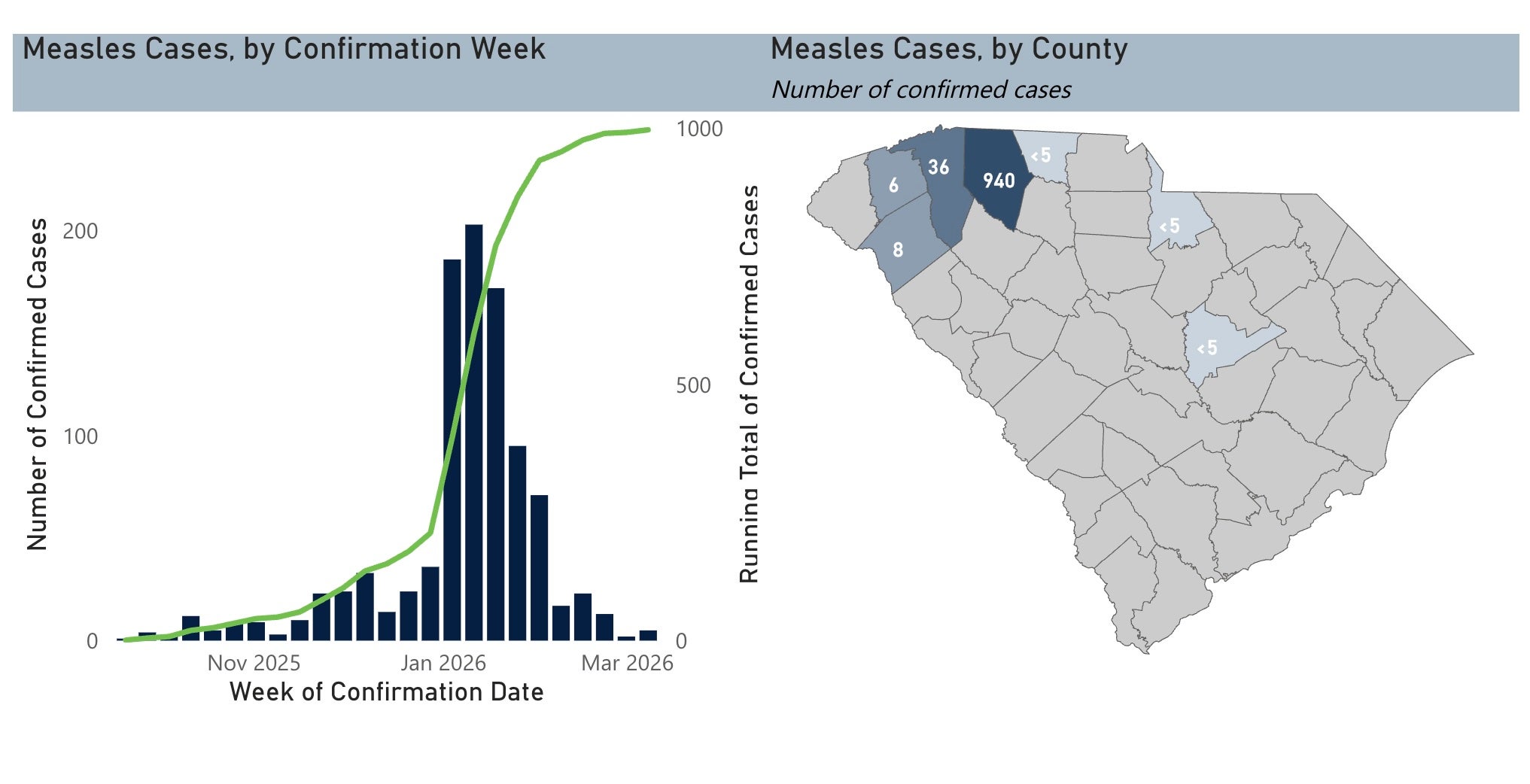
The majority of cases in both states were reported among young children. In South Carolina, fewer than 100 cases involved adults, while 264 cases were in children under the age of 5 and 639 were aged 5–17. Children are particularly vulnerable to severe infections, yet they also make up the largest portion of measles cases nationwide.
According to data from the U.S. Centers for Disease Control and Prevention, 917 of the 1,792 cases reported this year were in children and teens aged 5–19, and 385 were in kids under the age of 5. This highlights the critical role of vaccine skepticism in the spread of the disease.
To prevent the spread of measles, vaccination rates need to be above 95%. However, national coverage is currently at 93%, according to Johns Hopkins University. The CDC reports that childhood vaccination rates have been declining in recent years, with personal and religious exemptions reaching record levels.
A study by the Johns Hopkins Bloomberg School of Public Health found that these exemptions have reached an all-time high within the last year. Dr. William Moss, executive director of the International Vaccine Access Center, stressed the need to rebuild public trust in vaccines to reverse the decline in immunization rates.
“If more parents choose not to vaccinate their children for non-medical reasons, we will likely see more disease outbreaks,” he said.
Independent readers are known for their independent thinking and global perspective. They are not defined by traditional demographics but by their attitudes and values. In today’s fragmented world, communities seek real facts and honest opinions from reliable news sources. Empowered by information and inspiration, these readers take a stand for the issues they care about.