Pulitzer Prizes Recognize Excellence in Journalism and the Arts
The prestigious Pulitzer Prizes have once again celebrated outstanding achievements across a range of disciplines, from literature to investigative journalism. This year’s awards highlight remarkable works that push creative boundaries and shed light on critical societal issues.
Fiction and Drama Awards
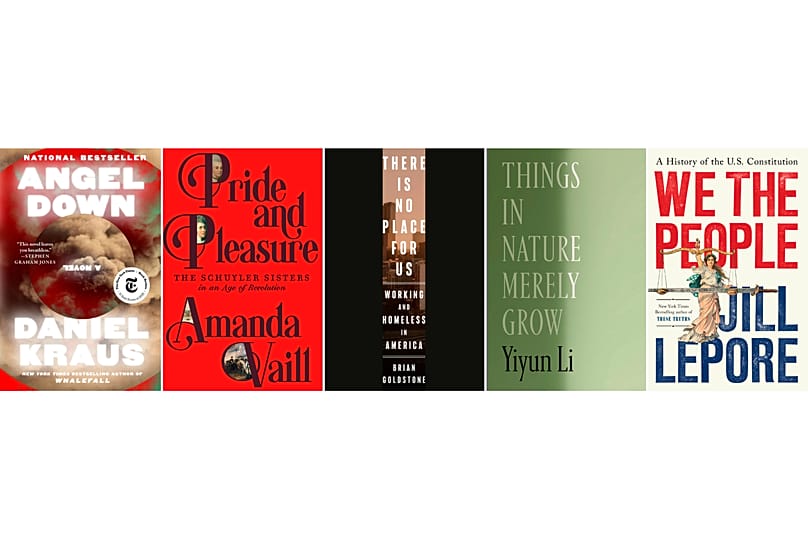
Daniel Kraus was awarded the fiction prize for his novel “Angel Down,” which presents a unique narrative structure by unfolding over 300 pages in a single, continuous sentence. The story follows an army private who encounters an angel on the battlefield, blending genres such as allegory, magical realism, and science fiction into a cohesive whole. Kraus is known for his work in horror and science fiction, and has collaborated with renowned filmmakers like George Romero and Guillermo del Toro.
Bess Wohl’s play “Liberation” won the drama prize for its exploration of 1970s feminist consciousness-raising groups. The play confronts themes of misogyny, homophobia, and gender roles, offering a powerful commentary on social dynamics.
Other Literary Honors
Jill Lepore received the history prize for her book “We the People: A History of the US Constitution,” while Amanda Vaill was recognized for her biography “Pride and Pleasure: The Schuyler Sisters in an Age of Revolution.” Yiyun Li’s memoir “Things in Nature Merely Grow,” which reflects on the loss of her two sons, was honored in the memoir-autobiography category. Brian Goldstone’s nonfiction work “There is No Place for Us: Working and Homeless in America” won the general nonfiction prize.
Juliana Spahr was awarded the poetry prize for “Ars Poeticas,” and American pianist and composer Gabriela Lena Frank received the music award for her symphonic work “Picaflor: A Future Myth.”
Investigative Journalism and Public Service
The Pulitzer Prizes also recognized significant contributions to journalism, particularly in the context of coverage related to the Trump administration. The Washington Post was awarded the public service journalism prize for its in-depth reporting on the chaotic efforts to reconstruct the US federal bureaucracy under the Trump administration.
The New York Times received the investigative reporting prize for its series exposing how Trump exploited the money-making opportunities that come with power, enriching his family and allies. The Chicago Tribune was honored for its vivid reporting on the impact of federal immigration agents in a midwestern city during Trump’s crackdown on undocumented migrants.
In the local reporting category, the Connecticut Mirror and ProPublica were recognized for their investigation into unscrupulous vehicle towing practices. Miami Herald reporter Julie K. Brown received a special citation for her groundbreaking reporting on convicted sex offender Jeffrey Epstein.
International and National Reporting
Reuters was honored in the national reporting category for its coverage of Trump’s use of executive power and the influence of his supporters in exacting vengeance on his foes. The Associated Press received recognition in the international reporting category for its reporting on the US government’s allowance of surveillance technology sales to China.
The San Francisco Chronicle was awarded the explanatory reporting prize for its series on the aftermath of the LA fires, highlighting how insurers undervalued properties lost to fires and denied homeowner claims.
Breaking News and Feature Writing
Reuters scooped the beat reporting prize for its inventive and revelatory coverage of Meta’s exposure of users to scams and AI manipulation. The Minnesota Star Tribune was awarded the breaking news reporting prize for its coverage of a shooting at a Catholic school, bringing attention to the prevalence of gun violence in the US.
Aaron Parsley of Texas Monthly won the feature writing prize for his account of the Central Texas floods that destroyed his home and killed his nephew.
Legacy of the Pulitzer Prizes
Established in the will of newspaper publisher Joseph Pulitzer, the Pulitzer Prizes were first awarded in 1917. Winners receive $15,000, and the public service award carries a gold medal. Decisions are made by the Pulitzer Board, based at Columbia University in New York.