New Study Reveals That Dreams Can Happen While We Are Awake
You might think that dreams are something that only happens during deep sleep, but a new study suggests otherwise. Researchers have discovered that people can experience vivid, bizarre, dream-like occurrences even while they are awake. This finding challenges the traditional view of dreaming as something that only occurs during sleep.
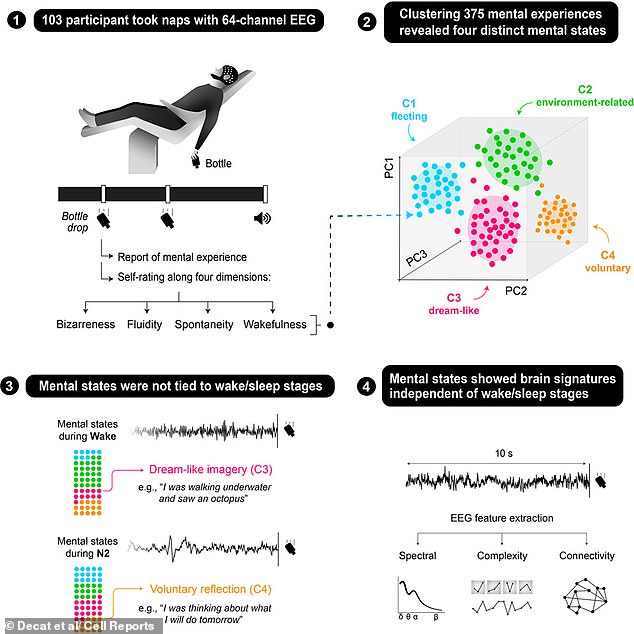
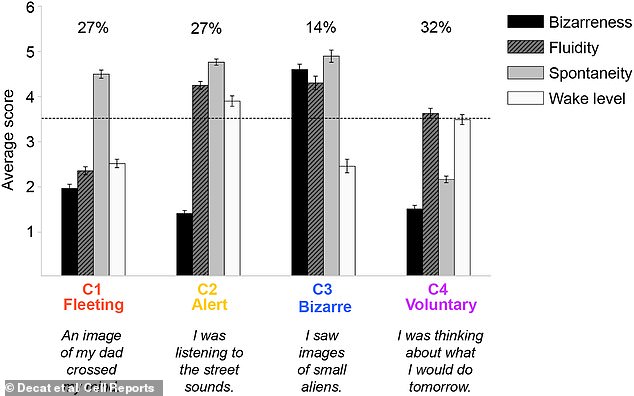
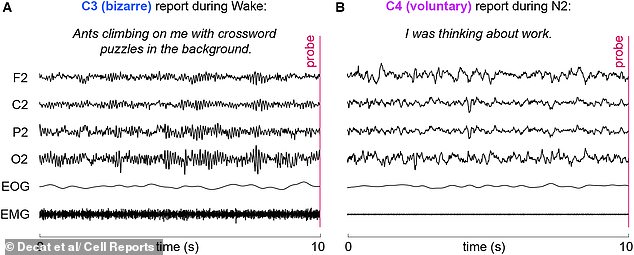
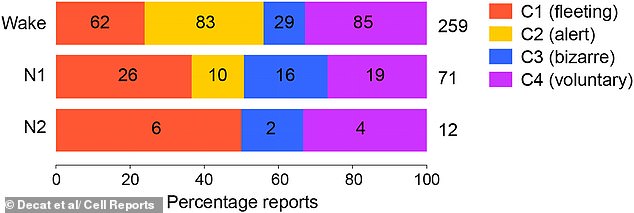
The study found that there are four distinct mental states that exist between wakefulness and sleep. These states were named fleeting, alert, bizarre, and voluntary. The researchers believe these mental states are linked to specific brain activity patterns rather than whether a person is technically awake or asleep.
Nicolas Decat, the first author of the study from the Paris Brain Institute, explained that the content of our thoughts doesn’t follow the boundaries between waking and sleep. He shared an example where one participant saw ants crawling on her body while she was awake, and another participant mentally went through his schedule for the next day while he was fully asleep.
Understanding the Four Mental States
To conduct their research, the team recruited 92 participants who were used to napping. Their naps were interrupted at different time points, and they were asked to describe their mental experiences from the previous 10 seconds. Throughout the study, their brain activity was recorded using an EEG cap.
The analysis revealed that there are not just two mental states—dreaming and awake—but four in total. Each of these states appeared across wakefulness, the onset of sleep, and light sleep.
The four distinct mental states are:
- Fleeting: Momentary recollections, such as memories of a deceased loved one
- Alert: A high level of connection to the surrounding environment
- Bizarre: Weird visions, such as seeing aliens
- Voluntary: A high level of control over what they are thinking, such as planning a to-do list for the next day
The Role of Sleep Onset
According to Mr. Decat, sleep onset allows researchers to capture fluctuations in our state of vigilance, from wakefulness to sleep, and observe the mental experiences associated with them. As we drift toward sleep, sensations, visions, and snippets of speech unfold—what are commonly called hypnagogic experiences.
Tracing the evolution from ordinary thought to dream-like narrative can help us understand how a dream emerges. The researchers said most people believe that extravagant mental content only occurs in the depths of the night. However, this preconception probably stems from a memory bias.
“We mainly remember dreams that come with strong emotions or those to which we attach particular meaning,” Mr. Decat added. “Yet it is just as common to dream that we are working. Conversely, some people report that fanciful daytime thoughts, like fragments of a dream, sometimes surface during their everyday activities.”
Dreams as a Mental Practice Space
A separate study recently found that dreams may be preparing us for the challenges of daily life. Researchers discovered that dreams tend to reflect everyday goals that shape human life, including staying safe, building relationships, and caring for family.
By experiencing these scenarios in our sleep, we are training ourselves to deal with them in the real world, according to the experts. Frederick Thomas, an assistant professor of psychology at Coker University, said, “The findings suggest that dreams may act like a kind of mental ‘practice space,’ where the mind works through real-life social challenges—helping us prepare for situations involving relationships, reputation, survival, and caregiving.”
How to Interpret Your Dreams
The meaning of dreams will vary depending on your personal associations and experiences. Sarah Bick, a clinical and cognitive hypnotherapist, offers some tips on interpreting your own unique dreams:
- Write down the dream in detail as soon as you wake.
- Make free associations to what each of the dream elements mean to you. Don’t research it; instead, ask yourself what comes to mind first when you think of, say, a rabbit. Fast, white, magician, magic? Or perhaps underground, family, babies, running away?
- Connect the dream to what is happening in your own life. What resonates as being true for you?
- Interpret the dream, combining what you’ve written into a coherent message, until it gives you an ‘aha’ moment. Dreams rarely go over material that is resolved, rather that which is yet to be solved.