The Challenge of Fire on the Moon
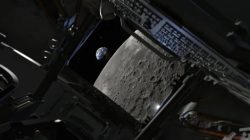
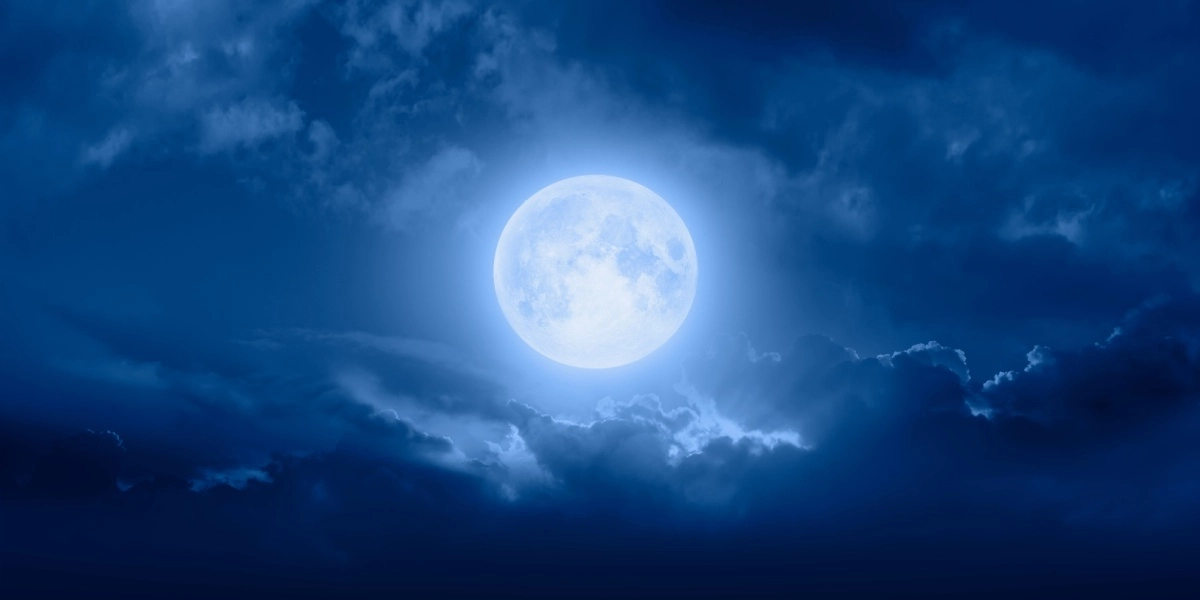
As NASA prepares for long-term human missions to the Moon, researchers are facing a critical question: what happens if astronauts accidentally start a fire? The answer is more complex than it seems. On the Moon, flames may behave in ways that are impossible to replicate on Earth, including burning longer, spreading differently, and becoming harder to extinguish.
Fire Without Gravity
On Earth, gravity plays a significant role in how fire behaves. Hot gases rise upward, pulling fresh oxygen into the base of the flame through convection currents. In some cases, this airflow can even destabilize and extinguish flames through a process known as “blowoff.” However, the Moon’s gravity is only about one-sixth as strong as Earth’s.
According to researchers from NASA’s Glenn Research Center, Johnson Space Center, and Case Western Reserve University, this weaker gravity dramatically changes the airflow around flames. Oxygen still moves, but far more slowly. That means some materials that are only mildly flammable on Earth could potentially continue burning for much longer on the Moon because oxygen keeps feeding the flame without the same destabilizing airflow.
For future lunar habitats packed with electronics, oxygen systems, and enclosed living quarters, this creates a major safety problem.
Earth Tests Fall Short
NASA has relied for decades on a flammability standard known as NASA-STD-6001B to evaluate materials used during spaceflight. The test is straightforward: a flame is applied to a vertically mounted material sample, and researchers observe whether the fire spreads or produces burning debris.
The issue is that the entire test happens under Earth gravity. In space or low-gravity environments, flames behave completely differently. On the International Space Station, for example, fires form slow-moving spherical flames rather than rising upward. Ventilation systems become the primary factor controlling how fires spread, not gravity itself.
Science Alert details how NASA researchers have already conducted more than 1,500 small combustion experiments aboard the ISS to better understand microgravity fires. But larger-scale tests are considered too dangerous for a crewed station. That led NASA to launch the Saffire experiments inside uncrewed Cygnus spacecraft after they detached from the ISS.
Strange Flame Behavior
The Saffire tests revealed several unexpected behaviors. Researchers observed flames spreading against airflow directions, while thinner materials sometimes burned more intensely than thicker ones. The experiments highlighted how poorly traditional Earth-based testing predicts combustion in space environments.
Short-duration drop towers and parabolic aircraft flights also proved insufficient because they only provide seconds of weightlessness, limiting researchers’ ability to study long-term fire behavior. NASA is now preparing what may become the agency’s most important fire experiment yet: directly setting controlled fires on the Moon itself.
Burning on the Moon
The upcoming Lunar Flammability of Materials experiment, known as FM2, will send an autonomous chamber to the lunar surface carrying four solid fuel samples. Inside the sealed chamber, the materials will be ignited under real lunar gravity conditions — something scientists currently cannot reproduce anywhere on Earth.
The experiment will use cameras, oxygen sensors, and radiometers to monitor exactly how the flames spread, evolve, and consume material in real time. The goal is to gather the first direct data on combustion under lunar conditions before astronauts establish long-term habitats during future Artemis missions.
Understanding those dynamics could ultimately shape everything from spacecraft interiors to habitat construction materials and emergency fire protocols for future Moon bases. Because on the Moon, even a small fire may behave unlike anything humans have ever encountered before.