
A Groundbreaking Advance in Women’s Health Research
A significant development in women’s health research is gaining international attention at a time when the field still struggles for equal scientific investment. Medical researchers and advocates have consistently highlighted that women’s health remains one of the most underfunded areas in modern healthcare. Conditions related to reproductive, hormonal, and gynaecological health have historically received far less scientific attention compared to many illnesses that predominantly affect men.
According to a study cited by Imperial College London, only a small proportion (two per cent) of public research funding is directed towards pregnancy, childbirth, and female reproductive health—despite women making up half the population. Against this backdrop, a breakthrough in female reproductive science has received global recognition for its potential to advance research without relying on animal testing.
On 12 May, Harvard scientist Dr Zohreh Izadifar will be awarded the £50,000 Lush Prize for Science at a ceremony in London, acknowledging her work in developing alternatives to animal experimentation. Dr Izadifar leads the development of the Cervix Chip and sensor-integrated system and has contributed to a broader multidisciplinary team effort in creating Organ-on-chip models of the female reproductive tract. The Vagina Chip was led by other members of the research team, with Dr Izadifar contributing as part of the wider collaboration.
The annual prize supports researchers pioneering cruelty-free scientific methods and has awarded millions of pounds to projects around the world since its establishment in 2012.
Innovations in Reproductive Health Technology
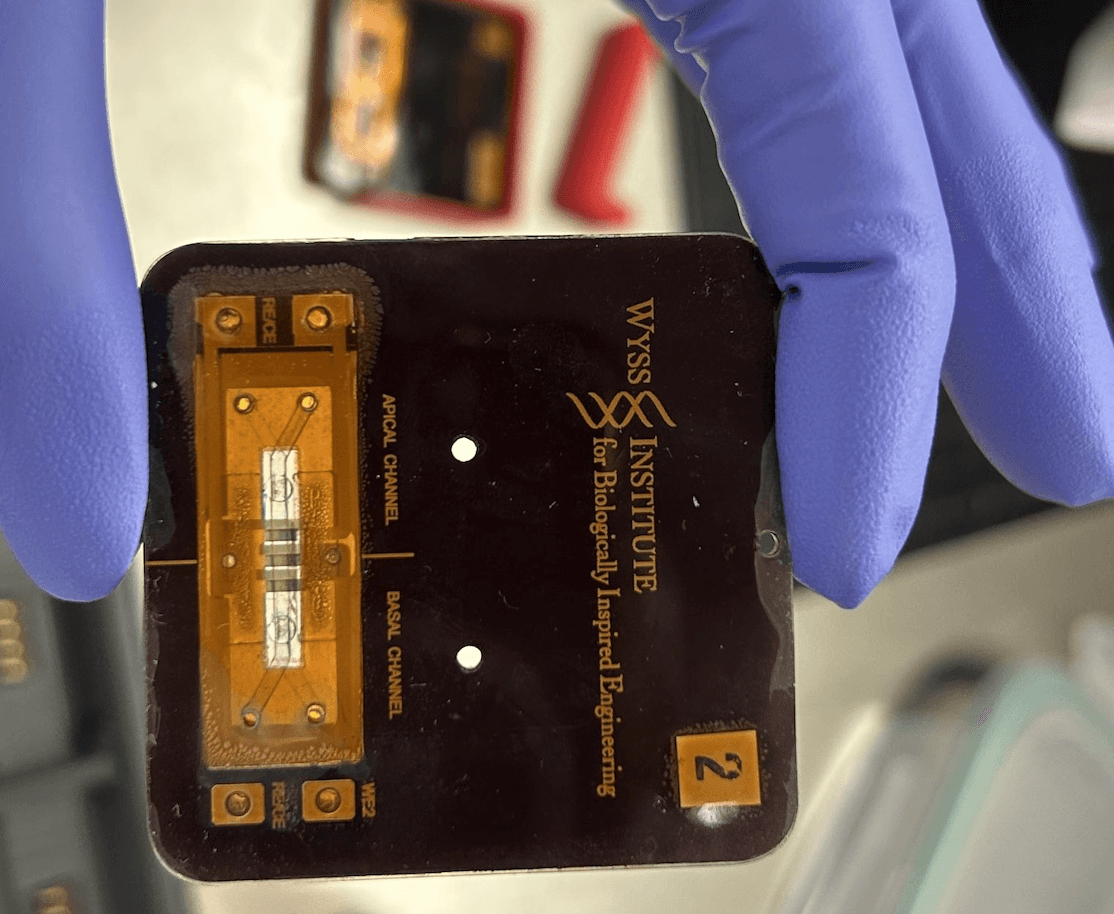
Dr Izadifar and her team have developed an “organ-on-chip” device small enough to fit in the palm of a hand, designed to replicate the biology of human vaginal and cervical tissue. These technologies are the result of collaborative, multidisciplinary work involving multiple researchers, with different team members leading specific components of the Organ-on-chip platform.

Equipped with tiny electrical sensors, the microchip enables scientists to observe how human cells respond in real time to hormones, beneficial bacteria, and infections. Researchers say the technology could help deepen understanding of vaginal health, infertility, and the causes of pre-term birth.
“By using the Organ-on-chip platform, we created the first human Cervix and Vagina Chip models that faithfully replicate how these tissues function, including responses to hormones, beneficial bacteria, and infections, key aspects of women’s reproductive health,” Dr Izadifar, Female Reproductive Health Team, Wyss Institute of Harvard University, shared.
“These models are already enabling breakthroughs in understanding infection, fertility, and disease, while accelerating the development of safer, more effective treatments – offering a scalable path to replace animal testing and improve global women’s health outcomes.”
Addressing Gaps in Scientific Research
Judges said the project stood out in part because it focuses on women’s health, which remains an underrepresented field. Experts have long argued that progress in female reproductive medicine has been slowed by the limitations of animal testing, particularly because commonly used laboratory animals do not accurately reflect human biology.
Mice, for instance, do not menstruate or undergo menopause, and differ substantially from humans in hormonal and vaginal microbiome processes, making it harder for researchers to draw reliable comparisons.
This year’s Lush Prize ceremony also recognises campaigners, scientists, and early-career researchers from across the world working to develop alternatives to animal testing, with total awards amounting to £250,000.
The Future of Women’s Health Research
The advancements made by Dr Izadifar and her team represent a critical shift in how researchers approach women’s health. By focusing on human biology rather than animal models, these innovations offer a more accurate and ethical way to study reproductive health. This could lead to better treatments for conditions such as infertility, infections, and pre-term birth, ultimately improving health outcomes for women globally.
As the field continues to evolve, the importance of investing in women’s health research cannot be overstated. With continued support and innovation, there is hope for a future where medical research is more inclusive, accurate, and effective for all.