The Summer Patio Dilemma: A Guide to Avoiding Design Fails
As the UK braces for a four-day dry spell with temperatures reaching up to 24 degrees, it’s clear that summer is just around the corner. With the season in full swing, many homeowners are turning their attention to sprucing up their outdoor spaces. Nowhere is this more evident than in the patio—a key area of any garden that offers both practicality and aesthetic appeal.
Patios can be the perfect spot for enjoying morning coffee or hosting evening dinners under the sun. However, getting the design right is crucial. While a new patio can offer a fresh look, it can also come with a hefty price tag. High-end materials often lead to significant expenses, prompting many to consider DIY options like laying their own stones or even painting weathered ones. But according to design experts, these quick fixes can sometimes do more harm than good.
Cheap and Cheerful: Concrete Squares on Pebbles
For those looking for a budget-friendly option, concrete squares on pebbles might seem like an attractive choice. It’s a quick project that can be completed in a few hours with minimal effort. However, this approach isn’t without its drawbacks.
Jordana Ashkenazi, Design Director and Founder of Element One House, warns that this style often feels temporary and can date a space quickly. “Concrete slabs scattered over pebbles always feel a bit temporary to me,” she says. “It has that DIY, budget-garden look that can instantly date a space.”
While larger-format concrete slabs paired with the right size and colour pebbles can look modern and relaxed, most people get the proportions wrong. Tiny stepping stones with bright white pebbles rarely look high-end. Done properly, it can feel contemporary, but done badly, it just feels unfinished.
The Middle-Class Favourite: Resin Patios
Resin patios have become increasingly popular, especially among middle-class homeowners. This material combines natural aggregate with polyurethane resin, offering a durable and functional surface. However, they come with their own set of challenges.
According to Jordana, resin patios are the Range Rover Sport of the garden world—sleek, practical, and expensive. “They absolutely have their place, especially for families wanting low maintenance and good drainage,” she says. “But personally, they’re not something I’d usually specify on a design project.”
Choosing the right colour is essential. Some warmer orange-toned or speckled mixes can date a property and make the garden feel more like a commercial driveway. The surrounding landscaping also plays a crucial role. If the fencing, planting, and furniture aren’t elevated enough, resin can look flat and harsh.
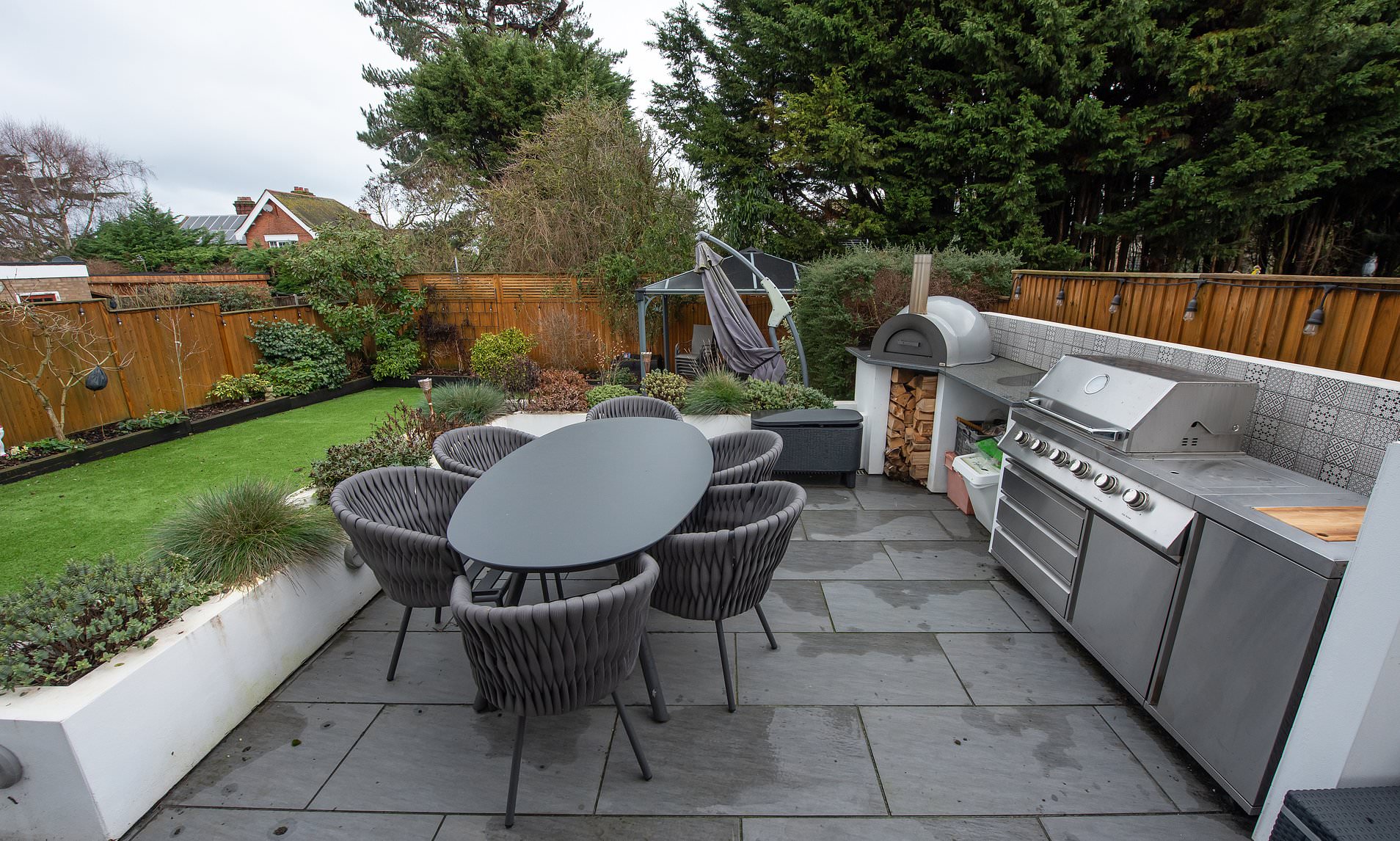
Grey-Ve Mistake: Slate Patios That Only Look Good in the Rain
The ‘make everything grey’ trend from two decades ago is still prevalent in many gardens. Many first-time homeowners and thirtysomethings are drawn to the slate grey expanses seen on patio company websites and Pinterest. However, there’s a reason those who lay black limestone slabs run a hose over it before taking photos for their Instagram page.
Grey patios look like leaden skies when they’re dry, says Jordana. “Grey had a huge moment in the late 90s and early 2000s because it felt sleek and contemporary at the time, but now it can feel cold and a little lifeless unless it’s balanced properly.”
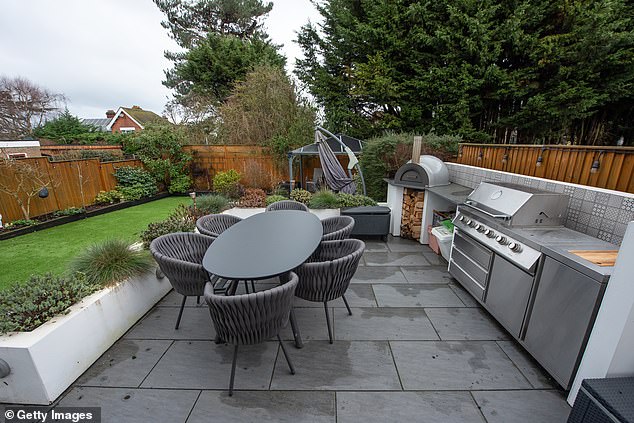
Posh Paving: Crazy Paving Works – But Only If You Live in the Country
Crazy paving, which originated in Ancient Rome, was a huge hit in England during the Seventies. This haphazard technique involves different sizes of natural stone laid in a mortar bed. While it has largely fallen out of fashion, it still works well in posh, rural communities.
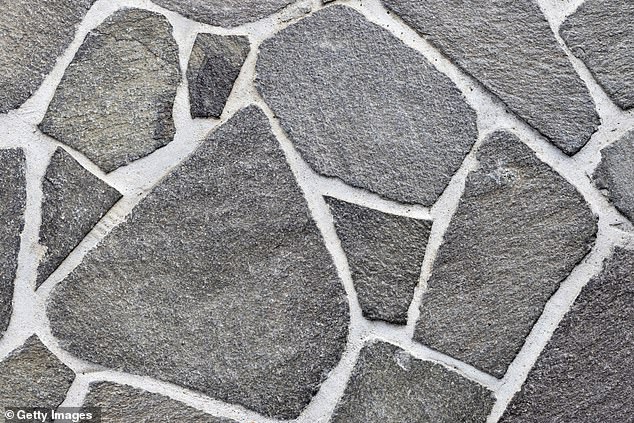
Jordana says that when done with beautiful natural stone in the right setting, crazy paving can look incredibly expensive and timeless. “It works brilliantly in country homes, period properties and Cotswolds-style gardens surrounded by greenery and character. In a modern suburban garden though, it can quickly veer into ‘1970s bungalow patio’ territory.”
Outdoors In: Matching an Open Plan Kitchen with a Porcelain Patio
Porcelain tiles in creamy shades are becoming increasingly popular for patios. They look divine and can create a seamless transition between indoor and outdoor spaces. “Beige porcelain paving is hugely popular for a reason because it instantly makes a garden feel brighter, cleaner and more expensive,” explains Jordana.
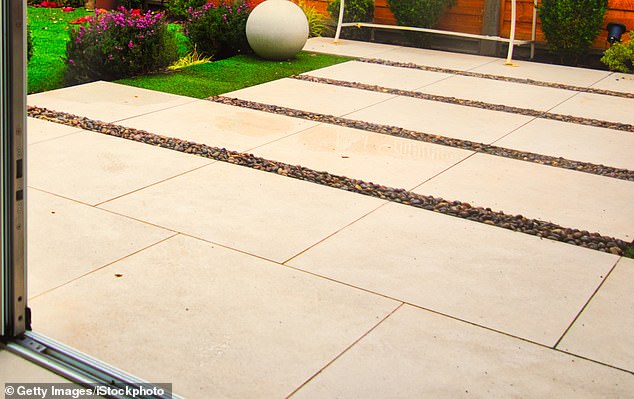
However, there are practical considerations. Porcelain can be slippery, especially in winter or during heavy rain. Lighter porcelain can also go green quickly in damp British gardens. While it looks beautiful when freshly installed, it definitely comes with maintenance and practical considerations.
Is the Painted Patio Beyond the Pale?
Painting patio slabs might seem like a quick fix, but it’s not a long-term solution. “Painted patio slabs are one of those ideas that look fun on Pinterest for about five minutes before reality kicks in,” says Jordana. “They chip, fade, stain and almost always end up looking like a temporary cover-up rather than an actual design decision.”
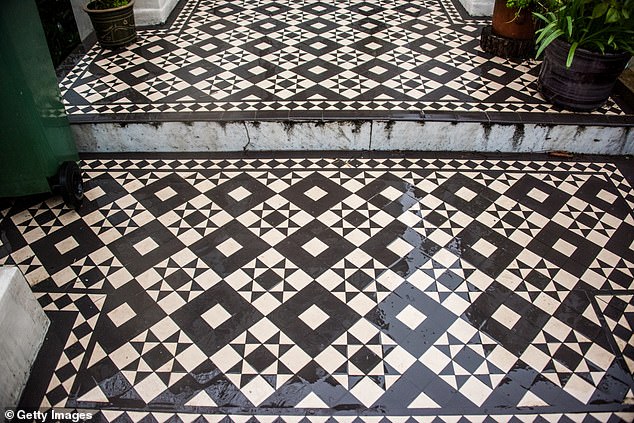
Go Bold, Go Indoors: Geometric Tiles
Geometric tiles might have looked cool at a trendy five-star hotel, but they don’t always translate well to outdoor spaces. “They photograph beautifully and instantly make an outdoor space feel more designed,” says Jordana. “The problem is they’re already starting to date.”
These tiles work better in smaller doses, such as bathrooms or boutique hospitality spaces, rather than across an entire patio. Outdoor areas should generally feel calming and timeless, not visually exhausting.
No Patio Required: Decking and Fake Grass?
Traditionalists may want to look away, but many homeowners are opting for decking and fake grass for convenience. However, this isn’t without its issues.
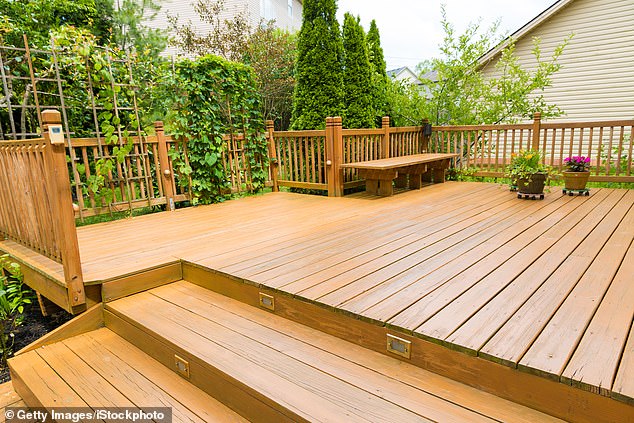
Decking can become high-maintenance after a few British winters, warping, fading, and growing moss and weeds. “I’ve also seen clients end up with rodents nesting underneath raised decking,” says Jordana. “It’s enough to put anyone off for life.”