A New Hope for Stroke Patients
Scientists in Hong Kong have made a groundbreaking development with the creation of the world’s first nasal spray designed to protect brain cells immediately after a stroke. This innovation is being hailed as a potential “emergency rescue tool” that could revolutionize the treatment of this devastating condition.
Stroke remains one of the leading causes of death and disability globally, placing an enormous burden on healthcare systems. The annual cost associated with stroke exceeds $890 billion, highlighting the urgent need for more effective treatments. Current stroke treatments typically begin after a patient is admitted to the hospital and involve clot-breaking drugs and reperfusion therapies aimed at restoring blood flow to the brain. However, the window for effective intervention is extremely narrow, meaning that over 85% of patients do not receive timely treatment.
Many drugs targeting the brain in clinical trials also face significant challenges. They often fail because they cannot cross the brain’s protective barrier, which is essential for keeping infectious germs out of the organ. Developing timely interventions that are both effective and safe within the critical “golden therapeutic window” remains a key challenge in stroke treatment.
Aviva Chow Shing-fung from Hong Kong University explained that the failure rate of drug candidates targeting the central nervous system in clinical trials exceeds 90%. This is largely due to their inability to cross the blood-brain barrier, preventing them from reaching the brain to exert their therapeutic effects.
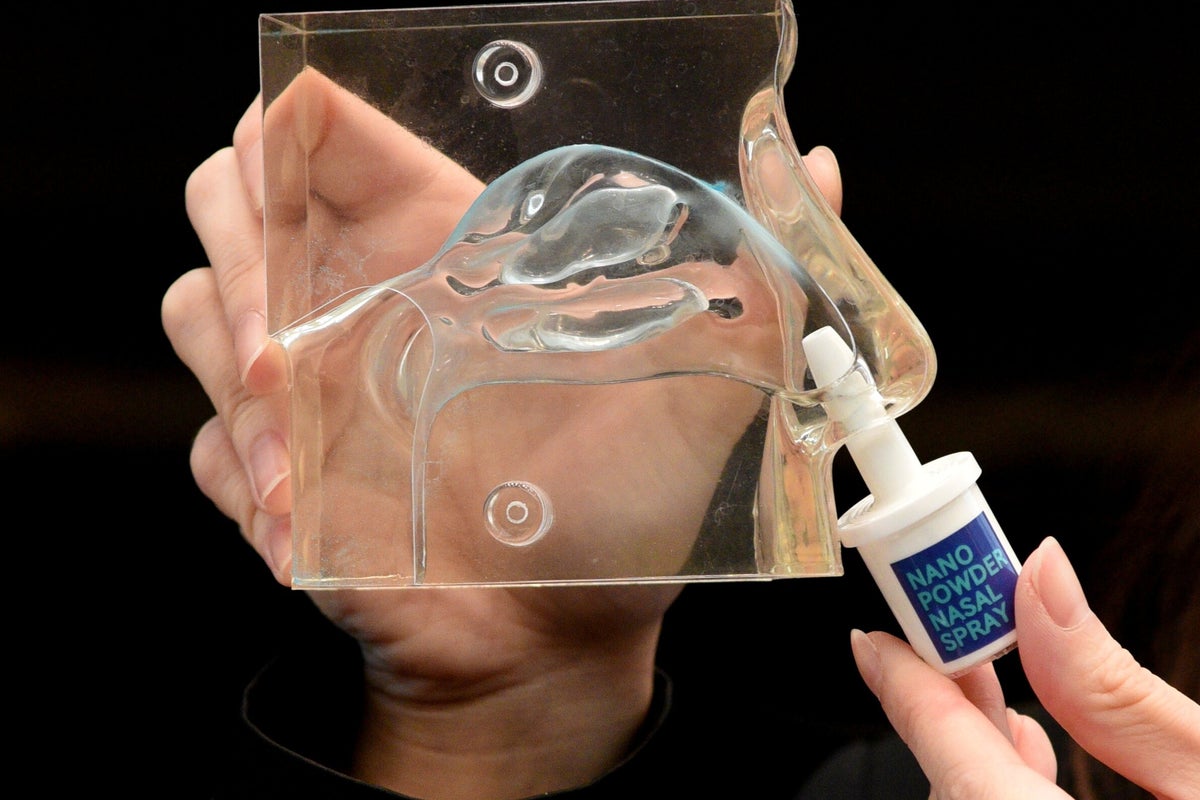
To address this issue, scientists have developed the “Nanopowder” nasal spray, which contains brain-protective drugs in the form of ultra-small inhalable powders. When inhaled into the nasal cavity, the spray deposits effectively in the target area and separates into nanoparticles. These tiny particles then travel along the nose-to-brain pathway, bypassing the blood-brain barrier to deliver the drug directly to the brain, according to researchers.
This nasal spray offers early protection while patients are en route to the hospital, significantly slowing the death of brain cells immediately after a stroke. It provides valuable time for subsequent interventions, potentially serving as a breakthrough solution for prehospital emergency treatment of stroke.
Research has shown that administering the nasal spray within 30 minutes of a stroke can reduce the death of brain tissues by over 80% and protect neurological and body movement functions. The spray can also mitigate inflammation, prevent cell death, and preserve the integrity of the blood-brain barrier, potentially extending the time available for treatment.
Shao Zitong, a postdoctoral fellow at Hong Kong University, emphasized the importance of every second following a stroke. “Even an additional 10 minutes of brain protection might determine whether a patient can walk or speak in the future,” she said.
The key breakthrough of this technology lies in shifting stroke treatment from the “in-hospital” setting to the “prehospital” stage, enabling neuroprotection rather than merely focusing on clot dissolution or thrombectomy.