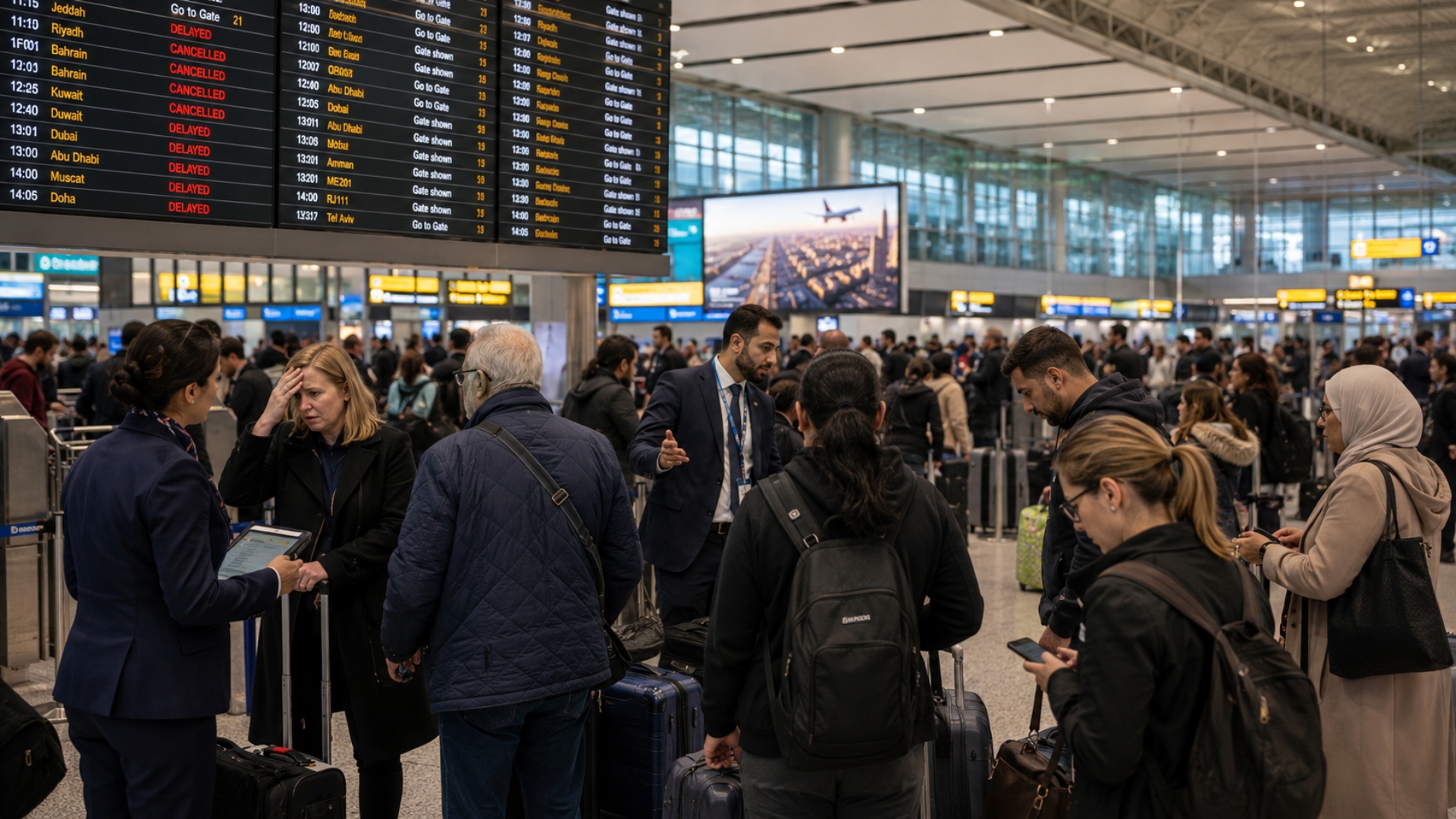
Heathrow Traffic Slips in April
Heathrow reported a 5% decline in passenger numbers in April, bringing the total to 6.7 million. This drop is considered one of the clearest indicators that the ongoing conflict in Iran is affecting international travel far beyond the Middle East. Despite this decline, Heathrow still described April as its busiest month of 2026 so far.
The decrease in traffic is significant because Heathrow is Britain’s busiest airport and one of the world’s largest long-haul hubs. When passenger numbers at Heathrow fall due to geopolitical instability, it often signals broader challenges for airline scheduling, passenger demand, and route planning. This conclusion is based on Heathrow’s size and the reported drop in April.
Middle East Routes Suffered the Most
The most severe impact was seen on flights connected to the Middle East. According to reports, traffic to and from the region fell by over 50% in April. This highlights how deeply the conflict has affected one of Heathrow’s key long-haul markets.
This decline is not just due to reduced demand. The war has disrupted airspaces, forced rerouting, and made some journeys longer or less predictable, which has affected the normal flow of passengers through major hubs. The Guardian linked Heathrow’s drop directly to cancellations, delays, and longer flight paths caused by the conflict.
London Gains from Rerouted Passengers
Not all travel metrics showed a decline. Reports indicated that transfer passenger numbers at Heathrow increased by 10% as some travelers chose to reroute through London instead of using Gulf hubs like Dubai or Doha.
This shift helps explain why the overall decline was noticeable but not more severe. While Heathrow lost traffic on certain routes, it also absorbed displaced demand from passengers seeking alternative ways to reach Asia and Oceania. This interpretation is based on the reported drop in Middle East traffic combined with the rise in transfer passengers.
Fuel Costs and Forecasts Now Under Scrutiny
The drop in passenger numbers is not the only concern for Heathrow. Reports suggest that fears about fuel supply disruptions have intensified, with jet fuel prices doubling year-on-year to $181 per barrel as markets reacted to the crisis around the Strait of Hormuz.
Reuters noted that Heathrow now expects the disruption to affect its full-year traffic outlook and plans to update its 2026 passenger forecast in June. Heathrow’s chief executive, Thomas Woldbye, described the impact as a short-term disruption, while still acknowledging that broader travel demand remains strong.
What Comes Next?
The next question is whether April marks a temporary dip or the beginning of a longer travel slowdown. If airspace disruptions ease and confidence returns, Heathrow could recover quickly. However, if the conflict continues, airlines may face a more challenging mix of weaker regional demand, higher fuel costs, and more complex route planning. This assessment is based on Heathrow’s planned forecast review and the reported war-related disruptions.
For now, the April data shows that the conflict is extending well beyond the battlefield. Heathrow’s numbers suggest that the Iran war is already reshaping how people travel, where they connect, and how major global hubs manage the fallout.