The Debate Over State of Origin and Club Football
The issue of players competing in both State of Origin and club football has long been a topic of discussion within the rugby league community. However, with the game becoming faster and more physically demanding than ever before, questions are now being raised about whether players are being placed at real risk for the sake of tradition and personal pride.
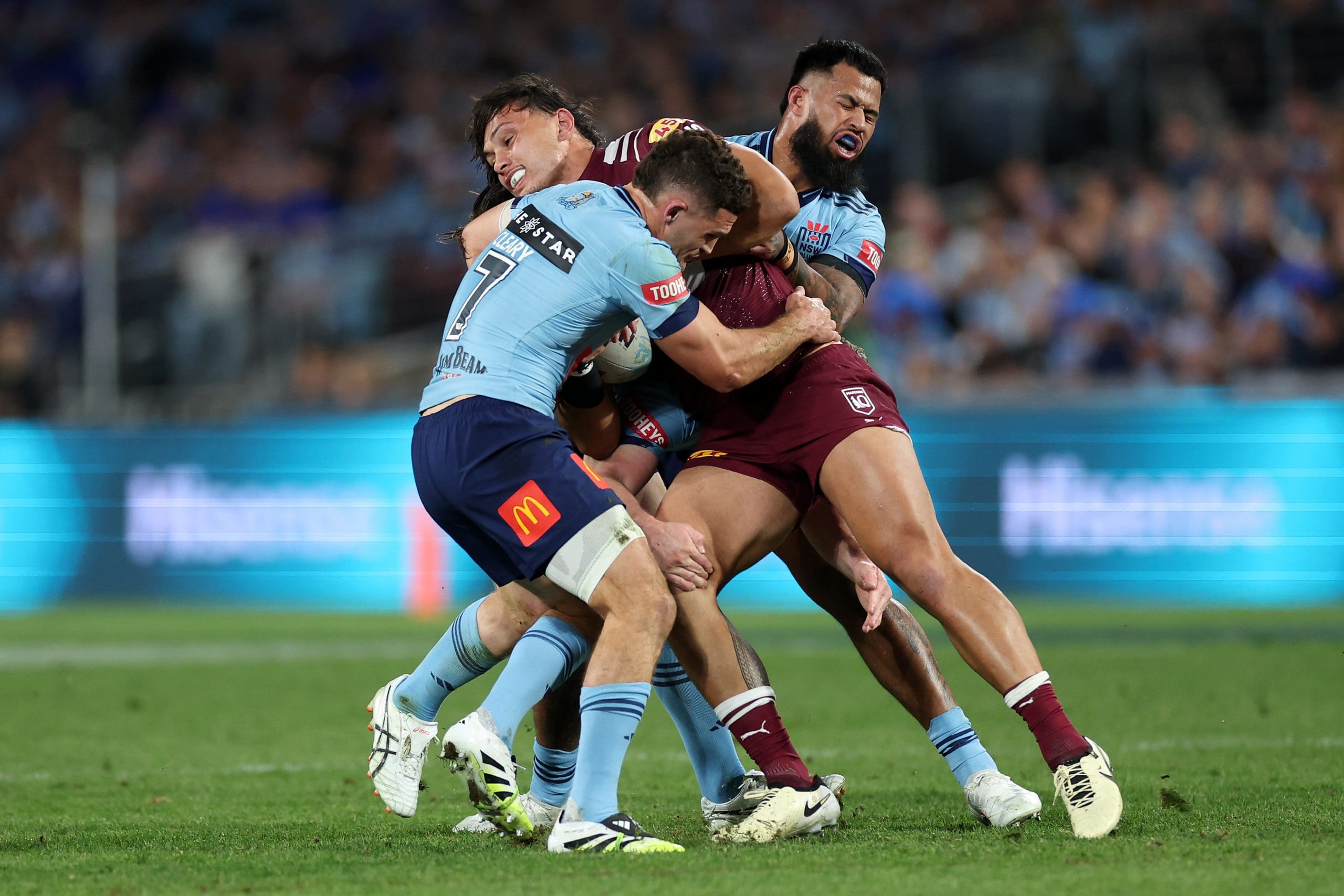
As the State of Origin series continues to overlap directly with the NRL season, concerns are growing that this period is not only the most challenging but also one of the most dangerous for players who are expected to return to club duties within 48 hours of representing their state.
Perspectives from Former Players
Ryan Hoffman, a former NRL premiership winner, believes the impact of this schedule is already evident in the quality of club football during the representative period. He discussed the timing of Origin with Chad Townsend on Zero Tackle’s The Boardroom NRL podcast.
“There’s a lot being said around how it affects clubland. And look, you’d be lying if it doesn’t,” Hoffman said on The Boardroom. “The quality of the games throughout the middle of the season, there is a bit of a dip.”
Hoffman questioned whether there could be a better way to manage the schedule. “Should it just be three weeks concurrently, and we pause the NRL season?” he asked Townsend.
The Physical Toll of Modern Rugby League
Chad Townsend, a former halfback, highlighted the increased physical demands of the modern game. He pointed out that factors such as the speed of play, six-again rulings, and reduced stoppages have made the recovery process after Origin more dangerous than in previous years.
“Yeah, look, I actually think it’s time now that change needs to happen,” Townsend said. “I think back to a game last season when Origin was on the Wednesday and then the Newcastle Knights played the Dragons on the Friday night, and Adam O’Brien rested Kalyn Ponga, and the Dragons played Valentine Holmes.”
Both teams were desperate, but O’Brien chose to rest his star players just 48 hours later. “The way that the game is played now, the speed of the game, the six again, the ball in play, how can you actually expect someone to play on a Wednesday night and then back up and play on a Friday night?” Townsend asked.
He added, “Like it’s mindblowing. Absolutely mindblowing. Like the risk that you put your players in from backing up now, and I know Hoffy, it is a badge of honour to back up after State of Origin. I absolutely applaud the toughness of the players. Sometimes you need to take that call out of their hands because you need to look after their long-term safety.”
A Shift in Perspective
Hoffman reflected on his own playing days, acknowledging that while backing up was once seen as a point of pride, the physical and emotional toll may have been underestimated. “I last played Origin 11 years ago, and the game was different to what it is now,” he shared. “Back when I was always playing Origin, the last message from your Origin coach after the game was make sure you go back and do the right thing by your clubs.”
“It was an ego thing for me. I wanted to be the tough bloke and make sure I backed up after every single Origin. Thinking back over the years, I think it did affect my form at the back end of the season. Not just the physical fatigue, but the emotional fatigue.”
Hoffman suggested that Origin could be a blocked-out period during the NRL season, ruling out any impact on clubs due to losing star players and not pressuring them to back up for their clubs. “I wouldn’t have a problem with it going three weeks in a row. If you go say maybe from a Friday night origin into then a Saturday origin into like a Sunday origin or something like that, you know, where they get an extended break,” he proposed.
The Future of the Game
Townsend added that the risk profile for players backing up has shifted dramatically in the current environment, with injuries and burnout becoming greater concerns than ever before. “What we’ve seen with the speed of the game now, with injuries like for me, I just think players are more at risk now more than ever of being injured, being burnt out, and then obviously not being able to play,” Townsend said.
“I think it’s absolutely ludicrous that players would potentially be forced to back up.”
With the debate continuing to build, the question remains whether the NRL will eventually move to protect Origin players with a compulsory rest window, or whether the tradition of backing up will continue to be worn as a badge of honour in an increasingly demanding era of the game.