A Heartbreaking Discovery at Castlemaine Cemetery
When Sally Eaton visited a cemetery in Castlemaine to find the resting place of her ancestor, it was easy enough to locate his name. The headstone for James Monks, an Irish convict who settled in the central Goldfields region before dying in 1862, sits along the dirt road running through the cemetery. For Ms Eaton, this was a significant moment as Monks was one of the first ancestors to come to Australia in her family tree. However, finding his actual grave proved more challenging.
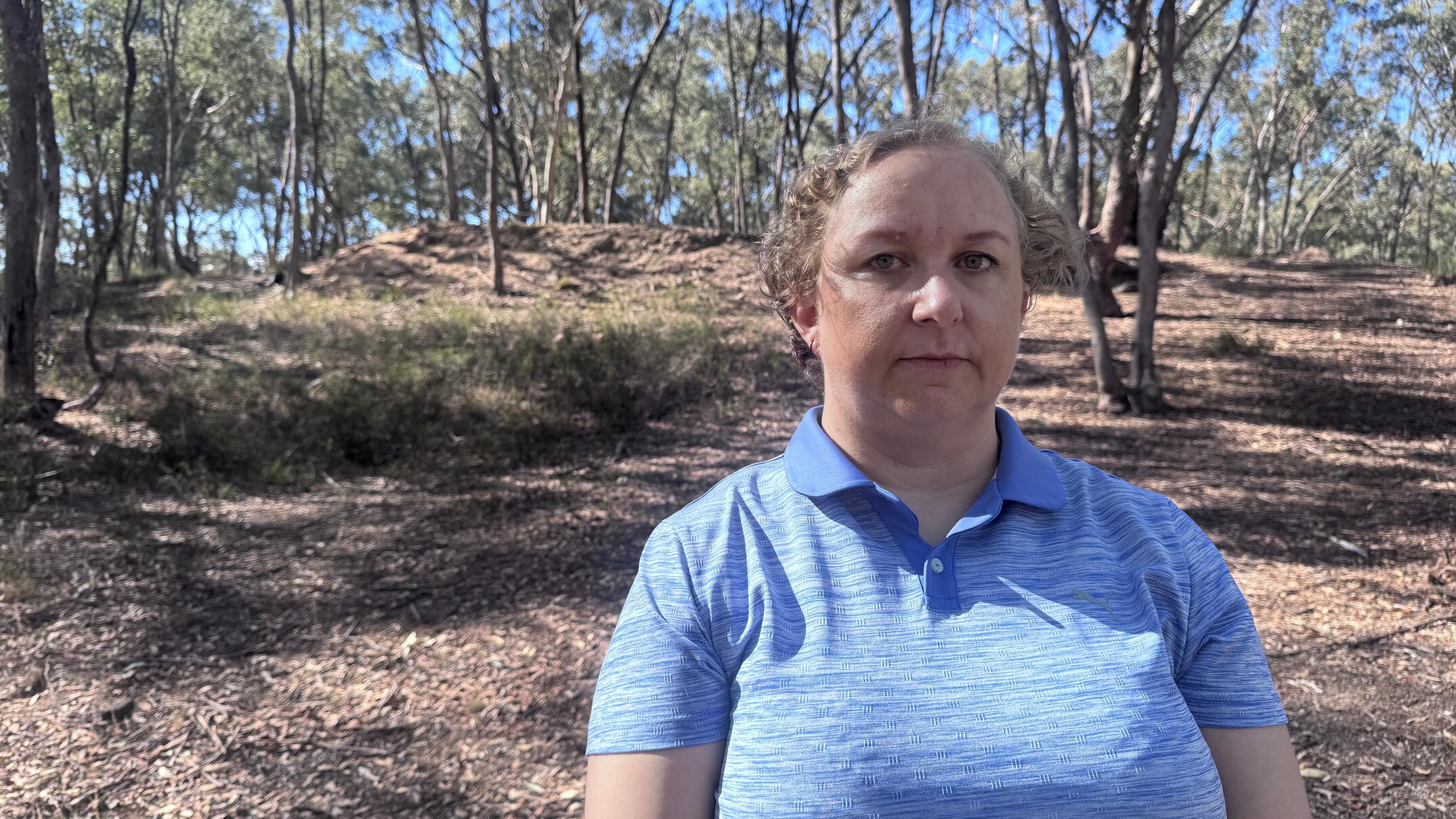
In a “gut-wrenching” discovery, Ms Eaton learned that Monks’s remains were somewhere within nine large piles of dirt dumped among the scrub at the rear of the cemetery. “It’s awful,” she said. “You come in the front gates, and it’s this beautiful, nicely laid-out cemetery. And then you come up the back, and there’s just piles of dirt in the trees, and knowing that there’s potential ancestral people in there… it’s incomprehensible.”
A Dark History of Grave Reuse
Cemetery manager Deb Tranter says when she started as a volunteer in 2019, she was horrified to learn of its history. Historical graves dating back to the 1800s had been dug up and reused at Castlemaine cemetery, with evidence that graves as recent as 1955 were also excavated. Ms Tranter estimates the dirt piles contain the remains of at least 3,000 people, and possibly up to 5,000. “It’s a very conservative estimate,” she said.
A 1963 letter to the public health commissioner reveals the cemetery trust at the time had been reselling and reusing public graves dating before 1880. According to the letter, the trust chairperson and sexton were “instructed that this practice was to cease immediately.” Now, Ms Tranter hopes to connect with more people like Sally, in a bid to restore some dignity for those whose ancestors’ remains were disturbed.
Repeated Warnings Over Decades
In 1980, a letter from a cemetery officer recommended the Department of Health advise the trust to stop reusing old graves. “Verbal instructions have proved ineffective in the past, and the written agreement of the trust should be sought.” A police investigation in 1994 found the practice had continued, after two locals discovered a human skull while walking through the cemetery. Police found the bones had been unlawfully dug up, and spilled from a trailer while the dirt from the grave was being transported to the rear of the cemetery.
According to a report by Detective Sergeant Kevin Churchill, the cemetery sexton at the time said he was told to dig up old graves and rebury any bones he found. These piles of dirt dumped in the bushland behind the cemetery contain thousands of human remains. (ABC News: Nate Woodall)
The detective found most of the board members responsible for the decision to reuse old burial grounds were dead. Cemetery records seen by the ABC indicate the practice of digging up old graves resumed just days after police concluded their investigation.
A Personal Struggle
“I don’t even know where his bones are,” Ms Tranter said. “We just need to acknowledge that it happened and make sure it never happens again.” Former cemetery secretary Dennis Cox served on the trust from 2016 to 2020 and said during his time, no historic graves were resold. But he says burial plots purchased prior to 2016 were dug up. “There would have been graves going back probably 100 years. We wouldn’t have dug up someone buried 20 years ago or 30 years ago.”
“I don’t believe anything we did was illegal.”
Unprecedented Scale of Desecration
Manager of the re-burial project Nicci Foster says the scale of the disturbance is unlike anything she has encountered. “I was gobsmacked,” she said. “From speaking to experienced archaeologists … I haven’t come across anything this specific as far as spoil piles with fragmented human remains from 70 years of practice.”
Ms Foster is working with a team of experts, including archaeologists, to help Ms Tranter. An initial inspection of the piles identified several human bones sitting close to the surface within the mounds of dirt. Ms Foster and other experts are using a drone and laser mapping technology to create three-dimensional scans of the piles. Once completed, the local community will be consulted about what to do with the human remains. Ms Foster says this could involve leaving the piles undisturbed or carefully excavating the bones and reinterring them in the ground, which could take years, or even decades, to complete.
A Difficult Situation for Volunteers
Ms Eaton says she’s glad she knows the truth about her ancestor’s remains. “Some people might show up and either assume [their ancestor] didn’t have a headstone, or that they weren’t buried here. Not that they’d been dug up and dumped in a pile of dirt up the back.”
Sector-wide regulation issues have also emerged. The Victorian Department of Health acknowledged the practice was unlawful in a 2024 letter to Ms Tranter. “A right of interment for the interment of bodily remains is perpetual,” the department wrote. “A cemetery trust does not have the power to … inter bodily remains in a plot without the approval of the right of interment holder.”
Ms Tranter says it’s a difficult situation for volunteers to navigate. “We need a set of minimum standards so we’re all on the same page.” A Victorian government spokesperson acknowledged the “distress” for affected families and communities. “The discovery of historic human remains is distressing for affected families and communities, and we support the trust’s efforts to address the impacts arising from past practices,” the spokesperson said.