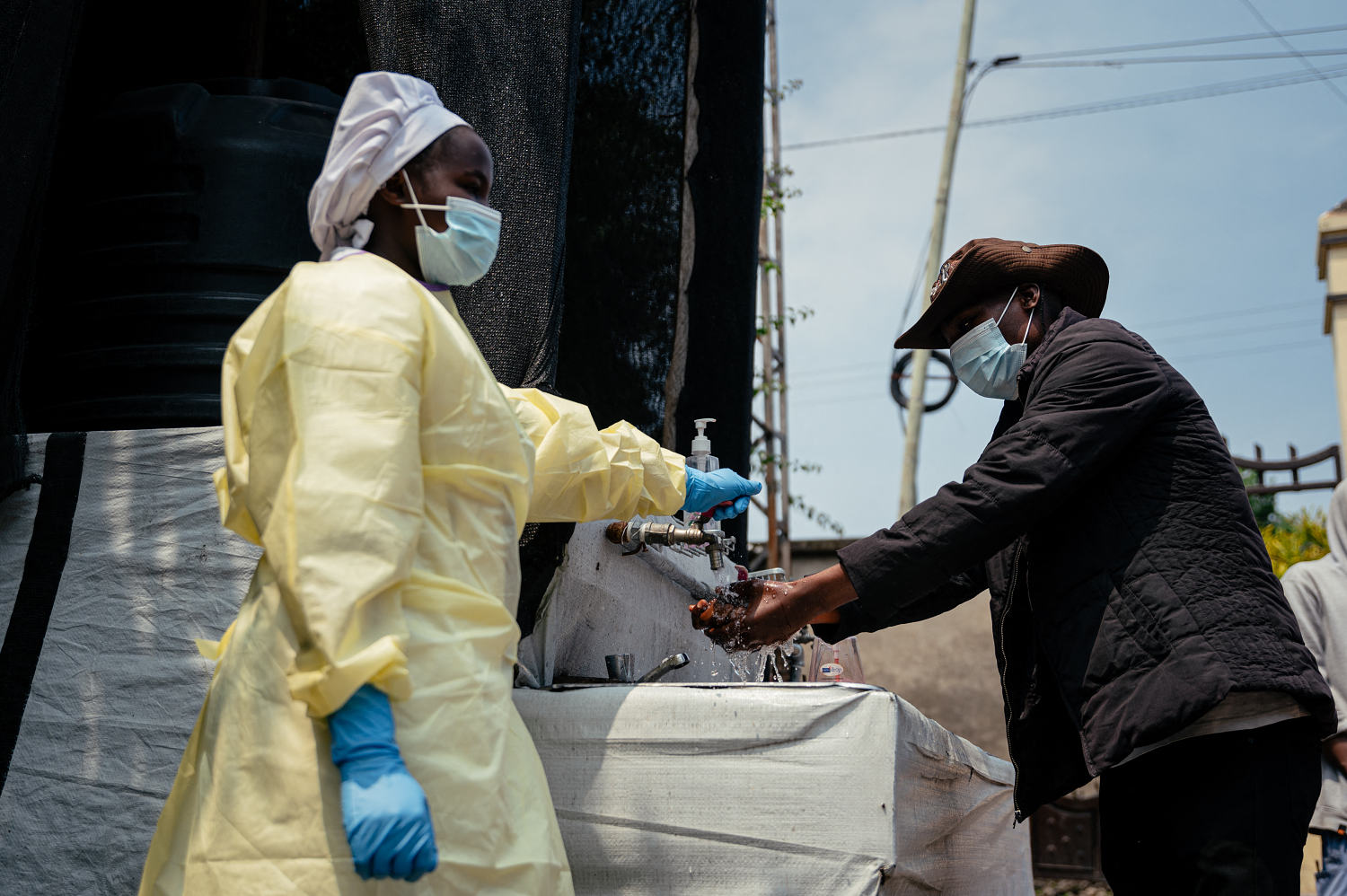
While the world closely watched an outbreak of hantavirus unfold on a luxury cruise ship over the last few weeks, another deadly infectious disease was sweeping through one of Africa’s largest countries and killing dozens: Ebola.
An outbreak of a rare type of Ebola in the Democratic Republic of the Congo and neighboring Uganda has caused over 530 suspected cases and 131 deaths, according to the DRC’s Public Health Ministry. An American doctor and missionary working in the DRC, Dr. Peter Stafford, has also tested positive and been evacuated to Germany for treatment.
Ebola is a severe and often fatal disease caused by a group of viruses, including the rare Bundibugyo strain, which is fueling the current explosion of cases. Earlier this week, the World Health Organization declared the outbreak of Ebola a public health emergency of international concern, its highest level of alarm.
“I am deeply concerned about the scale and speed of the epidemic,” WHO Director-General Tedros Adhanom Ghebreyesus said at the World Health Assembly on May 19. The U.S. Centers for Disease Control and Prevention announced an entry ban for foreign travelers who’ve visited DRC, Uganda or South Sudan in the last 21 days, and said it plans to ramp up screenings for anyone returning from Ebola-affected countries.
Although the immediate risk of Ebola to Americans is low, the CDC says, the fast-growing outbreak has sparked alarm among health experts. Here’s what to know about the current outbreak, the Bundibugyo strain and how Ebola spreads.
Ebola Outbreak 2026
In late April, the WHO was alerted to a cluster of a severe illnesses among health workers in the Ituri province of northeastern DRC. Initially, the patients tested false-negative for Ebola because the first test kits used were looking for a different strain of the virus. As a result, the Ebola outbreak went undetected for some time, which delayed the response.
On May 15, samples were sent to a laboratory in the DRC’s capital, Kinshasa, and testing confirmed the Bundibugyo virus, a much less common type of Ebola than the strains we’re familiar with from previous outbreaks. “This outbreak was already quite large when it was detected, which is concerning because the virus has had weeks to spread unimpeded,” Caitlin Rivers, Ph.D., director of the center for outbreak response innovation at the Johns Hopkins Bloomberg School of Public Health, tells.
Since then, DRC officials have identified 33 confirmed cases and 513 suspected infections. Due to lags in testing, the true number of cases is unknown, the WHO said. What’s more, the virus has already spread across borders, Jodie Guest, Ph.D, senior vice chair of epidemiology at Emory University’s Rollins School of Public Health, tells. Two cases, including one death, have been reported in Kampala, the capital of Uganda and a major travel hub — a development Kavanagh calls “very alarming.”
The current trends “point towards a potentially much larger outbreak than what is being detected,” the WHO said. “The fact that there’s been so many cases and deaths already tells us it’s currently an out-of-control epidemic,” Kavanagh adds.
The DRC is no stranger to Ebola. This is the country’s 17th Ebola outbreak and second outbreak of Bundibugyo, per the CDC. However, a humanitarian crisis and recent population displacement in the region may hinder the response. “The Bundibugyo outbreak is unfolding in a difficult setting, a remote area troubled by conflict,” Rivers says. “DRC physicians are better prepared than most people in the world to tackle this, but the outbreak is happening in a province that is very hard to operate in,” Kavanagh adds.
The outbreak also comes after a slew of major cuts to foreign aid and the U.S. withdrawal from the WHO. These include the dismantling of the U.S. Agency for International Development (USAID), a major contributor to the DRC health system, says Kavanagh. The reductions in funding have had a “tremendous impact” on the country’s ability to fight Ebola, Anne Ancia, WHO’s representative in Congo, said on May 19.
Will Ebola Cause a Pandemic?
While the Ebola outbreak is alarming, health experts emphasize that it’s unlikely to trigger a pandemic. “The risk to the general population in the U.S. is extremely low, and we don’t have any cases here right now,” says Guest. Currently, the Ebola outbreak is considered a “public health emergency of international concern,” which the WHO defines as an extraordinary health event that poses a risk to multiple countries. But the outbreak does not meet the WHO’s criteria for a “pandemic emergency,” the agency said on May 17.
“It’s at the WHO’s highest level (of alarm) without being a pandemic. The PHEIC is their way of saying it’s likely not going to stay inside the DRC and Uganda,” Guest explains. Countries that share a land border with DRC are considered “high risk” for the spread of Ebola, the WHO said. These include South Sudan, Rwanda and Burundi, among others.
However, the likelihood of Ebola spreading widely in nations outside of sub-Saharan Africa, including the U.S., is very low, experts say. “The Ebola virus is not airborne, so we are not looking at something like COVID-19 or even flu where it quickly spreads worldwide,” says Kavanagh. That said, the current situation is still serious.
The CDC has issued a health alert for clinicians in the U.S. with recommendations for Ebola testing and safety precautions. “Anytime we have an outbreak of this magnitude of a virus that is this fatal, everyone should be concerned because we are a global world and we’re all connected,” says Guest. In a statement, the Africa CDC said, “Africa needs solidarity, not stigma.”
Compared to the Andes hantavirus, which has spread to 10 people so far, Ebola is far more contagious and dangerous, the experts emphasize. “It’s ironic in the worst way that, while global attention has been focused on a cruise ship facing a virus that spreads slowly and can be controlled, there’s a massive outbreak of a much deadlier, more easily spread virus going on in Africa unnoticed,” says Kavanagh.
What Is the Bundibugyo Ebola Virus?
Ebola is a disease caused by a group of viruses called orthoebolaviruses, which are found in sub-Saharan Africa, per the CDC. Four of these are known to cause Ebola in humans. The Zaire Ebola virus is the most common and lethal strain. It fueled the 2014-2015 Ebola epidemic, and scientists used it to develop the Ebola vaccine.
The Bundibugyo virus is much more rare, but has caused outbreaks in the past: one in the DRC in 2015 and one in Uganda in 2007, the CDC said. The fatality rate ranges from 30-50%. Unlike with the most common Ebola strain, there’s no licensed vaccine or treatments for the Bundibugyo virus. “This means fewer options to protect people at risk,” says Rivers.
How Does Ebola Spread?
Ebola viruses are zoonotic, meaning they’re carried naturally by animals. Occasionally, the viruses “spillover” into the human population, where they can spread easily from person to person, per the CDC. The Bundibugyo virus is highly contagious, though it is not airborne. It transmits through close contact with an infected person, their blood or bodily fluids or contaminated objects, says Guest.
It’s commonly spread through caregiving or in health care settings, says Rivers. People are usually only contagious when they have symptoms. However, Ebola can also spread from a recently deceased person. Handling dead bodies during burials is a known risk factor for the spread, according to the WHO.
Symptoms of Ebola
Symptoms typically show up two to 21 days after exposure to the virus, per the CDC. “So far, the Bundibugyo virus is presenting the same way as other strains of Ebola,” says Guest. In the early stages, Ebola can cause flu-like symptoms, including a high fever, fatigue and muscle aches. “It can be commonly confused with malaria or the flu,” says Guest. After several days, the illness can progress rapidly to severe vomiting and diarrhea, a rash and unexplained bleeding. In severe cases, Ebola can lead to shock, seizures and organ failure, per the Cleveland Clinic.
Depending on the strain of Ebola, the fatality rate can range from 25-90%. Survivors can be left with long-term complications.
Ebola Treatment and Prevention
There is no specific treatment for the Bundibugyo virus, but intensive supportive care can help manage symptoms. The two vaccines approved for the Zaire Ebola virus have not shown to be effective against other strains in animal studies. Several experimental vaccines for the Bundibugyo virus are being developed around the globe, but it could take years before these are ready for human trials.
In lieu of a vaccine, prevention measures can help lower the risk of transmission. If you live in or are traveling to an Ebola-affected country, the CDC recommends avoiding contact with sick people, wearing personal protective equipment, and monitoring yourself for symptoms.
As for the Americans living thousands of miles from the outbreak, there’s no need to panic, the experts say. But it’s important to stay informed, especially if you have any upcoming trips to countries near the DRC.