UK Experiences Unprecedented Spring Heatwave
The United Kingdom is currently experiencing an intense spring heatwave, with temperatures in various regions reaching as high as 35.1°C. This extreme weather has left many Brits searching for ways to cope, while scientists have pointed to climate change as a key factor behind the record-breaking temperatures.
Professor Friederike Otto, a professor of climate science at Imperial College London, highlighted the role of climate change in the current situation. She stated, “This record-breaking heat has the fingerprints of climate change all over it. Temperatures on this scale were once exceptional even at the height of summer. Seeing 35°C in the UK during spring is absolutely astonishing, but the science is very clear – climate change makes these heatwaves hotter, longer, and far more frequent.”
Looking ahead, Dr. Otto warns that such spring heatwaves could become the norm unless urgent action is taken to address climate change. “The climate we are living in today is simply not the one we grew up with, and our buildings and infrastructure are woefully unprepared for what’s next,” she added. “While we have made some progress in cutting emissions, it is not fast enough. Temperature records will continue to tumble until we fundamentally halt global emissions and reach net zero.”
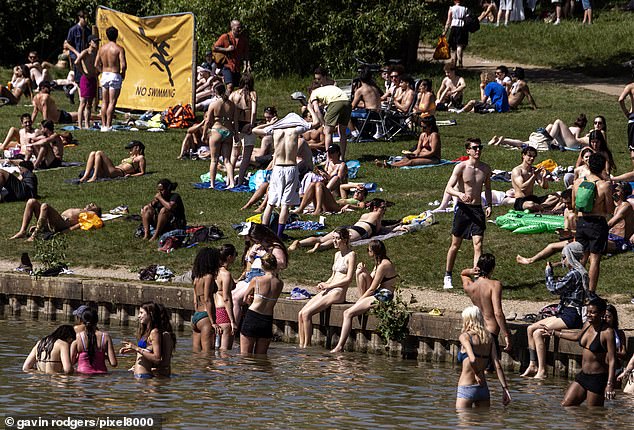
Data from the Met Office confirms that the May and spring temperature records in the UK have been broken multiple times this week. A temperature of 34.8°C was recorded on Monday at Kew Gardens, followed by a reading of 35.1°C at the same location the next day. The previous record stood at 32.8°C, set in 1922 and 1944.
Gareth Redmond-King, Head of International at the Energy & Climate Intelligence Unit, described the new records as “deeply worrying.” He said, “To break one extreme weather record in the space of a couple of days is one thing, but breaking them each day and night in succession, and by such a margin, is deeply worrying. The hottest May day in the UK is now more than two degrees higher than it was last week – and had been for more than 80 years – and our sleep is being disrupted by tropical spring nights.”


As recent heatwaves in the UK and across Europe have shown, dangerous extremes can cause harm and cost lives, particularly affecting elderly people and very young children. “If we want to avoid worse extremes becoming the norm, then science has the answer – cutting our planet-heating emissions to net zero is the only way we know to halt climate change,” he added.
How Hot Could the UK Get?
Speaking to the Daily Mail, Dr. Laurence Wainwright, a senior researcher at the University of Oxford, explained how much hotter the UK could become if climate change is not addressed. “Overwhelming scientific evidence indicates that human-induced climate change is already, and will continue to, result in the UK getting hotter,” he said. “Average temperatures will go up, our summers will be warmer and longer, hot weather will sometimes start earlier (e.g., May rather than July), and heatwaves – periods where there are consecutive days of the temperature being above the normal highest ranges for a certain area – will be more frequent.”
According to scientific modeling, summer temperatures in the UK could be on average 5°C hotter by 2070. “While perhaps 2070 sounds far away, and 5°C doesn’t sound like much, it is starting already, and will, as the years go by, have a profound impact on the way that we live our lives,” Dr. Wainwright added.
Why Does Heat ‘Hit Different’ in the UK?
There are several reasons why heat feels more intense in the UK compared to other regions:
- Humidity: High humidity short-circuits the body’s cooling system because sweat cannot evaporate efficiently. So temperatures in the high twenties can place significant stress on the body, particularly overnight when people rely on cooler air to recover.
- Lack of infrastructure: Buildings trap heat overnight, and because air conditioning is still relatively uncommon, there is often little relief indoors.
- Climate change: Climate change is making UK heatwaves more frequent, more intense, and longer lasting.