The Ultimate List of Footballing Greats: The World Cup’s Greatest Ever Players
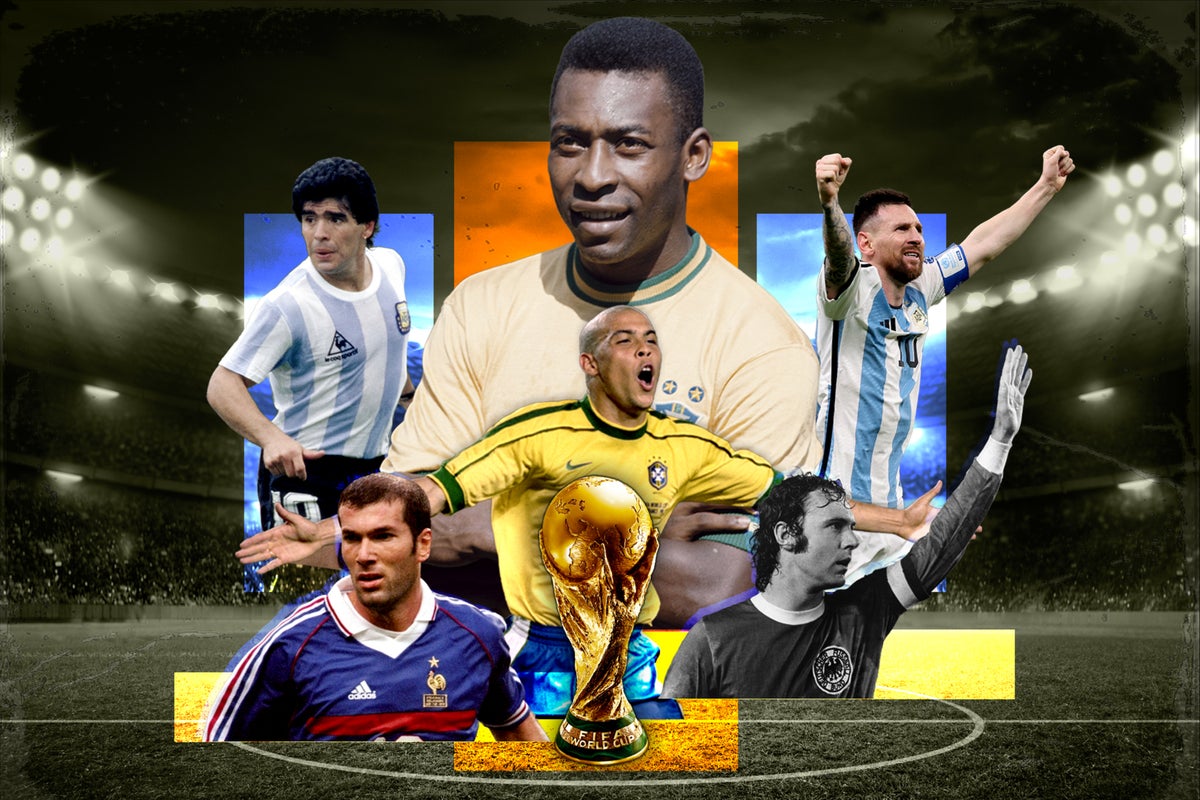
As the 23rd FIFA World Cup approaches, set to take place in North America starting on 11 June, we look back at the players who have left an indelible mark on the world’s most prestigious football tournament. From Pele and Messi to Maradona and Beckenbauer, these are the legends who have lit up the “greatest show on earth” over the past 96 years.
Our team of sports reporters has ranked the top-50 players in World Cup history, from the first tournament in Uruguay in 1930 all the way to the first-ever winter event in Qatar in 2022. This list is based solely on performances in World Cups, not simply on being the best-ever players who have featured in a World Cup.
One player who does not make the top-50 is Cristiano Ronaldo. Despite being set to take part in his sixth World Cup this summer, he is not among the pantheon of World Cup greats.
So, who has made the top-10 in our list of the World Cup’s greatest-ever players?
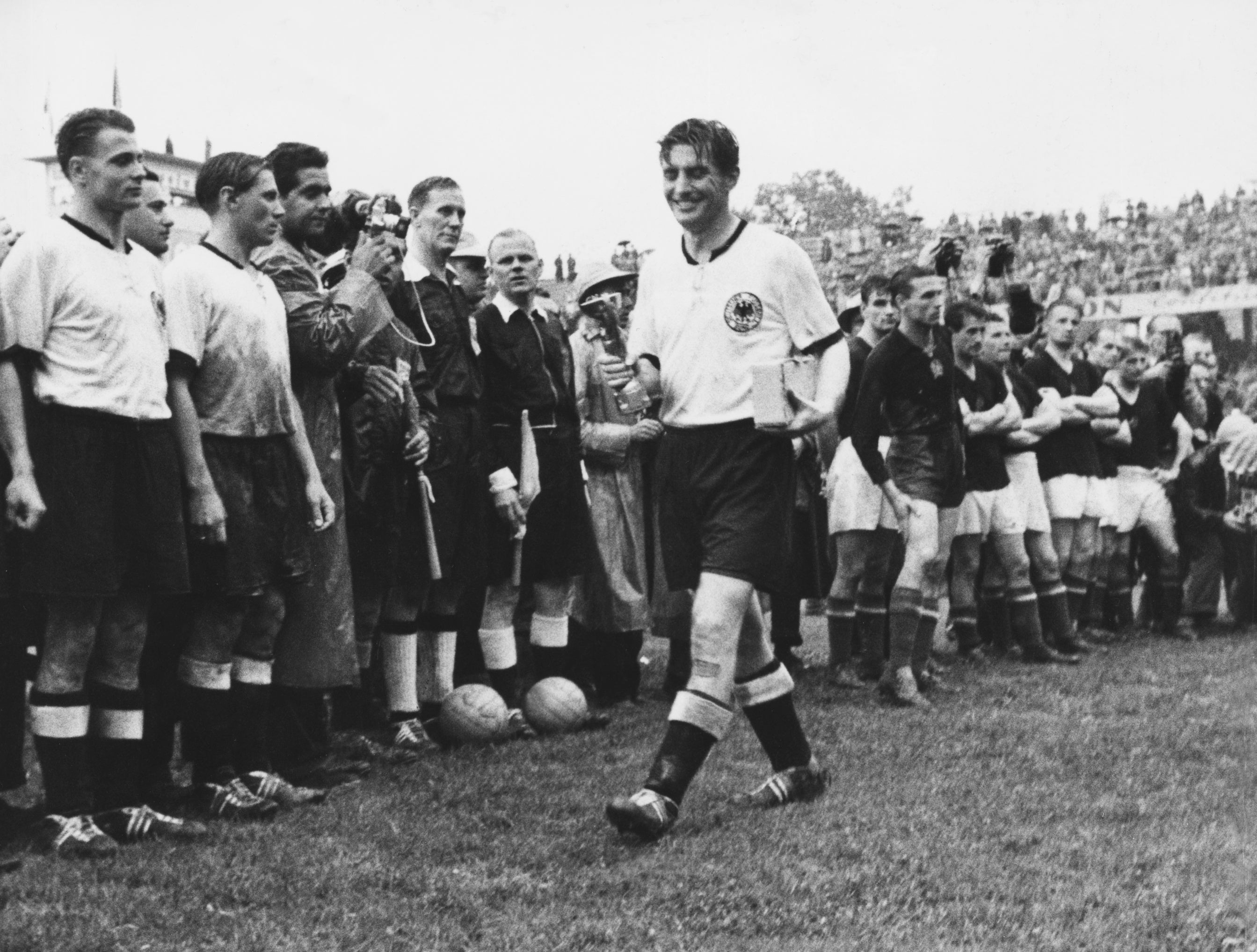
50. Fritz Walter (West Germany)
- World Cups played: 1954, 1958
- World Cup record: Winner 1954
- Games: 11
- Goals: 3
- Best moment: Lifting the World Cup no one expected West Germany to win
Football saved Fritz Walter from the Soviet gulag in World War II, with the aid of a Hungarian prison guard who recognized a top player. Walter certainly found a way of repaying Hungarian football.
The greatest shock in World Cup final history came in 1954; the all-conquering Hungary were beaten by West Germany, who had been banned from the 1950 tournament and had lost 8-3 to Hungary in the 1954 group stages.
Walter was the architect and inspiration of “The Miracle of Bern.” He was involved in two goals in the final and he, and brother Ottmar, are one of only two pairs of brothers to win the World Cup – along with the Charltons.
49. Vava (Brazil)
- World Cups played: 1958, 1962
- World Cup record: Winner 1958, 1962
- Games: 9
- Goals: 7
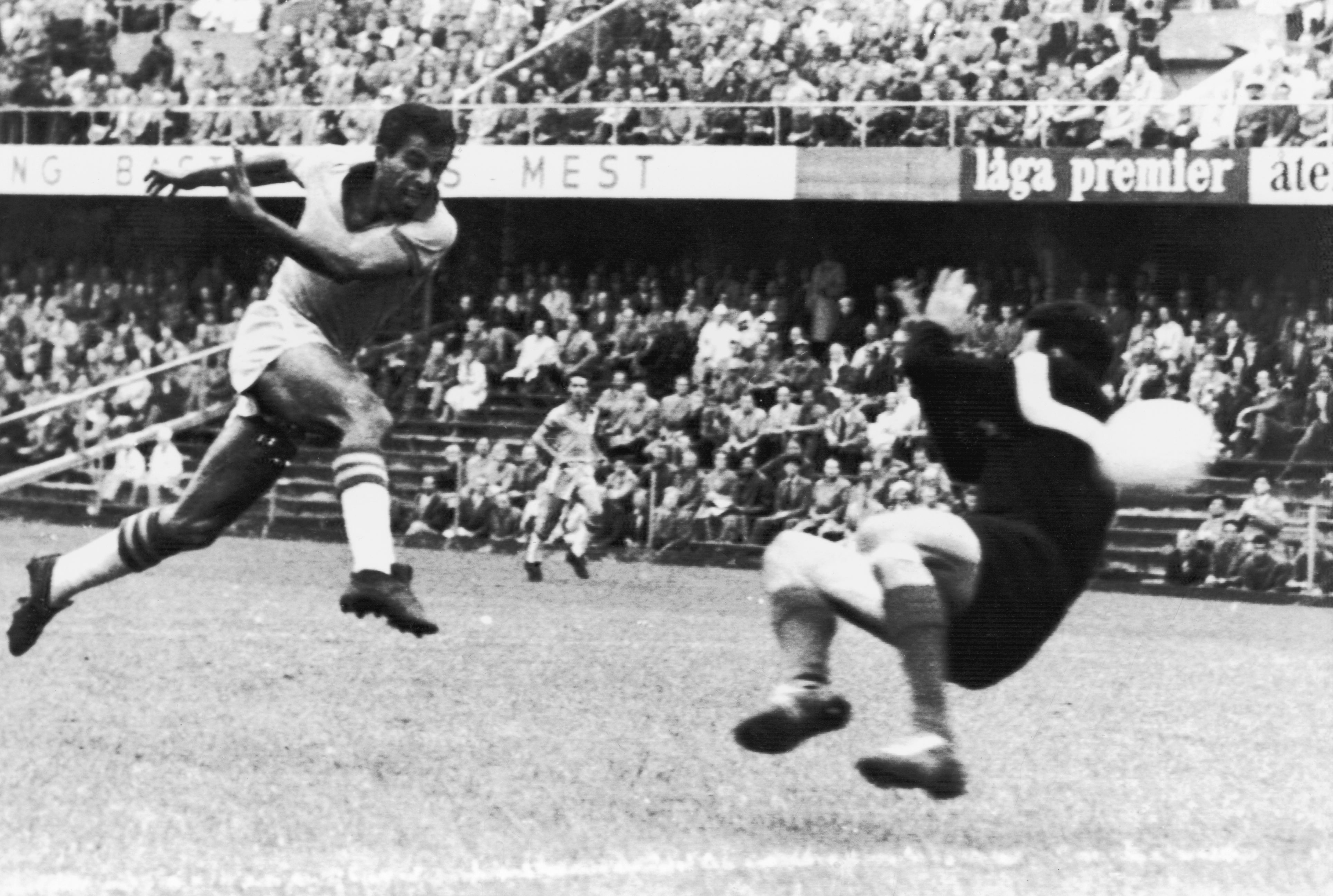
- Best moment: Brace in 1958 final, to bring Brazil from 1-0 down to 2-1 up en route to victory over Sweden
One of just four players who have played in only two World Cups and won them both.
You might associate the Brazilians with flair but sometimes you need something less flashy, and Vava’s close-range finishes were as clinical as they were crucial in the 1958 final; Brazil were 1-0 down to Sweden early, before Vava turned things around with a brace – his second of the tournament.
He also scored twice in the 1962 semi-final win over Chile, before netting again in the final.
And he’d previously scored in the 1958 semi-finals. A big-moment player.
48. Leonidas (Brazil)
- World Cups played: 1934, 1938
- World Cup record: Third place 1938
- Games: 5
- Goals: 8
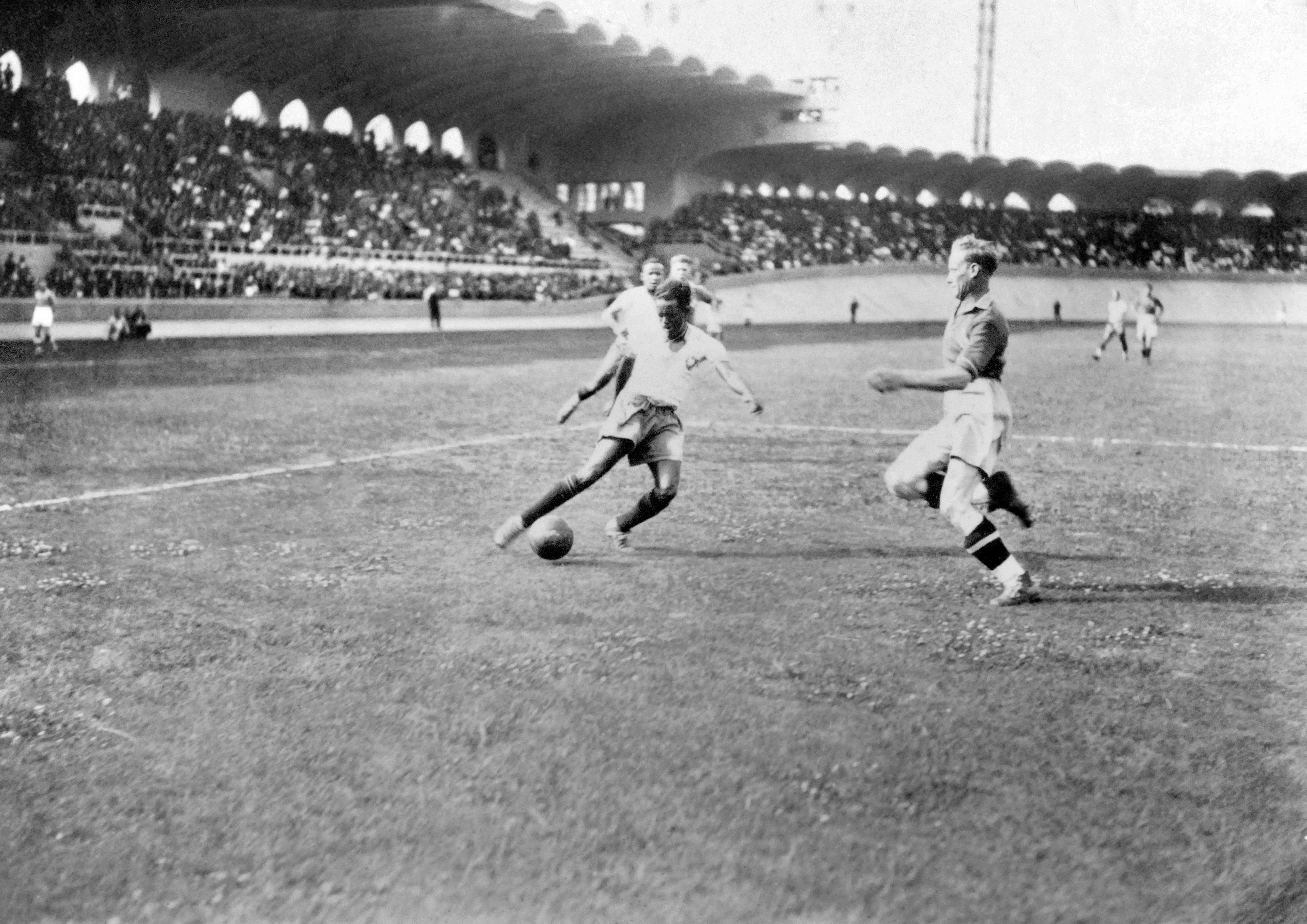
- Best moment: Two extra-time goals completed a hat-trick in Brazil’s 6-5 win over Poland in the round of 16
He may not share the famous reputation of other great Brazilians on this list, but Leonidas was an icon of the 1930s.
The forward known as “Black Diamond” won the Golden Boot and the Golden Ball in 1938, despite Brazil losing to eventual champions Italy in the semi-finals.
47. Didier Deschamps (France)
- World Cups played: 1998
- World Cup record: Winner 1998
- Games: 6
- Clean sheets: 5
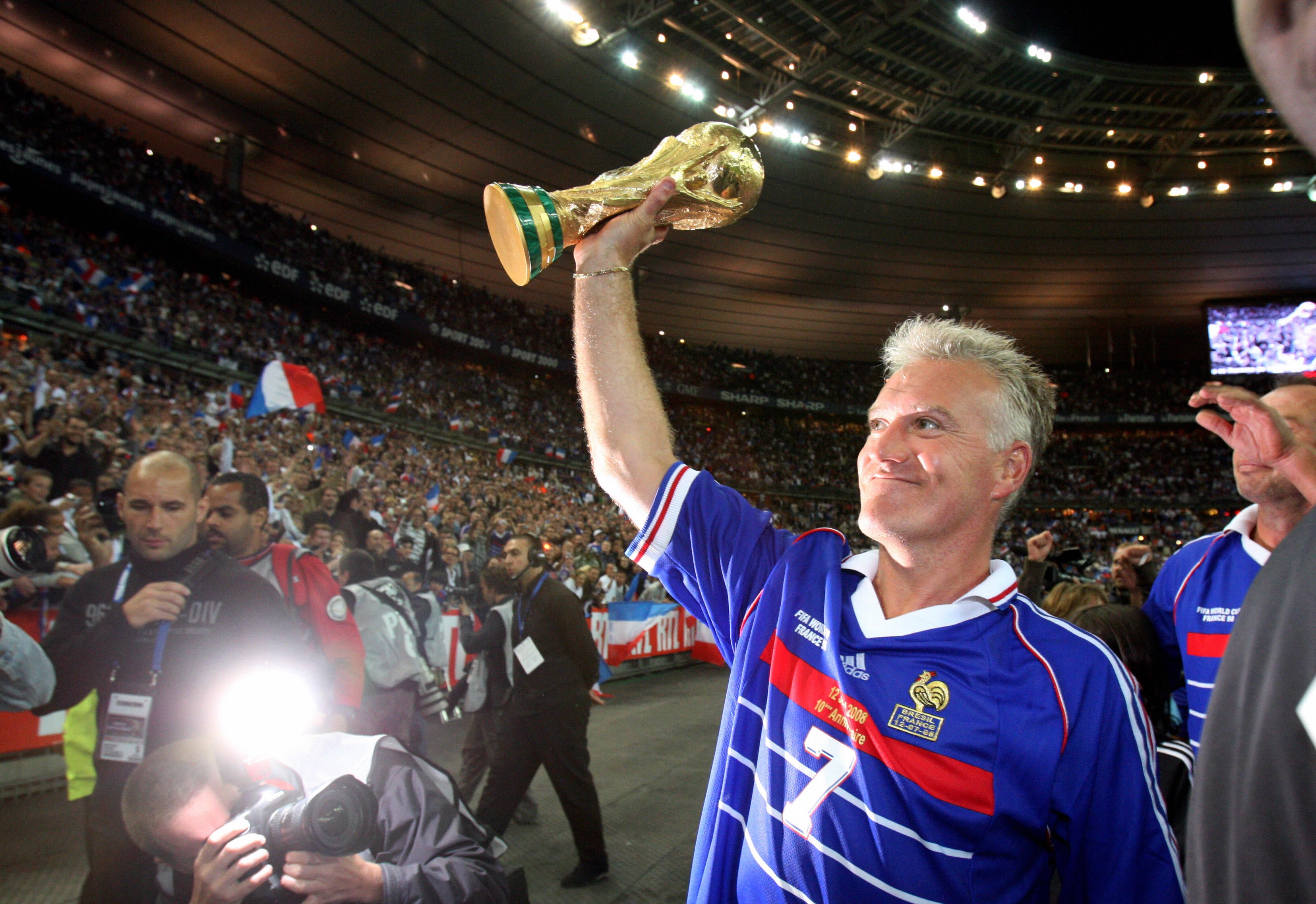
- Best moment: Lifting the trophy as captain at his sole World Cup
That moment above sums it up: Deschamps was clinical as a World Cup player – one tournament, one trophy.
The stats bolster this claim, too: the defensive midfielder helped his side to five clean sheets in the six games he played (including a 3-0 shutdown of a great Brazil side in the final), and France conceded in the sole match he missed. Furthermore, Deschamps did all of this as captain.
Of course, he would lead Les Bleus again as a coach (winning the World Cup in 2018 and losing the 2022 final), but we haven’t even factored that into his inclusion here.
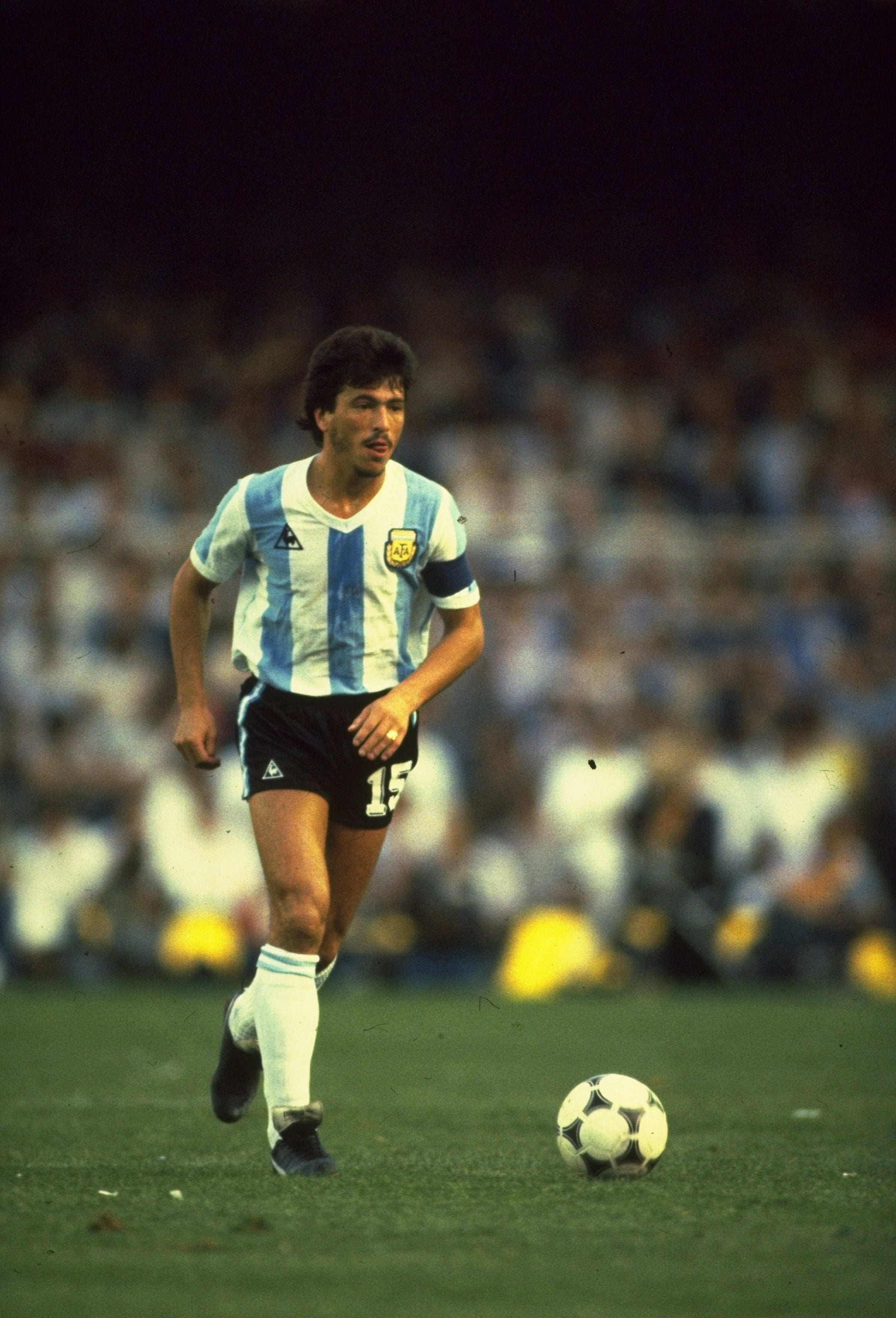
46. Daniel Passarella (Argentina)
- World Cups played: 1978, 1982, 1986
- World Cup record: Winner 1978, 1986
- Games: 12
- Goals: 3
- Best moment: Lifting the World Cup on home soil in 1978, becoming the youngest captain to do so at the age of just 25
Passarella captained Argentina to their first-ever World Cup win in 1978, with the tough-tackling, fierce defender (who had a remarkable eye for goal) proving a steely counterpart to the mercurial talents of teammate Mario Kempes.
He went to further tournaments in 1982 and 1986, and remains the only Argentine to win two World Cups (despite losing his place in the first team due to enterocolitis as Diego Maradona and co. triumphed in Mexico).
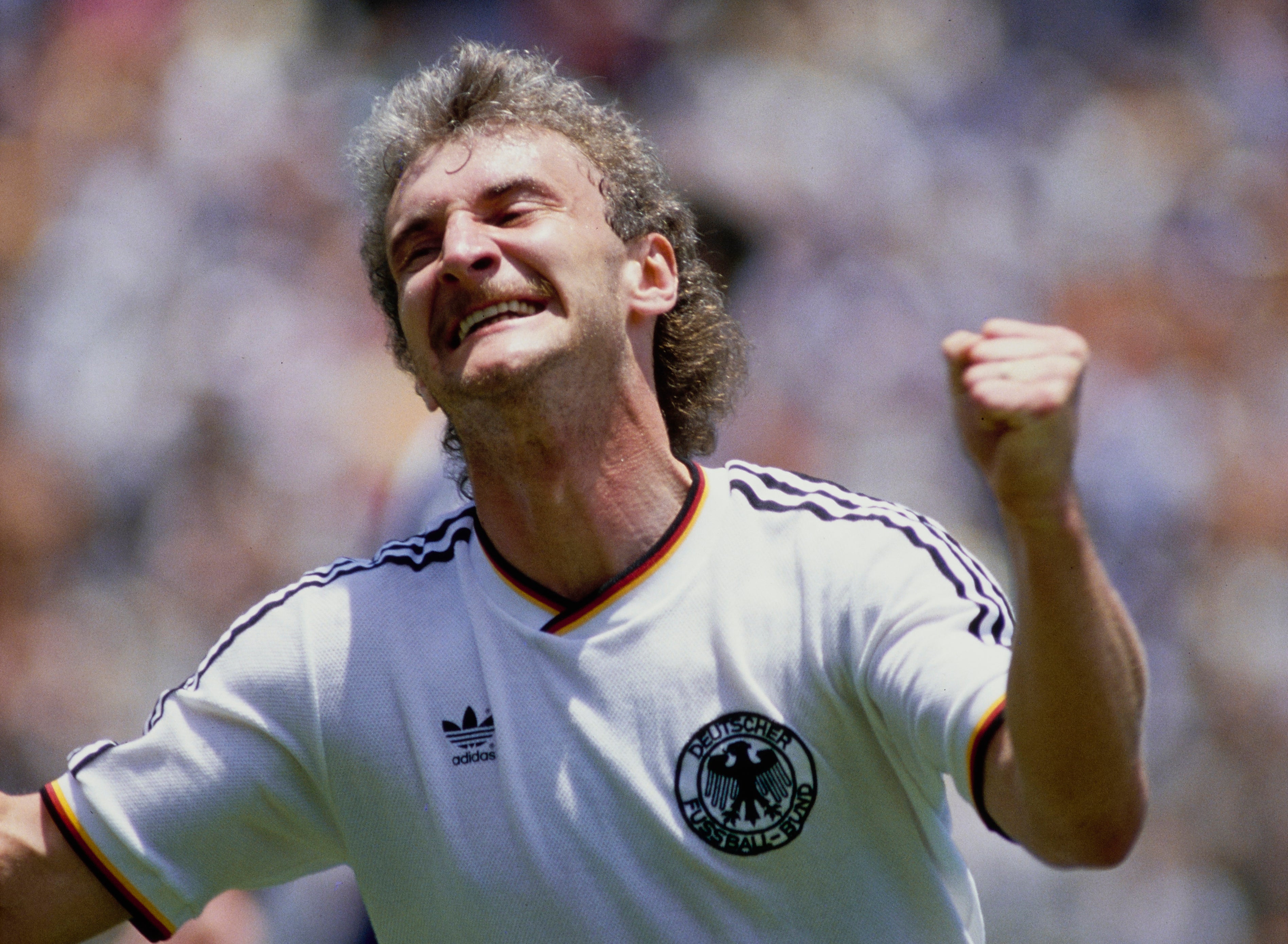
45. Rudi Voller (Germany)
- World Cups played: 1986, 1990, 1994
- World Cup record: Winner 1990, runner-up 1986
- Games: 15
- Goals: 8
- Best moment: After being confined to the bench in the 1994 group stage, his last-16 start yielded a crucial brace in a 3-2 win over Belgium
Voller has a varied history at the World Cup. He scored a fair few goals, even scored in a final but lost it, won it another time, was sent off on one occasion and was hooked early on another.
While Voller’s late equaliser wasn’t enough for West Germany to overcome Argentina in the 1986 final, it was a triumphant personal moment, as was his statement brace in the afore-mentioned 1994 clash with Belgium.
Between those competitions, he blotted his 1990 tournament copybook with a red card – but returned in time to start in Germany’s victorious final.
Graphic by Lawrence Ostlere
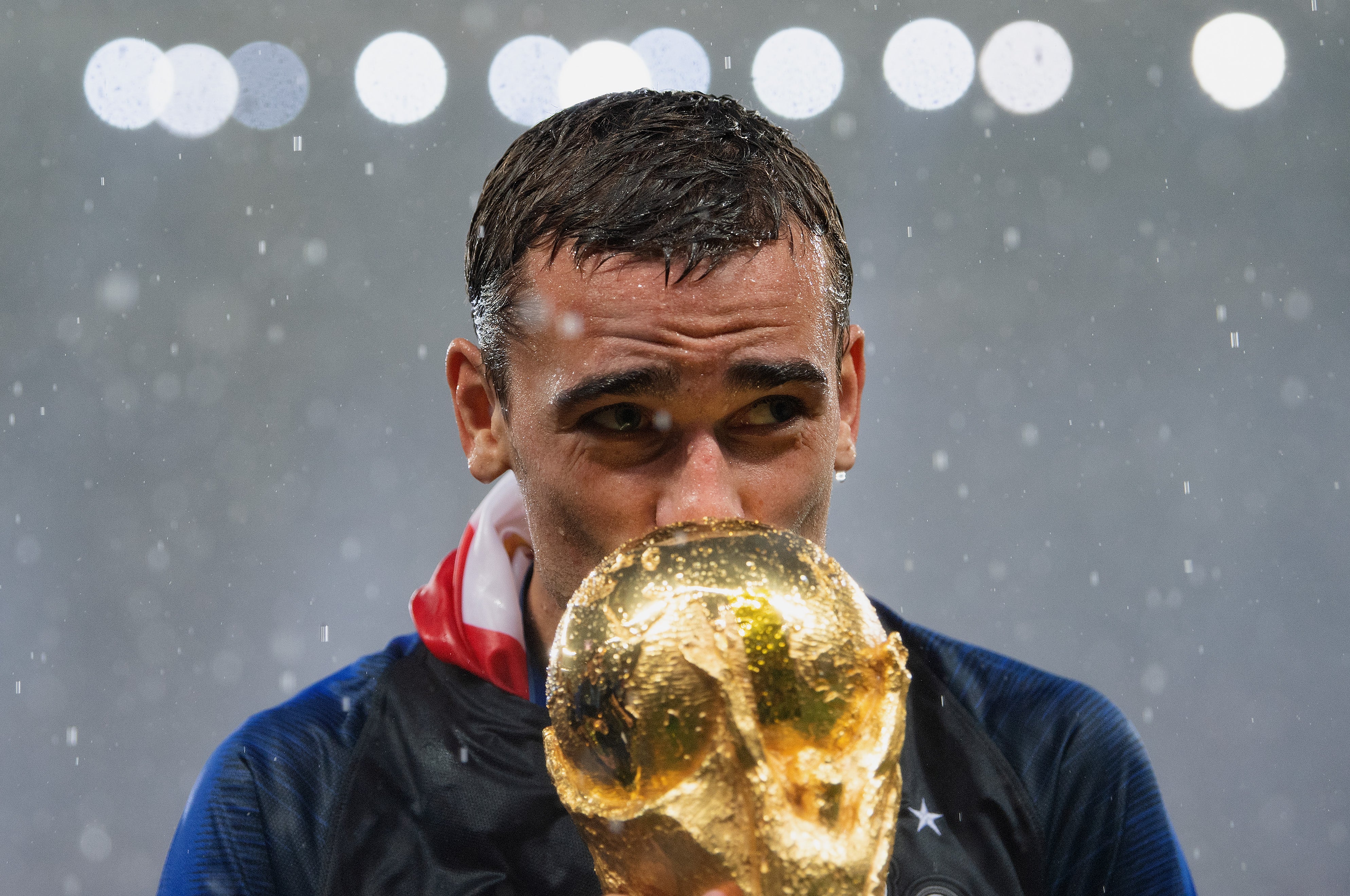
44. Antoine Griezmann (France)
- World Cup played: 2014, 2018, 2022
- World Cup record: Winner 2018, runner-up 2022
- Games: 19
- Goals: 4
- Best moment: He was man of the match as France eventually ran riot against Croatia with a 4-2 win in the 2018 final, scoring a penalty for good measure.
Griezmann won recognition on the pitch for his persona as much as his quality with the ball, and it shone brightly in the 2018 quarter-finals when his goal came through a Fernando Muslera mistake. With a Uruguayan mentor growing up, in addition to his compassion for Muslera after a dreadful lowlight to the goalkeeper’s career, Griezmann was subdued with his celebration.
One of the great French players in their second golden era, Griezmann was vital for this team throughout. He has won one World Cup and been a finalist in another.
Griezmann was allowed to flourish a little more under Didier Deschamps than he did for his club, largely with Diego Simeone and Atletico Madrid. A selfless player, able to knit the attack together, take a set-piece and hold his nerve in the final third, he was unlucky to only finish third behind Luka Modric and Eden Hazard in the voting for 2018’s Golden Ball.
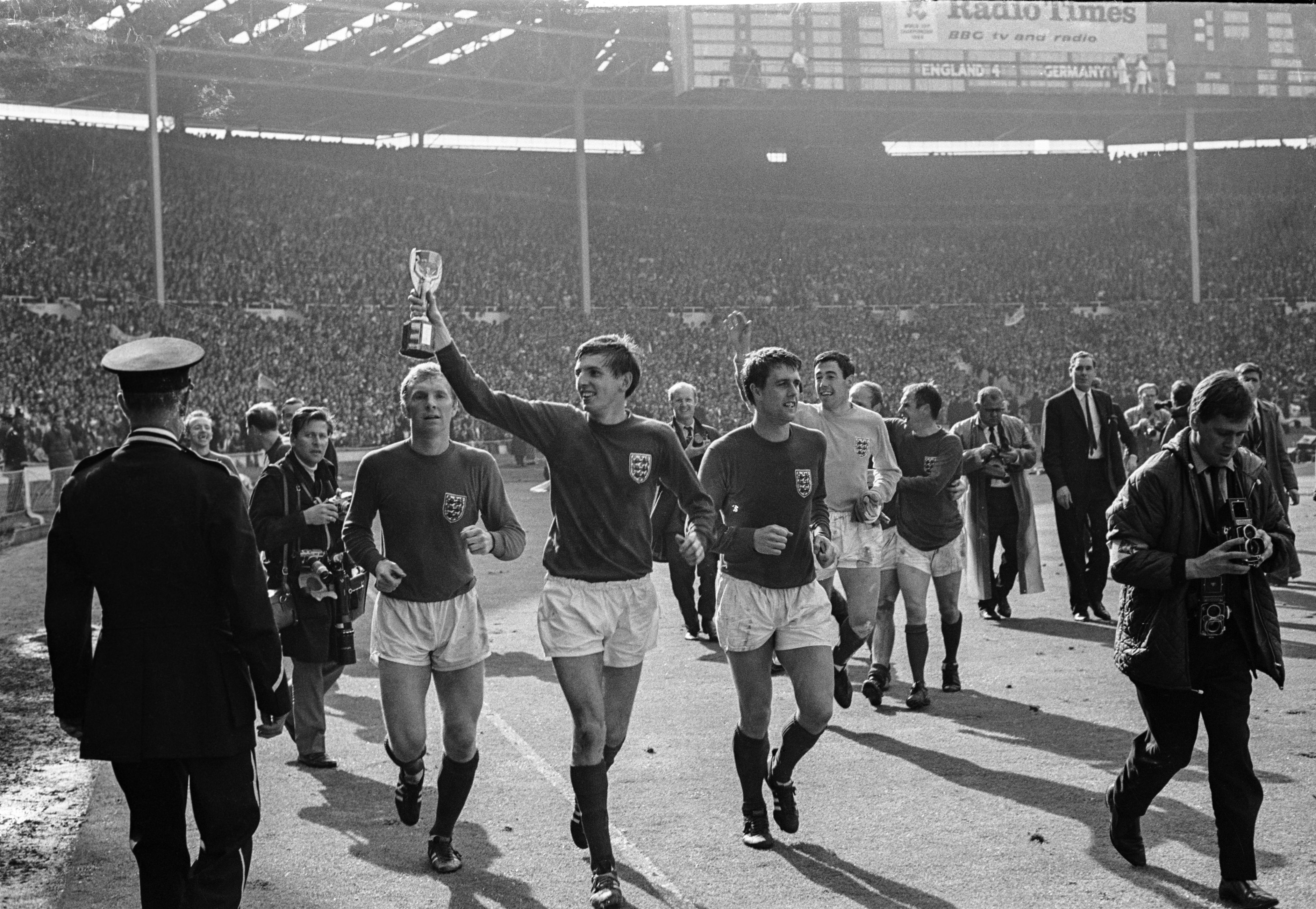
43. Martin Peters (England)
- World Cups played: 1966, 1970
- World Cup record: Winner 1966
- Games: 9
- Goals: 2
- Best moment: Scoring England’s second goal in the 1966 World Cup final
A player ahead of his time, the injection of Peters into England’s 1966 starting side proved the catalyst that took the “wingless wonders” to World Cup glory.
Marrying a tireless work ethic with an intuitive attacking brain, it was Peters who set up the winner for clubmate Geoff Hurst against Argentina, and he might have gone down in folklore as the final match-winner if not for West Germany’s equaliser in the last moments of normal time. It mattered not, of course.
Could there have been more success in 1970? The substitution of Peters and Bobby Charlton by Alf Ramsey, with England 2-1 up in the last eight against those same West Germans, was a major misstep.
42. Ronaldinho (Brazil)
- World Cups played: 2002, 2006
- World Cup record: Winner 2002
- Games: 10
- Goals: 2
- Best moment: Lobbing David Seaman in the 2002 quarter-final against England
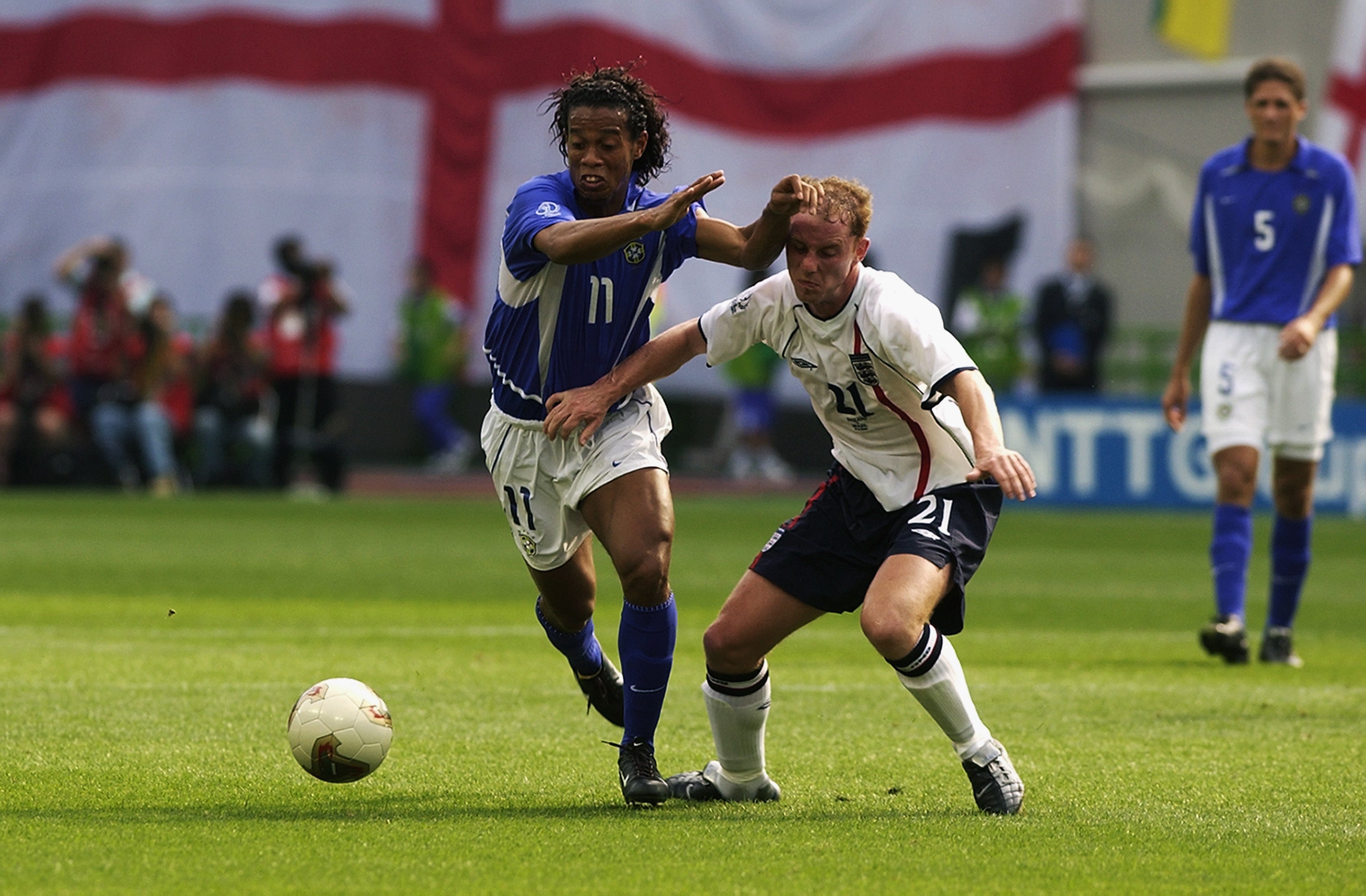
He may have been the least heralded of the “Three Rs” in 2002, but his performance when knocking England out in the last eight was astonishing.
Trailing to Michael Owen’s poached opener, Ronaldinho embarked on a run from halfway to tee up Rivaldo for the leveller, sending Ashley Cole to the floor following a stepover.
Then came his moment of ingenuity and the moment David Seaman will never forget. Re-watching the footage of that exquisite lob, what stands out most is how perfectly the ball nestled in the left corner.
That he was shown a red card seven minutes later for planting his studs on Danny Mills’ ankle is almost forgotten and, either way, he returned for the final that offered the Selecao redemption for 1998, before his club career soon became stratospheric.
41. Didi (Brazil)
- World Cups played: 1954, 1958, 1962
- World Cup record: Winner 1958, 1962
- Games: 15
- Goals: 3
- Best moment: Didi is attributed with nine assists on football’s biggest stage, one behind teammate Pele (10) in the all-time ranking, but it was his control in the 1958 semi-final against France that won him admirers, allowing Pele to thrive, though he also managed to impose himself on the game with the iconic folha seca (dry leaf) free-kick.
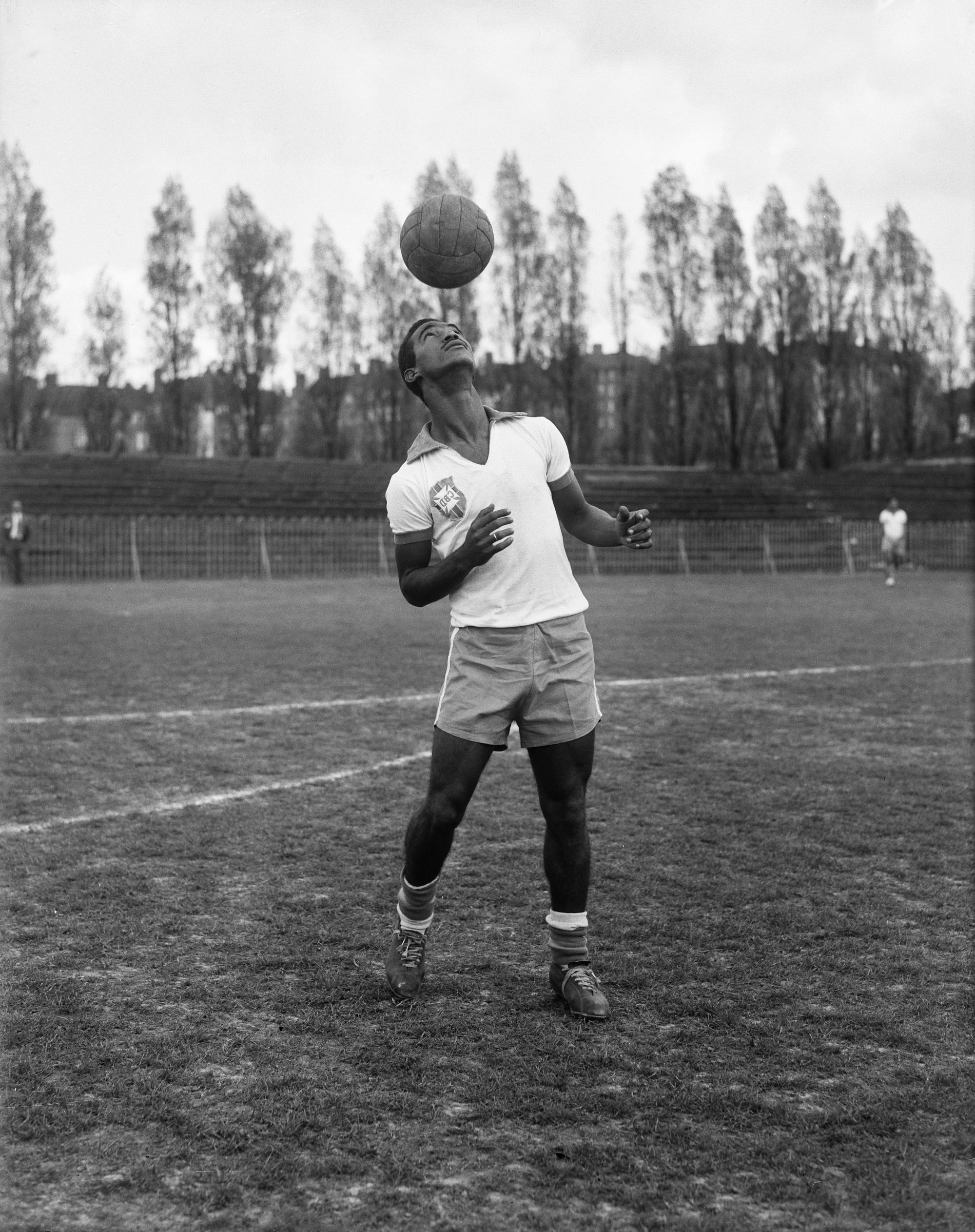
Often forgotten behind some dazzling teammates, and maybe underappreciated in his time, today’s game would recognise Didi as the orchestrator in one of the best teams of all time.
Able to dictate the tempo of the game, the grace of Didi allowed Pele, Garrincha and others to prove decisive in the final third. Also an innovator with his technique and the folha seca (dry leaf) shot, which saw the ball dip viciously.
His goal and two assists in the 1958 semi-final against France might rank among the all-time greatest single-game performances.
40. Roberto Carlos (Brazil)
- World Cups played: 1998, 2002, 2006
- World Cup record: Winner 2002, runner-up 1998
- Games: 17
- Goals: 1
- Clean sheets: 7
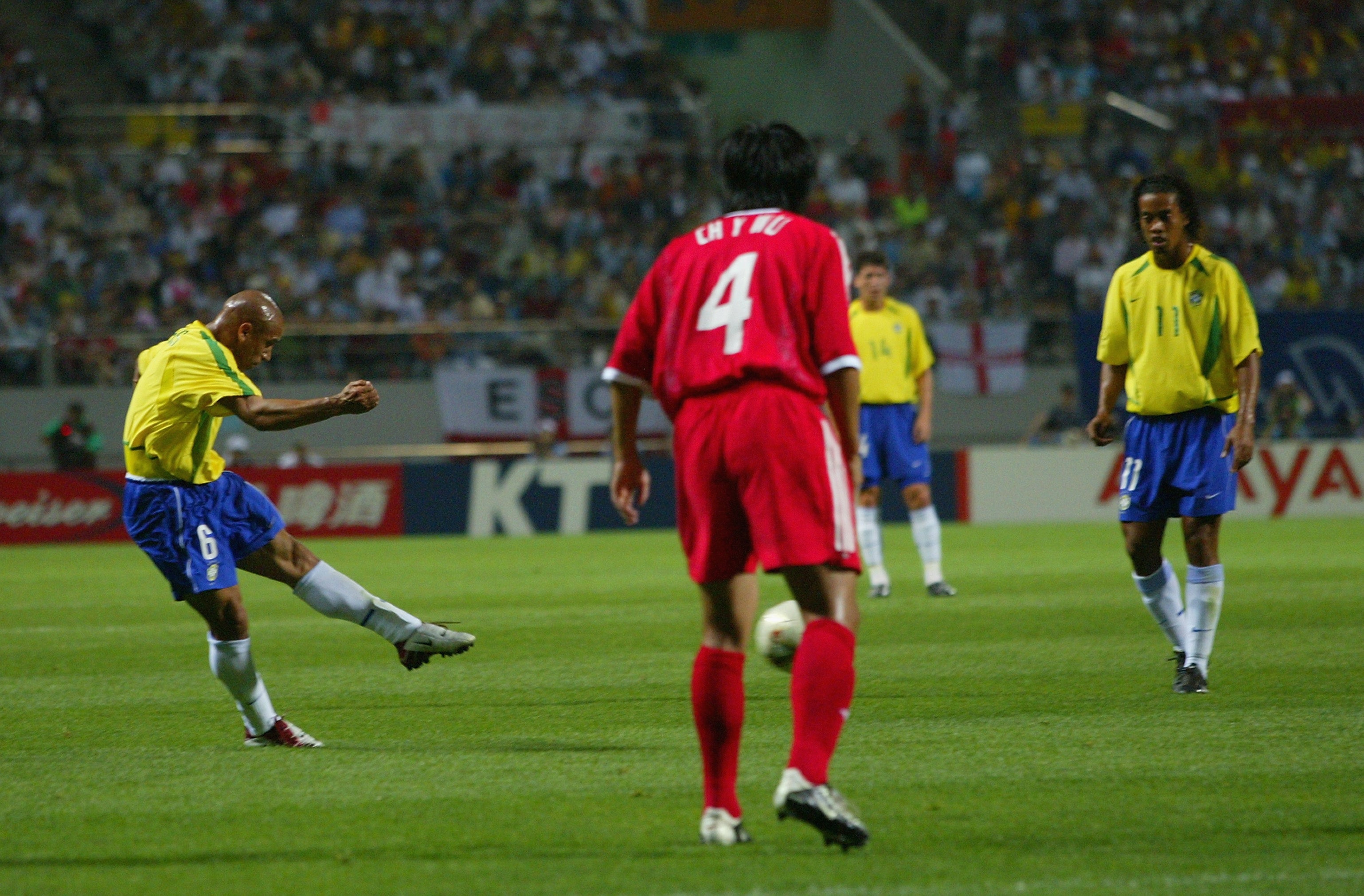
- Best moment: The only World Cup goal he ever scored, in the 2002 group stage contest with China. A free-kick outside the penalty area on the right with a perfect angle for his rocket of a left foot. Blasted past the wall and swerved away from the goalkeeper into the far side-netting. A beauty.
Like most football fans, I have several England shirts collected over more than two decades, and, in that time, I have only ever bought one different national team jersey. That was the shirt of the 2002 World Cup champions Brazil.
Ignore Ronaldo; I loved Roberto Carlos.
There is an argument as to whether the great defender redefined what it was to play full-back (yes), but what isn’t up for debate is that he perfected his role at left wing-back. Blistering pace, overlapping runs, indefatigable energy, curling crosses and a set-piece specialist. Like Beckham, but Brazilian and better.
39. Roger Milla (Cameroon)
- World Cups played: 1982, 1990, 1994
- World Cup record: Quarter-finalist 1990
- Games: 10
- Goals: 5
- Best moment: Scoring twice against Romania in 1990 to announce himself on the global stage aged 38
The poster boy of all veteran players and, for many, Africa’s first global star. Having featured in 1982, when Cameroon fell at the first hurdle, Milla had to be coaxed out of retirement for Italia ‘90.
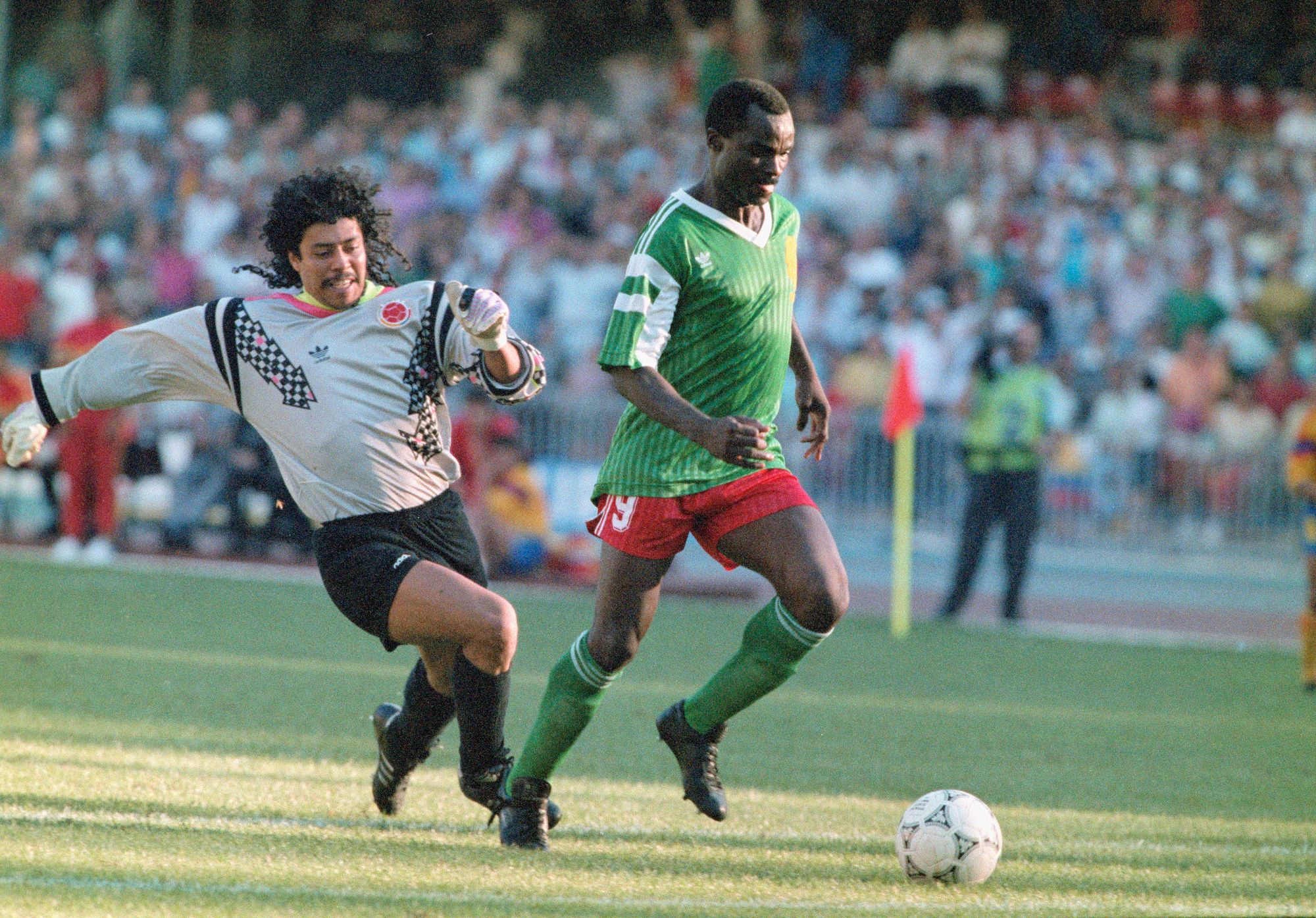
His impact as a substitute, aged 38, was transformative. Sprung off the bench in the second group game against Romania, he scored twice in a 2-1 win to ultimately seal their progress. In the round of 16, versus Colombia, he was brought on with the match scoreless and nabbed another brace in extra-time to lead the Indomitable Lions towards a stage no African nation had been before – the quarter-finals. And he celebrated with his iconic corner-flag jig.
Milla contributed two assists against England as Cameroon led 2-1, only for it to end in extra-time heartbreak.
Four years later, he became the oldest outfield player to feature in a World Cup, aged 42, coming on as a substitute in defeats to Brazil and Russia, scoring in the latter despite a 6-1 loss.
38. Jurgen Klinsmann (West Germany/Germany)
- World Cups played: 1990, 1994, 1998
- World Cup record: Winner 1990
- Games: 17
- Goals: 11
- Best moment: Lifting the trophy on his tournament debut, after playing every game and scoring three goals along the way
Klinsmann’s World Cup legacy is as interesting as it is impressive. See the moment above for a summary of his tournament debut, and although his sophomore effort brought a slightly premature exit, Klinsmann racked up a further five goals.
Then, his last tournament in 1998 brought another quarter-final defeat but three more goals – and with Klinsmann as captain.
Of 1990, he told me in 2021: “[As a young player], you really have difficulty comprehending what’s happened. You just join the group, party, and think: ‘This is the coolest. I scored a couple of goals, how cool.’”
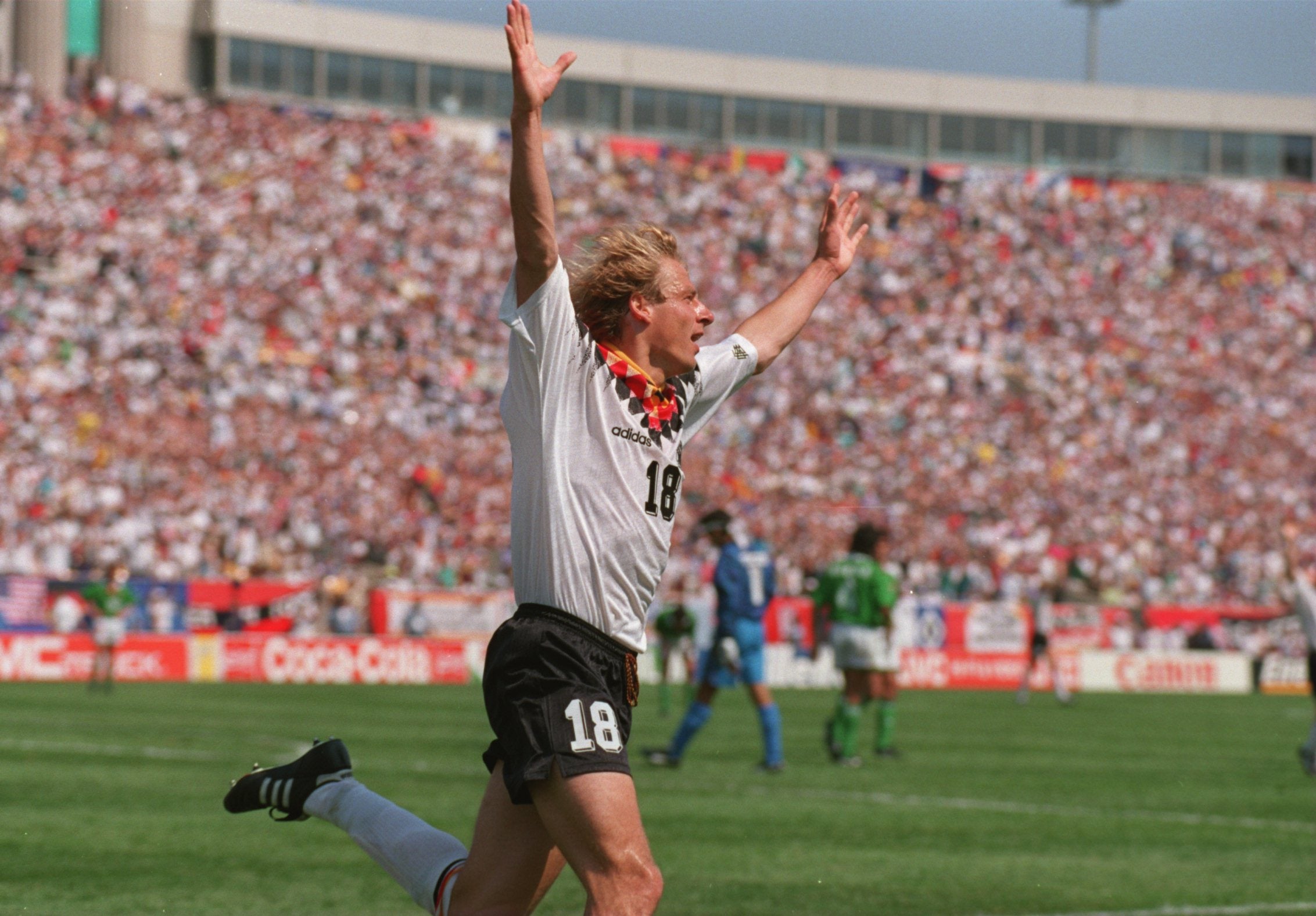
37. Gordon Banks (England)
- World Cups played: 1966, 1970
- World Cup record: Winner 1966
- Games: 9
- Clean sheets: 6
- Best moment: His “save of the century” from Pele in 1970
It says a lot that Banks’s greatest moment is not from 1966, when he kept four clean sheets in England’s winning run. He went untroubled until Eusebio’s late penalty in the semi-finals, the first goal he conceded in 721 minutes of international football. Beaten twice in the final, ultimately, it did not matter.
Fast-forward four years and Banks enjoyed and endured a dramatic tournament in Mexico. A day after being informed he’d been awarded an OBE, he made that astonishing save from Pele, clawing the Brazil legend’s powerful header away from goal as he stretched desperately behind him. It’s said that Pele remarked: “I thought that was a goal.” Banks replied: “You and me both.”
More drama was to come, though. England made it to the quarter-finals, but Banks missed the defeat to West Germany after suffering an upset stomach. While he blamed a dodgy bottle of beer, there are conspiracy theories to this day that the CIA poisoned him, in order to obstruct joint-favourites England’s progress and make Brazil’s path to glory easier for geo-political reasons.
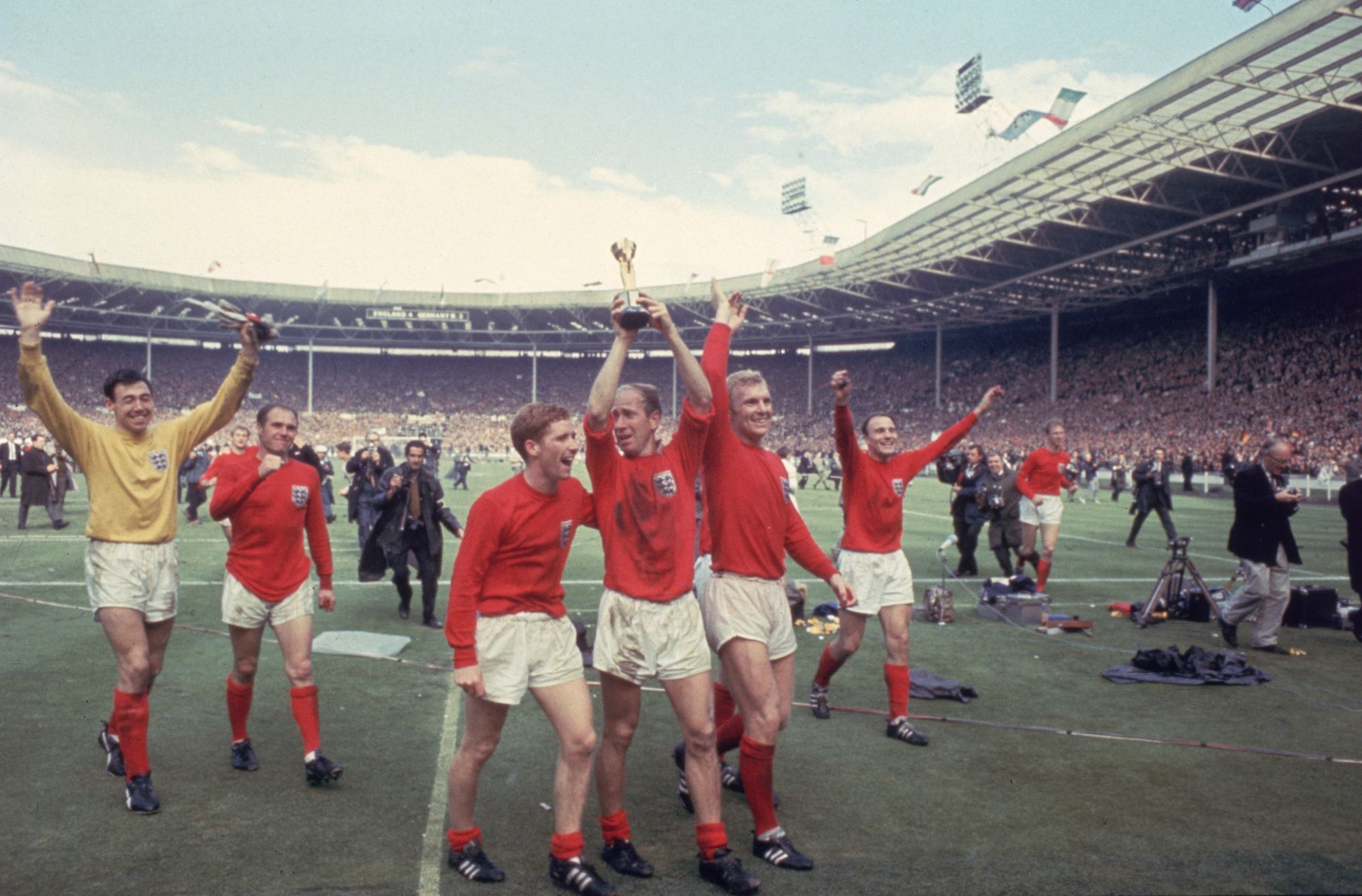
36. Philipp Lahm (Germany)
- World Cups played: 2006, 2010, 2014
- World Cup record: Winner 2014
- Games: 20
- Clean sheets: 10
- Best moment: Captaining Germany to a World Cup trophy in 2014
Lahm was undoubtedly one of Germany’s greatest ever players, captaining them at two World Cups.
In a modern era of inverting full-backs and position-less football, Lahm was one of the first players to ever be trusted to play in midfield despite being a traditional full-back by trade.
He was technically excellent, as well as someone who would cover every blade of grass in each game. With the crowning moment of his international career leading Germany to a World Cup triumph in 2014, Lahm cemented his place amongst the nation’s greats.
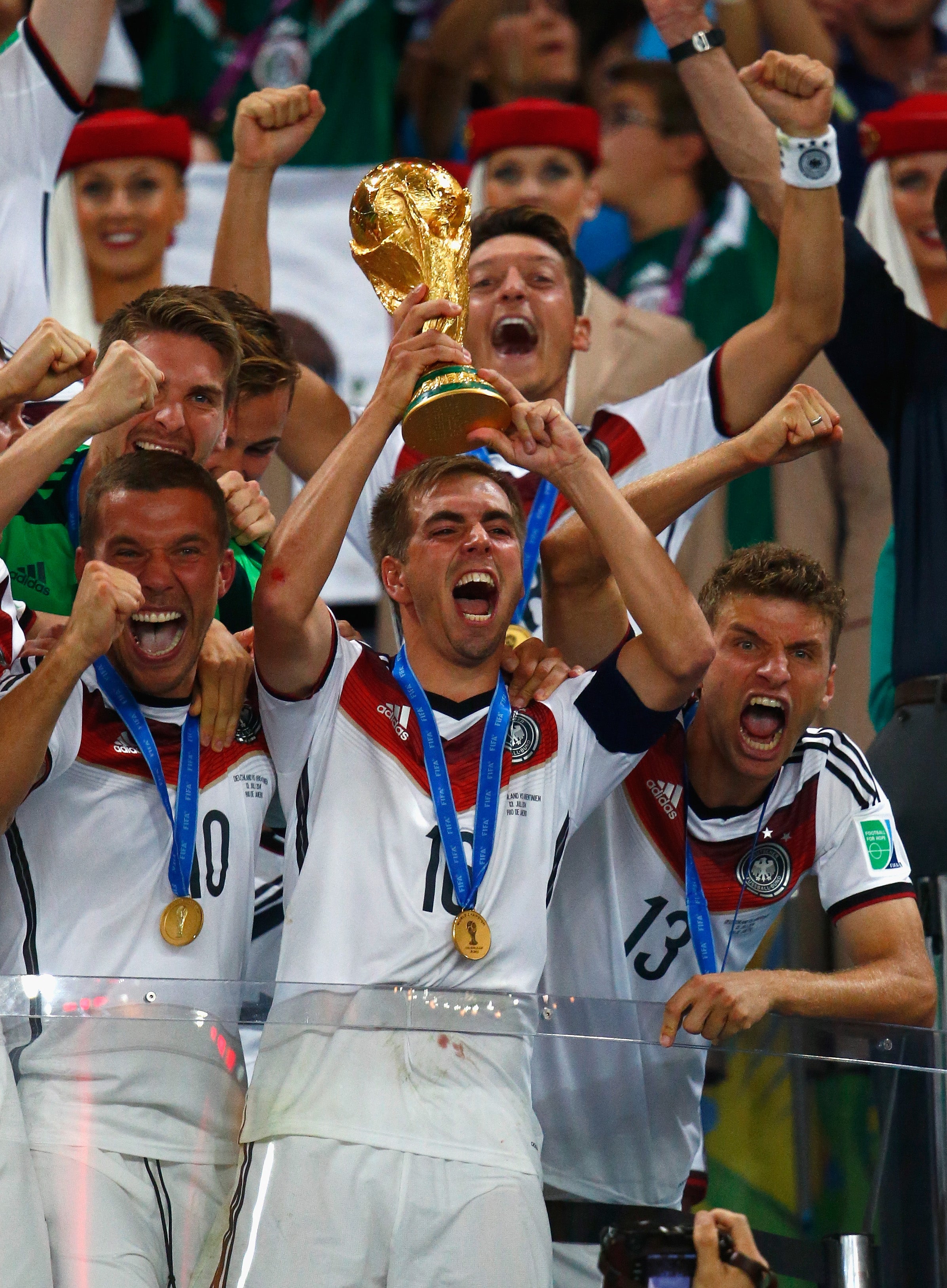
35. Ferenc Puskas (Hungary/Spain)
- World Cups played: 1954, 1962
- World Cup record: Runner-up 1954
- Games: 6
- Goals: 4
- Best moment: Scoring the opening goal in the 1954 World Cup final even if the day ended in Hungary, the “Golden Team”, suffering a defeat that would leave a mark over the country that it has never recovered from
Only one question follows the “Magical Magyars” now. Led by Puskas, the left-footed wonder, Hungary were the world’s best team and went unbeaten between 1950 and 1954.
Then, in their second game of the 1954 World Cup, Puskas suffered an ankle injury as a result of a crunching tackle during Hungary’s 8-3 victory over West Germany.
Clearly unfit, Puskas only returned in time for the final, where West Germany beat Hungary 3-2 in the “Miracle of Bern”. So, what if Puskas didn’t get injured earlier in the tournament, and what if his late equaliser was not disallowed for a disputed offside?
34. Sandor Kocsis (Hungary)
- World Cups played: 1954
- World Cup record: Runner-up 1954
- Games: 5
- Goals: 11
- Best moment: Four goals during an 8-3, group-stage pummelling of West Germany in the 1954 World Cup. Deadly throughout that game, Germany would get their revenge in the final, but Kocsis actually delivered more than his more illustrious teammate Puskas
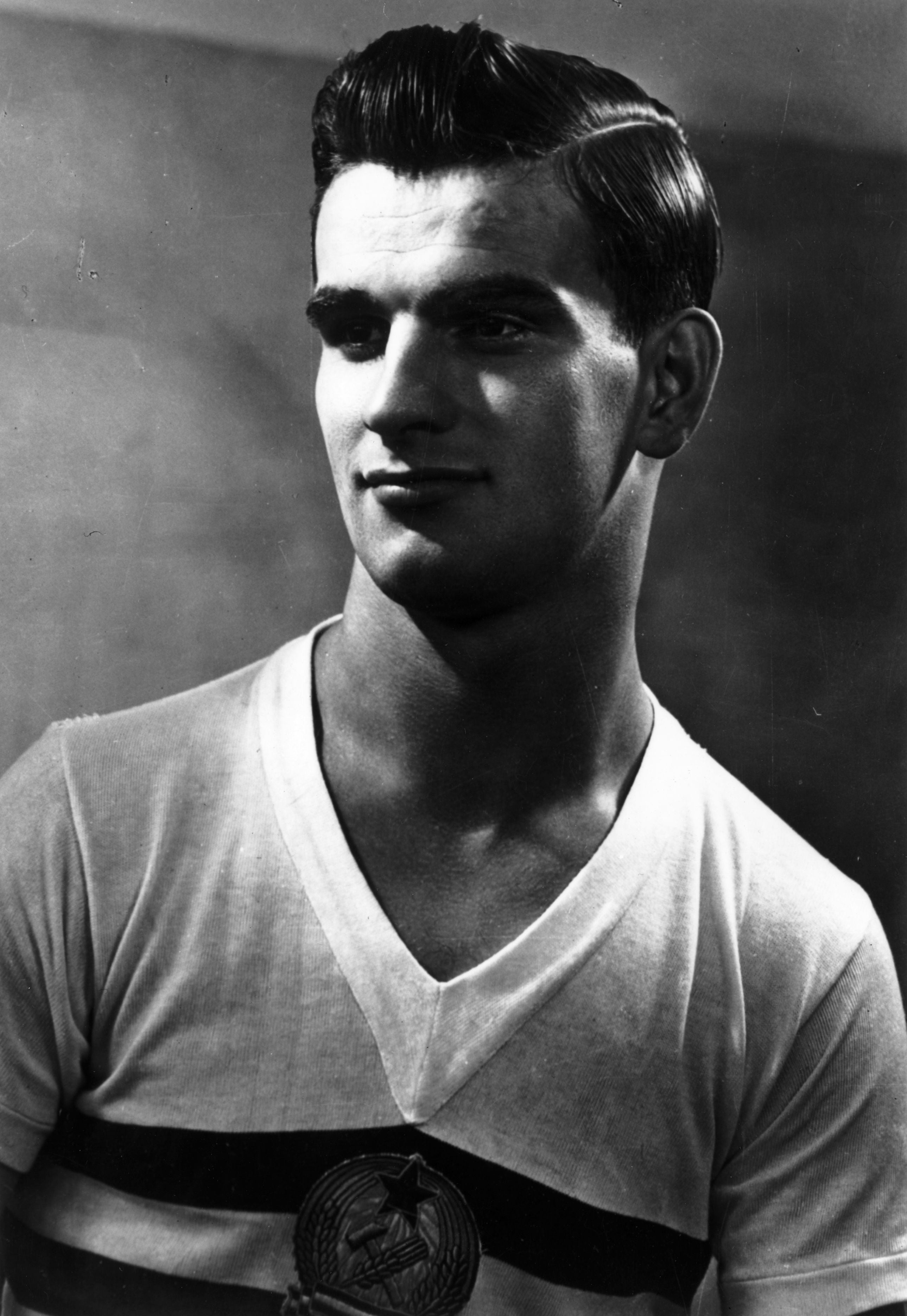
Combined with Puskas to revolutionise European football, but Kocsis was actually the superior player on the biggest stage of them all.
He proved prolific and his deadly run in 1954 saw him score four goals in one World Cup game against Germany, helping him to the Golden Boot that year and becoming the first player to score two hat-tricks in one tournament.
33. Rivaldo (Brazil)
- World Cups played: 1998, 2002
- World Cup record: Winner 2002, runner-up 1998
- Games: 14
- Goals: 8
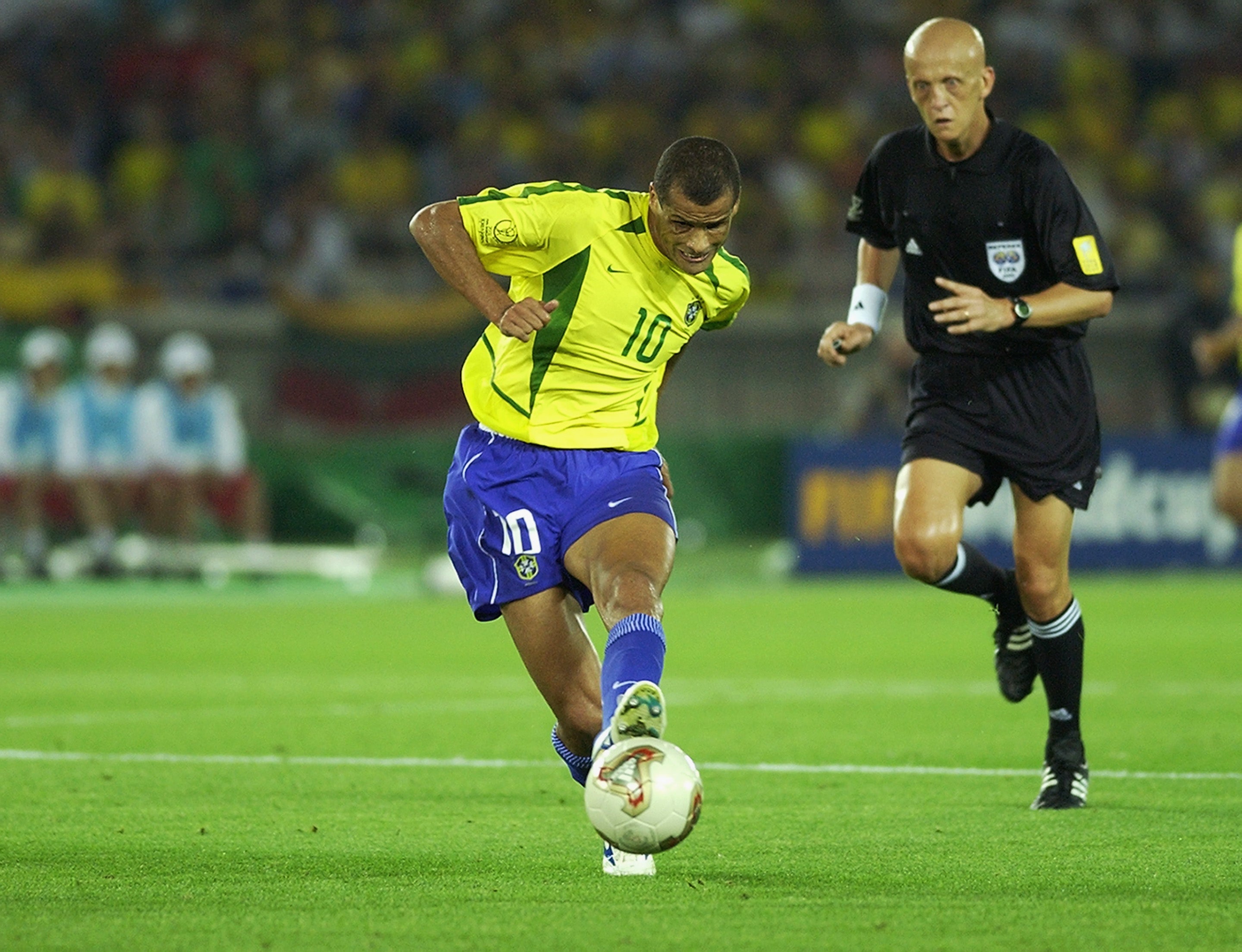
- Best moment: Though a superb volley against Belgium in the round of 16 in 2002 stands out on a personal level, lifting the World Cup as joint-top scorer at the end of the tournament was the highlight of a glittering career
Rivaldo was a key part of the Brazil team that lost the final to France in 1998, and by 2002 he had picked up a Ballon d’Or as he emerged as a leader in a side that also contained Ronaldo and Ronaldinho.
He scored five goals across seven matches in Japan and South Korea – including in every game up to the semi-finals – and his sublime dummy set up Ronaldo’s second in the final to wrap up his side’s fifth World Cup trophy. The less said about the pathetic play-acting when the ball gently hit him near the corner flag against Turkey in 2002, the better.
32. Lev Yashin (USSR)
- World Cups played: 1958, 1962, 1966, 1970
- World Cup record: Semi-finals 1966
- Games: 12
- Clean sheets: 4
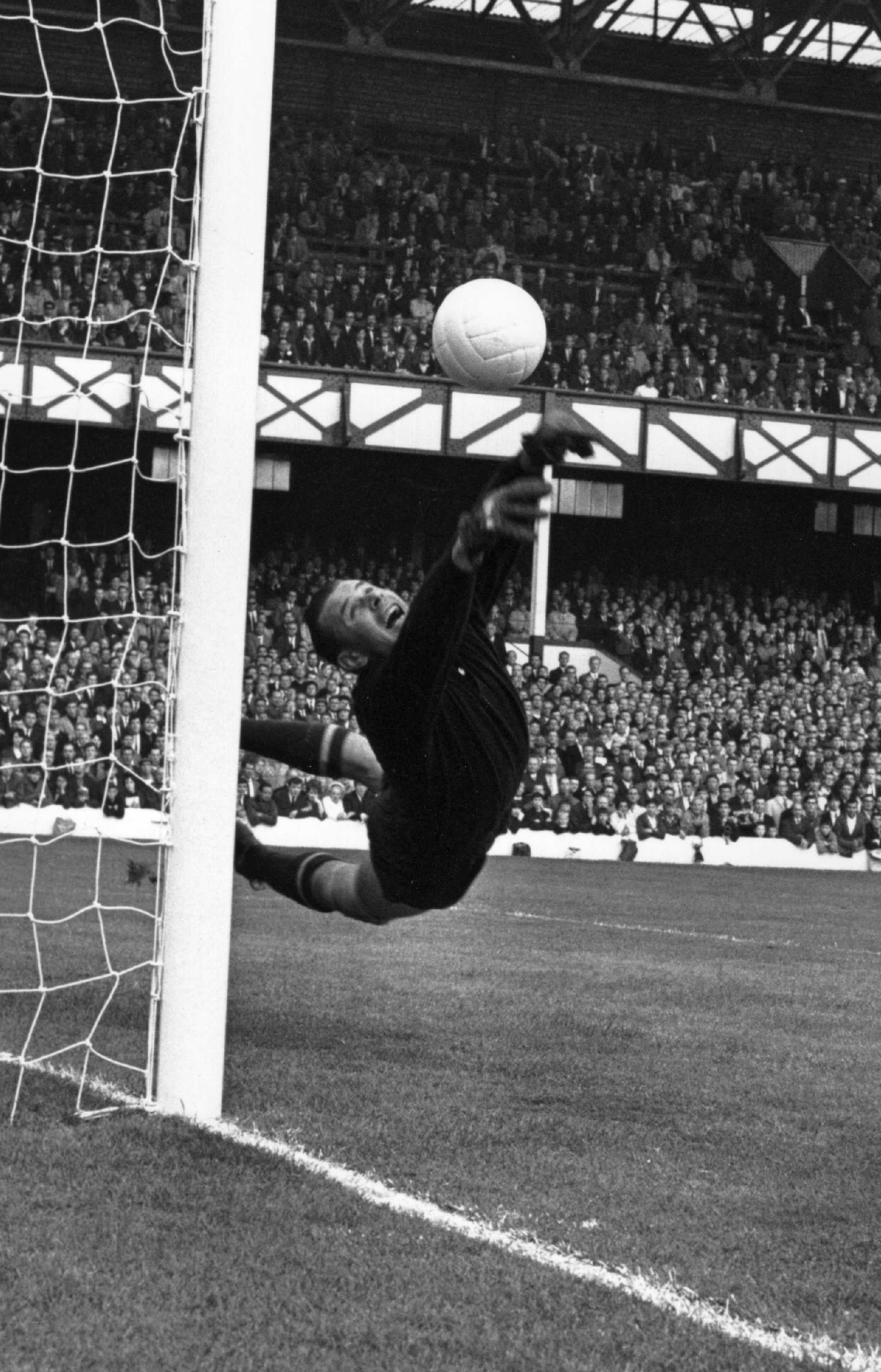
- Best moment: Facing a Pele-inspired Brazil in the 1958 World Cup, he single-handedly stopped the game becoming a rout, making a number of brilliant saves in a respectable 2-0 defeat for the USSR.
The greatest goalkeeper in the history of the sport – Lev Yashin’s athleticism, acrobatic saves and imposing presence made ‘the Black Spider’ an icon and he remains the only goalkeeper to win the Ballon d’Or (in 1963).
He allegedly saved over 150 penalties in his career and revolutionised the position by coming out to claim crosses, closing down attackers and yelling instructions at his defenders. Making four World Cup squads, Yashin was named as the goalkeeper in the all-time Fifa World Cup Dream Team in 2002 and helped the USSR to the semi-finals in 1966.
He took a very 1960s approach to fitness, saying that his secret was “having a smoke to calm your nerves, then tossing back a strong drink to tone your muscles.”
31. Thomas Muller (Germany)
- World Cups played: 2010, 2014, 2018, 2022
- World Cup record: Winner 2014
- Games: 18
- Goals: 10
- Best moment: Hat-trick in 2014 group-stage against Portugal
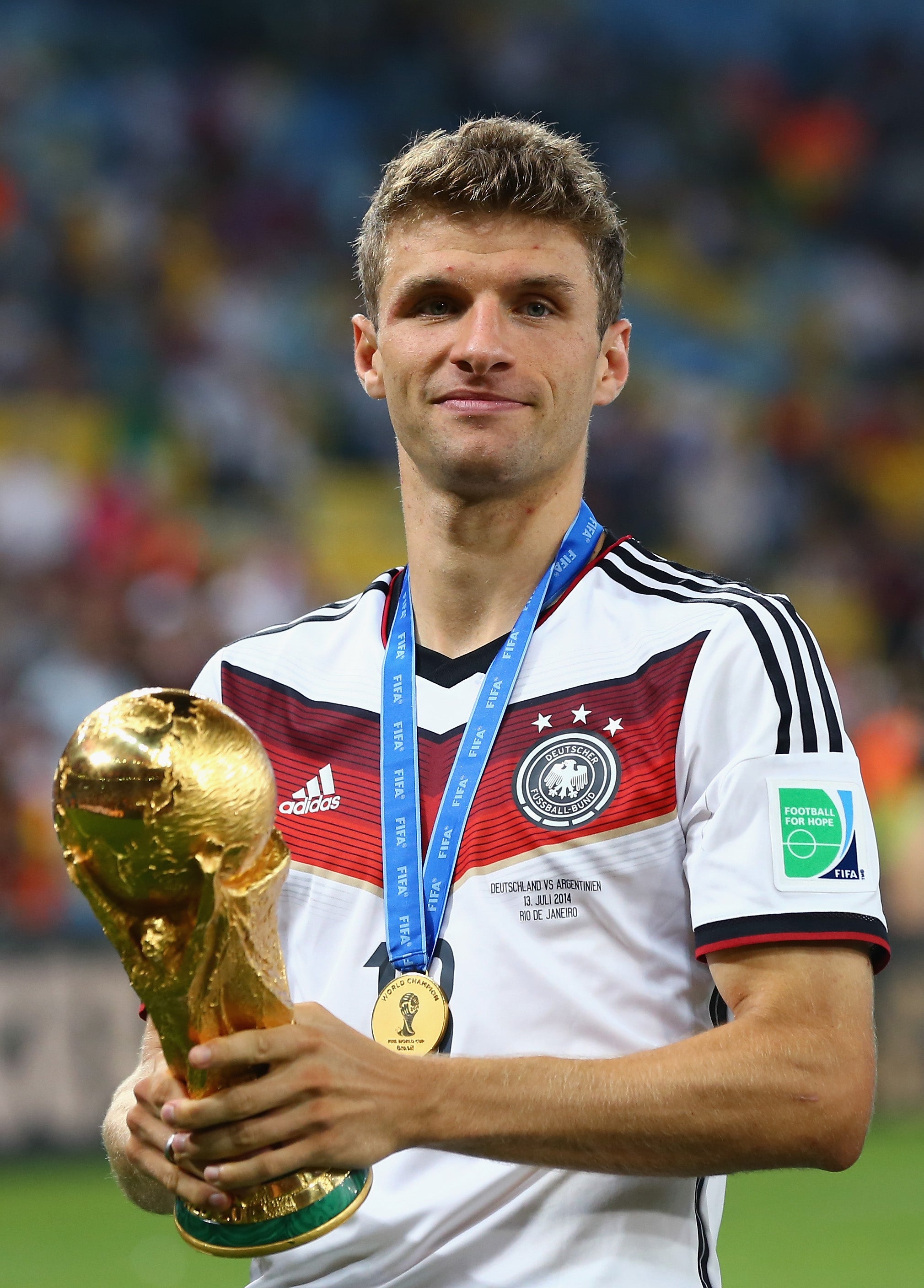
Golden Boot winner in 2010 and Silver Boot winner four years later, Muller was a player who thrived on the world stage.
From scoring his first international goal in his first World Cup appearance against Australia in 2010 and his brace against England in the last 16, to his hat-trick to open up proceedings in 2014 and his volley which set Germany on their way to their iconic 7-1 triumph versus Brazil, Muller’s early World Cup record was simply outstanding.
Perhaps his only personal blot was his needless yellow card against Argentina in 2010, which meant he missed the semi-final defeat to Spain. A tireless worker, brilliant finisher and competitive animal, Muller’s absence this summer will feel somewhat peculiar.
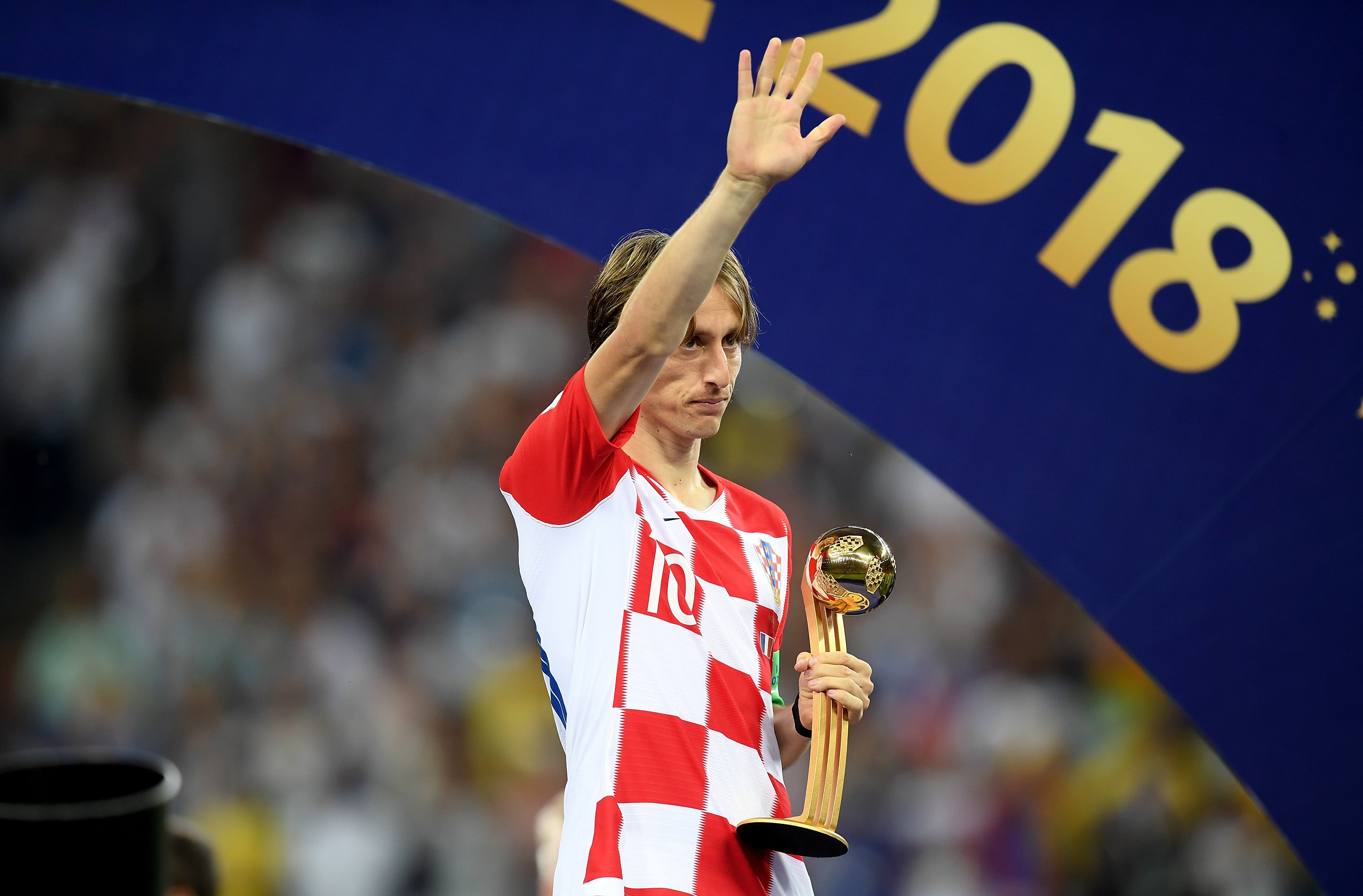
30. Luka Modric (Croatia)
- World Cups played: 2006, 2014, 2018, 2022
- World Cup record: Runner-up, 2018
- Games: 19
- Goals: 2
- Best moment: Stunning curler in 3-0 win over Argentina in 2018 group stage
In a world where the Ballon d’Or so often leans on team accolades in deciding its winner, rarely does a runner-up medal cut the mustard. After inspiring Croatia to a shock World Cup final in 2018, Modric became an exception to this.
Pulling the strings from midfield, the Real Madrid maestro produced one of the all-time great tournament campaigns and while it ended in defeat to champions France, he still beat off their star performers – the likes of Kylian Mbappe and Paul Pogba – to the Golden Ball.
Four years later, he led his country to a third-place finish, dumping out Brazil in the process. Once destined for the group-stage exit, Croatia are now serious players. Modric has been their torchbearer – and at 40, he’s still got life.
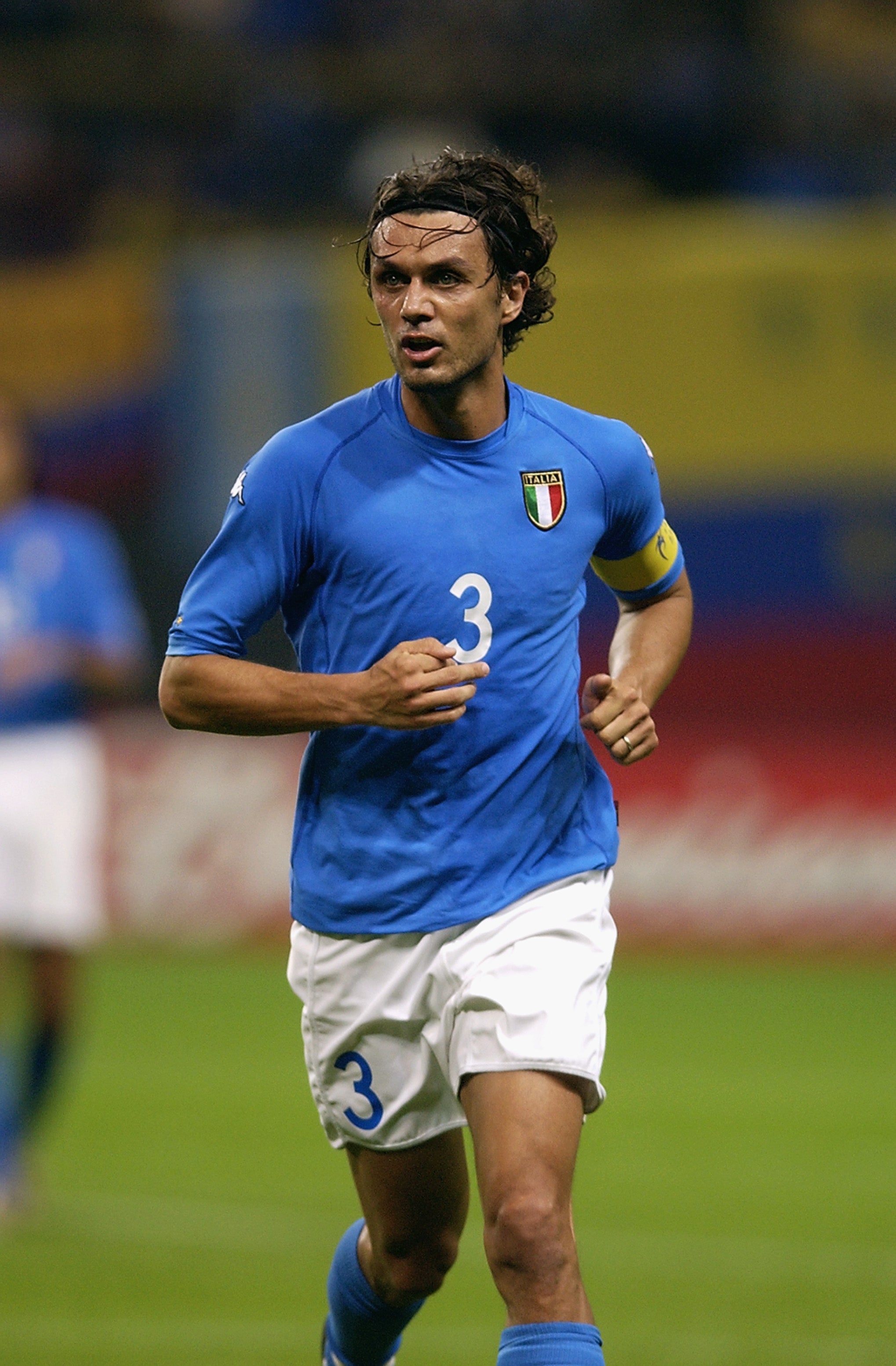
29. Paolo Maldini (Italy)
- World Cups played: 1990, 1994, 1998, 2002
- World Cup record: Runner-up, 1994
- Games: 23
- Clean sheets: 11
- Best moment: Five consecutive clean sheets at home tournament in 1990
In four World Cups, one of the game’s greatest left-backs played 23 matches and was only ever beaten on penalties or a golden goal in the knockout stages. Third at Italia 90, they were defeated by Brazil in a final shootout at USA 94, before spot kicks were their undoing against eventual winners France in ‘98.
The extra-time loss to South Korea in 2002 was the sorest of all for Il Capitano because of a series of controversial decisions made by Ecuadorian referee Byron Moreno.
He was still motoring along at AC Milan, though, when Marcelo Lippi tried to beckon him out of international retirement for 2006. Maldini turned the offer down, pointing to a persistent knee injury, and the Azzurri went on to win the tournament. “It was destiny, I guess,” he said.
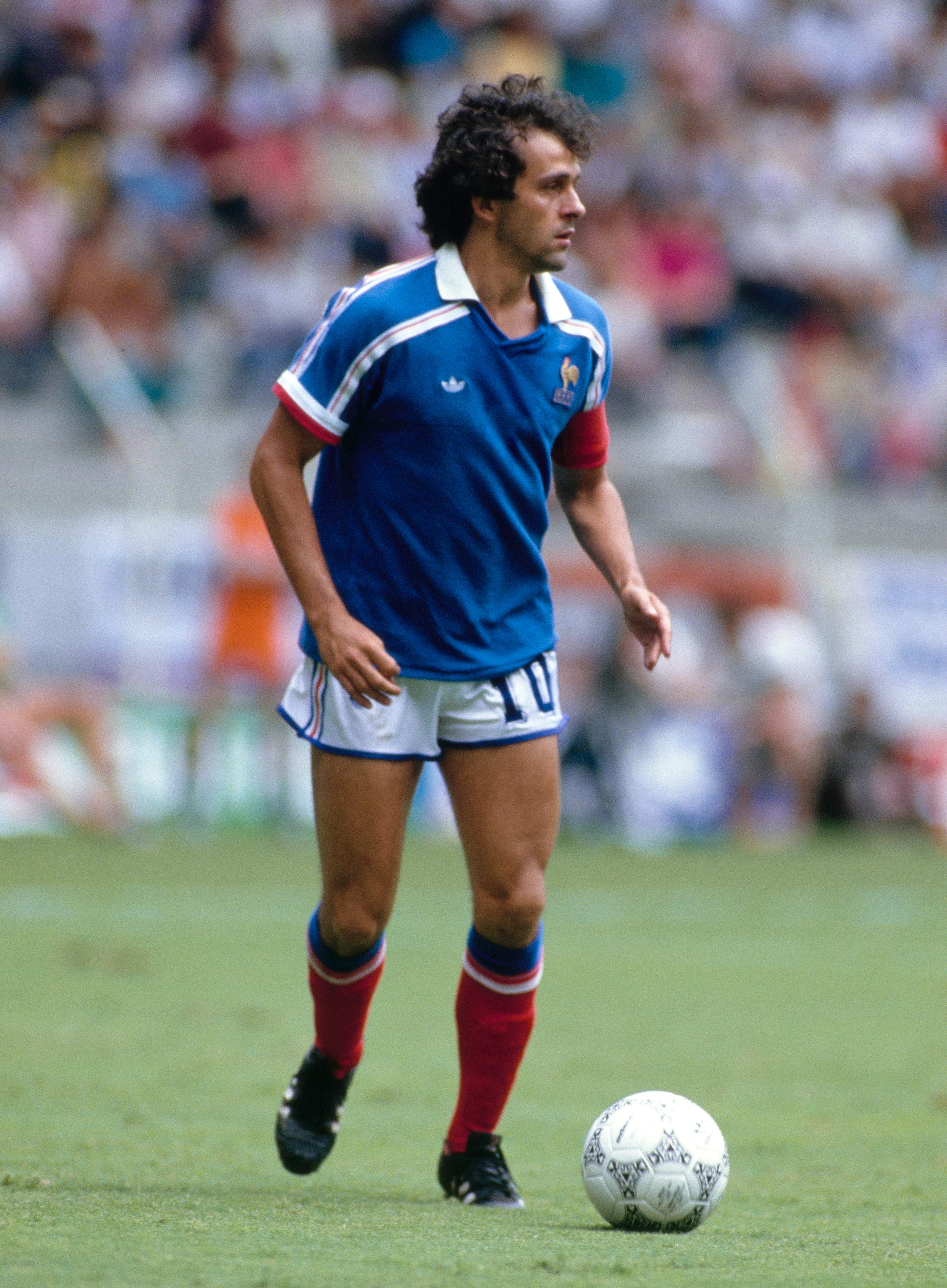
28. Michel Platini (France)
- World Cups played: 1978, 1982, 1986
- World Cup record: Semi-finals, 1982, 1986
- Games: 14
- Goals: 5
- Best moment: Scoring the equalising goal against Brazil in the 1986 quarter-finals, a game which France ended up winning on penalties.
One of the great number 10’s of his era, Michel Platini was more than just a creative marvel.
He has an eye-watering goal record for Les Bleus, scoring 41 in his 72 overall caps, and bagging five across his three World Cup campaigns.
His iconic free-kicks and intelligent play saw him named “French Player Of The Century” in 1999. He is also one of very few players to play for two national teams at senior level, after he came out of retirement to play an exhibition game for Kuwait at the request of the Kuwaiti Emir in 1988.
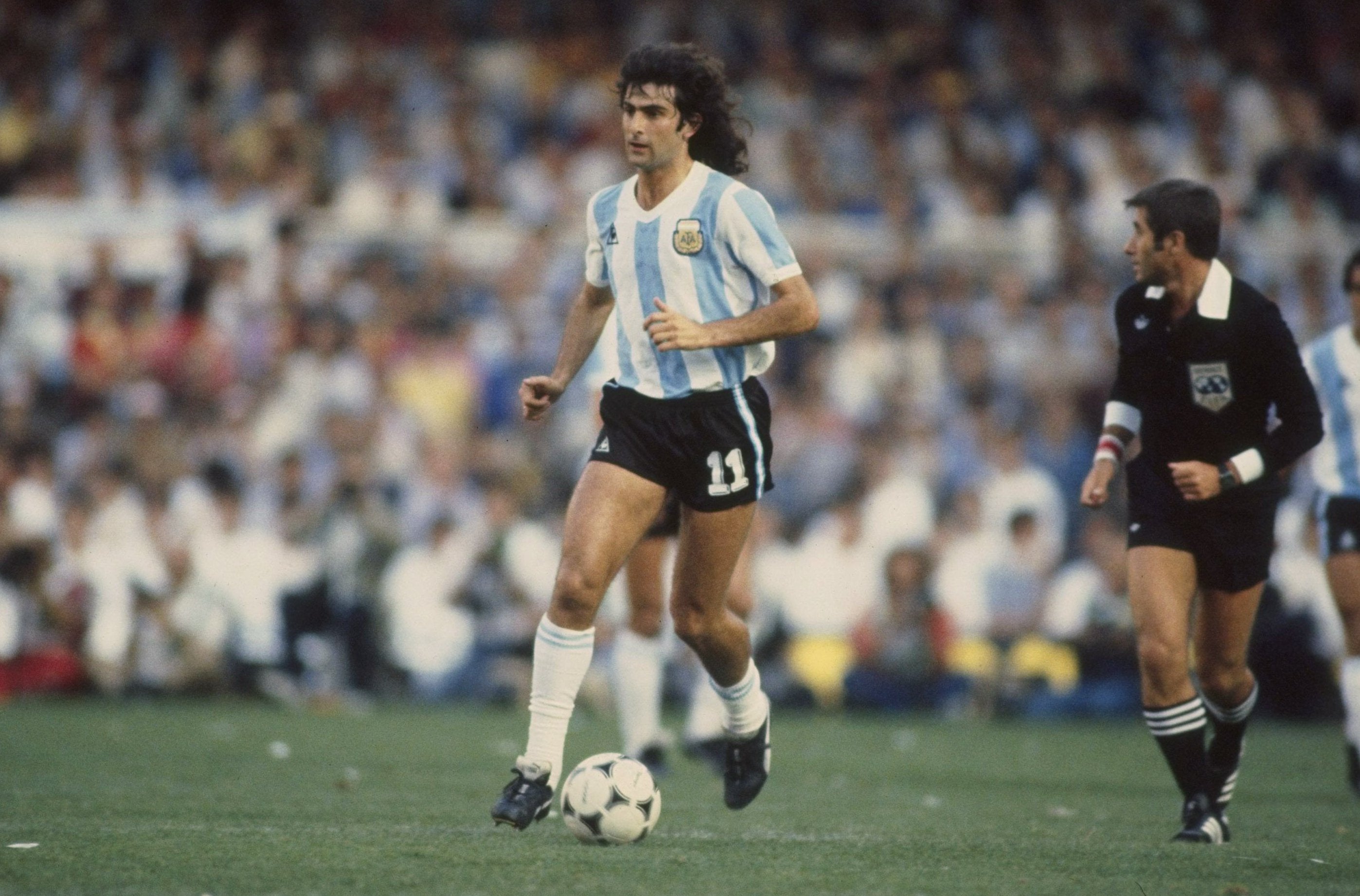
27. Mario Kempes (Argentina)
- World Cups played: 1974, 1978, 1982
- World Cup record: Winner, 1978
- Games: 18
- Goals: 6
- Best moment: The winning goal in the 105th minute of the 1978 World Cup final. Kempes burst into the box, evaded two sliding tackles, saw his initial shot saved and bundled in the bouncing rebound to send Estadio River Plate into raptures.
Only three men have won the Golden Boot, the Golden Ball and lifted the trophy at the same World Cup, so Mario Kempes is part of an incredibly exclusive club.
The 1978 tournament on home soil where he achieved the feat was his masterpiece, although the 23-year-old didn’t get going until the second group stage when he scored twice against Poland, twice in the controversial 6-0 win over Peru and twice in the 3-1 extra-time win over Netherlands in the final.
Remarkably, for such an accomplished No 9, he didn’t score a single goal in his other 15 World Cup matches, but his inspirational 11-day spell in 1978 is enough.
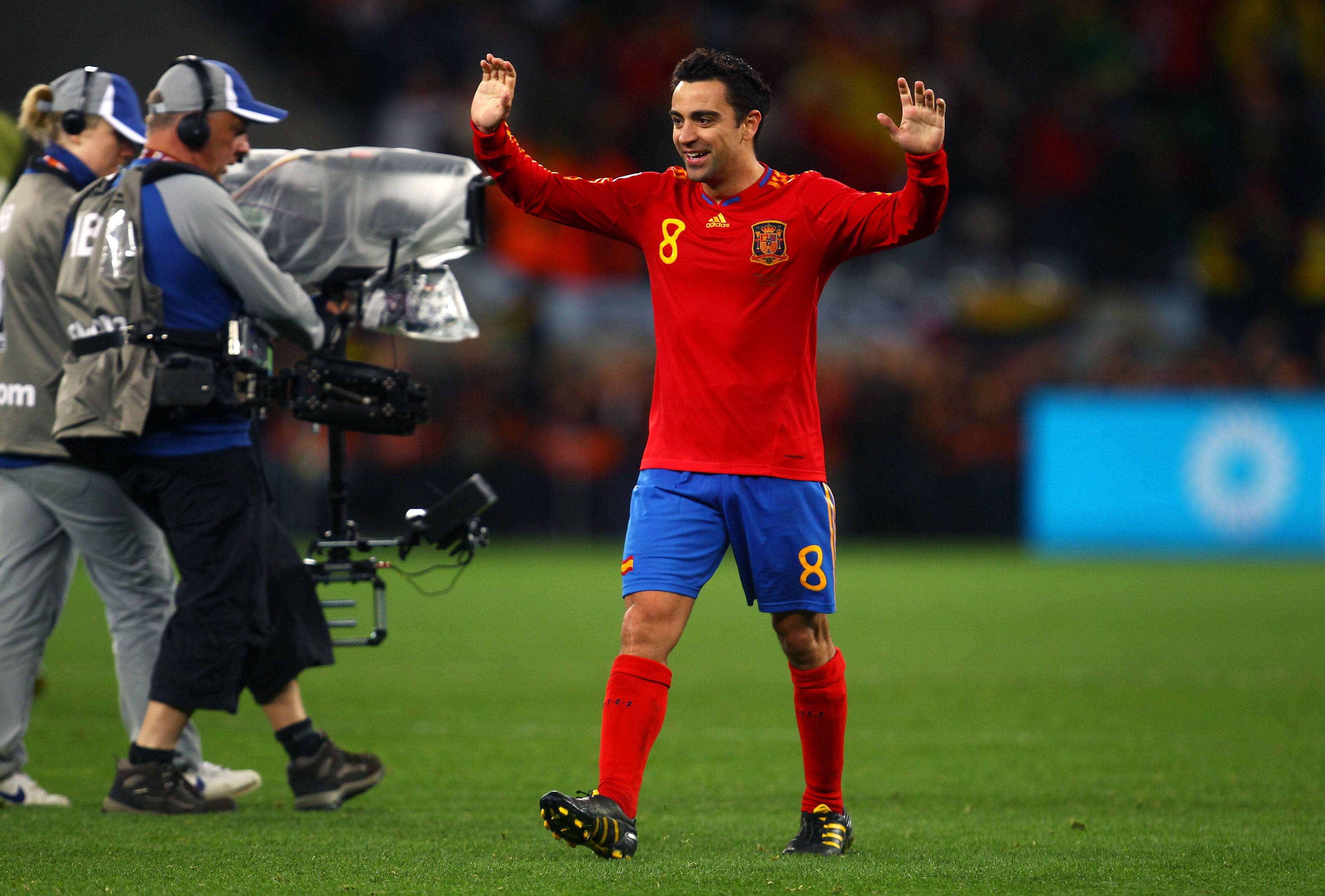
26. Xavi (Spain)
- World Cups played: 2002, 2006, 2010, 2014
- World Cup record: Winner, 2010
- Games: 15
- Goals: 0
- Best moment: 2010 World Cup semi-final versus Germany. A masterful performance of possession-based football saw Xavi win the man of the match award but it was his corner kick, swung onto the head of Carles Puyol, that set up the winning goal and sent Spain through to the final.
Forever to be remembered as a Spanish midfield maestro, Xavi’s partnership with Andres Iniesta will go down as one of the greatest of all time.
Across three major tournaments between 2008-2012, including the 2010 World Cup in South Africa, the duo were unstoppable as Spain proved they were the best team in the world. Described as the ‘beating heart’ of the Spanish team in 2010, Xavi provided the highest number of accurate passes and covered more ground per game than any other player.
His partner, Iniesta, took the plaudits in the final, but Xavi’s mastery of tiki-taka was unmatched by his peers.
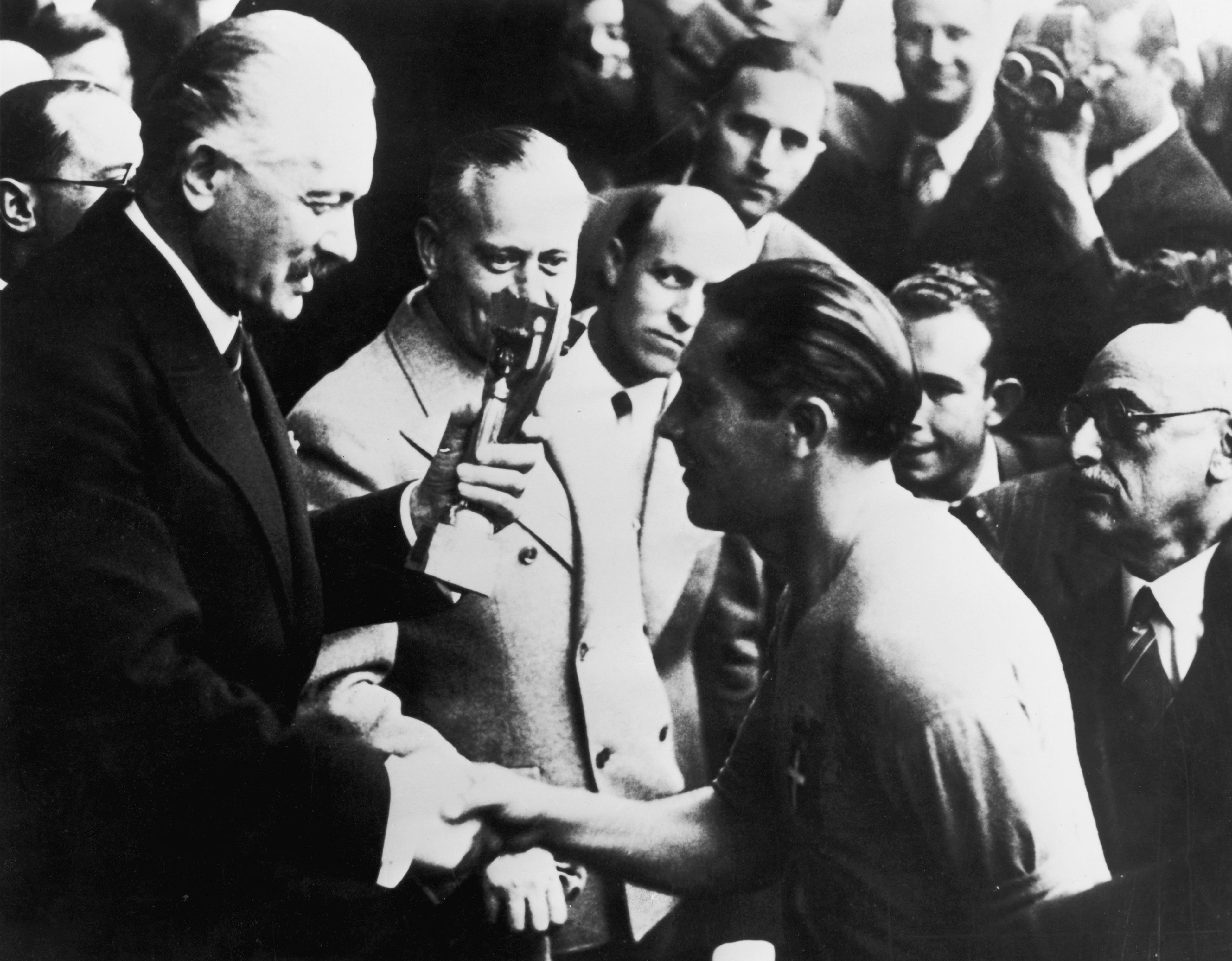
25. Giuseppe Meazza (Italy)
- World Cups played: 1934, 1938
- World Cup record: Winner 1934, 1938
- Games: 9
- Goals: 3
- Best moment: With Italy leading Brazil 1-0 in the 1938 semi-final, Meazza stepped up to take a penalty. His shorts suddenly fell down after the elastic in them ripped, so he held his shorts up with his left hand and still managed to score the spot-kick. Italy won the match 2-1 to reach the final.
A hard-drinking, brothel-visiting, chain-smoking playboy known as Il Genio (‘the genius’) for his on-pitch brilliance, Giuseppe Meazza is everything you want from a 1930s sporting icon.
The San Siro is officially called Stadio Giuseppe Meazza for a reason… One of the best, and most important, footballers in the first half of the 20th century, he won the 1934 and 1938 World Cups with Italy, claiming the Golden Ball for best player at the former and captaining the Azzurri in the latter.
A prolific goalscorer with an eye for the spectacular, he also delivered two sumptuous assists against Hungary in the 1938 final.
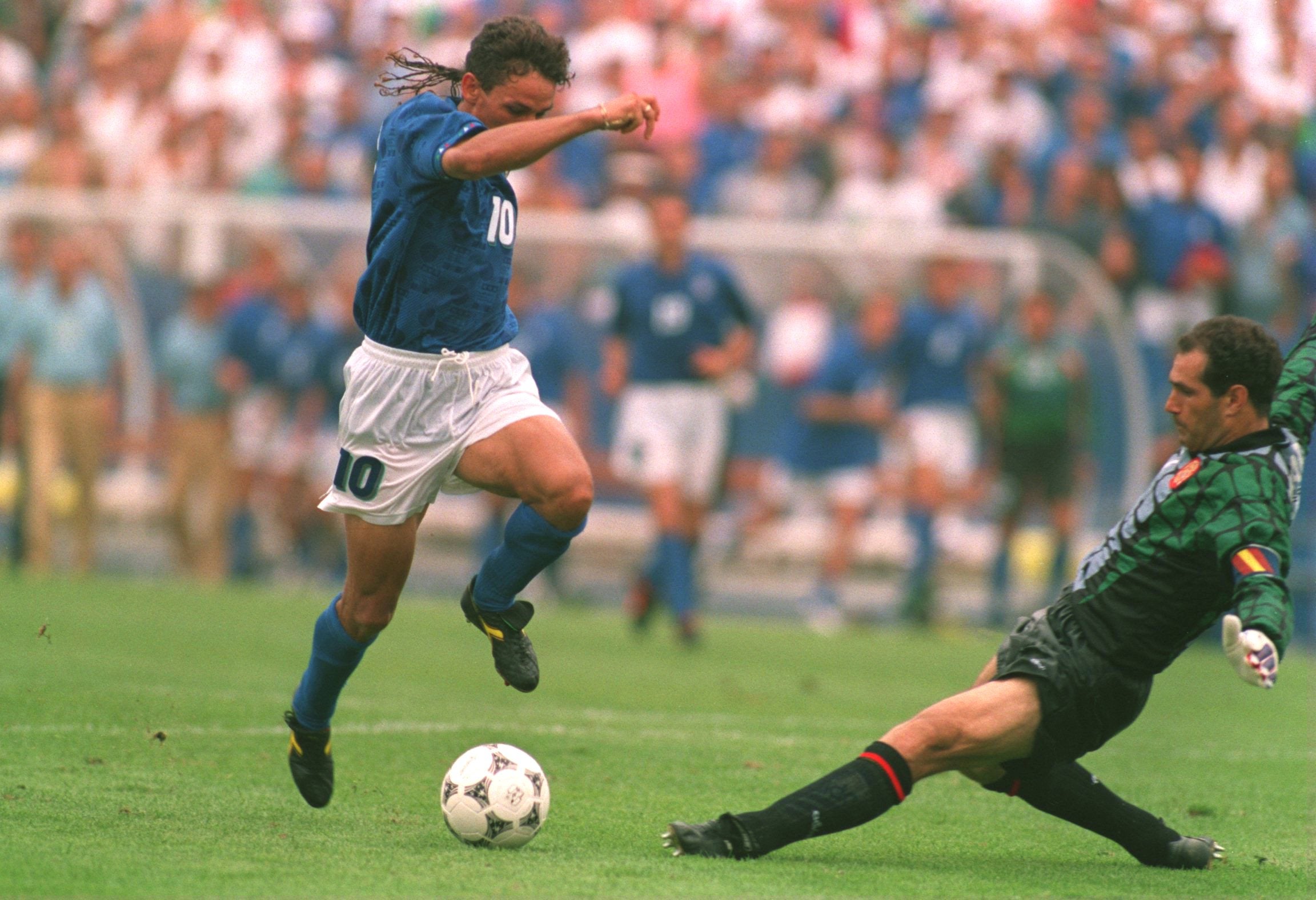
24. Roberto Baggio (Italy)
- World Cups played: 1990, 1994, 1998
- World Cup best finish: Runner-up, 1994
- Games: 16
- Goals: 9
- Best moment: Clutch brace against Nigeria to save 10-man Italy from elimination in ’94.
Roberto Baggio’s World Cup story is one of cruelty; his crucial penalty miss in the 1994 final will forever be the lasting memory of the Italian on football’s grandest stage.
That’s an injustice, because Baggio’s ’94 campaign was one for the ages. He dragged Italy through the knockouts, his five goals all decisive in beating Nigeria, Spain and Bulgaria to get what was by no means a prime Italy squad into that final with Brazil.
The 1993 Ballon d’Or winner is also the only Italian to score at three different World Cups in history. If not for that miss, he would probably crack the top 10. But there is no doubt of his worth in the top half of this list.
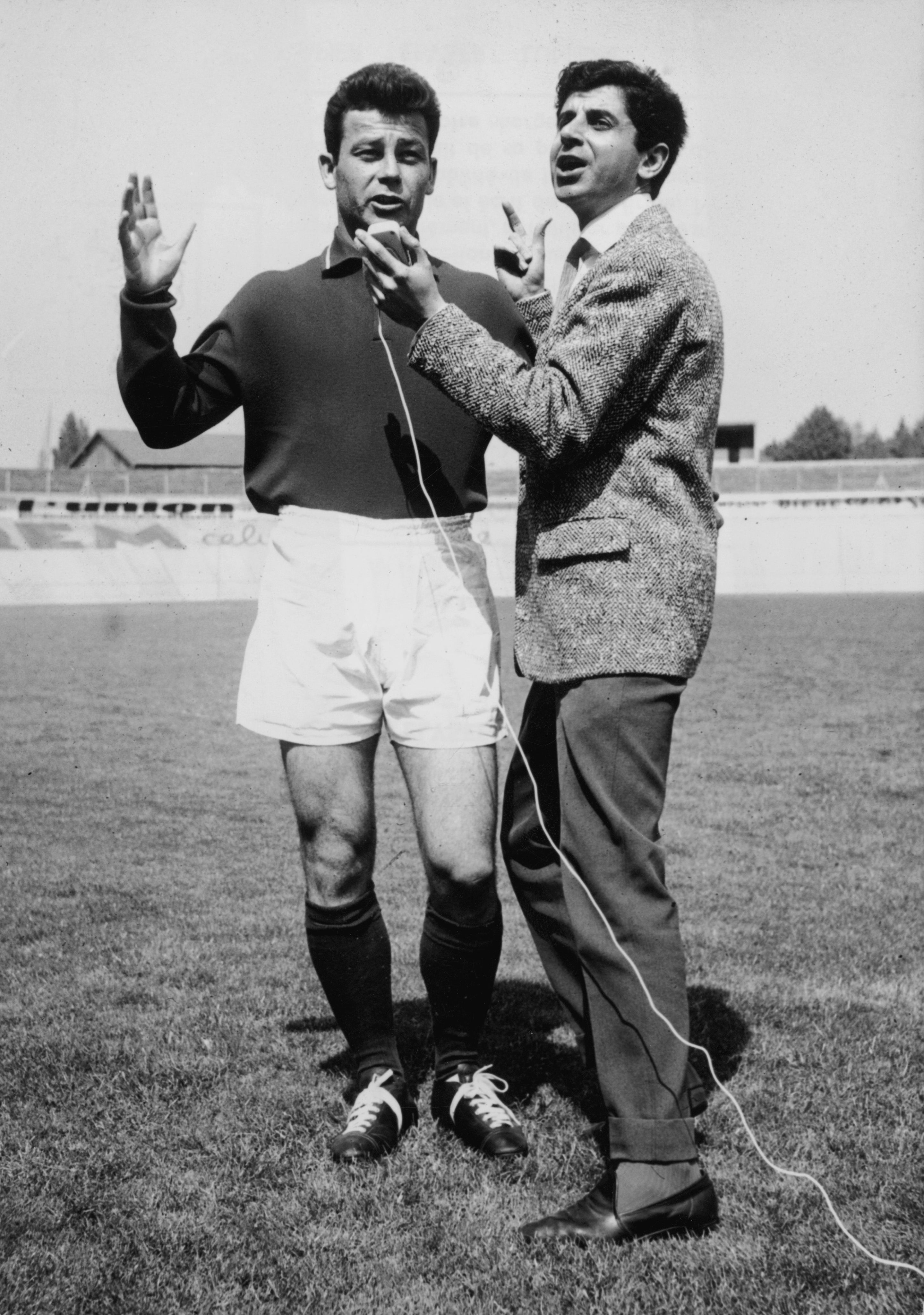
23. Just Fontaine (France)
- World Cups played: 1958
- World Cup record: Semi-finals, 1958
- Games: 6
- Goals: 13
- Best moment: Announcing himself on to the World Cup stage with a hat-trick against Paraguay in France’s opening game, while wearing borrowed boots.
The ultimate one-tournament wonder? Just Fontaine went to Sweden ‘58 as a back-up striker who had to borrow a pair of boots and left it as a World Cup legend.
His frankly ludicrous record of 13 goals in a single tournament will never be broken. While dazzlingly talented strike partner Raymond Kopa pulled the strings, Moroccan-born Fontaine averaged more than two goals per game in that World Cup (scoring 13 in six) including a hat-trick against Paraguay and four against West Germany in the third-place play-off.
However, a 5-2 loss to a Pele-inspired Brazil in the semi-finals ended France’s dreams of glory.
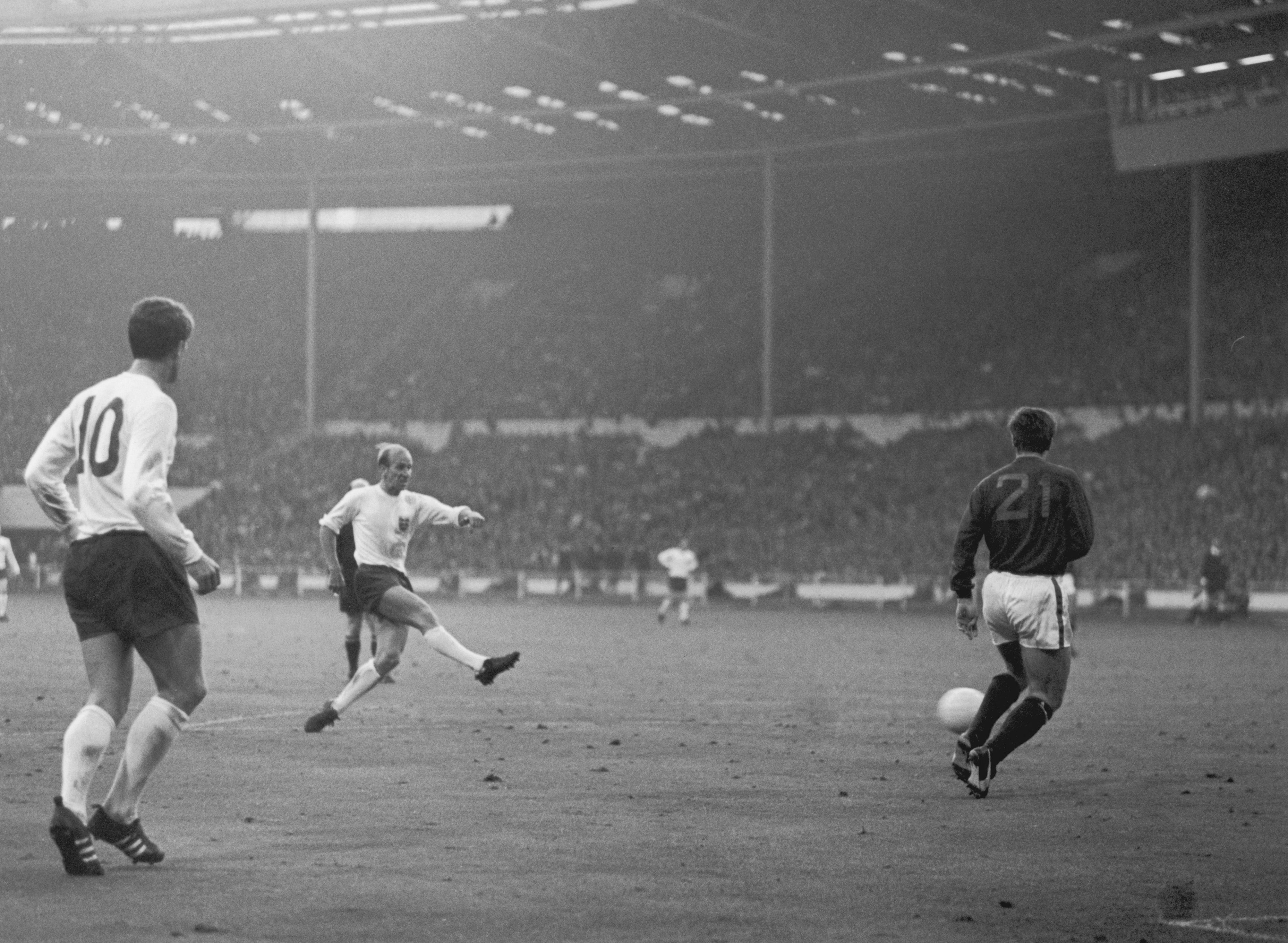
22. Bobby Charlton (England)
- World Cups played: 1958, 1962, 1966, 1970
- World Cup record: Winner, 1966
- Games: 14
- Goals: 4
- Best moment: It might sound strange not to call the win in the 1966 final Charlton’s best moment, but the Englishman’s brace in the 2-1 win over Eusebio’s Portugal side was a pivotal moment for the Three Lions and a notable personal milestone on his way to picking up the 1966 Ballon d’Or.
1966 was Charlton’s third World Cup, and while the Manchester United man had not managed to make his mark in 1958 or 1962, the stage was set as Sir Alf Ramsey’s side hosted the 1966 edition.
By now, Charlton was the key man in the Three Lions team, and he showed his worth with the only goal in the win over Mexico and both goals in the semi-final against Portugal.
His displays helped him win the Ballon d’Or that year, capping off his rise to the top of the game just eight years after the Munich Disaster.
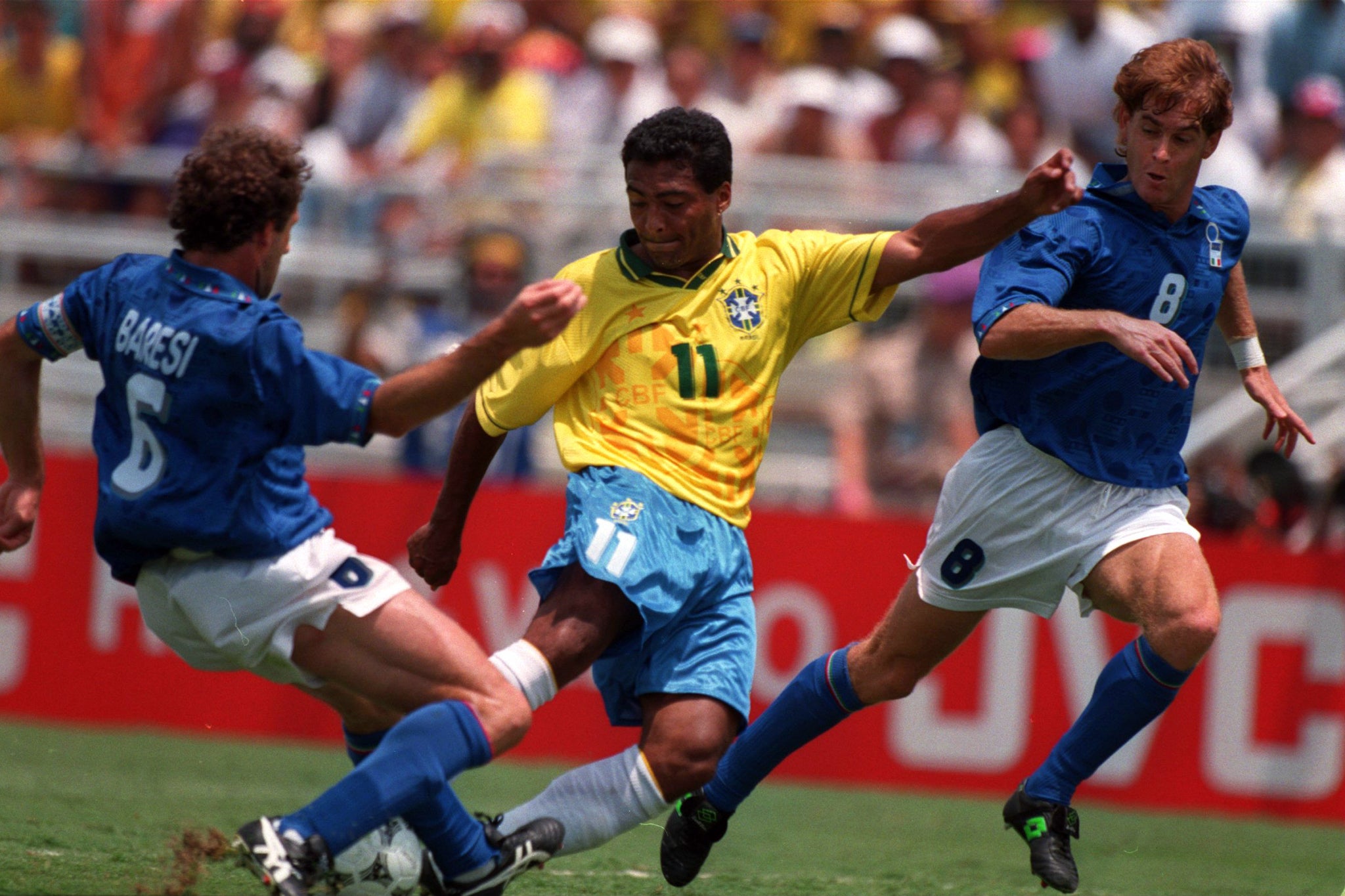
21. Romario (Brazil)
- World Cups played: 1990, 1994
- World Cup record: Winner, 1994
- Games: 10
- Goals: 5
- Best moment: His semi-final header against Sweden broke the deadlock and booked Brazil’s place in the final.
It remains a travesty that one of Brazil’s great strikers effectively played only one World Cup, barely appearing in 1990 due to injury and being omitted from the squad in 1998 and 2002.
But Romario was the undoubted star of 1994, helped by sidekick Bebeto, scoring five goals as he led Brazil to glory.
20. Carlos Alberto (Brazil)
- World Cups played: 1970
- World Cup record: Winner, 1970
- Games: 6
- Goals: 1
- Clean sheets: 1
- Best moment: That goal in the 1970 final. A nine-pass move, the ball was laid on a plate by Pele to a marauding Alberto storming down the right and the captain struck a fierce 73mph shot, first-time, into the far corner. It was the icing on the cake, and Brazil were world champions for a third time.
In a team with astonishing technical ability and talent, Alberto was a dynamic leader who glued the famous Brazil 1970 World Cup squad together.
While he missed out on the 1966 squad, which crashed out in the group stages, and a knee injury ruled him out of the 1974 tournament, the tough-tackling and loud-mouthed Alberto played every minute of the 1970 run in Mexico.
His goal in the final is one of the most iconic moments in World Cup history, sealing a 4-1 triumph