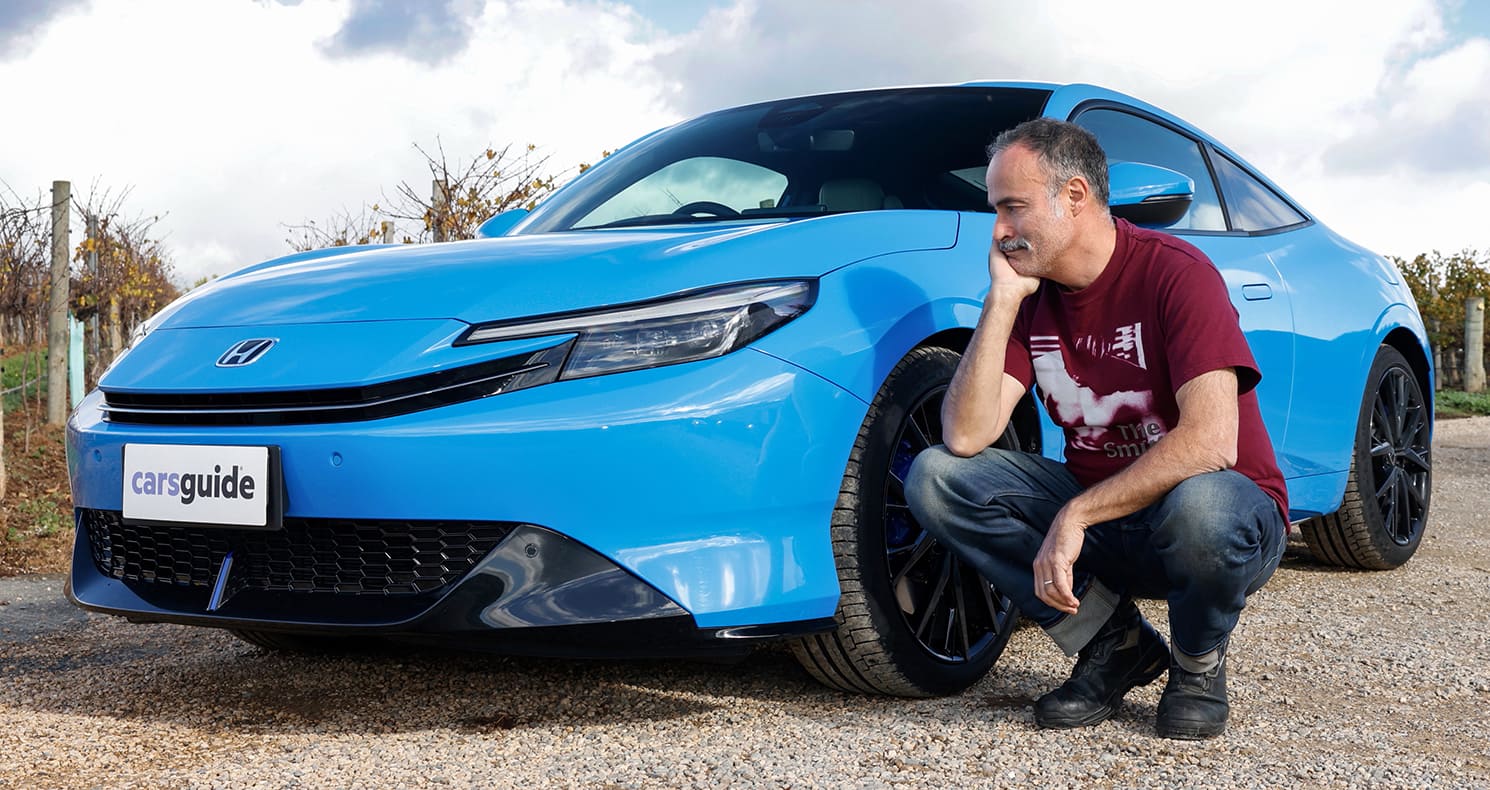
Honda is a company that rarely looks back. Badge aside, the resurrected Prelude series is more about being revolutionary than retro, with not even any classic-era styling cues (though a few likely Porsche ones). In fact, Honda made it clear this was created as a hybrid sports car first, with the name settled on later. Probably by marketing.
Honda cancels electric car plans to focus on hybrids from 2027 to potentially join the 2027 Honda CR-V and ZR-V in Australia.
Honda says 80 years of heritage and top products like 2026 Honda CR-V hybrid SUV keep brand competitive against Chinese brands like BYD, GWM and Chery.
2026 Honda ZR-V gets cheaper hybrid options to battle Hyundai Kona and Toyota Corolla Cross.
It could just as easily have been branded Integra, which – given the shared Civic platform and liftback when previous Preludes had two doors only – might have been the case, except that name is already on an Acura and Chinese GAC version of Honda’s venerable small car. That said, its new sports car is arguably more Prelude in spirit than even some of the past originals were anyway, and then some, and here’s why.
Price and features – Does it represent good value for the price? What features does it come with? 9 / 10
The 2026 Prelude is, for now, a single-grade e:HEV hybrid-only model at $65,000. But that’s drive-away. Besides electrification, the Prelude’s standard specification reads like a BMW M’s, with adaptive dampers, Brembo brakes up front, dual-pinion electric power steering, a dual-axis strut front suspension from the Civic Type R, 19-inch light alloy wheels to reduce unsprung weight and shod with Continental PremiumContact 6 tyres, four driving modes, ‘S+ Shift’ with paddles that either provide stepped regenerative-braking levels to boost efficiency or fake eight-speed ratio points from the electronic single-speed transmission and active sound control (‘enhanced’ exhaust noise – that actually sounds great) to exploit. You’ll also find ergonomically bolstered asymmetrical front sports seats that look fantastic (and come with heating), climate control air-conditioning, Bose premium audio, a 9.0-inch multimedia touchscreen, a 10.2-inch customisable electronic instrument cluster, wireless Apple CarPlay/Android Auto and smartphone charger, USB-C outlets, adaptive cruise control, and Google Built-In with free subscription, along with the latest ‘Honda Connect’ remote-car access tech, for the first three years.
Fitted, too, is a rollcall of advanced driver assist systems (ADAS), which we’ll get into in more detail further down. The only thing missing is a spare wheel. You’re stuck with a totally inadequate tyre-repair kit. And if you’re reading this as a die-hard Prelude tragic, you may want a manual gearbox, which isn’t available, sadly (Honda’s 2011 CR-Z managed to combine hybrid and three pedals, so why not Prelude?). And there’s no sunroof, due to roof-bracing engineering that bears impressive dividends elsewhere. More on that later on as well.
Now, even drive-away, $65K sounds expensive, right? Yet the massively-popular 1988 Si 4WS that defines the classic-era Preludes started from nearly $90,000 in today’s money.
Today, traditional 2+2-seater coupe rivals like the Toyota Celica and Nissan 200SX no longer exist, more’s the pity, leaving a smattering of indirect sports car alternatives. On the cheaper side is the smaller, rear-wheel drive (RWD) two-seater-only Mazda MX-5, with the Soft Top from about $47,000 (all prices are ex-Melbourne and approximate drive-away for easier comparison) to $57,000, or $59,000 and $62,000 for the gorgeous RF Retractable Fastback bodystyle. The same goes for the Toyota GR86/Subaru BRZ twins, which are also smaller, RWD 2+2 coupes alongside the Prelude, costing roughly between $48,000 and $52,000/$51,000-$57,000, respectively.
Note that, at this juncture, only the more expensive versions of each have equipment levels aligning to the Honda’s. From here-on in, every other two-door coupe is considerably more expensive, including the rousing Nissan Z from around $83,000, manly Ford Mustang 2.3-litre EcoBoost from nearly $81,000 (the GT V8’s from $95,000) and sophisticated BMW 230i from approximately $92,000, while the least-expensive hybrid is the strikingly opulent Lexus LC 500h that’s north of $240,000.
Honda reckons it’s svelte new hybrid 2+2 is right in the middle of the sports coupe Goldilocks zone. And we tend to agree that it is startlingly good value for money.
And that’s not taking in the Prelude’s efficiency and available warranty, either.
Design – Is there anything interesting about its design? 9 / 10
The Prelude sits on the Civic’s architecture, but uses the already-legendary (FL5) Type R’s architecture, brandishing dual-axis MacPherson strut suspension up-front and a multi-link rear-end. This is no idle reskin. The coupe is 47mm shorter at 4522mm long, 78mm broader at 1880mm and 60mm shorter at 1355mm tall, while 120mm has been cut from the wheelbase at 2605mm. Honda reckons it’s created a “perfect height-to-width ratio” as a result.
That there is so much conventional small-car engineering underneath something as visually arresting as this sleek aero two-door coupe is amazing.
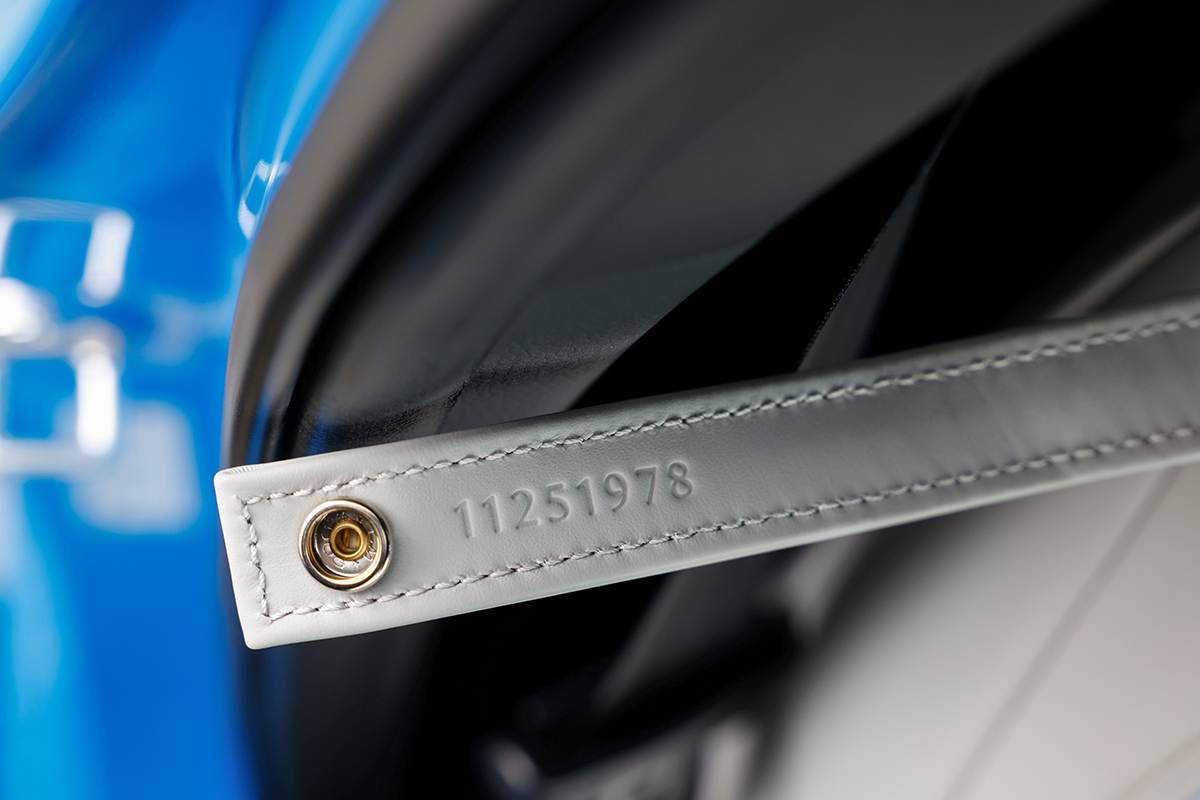
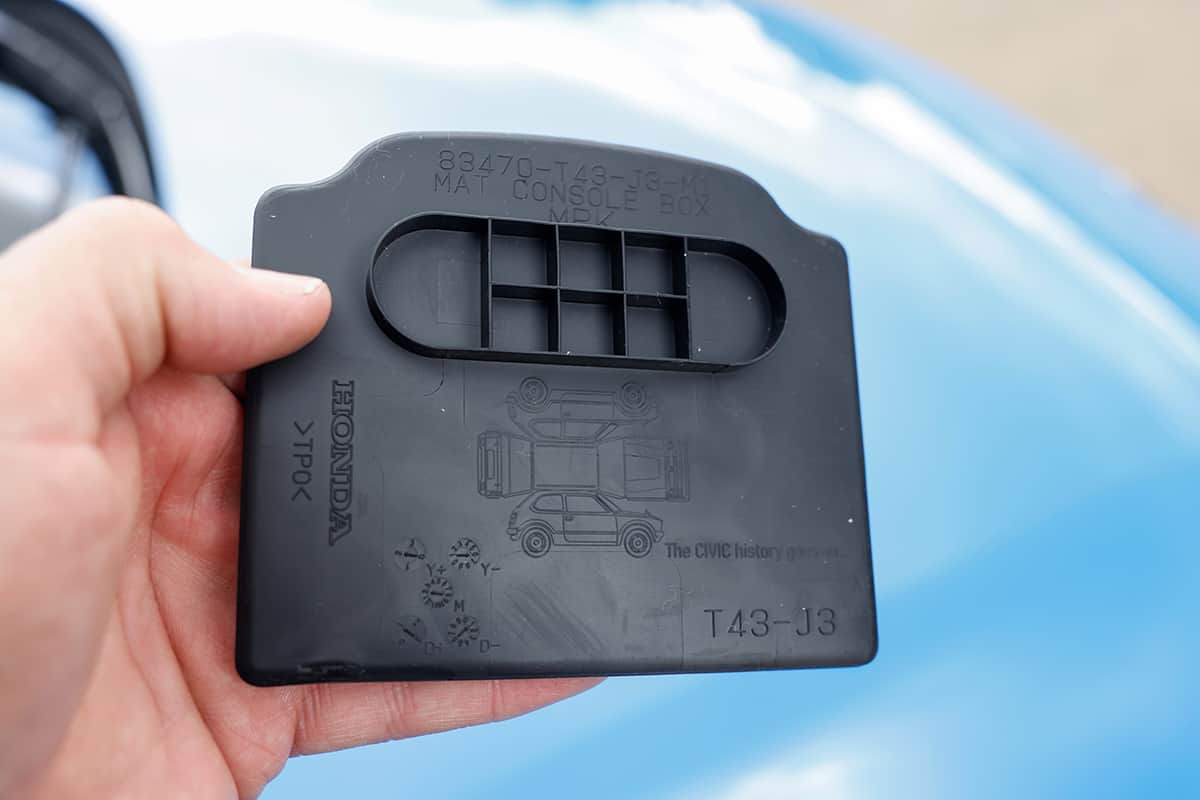
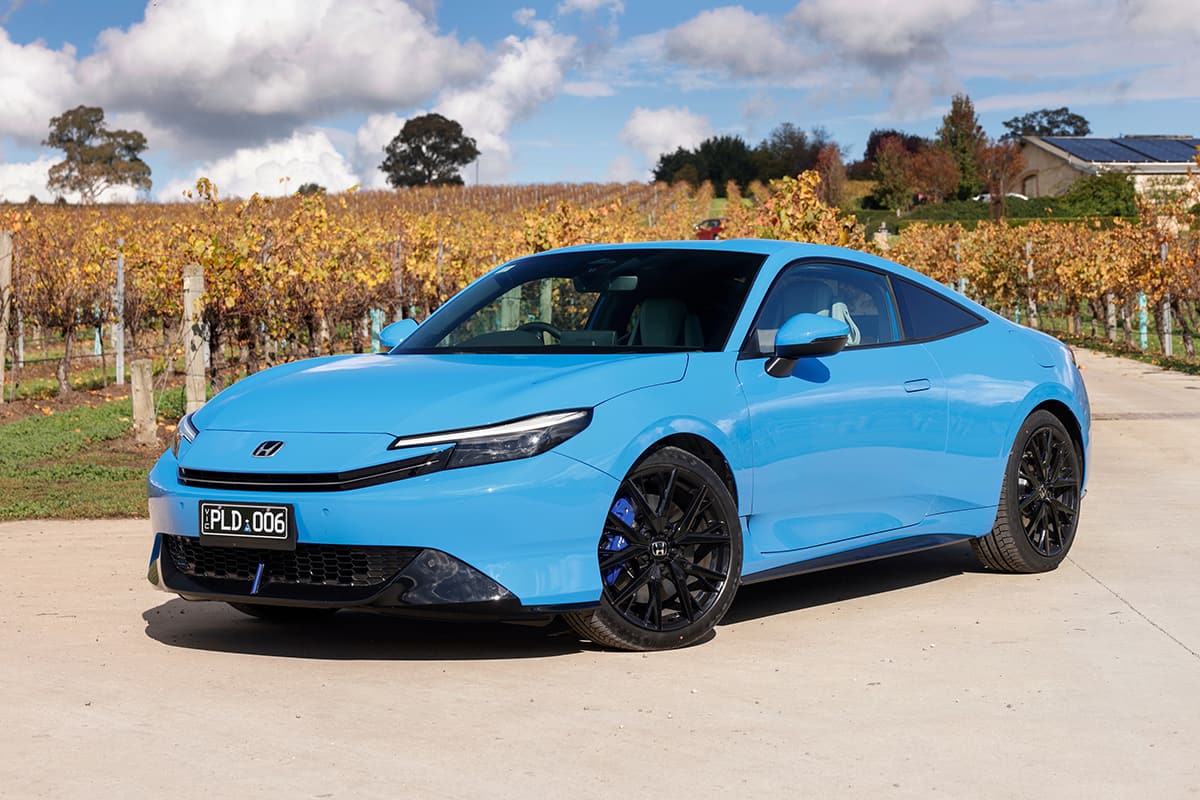
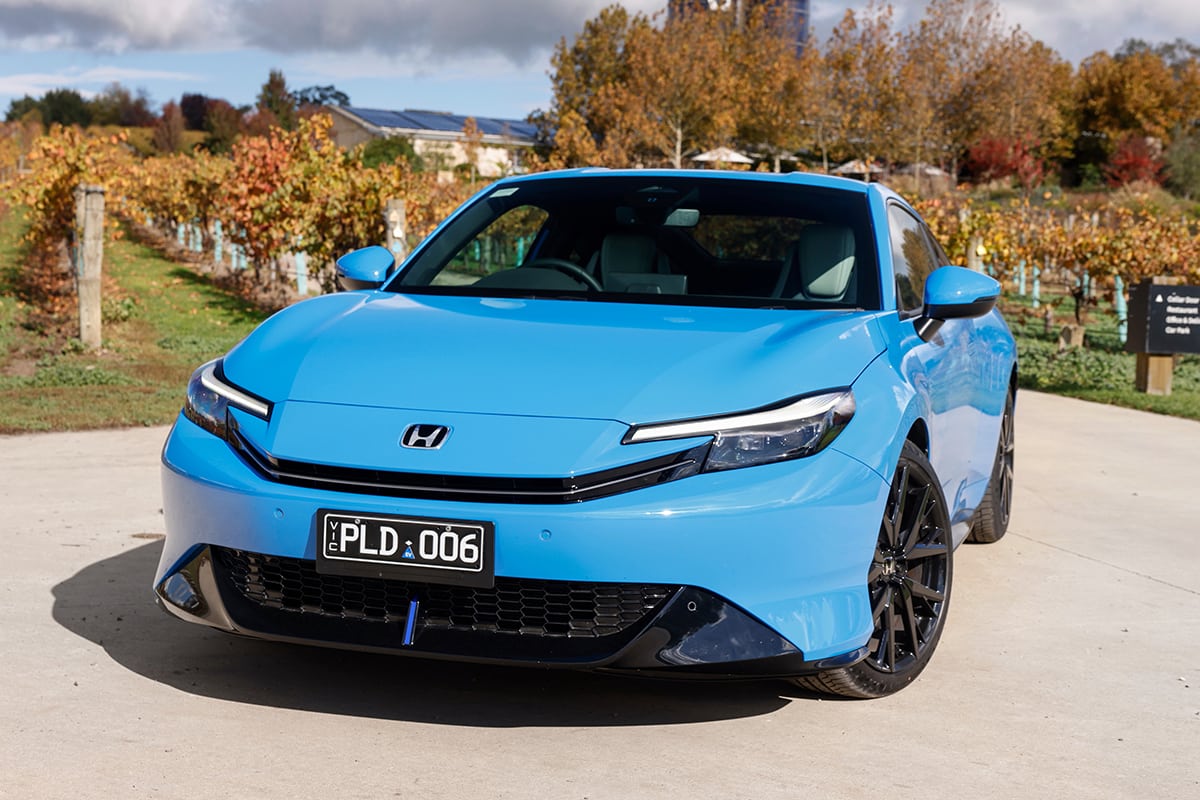
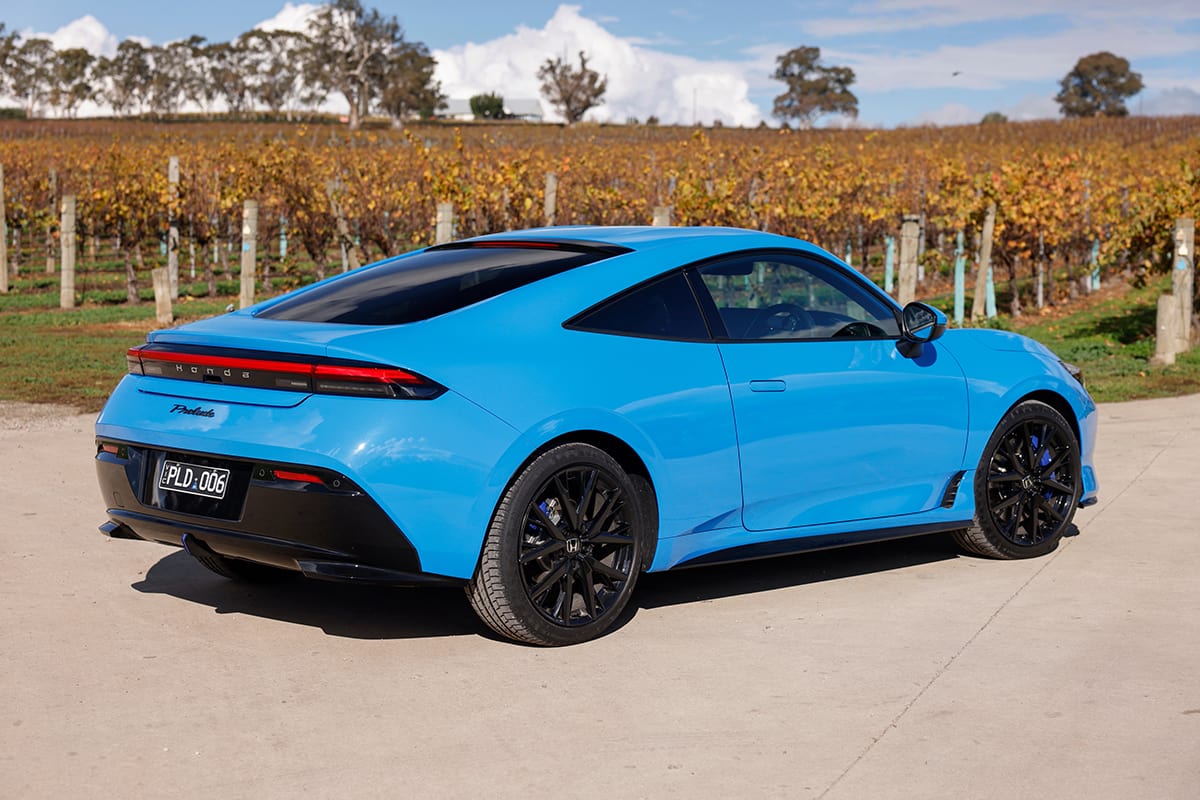
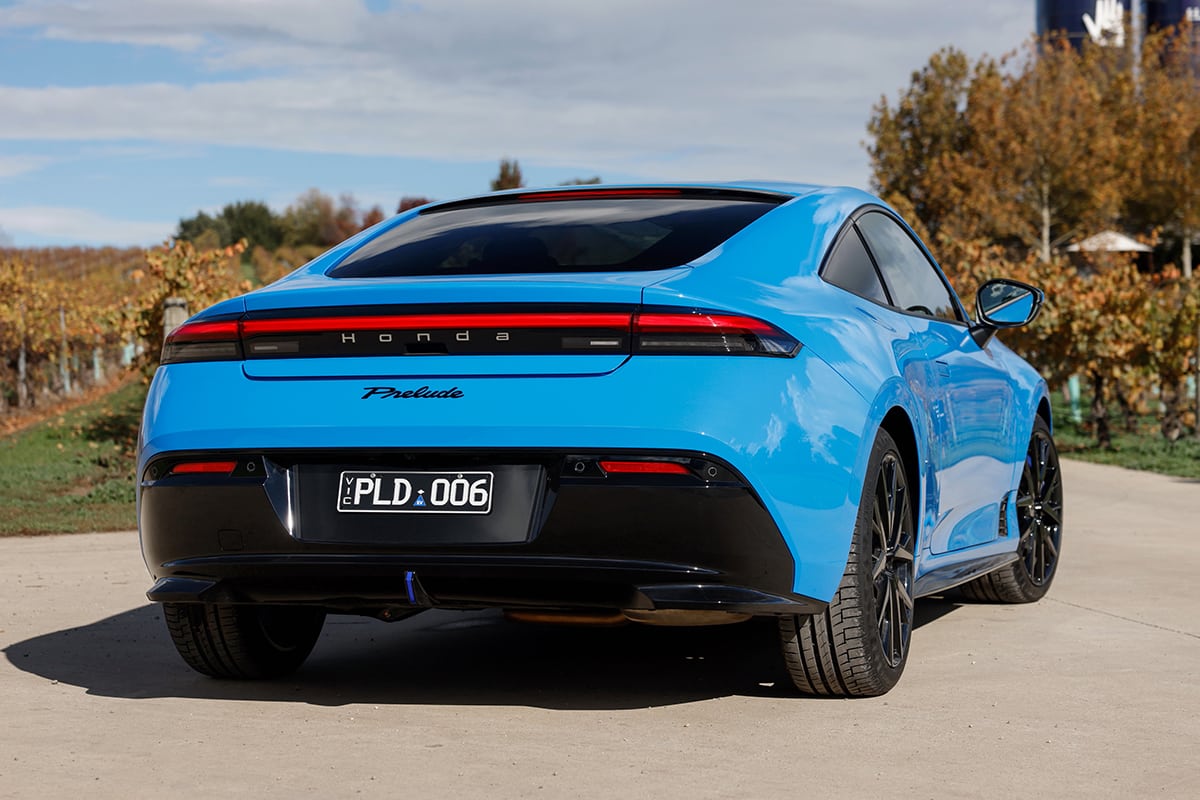
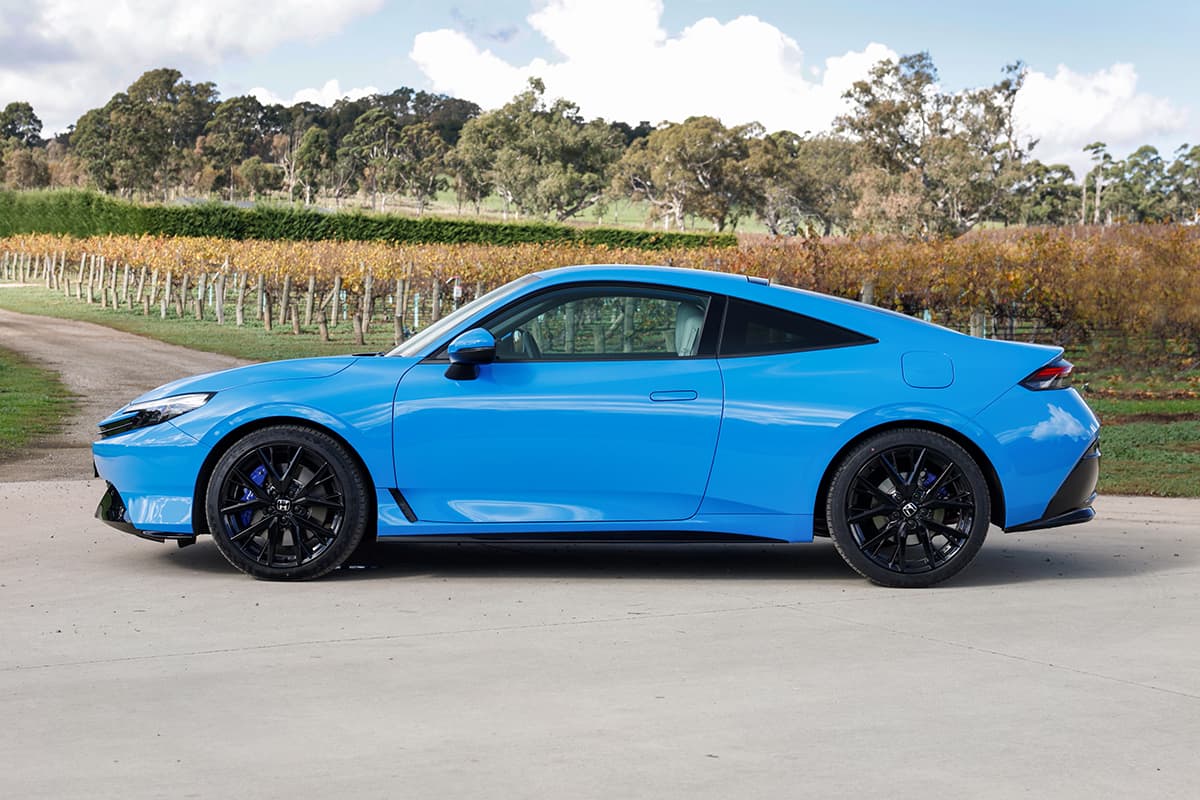
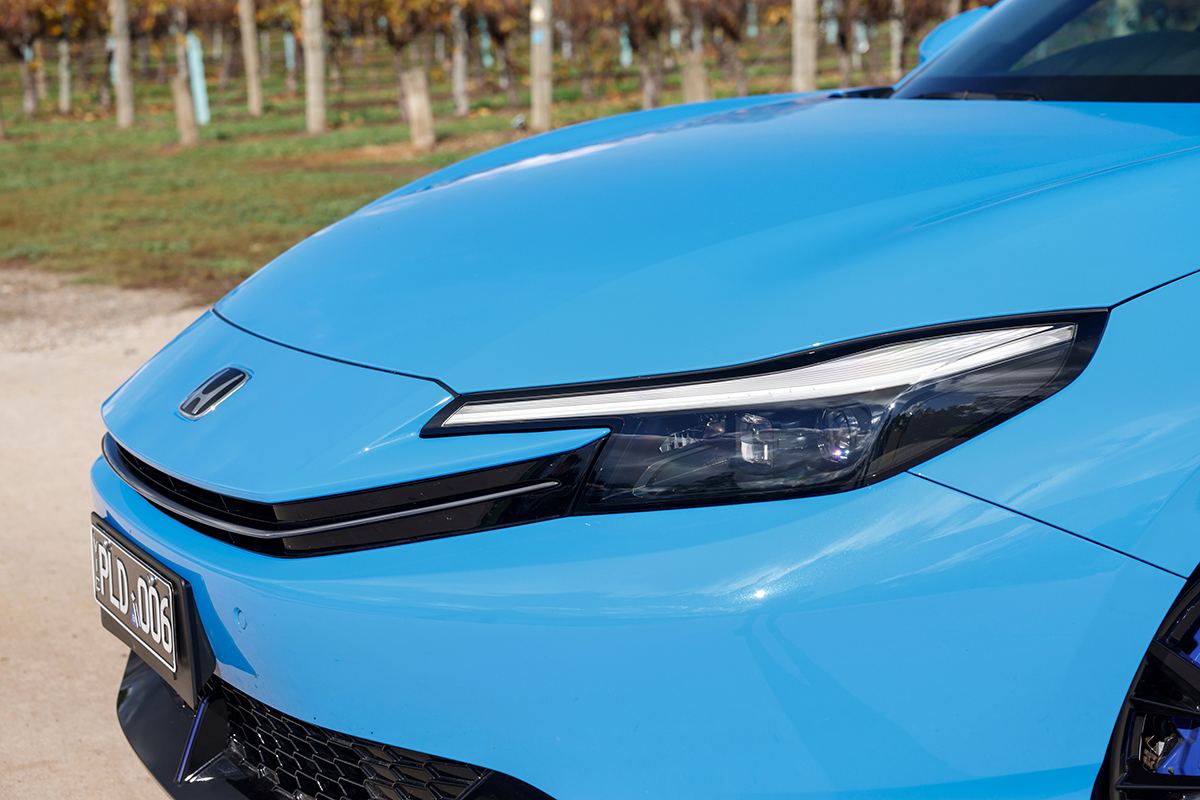
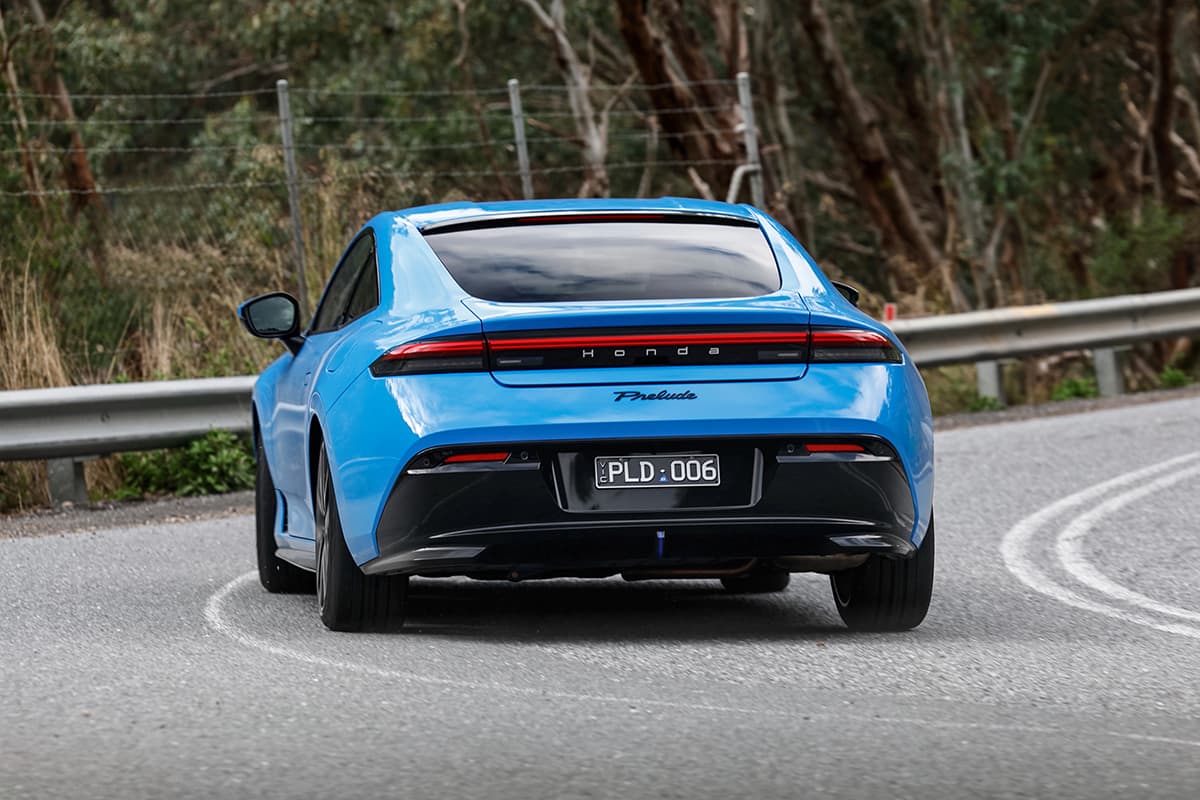
In photos the LED/smiling-grille theme may evoke the latest Toyota Camry, but in person every line and angle of the Prelude draws you in. This is a delicate yet aggressive, classical yet distinctive sports coupe of striking beauty. The exterior mirrors are door-mounted and there are no moulding strips along what Honda calls a ‘double-bubble’ roof panel – a very Italianate design touch. Imagine how much lovelier it would have been if frameless doors were fitted as well. But Honda says it strove for rigidity, in part due to the gaping hole that is the liftback’s aperture. Sills and pillars have been beefed up, while the roof has an indentation to provide extra strength.
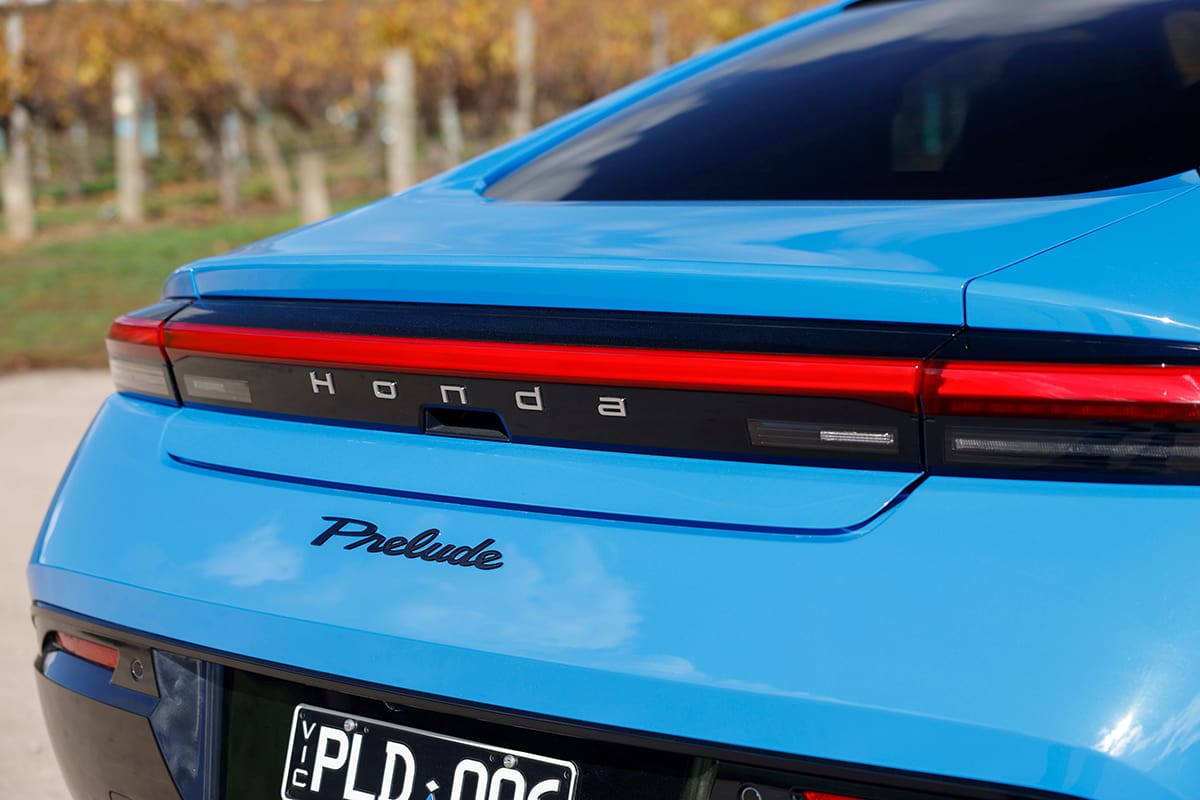
And here’s a fun fact about that. Although it’s 60mm lower than a Civic hatch, headroom has only been reduced by 23mm due to less internal ceiling bracing required. The rear’s LED strip lighting are clearly Porsche-inspired, with traces of Taycan and 911, while the wide hips seen from above evoke the Cayman. Collectively there is nothing here that says classic Prelude. Not a single nod to any of the prior five generations, supporting Honda’s claims that this did indeed start off as a sports coupe project.
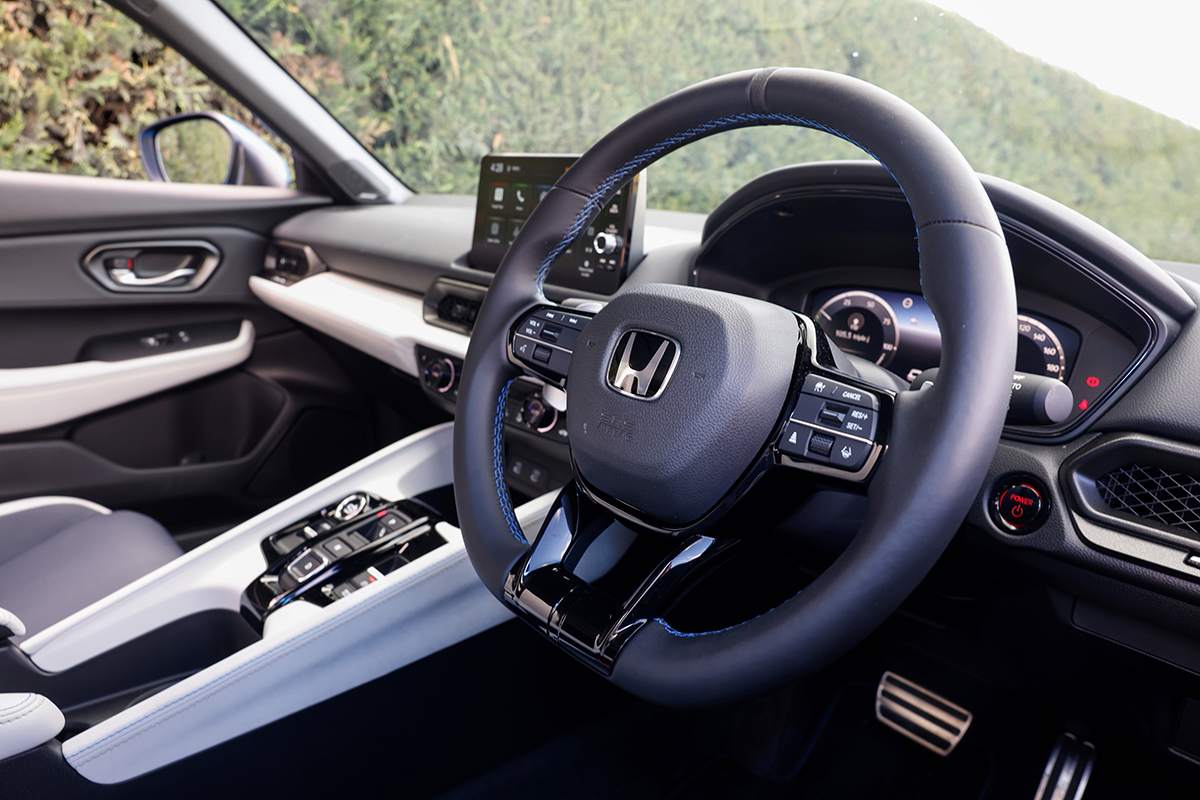
Inside, the Civic connection is unmistakable, with a similar dash layout and steering wheel, but there are detail changes to the lower fascia, centre console and other areas, giving the Prelude some uniqueness.
Practicality – How practical is its space and tech inside? 7 / 10
Sliding down and into the Prelude reveals a very typical modern Honda dashboard, but the looks and finishes are unique to the coupe. Yes, it is a Civic-esque dash interior, but it’s smartly designed, extremely functional and beautifully presented, with layers of blue-stitched white panels, metallic trim inserts, padded surfaces and contrasting textures elevating the cabin beyond the mundane.
The asymmetrical leather front seats are heavily contoured for a sporty, snug feel, yet the bolsters are soft and pliable to aid entry and egress despite their height. The steering wheel is BMW-esque in its chunkiness, though not so much so that the rim is too wide. And the driving position is nigh-on perfect. This is an inviting, cosy and user-friendly interior. Boasting clear white-on-black graphics, the 10.2-inch electronic instrument cluster provides various displays according to which mode the car is in, while the almost-wilfully compact 9.0-inch touchscreen is about right-sized for something that isn’t an SUV. It’s fairly basic but easy to operate and quick to respond, while the wireless Apple CarPlay and Android Auto connected seamlessly in our experience.
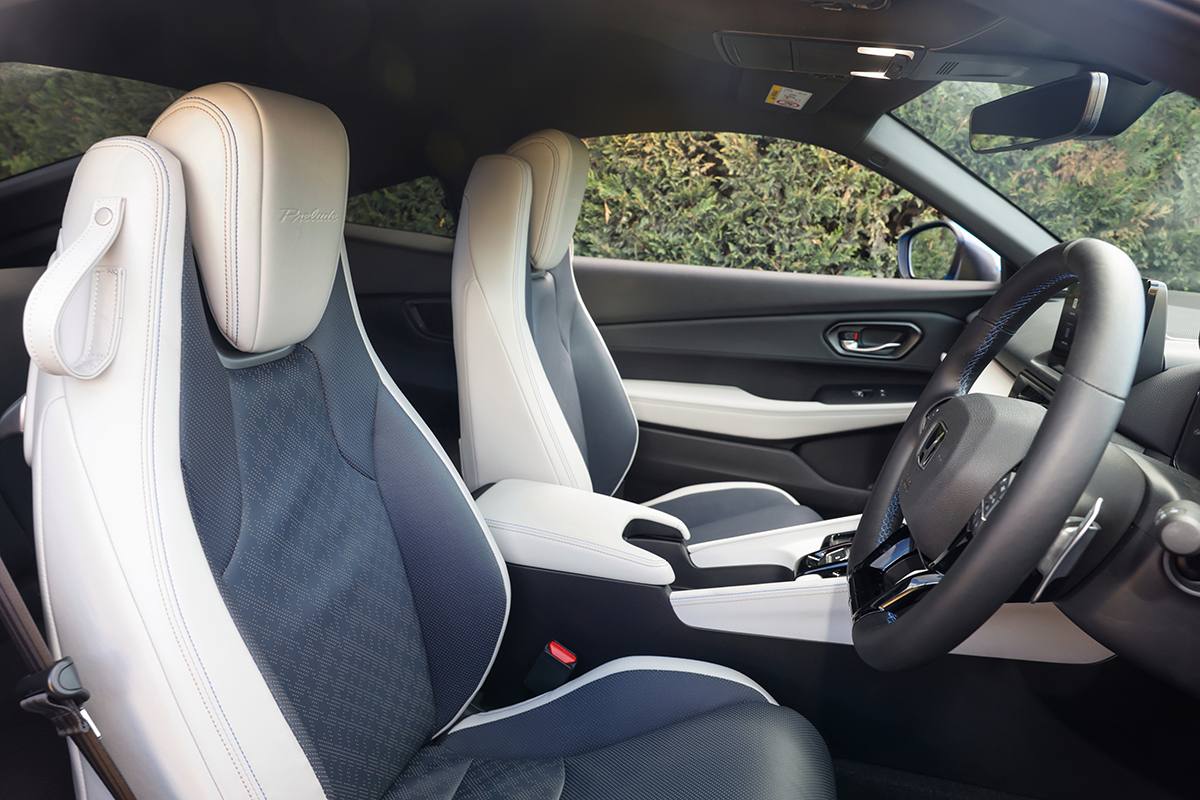
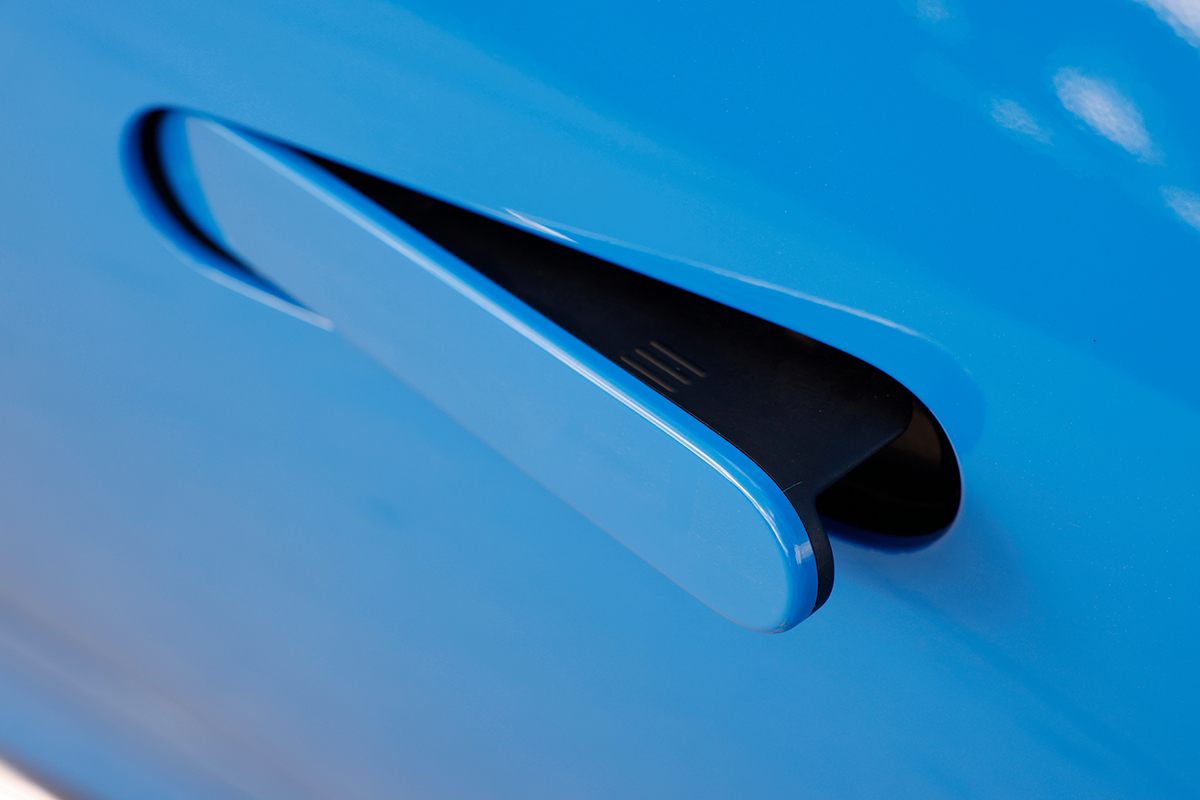
Other plus points include exquisitely tactile dials and switchgear for the (very effective) climate control system, superb audio sound, thoughtfully sited storage for phones and cups and excellent quality. But there are minus points, too. The exterior flush door handles are infernally fiddly. More understandable is the decision not to fit frameless (or sashless) door windows, but they do turn any two-door sedan into a true coupe. The driver’s seat rake lever feels alarmingly flimsy. The push button/toggle combo for the transmission is confusing and potentially hazardous as selecting reverse instead of drive is a simple mistake to make. There are no overhead grab handles. Over-shoulder reverse vision is poor. And that suede-like white trim may prove challenging to keep clean over time.
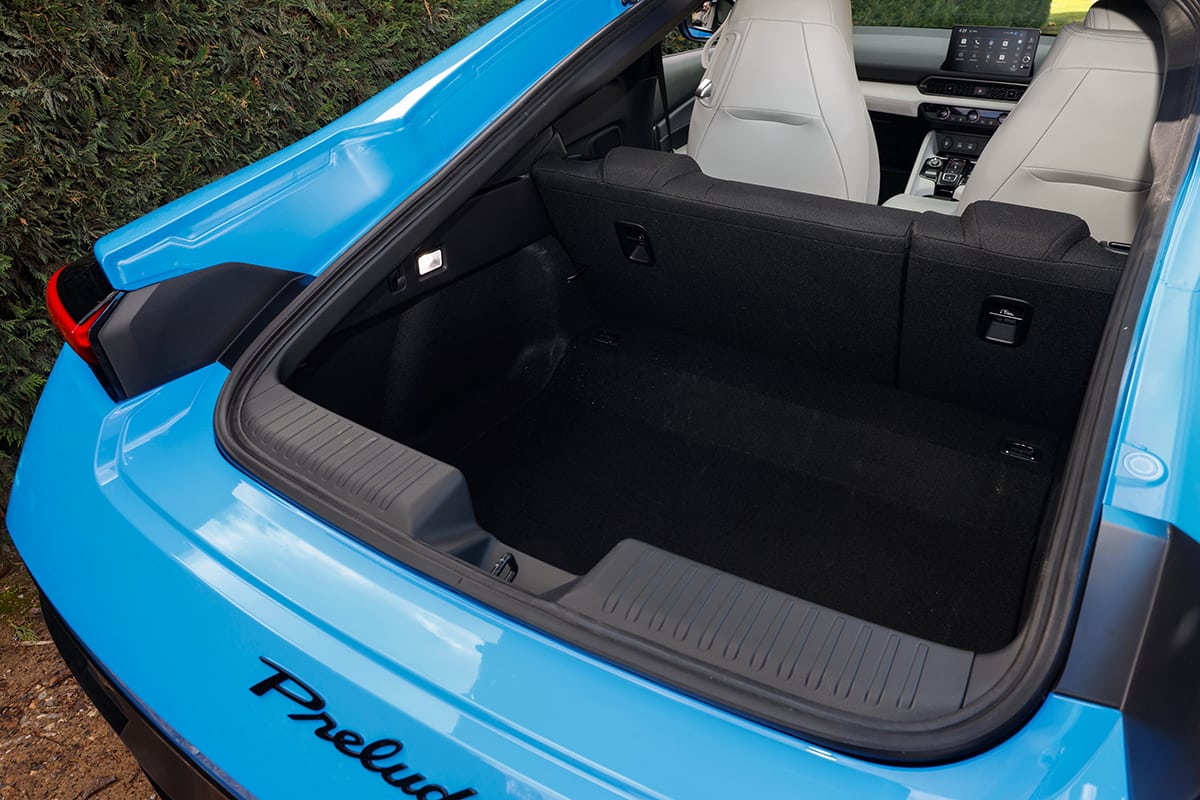
So is getting into the back, with its small, plain fabric-faced seats, limited kneeroom and lack of head space except for smaller occupants. For most people it would be emergency-only transport. Owners of previous Preludes would know that headroom is far worse in the latest model and comparable to the old, smaller Integra (another hatch) because of the newcomer’s sloping – instead of notchback – roofline. There are no amenities beyond two seat belts and a pair of folding backrests, allowing through-access to the shallow but wide and nicely-carpeted boot area. Dropping them ups cargo capacity from 264 litres to 663L (VDA), or 760L to the ceiling. A bike with a quick-release front wheel should nestle back there easily enough. Note there is no spare wheel, just a totally inadequate tyre repair kit.
Having a large liftback does boost the versatility of the Prelude compared to any of its predecessors.
Under the bonnet – What are the key stats for its engine and transmission? 8 / 10
At the heart of the Prelude is a petrol-powered, naturally aspirated 2.0-litre direct-injection Atkinson-cycle four-cylinder twin-cam internal-combustion engine (ICE), mated to two electric motors, a 1.06kWh battery and an electronic single-speed transmission (dubbed e-CVT) that can allow for pure-EV, hybrid and pure-ICE drive, according to the situation. Now, of the two electric motors, one is a 135kW traction unit that helps power the front wheels and the other is a 105kW generator that charges the battery. So, while maximum power is officially 135kW, it’s about 150kW combined, while torque is also considerably greater than the 315Nm quoted, though nobody at Honda will confirm much more. And even the modest 8.2-second 0-100km/h acceleration time is understated, with one independent tester achieving around 7.5s.
Speaking of speed, there are four drive settings to choose from: ‘Comfort’, ‘GT’, ‘Sport’ and the multi-configurable ‘Individual’, and each provides a much broader bandwidth of performance and comfort than any Prelude sold previously in Australia has ever managed. Aiding the former is Honda’s S+ Shift system, which provides manual control and sharper responses via steering-wheel paddle shifters. It allows for eight artificially-stepped ratios that feel (and sound) like blipping up and down gears.
Efficiency – What is its fuel consumption? What is its driving range? 9 / 10
Here are two reasons why you may consider buying a Prelude that has nothing to do with styling or driving. Firstly, it runs on 91 RON standard unleaded petrol. And, secondly, Honda claims it returns 4.3 litres per 100km on average, which translates to a carbon dioxide emissions rating of 98 grams/km. Topping the 40L fuel tank should allow an average range of 930km between refills. That said, driven hard to the point of being thrashed mercilessly at times, with a mix of heavy traffic and faster roads through the beautiful Adelaide Hills, our barely run-in Prelude indicated an average of 7.0L/100km. Still, this side of an EV, no sports car officially uses less fuel, or belches out less pollution, than a Prelude.
Driving – What’s it like to drive? 9 / 10
Here’s the moment of truth. Does the new Prelude drive as well as it looks? Strap in! Let’s talk performance. This hybrid is tuned to sporty, and despite the Honda only officially making 135kW and 315Nm, it accelerates and responds to throttle inputs like a much stronger car, due to the electrical assistance, resulting in a linear and muscular power delivery. That’s the underlying base. Though saddled with the industry term ‘e-CVT’, there are no belts or pulleys as per a regular Continuously Variable Transmission (CVT) as found in a conventional ICE vehicle, so no whine, lag or – eventually – breakage.
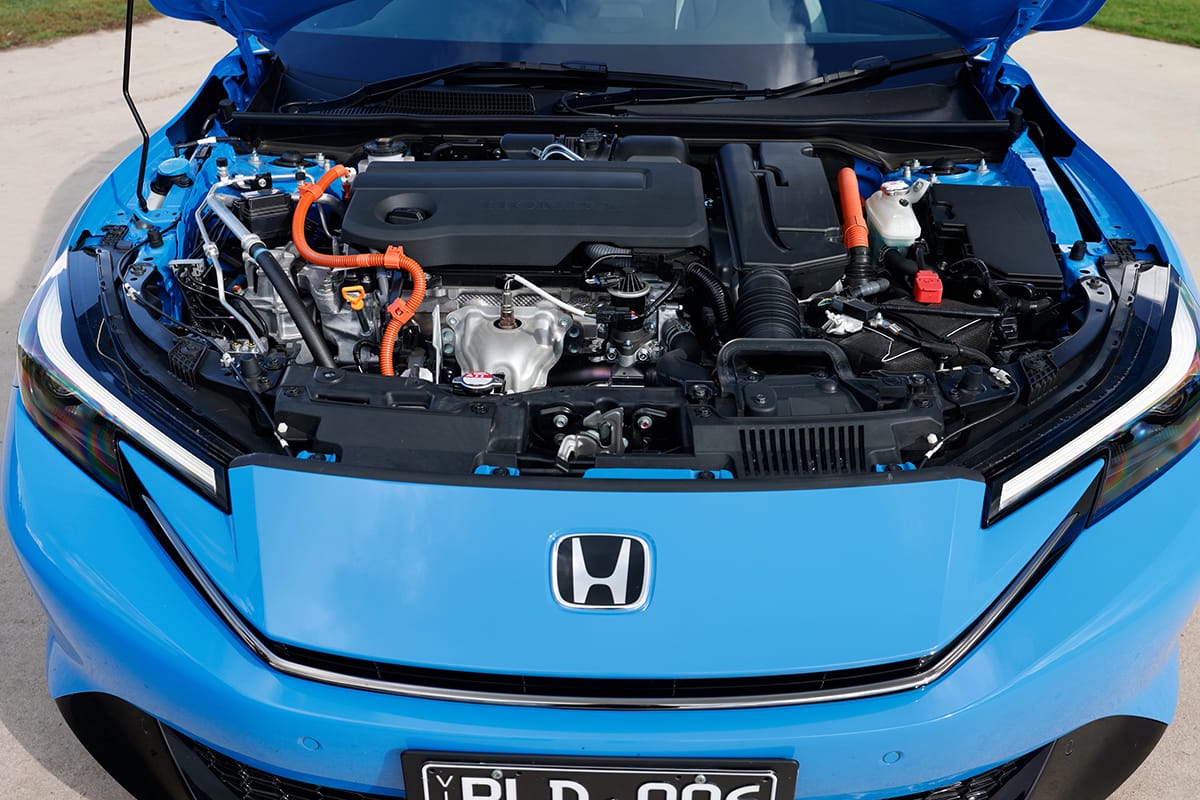
This steps off the line like a spirited EV, thanks to the assistance of the traction electric motor. Just like the creamy flow of the Civic e:HEV, but amplified, so punchy, instantaneous overtaking is there for the taking. And this is in Comfort mode. Choose GT or Sport, and the resulting, electrified velvety thrust is even more pronounced, accompanied by an (optional) artificial soundtrack that’s quite rousing. Make no mistake, the latest Prelude is the quickest real-world version ever officially sold in Australia. But nothing prepared us for the steering, which is a serotonin hit for the senses. The front end feels famished for corners, glued to their scent like the hungriest of hot hatches, hugging each turn with precision and purpose. That dual axis front suspension set-up is extraordinarily bonded to the bitumen, providing instant connection and reaction. This thing flows through corners with the grace of an Olympic skater. Which makes the addition of adaptive dampers a stroke of genius, since they – along with the special Continental tyres – harmonise to sort out what level of comfort and control is desired. The big revelation here is that the Prelude’s ability to isolate its occupants feels almost limo-like for a coupe on one hand, while possessing the agility, athleticism and poise of a Type R on the other. Minus the hectic raucous bellowing exhaust roar.
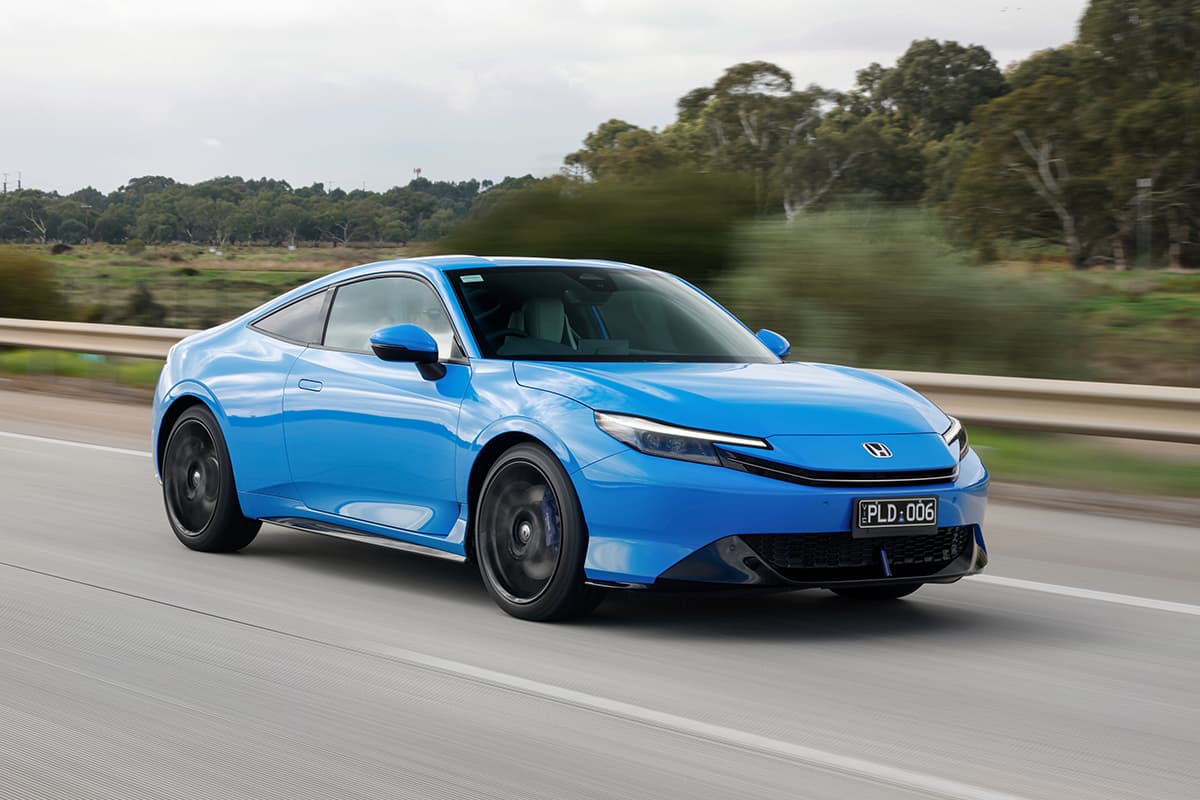
GT mode is all the fun the keen driver needs, since it’s the best of both worlds, though if you never stray from Comfort mode you’re still in for an invigorating drive. That’s the Prelude’s underlying ingenuity, revealing a clear DNA link to all-time brand greats like the S2000 (minus the snap oversteer), NSX (one of history’s greatest supercars) and DC2 Integra Type R (the best handling front-drive coupe?). But, oh how we wish Honda offered this set-up with the Type R’s manual powertrain! Sport+ is a gimmick if drivers want a Tiptronic-style paddle shift-actuated manual control, except you can’t bounce off the rev limiter being an e-CVT… so what’s the actual point? It is buzzy and indecently brisk all the same, though.
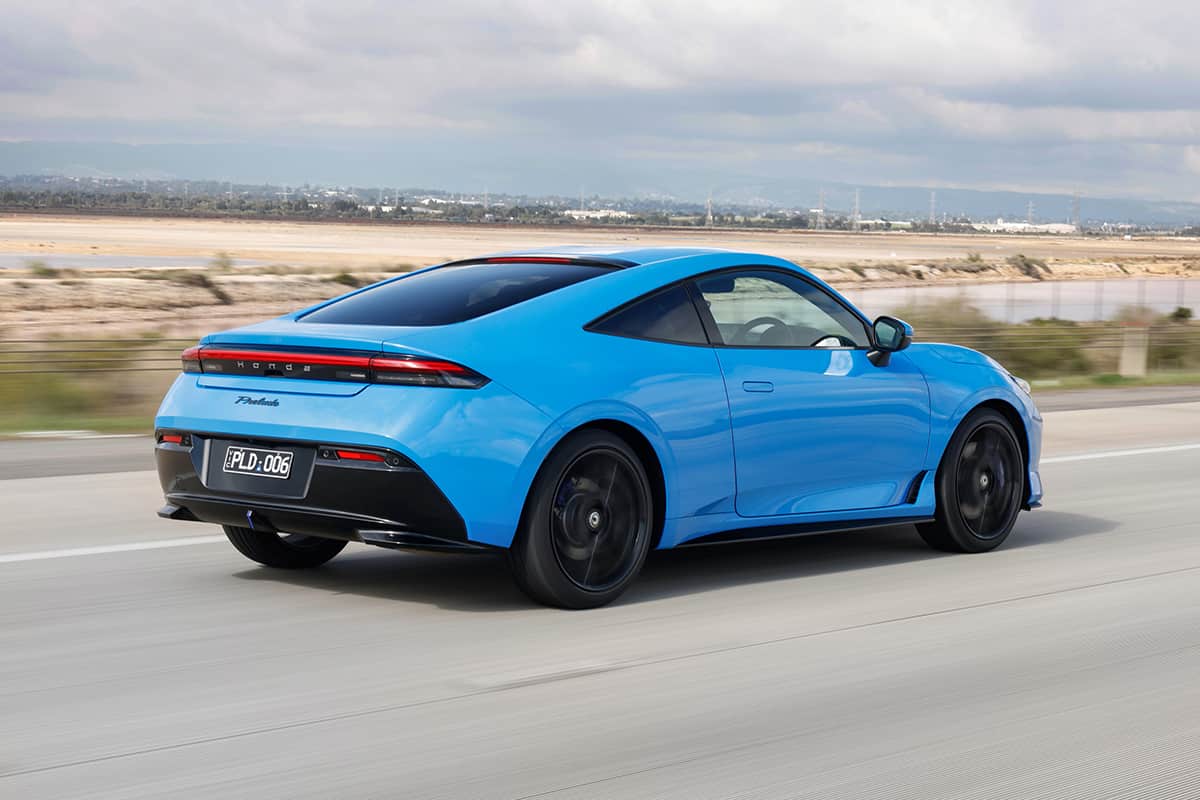
At this juncture, it is difficult to criticise the Prelude from a driving perspective. Even the ADAS tech is well-nuanced for Australian roads. On one occasion the lane-keep warning piped up, but it never interrupted the flow of progress or connection. What would we want fixed? Hard to say. Even road noise is sufficiently subdued given this coupe’s alacrity and verve. The turning circle seems too big around town (but, please, don’t return to four-wheel steering if it means trading off the supernatural tactility, Honda – and this is coming from an ’89 Si 4WS owner) and over-shoulder visibility when reversing is poor. A day’s drive is not enough to fully experience the latest Prelude, but three things are abundantly clear. Firstly, the performance on offer goes far beyond the sum of its published numbers. Secondly, the fluency of the chassis to communicate with the road and driver makes this a true enthusiast’s car. And thirdly, this leaves us wanting more. Long after the sensual lines are out of sight, your mind’s eye keeps looking back, yearning to return to the driver’s seat. All for $65K drive-away, folks.
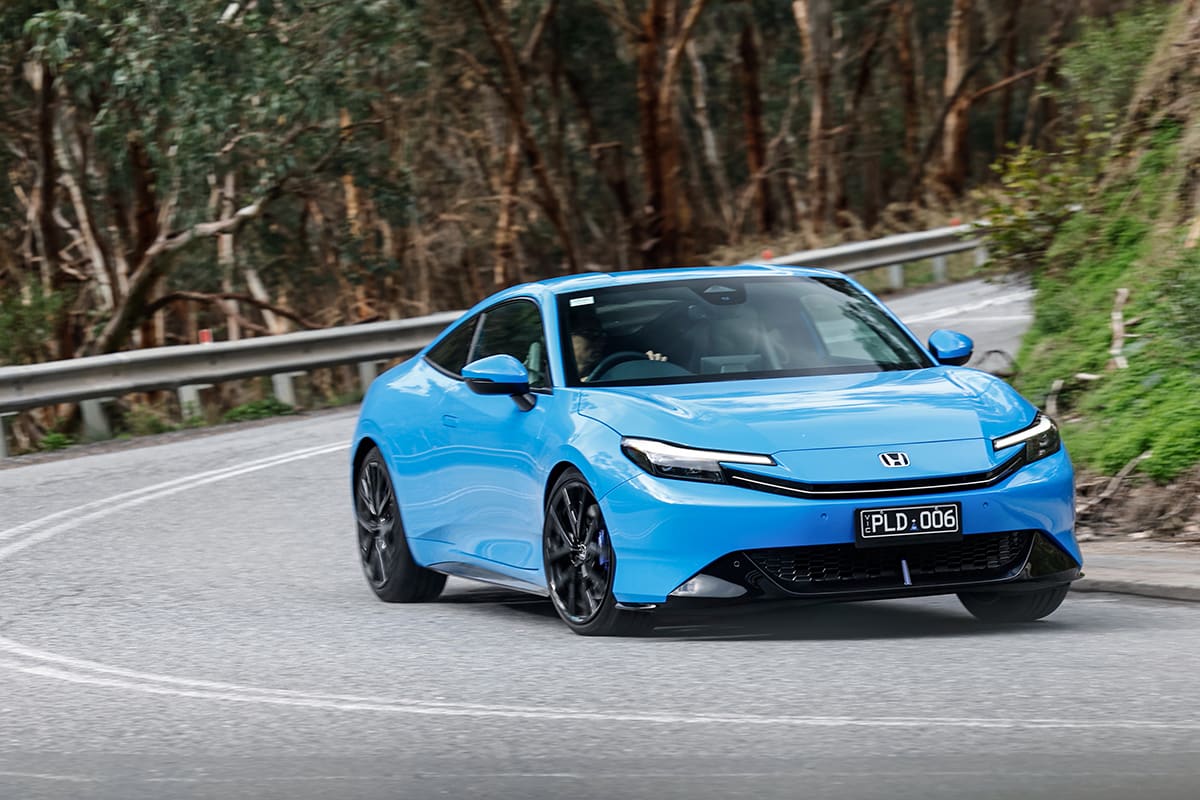
As far as Australian-market classic-era Preludes are concerned, this sort of connection has never been the case. Any keen driver buyer should experience this before they sign on a dotted line. One of 2026’s greats – and a bargain to boot.
Safety – What safety equipment is fitted? What is its safety rating? 8 / 10
Don’t bother searching for a Euro-NCAP or ANCAP crash-test ratings, because none have yet been conducted given the low-volume niche nature of such sports cars. But Honda assures us that the Prelude has been constructed to meet or exceed the maximum five-star-rated Civic small car’s rating, with extra bracing applied to their shared platform and structure to boost strength and rigidity. Meanwhile, every available advanced driver-assist system (ADAS) technology that Honda offers is present in the Prelude, but modified for a sports car application. This includes Autonomous Emergency Braking (AEB), blind spot warning, ‘Forward Collision Warning’, rear cross-traffic alert (with ‘Collision Mitigation Braking System’), lane departure warning, lane keep assist, ‘Road Departure Mitigation System’, post-collision braking, traffic sign recognition, adaptive cruise control (with ‘Traffic Jam Assist’) and adaptive lighting with auto high beams. Surprisingly, the Prelude comes with 10 airbags – dual front, dual front knee, front-middle, dual side and dual curtain, giving coverage for all four occupants. Two ISOFIX and two child-seat tether latch anchors are provided for each rear seat.
Ownership – What warranty is offered? What are its service intervals? What are its running costs? 9 / 10
Honda offers a five-year, unlimited kilometre warranty, five years of roadside assistance, and $199 capped-price annual servicing, the latter being extraordinarily cheap nowadays. Service intervals are every 12 months or 10,000km. If you elect to have the service done at a Honda dealer for the entire period, the warranty will increase to eight years with no mileage ceiling. This makes Honda’s ownership proposition one of the most competitive on the market. At the time of publishing, there were 87 Honda dealers throughout Australia.
Verdict
Expectations have clearly been exceeded by the latest Honda Prelude. Along with a striking design, combining hybrid with Civic Type R-enhanced engineering underneath has created a uniquely frugal yet ferociously capable 2+2-seater coupe experience that rarely puts a foot wrong. Possessing no spare wheel is its worst sin. This is one of the most enjoyable Hondas we have ever driven, period. If sports coupes are your thing, then the $65,000 drive-away pricing is just the icing on a most delicious cake. Brilliant and tasty.