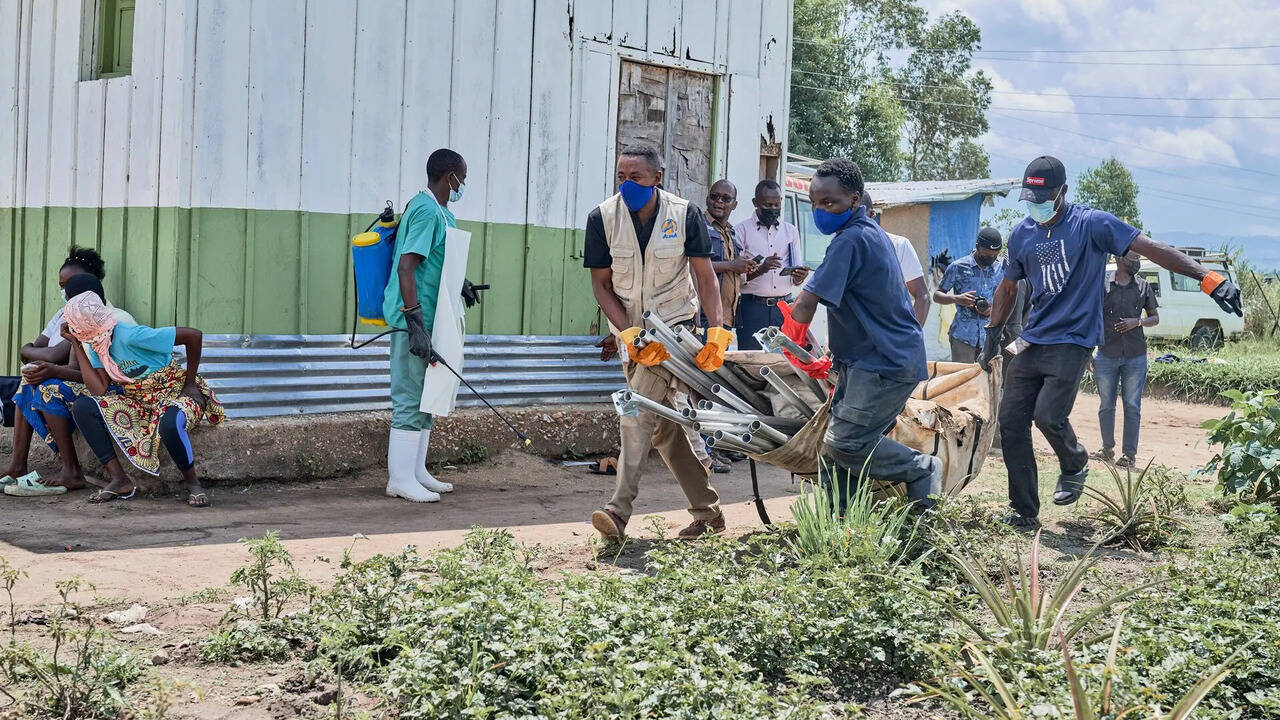
Understanding the Bundibugyo Virus Outbreak in Congo
The virus responsible for the current outbreak in the Democratic Republic of the Congo, which is suspected to have caused over 200 deaths, is a rare strain known as the Bundibugyo virus. This particular form of the Ebola virus is less common than other strains, such as the Zaire or Sudan viruses, making it more challenging to manage due to the lack of specific treatments or vaccines.
Dr. Celine Gounder, an infectious disease specialist and epidemiologist who worked during the 2014-2016 Ebola epidemic in West Africa, emphasized that there are currently no treatments or vaccines ready for clinical trials. “That means responders, healthcare workers, and aid workers are really back to the basics,” she said.
WHO’s Response and Potential Treatments
Last week, the World Health Organization (WHO) announced that its advisory groups had identified potential vaccines and therapies for testing. However, they recommended that these be used exclusively in clinical trials to ensure safety and effectiveness, which could take months of development.
According to Dr. Tom Ksiazek, a virologist at the University of Texas Medical Branch, the Bundibugyo virus has previously caused two outbreaks in the same region of the Congo River basin. He was part of the team that first identified the virus in 2007 while working with the U.S. Centers for Disease Control and Prevention’s Special Pathogens Branch.
Other viruses that cause Ebola disease include the Ebola virus (often called the Zaire virus), the Sudan virus, and the Taï Forest virus, which is not typically associated with large outbreaks.
Transmission and Risk Factors
The Bundibugyo virus spreads through close contact with the bodily fluids of infected or deceased individuals, such as blood, sweat, feces, or vomit. Healthcare workers and family members caring for sick patients are at the highest risk of infection.
“So very often we see doctors and nurses among the first to be infected and to die,” said Gounder, who serves as editor-at-large for public health at KFF Health News.
Based on previous outbreaks, the Bundibugyo virus may be slightly less deadly than the Ebola or Sudan viruses, though its mortality rate of over 30% remains alarming. “It’s hard to say with a lot of precision because we don’t have a lot of experience,” Gounder remarked.
Current Efforts in Vaccine and Therapy Development
During earlier Bundibugyo outbreaks, health authorities were able to identify initial cases quickly, which facilitated a rapid public health response. This included providing healthcare workers with adequate protective equipment, isolating exposed individuals, and offering supportive medical care, which significantly reduced mortality.
Current global health officials have identified three promising vaccine candidates:
- A vaccine similar to Merck’s Ervebo, which targets the Ebola virus, while a Bundibugyo-specific version is under development by the International AIDS Vaccine Initiative, requiring at least seven months before it could enter clinical trials.
- Another candidate is based on the platform of the Oxford University/AstraZeneca COVID-19 vaccine, with doses being produced by India’s Serum Institute, potentially available for clinical trials in two to three months, pending further animal testing.
- A third candidate is being developed by Moderna, using mRNA technology similar to its COVID-19 vaccines, which could advance to broader clinical testing if initial safety tests are successful.
Therapies and Public Health Measures
The WHO has recommended prioritizing three therapies for clinical trials: antibody therapies from Mapp Biopharmaceutical and Regeneron, along with Gilead Sciences’ antiviral drug remdesivir. Mapp’s experimental treatment, MBP134, targets several forms of Ebola, including Bundibugyo, while Regeneron’s treatment, maftivimab, is part of Inmazeb, approved by U.S. regulators in 2020 for Ebola.
Remdesivir, known under the brand name Veklury, was approved as a COVID-19 treatment in 2020. The WHO also suggested that an experimental antiviral drug, obeldesivir, should be studied for its potential to protect those exposed to Ebola victims.
Health workers are currently focused on finding and isolating cases, tracing contacts, and educating communities about how to prevent the virus’s spread. Gounder emphasized the importance of safe burial practices, as improper handling of deceased individuals has historically contributed to the spread of Ebola.
Expert Insights and Ongoing Challenges
Lina Moses, an epidemiologist and disease ecologist at Tulane University, noted that while vaccines are some of our best tools for combating infectious diseases, public health measures such as education, contact tracing, and quick testing remain effective.
“It’s important to keep in mind that every single Ebola outbreak that has occurred in the Democratic Republic of the Congo — we’re on our 17th now — has been stopped,” she added.
Mogomotsi Magome in Johannesburg, Jamey Keaten in Geneva, and Jonathan Poet in Philadelphia contributed to this report.
The Associated Press Health and Science Department receives support from the Howard Hughes Medical Institute’s Science and Educational Media Group and the Robert Wood Johnson Foundation. The AP is solely responsible for all content.
Stay informed with ET Now’s in-depth coverage of
Business News
,
Stock Market
updates,
IPO announcements
,
Company News
, and
Personal Finance
Updates. Track live
Share Market data
,
Mutual Funds
, and the
latest news
events in real time.