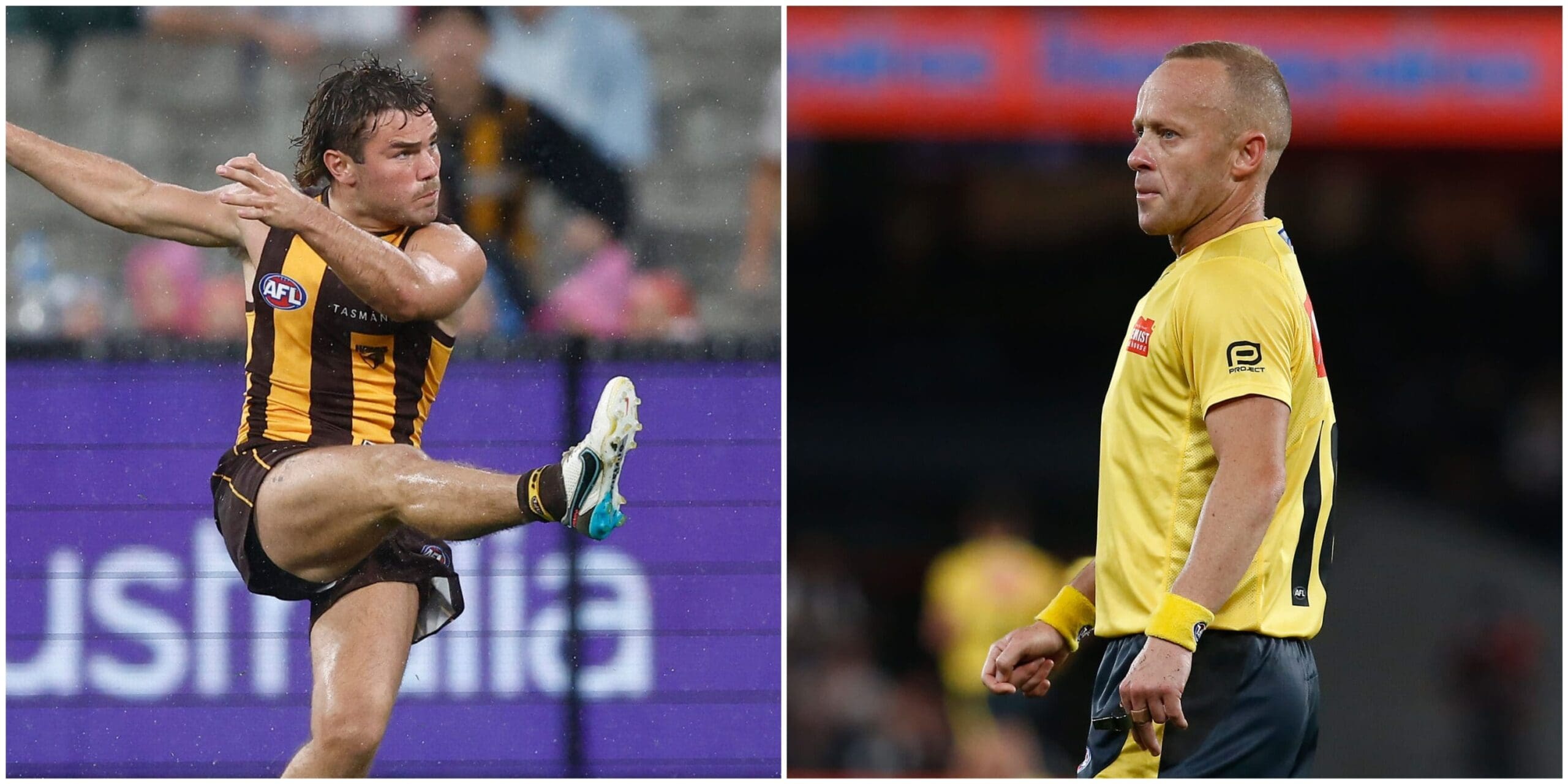
The Debate Over the No-Goal Call
Former AFL umpire Ray Chamberlain has made a strong case that the no-goal call on Nick Watson last week was incorrect. According to Chamberlain, the decision by the adjudicating umpire was based on a misinterpretation of the rules.
Watson, known for his energy and quick movements, was denied a major against St Kilda after the half-time siren. The umpire ruled that Watson ran off his line — towards the boundary — before taking a shot on goal. Chamberlain, drawing from the rule book, argues that this call was wrong because Watson did not improve his angle to the goal.
Understanding the Rule
Chamberlain explains that the law, specifically addendum B, allows players to move anywhere as long as they do not improve their angle towards the goal posts. He emphasizes that simply going around the corner does not change the angle, so there is no issue with the movement.
“Just because he goes around the corner makes no difference,” Chamberlain said on AFL360. “The literal application of the law says there is no problem with that. Whether he goes one step, two steps, is that okay? Doesn’t matter, because he didn’t improve his angle on goal.”
He also highlights that his experience as a senior-listed umpire shows that the intention of addendum B was to allow players to go out to the side. However, he notes that the current interpretation of the rule may not align with what the AFL wants to see on the field.
Recent Examples in the Season
Throughout the season, several instances have been highlighted that suggest the rule is being applied inconsistently. On Sunday, Melbourne’s Latrelle Pickett appeared to veer off his line during a set-shot routine but wasn’t called play on. Similarly, Carlton’s Talor Byrne, who had a shot after the siren, swerved minimally in his run-up before kicking the ball.
Even older examples have been brought up, such as the 2023 grand final between the Pies and Lions. Jordan De Goey curved right after the quarter-time siren to assist with extending his kick from outside 50. These cases illustrate how the rule is being interpreted differently across games.
AFL’s Position on the Rule
The AFL has backed the umpire’s call on Watson’s disallowed goal. However, the league has now opened up the interpretation of the rule, which Chamberlain says is only applicable when players improve their angle to the goal.
This inconsistency in rule enforcement raises questions about the clarity and fairness of the application. As the debate continues, it remains to be seen whether the AFL will revisit the rule to ensure it reflects the intended spirit of the game.
Conclusion
The incident involving Nick Watson has sparked a broader conversation about the interpretation of the rules in AFL. While some argue that the rule is being applied correctly, others, like Chamberlain, believe that the intent of the rule is being overlooked. With recent examples showing varied interpretations, the need for a more consistent approach becomes evident. As the season progresses, it will be interesting to see how the AFL addresses these concerns and whether changes are made to ensure fair play.