There was a time when you could check your bag, choose your seat, and stretch out your legs on a flight without paying extra. It wasn’t just a myth—it was the norm. But now, those basic comforts have been transformed into premium options, often at a steep price.
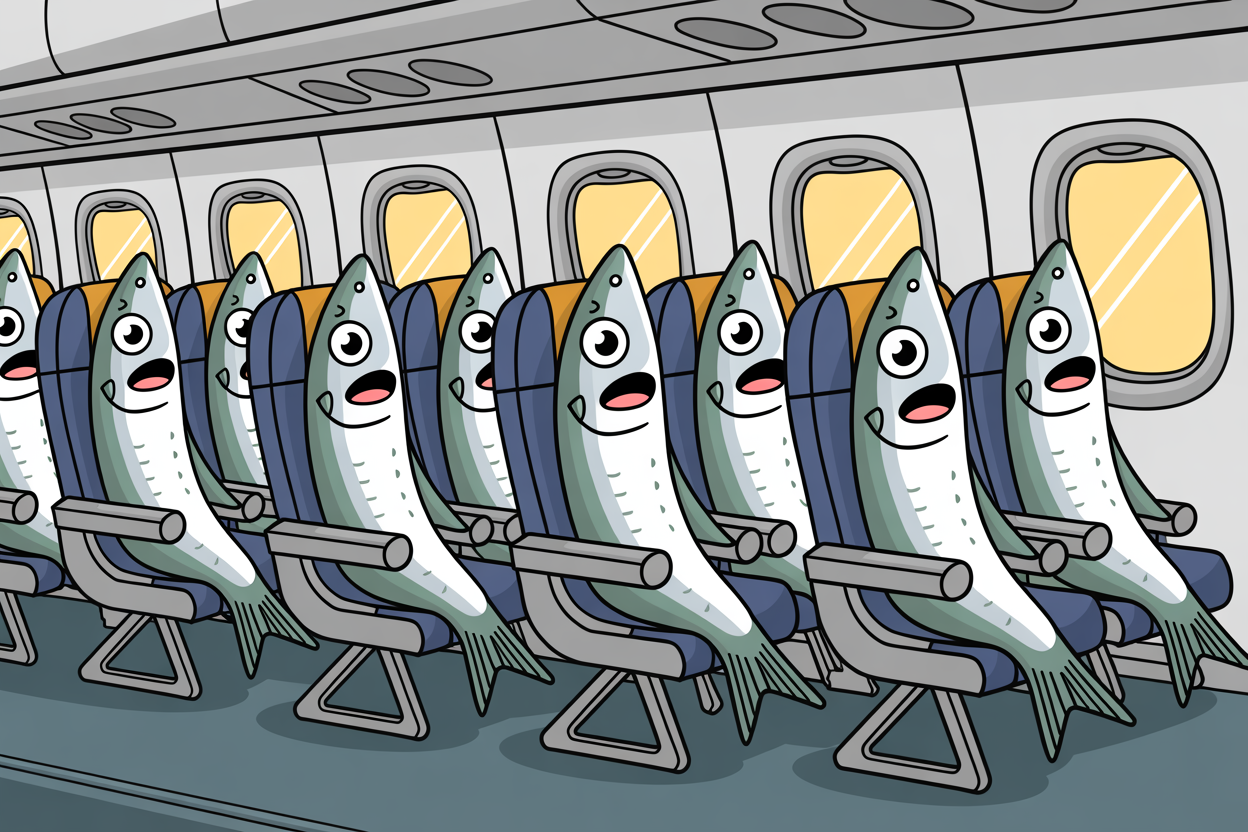
I remember when a 34-inch seat pitch (the distance between seats) was standard in economy class. Today, that same space is branded as “premium economy” and comes with an additional $200 fee. The 30-inch squeeze you’re currently sitting in? That’s the new normal.
Your travel voucher may be worth less than you think. You’re a victim of what some call “premium creep.”
What is premium creep?
It’s a subtle but widespread trend where what used to be standard features in air travel are now being rebranded as luxury options. This form of shrinkflation is rarely discussed, yet it has a significant impact on travelers. The industry uses marketing jargon like “choice” and “flexibility” to justify these changes, but the reality is far different. You’re getting less for more.
“This trend isn’t driven by consumer demand,” said Dean Rotchin, CEO of Blackjet, a private jet company. “It’s about companies maximizing their margins through the unbundling of services.”
And it’s not just airlines. Many customers are turning to private jets because they’re so dissatisfied with the current state of air travel. If only more people could afford that option.
“The reason for higher pricing isn’t due to added value,” said Jon Morgan, a frequent traveler and venture capital firm owner. “It’s simply the removal of recently inflicted pain—pain caused by the company itself.”
The travel industry creates the problem, then sells the solution. It’s a clever move, but one that leaves passengers feeling shortchanged.
Here’s how it happened
How did we end up here? The answer lies in airline deregulation and the aftermath of the 2008 financial crisis. Airlines discovered they could advertise low fares while making up the difference—and even more—through fees. It started with discount carriers charging for everything from bags to seat selection, but soon, legacy airlines followed suit.
The result? In 2024 alone, airlines generated $148 billion in ancillary revenue worldwide—a 26% increase from the previous year. Fees for baggage, seat selection, early boarding, and other extras that once came with your ticket all added up.
How did they pull this off? By making the basic product so uncomfortable that you’d pay to escape it.
Airline seat pitch shrank from an average of roughly 34 inches in the 1970s to around 30 inches today. That’s four inches of personal space the industry took from you without you even noticing.
“Premium is not the new economy,” said Michal Strahilevitz, director of the Elfenworks Center for Responsible Business at Saint Mary’s College of California. “It’s a downgrade disguised as an upgrade. Features that were once standard are now removed and sold back to consumers at a premium, creating the illusion of added value where none actually exists.”
It’s a sleight of hand, according to experts.
“Companies determine what’s premium by testing what they can remove from the base product without losing significant customers,” explains Jacob Wedderburn-Day, CEO of Stasher, a luggage storage service. “They’re not offering anything new or better. They’re taking away what used to be standard and charging you for it separately.”
It’s not just airlines
The practice spread. Hotels famously unbundled basics like the use of their gyms, daily newspapers and towels at the pool to create a mandatory “resort” fee for their guests. Cruise lines removed access to their best restaurants and offered special packages that include basic necessities like Wi-Fi and soft drinks. Tour operators got in on the action, making most meals and activities optional and charging extra for them.
And they’re just getting started.
- Premium breakfast. Gabrielle Yap, a culinary entrepreneur who travels constantly, recently stayed at a hotel that advertised “premium” breakfast for an extra $25 per day. “Last year in this city, breakfast was automatically a part of the service,” she said. “Now it is paid for if included or bought as a premium item.”
- Slowing down your “free” Wi-Fi. Rob DelliBovi, founder of RDB Hospitality Group, has noticed that some hotels slow down complimentary Wi-Fi to boost sales of “premium” internet. “I’ve seen properties make it nearly impossible to stream a movie or even join a video call on the standard connection,” he said.
- Cruise food that costs extra. Mike Jirout, who runs a cruise booking site, analyzed 122 cruise ships and found that specialty restaurants now account for one out of every two dining venues on newer ships. “It’s undeniable that cruise lines have been packing their ships with more ‘specialty’ restaurants, (most) requiring an upcharge,” he said.
Even car rental companies are in on it. Want USB ports and built-in navigation? You’ll need to upgrade to a “premium” vehicle.
The psychology of the upcharge
The genius of premium creep is that it doesn’t feel like a price increase, but an upgrade.
“Basic services are being unbundled and sold back to you,” said Jason Vaught, a frequent traveler and marketing expert. “All these extras add on to the price of the ticket far beyond what you first saw.”
The industry carefully chose terms like “premium,” “basic” and “choice” after the 2008 financial crisis to reduce resistance.
But seasoned travelers are on to them. Stefany Ceccato, a travel adviser with DMC Travel Tailor, admits she now avoids basic economy altogether on long flights.
“For my clients, some feel the same,” she adds. “They will fly less if they have to, but fly business or premium economy to get the comfort on long flights.”
See what happened there? Airlines didn’t add value. They removed so much that passengers either pay more – or fly less.
Can you still find real value?
Yes, but it takes work. And that’s another hidden cost – your time.
You can find real value by flying during off-peak days, such as midweek. Wait for an opening and then bid for an upgrade instead of forking over your hard-earned money for a better seat.
Some international carriers – Emirates, Singapore Airlines, ANA – still provide actual service in economy. Reputation, not additional charges, forms the basis of their business.
Delbert Lee, a former vice president for a travel company, said it’s essential to run the numbers. “Calculate the total cost of the travel experience,” he recommends.
He’s right. The advertised base price is meaningless. Add up everything – baggage, seat selection, early check-in, Wi-Fi, resort fees – before comparing your options.
What can you do about it?
We need to demand quality products at fair prices – not this travel shrinkflation wrapped in marketing double-speak.
So here’s my advice:
- Don’t believe the spin. Stop accepting the industry’s framing that you’re getting “choice.” You’re not. You’re getting less for more, repackaged as an upgrade.
- Work with a pro. A human travel agent knows which companies offer fair value. That information can make the difference between overpaying and traveling smart.
- Vote with your wallet. Support airlines and hotels that bundle services transparently, even if their sticker price looks higher. Push back against obvious cash grabs. File complaints when companies advertise one price and charge another.
The old standards are reasonable and worth revisiting. If you’re flying, you get 34 inches of legroom, a checked bag, an assigned seat and, on longer flights, an edible meal. If you’re staying at a hotel, basic services are always included in the up-front price. And travel companies make money the old-fashioned way: by charging people for tickets and rooms.
That wasn’t premium. That was basic travel. And until we demand it back, the creep will continue – one inch, one fee, one “premium” upcharge at a time.
Christopher Elliott is an author, consumer advocate, and journalist. He founded Elliott Advocacy, a nonprofit organization that helps solve consumer problems. He publishes Elliott Confidential, a travel newsletter, and the Elliott Report, a news site about customer service. If you need help with a consumer problem, you can reach him here or email him at [email protected].
This article originally appeared on USA TODAY: The travel industry’s ‘premium creep’ is costing you more