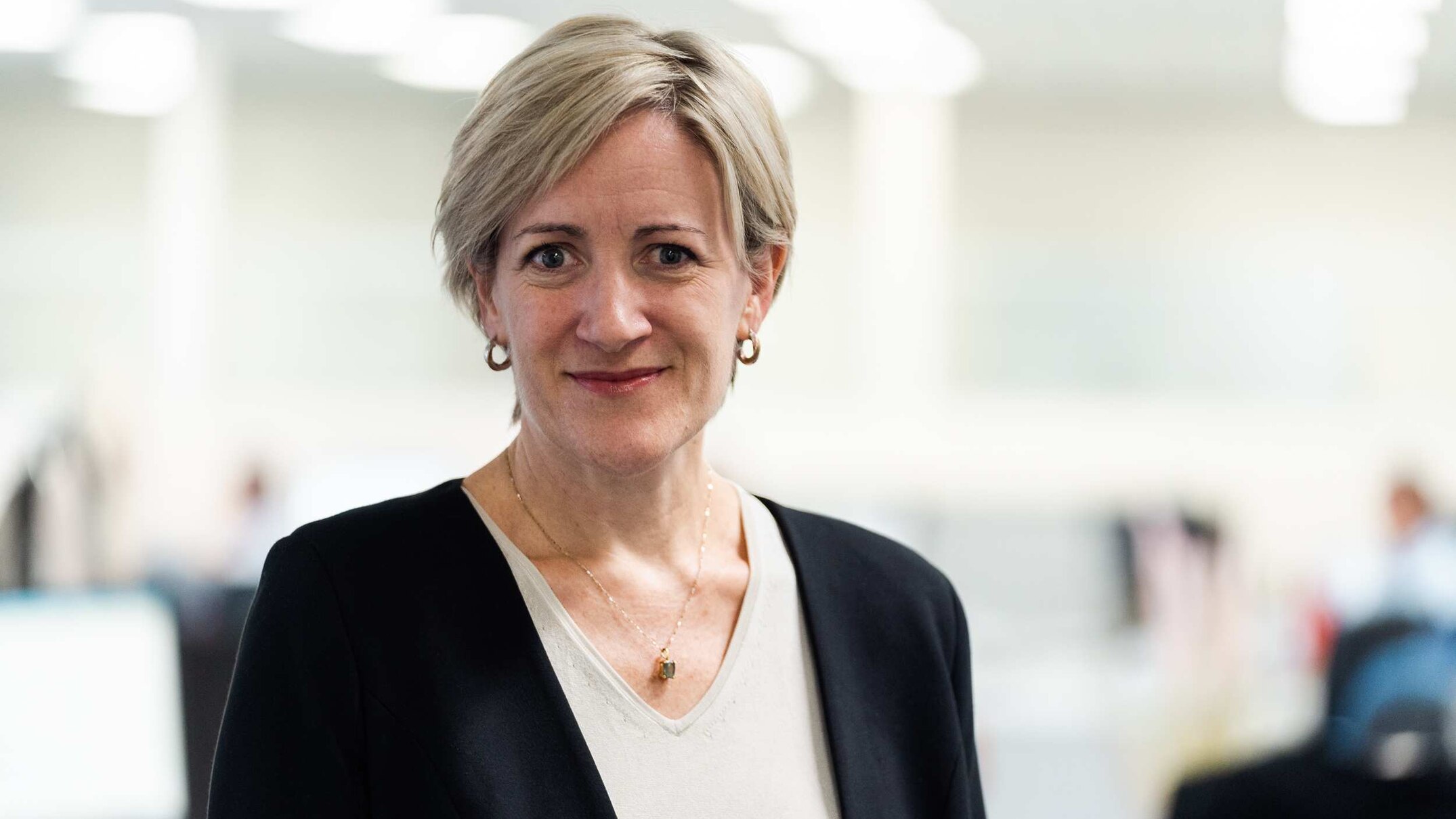
New Chief Health Officer Addresses Public Health Challenges
Western Australia’s new chief health officer, Clare Huppatz, has expressed confidence that the risk of Ebola entering the state is low. However, she acknowledges the need for continued vigilance as authorities monitor travel from the Democratic Republic of the Congo (DRC), where an outbreak of the deadly disease is currently underway.
With several WA-based mining companies and contractors traveling to and from the DRC, discussions are ongoing about what steps should be taken if a suspected case were to reach Australian shores. Dr. Huppatz, who took on her role in late February, has been dealing with various public health challenges since assuming the position. These include the recent quarantining of six passengers from a Hantavirus-hit cruise ship in Perth, as well as the spread of diphtheria in northern WA and the ongoing flu season.
“I do acknowledge that there’s a lot happening both in the world and within Western Australia recently,” Dr. Huppatz said during an interview with Stateline. “These are all usual things that we experience in public health from time to time. It just so happens that the last two months have been pretty busy.”
Public Health Challenges and Preparedness
Dr. Huppatz is no stranger to major health crises. She played a central leadership role in WA’s response to the COVID-19 pandemic. In her first sit-down interview as the state’s chief health officer (CHO), she highlighted the numerous challenges facing public health today.
“There are a few patterns in the world that make infectious disease movement and transmission more likely,” she said, citing factors such as global unrest and declining vaccination rates. Despite these challenges, she believes Australia is well-positioned to combat such threats, both at the border and in hospitals.
Like her predecessor, Dr. Andy Robertson, Dr. Huppatz remains alert to the possibility of another pandemic. “Another pandemic is definitely something that we need to prepare for,” she said. “I don’t have a crystal ball, so I can’t say exactly how or when, but infectious disease physicians would tell us that we may well have another pandemic at some point in the future.”
Monitoring the DRC’s Ebola Outbreak
While the number of WA miners traveling to the DRC for work is relatively low, Dr. Huppatz is closely watching the situation. She emphasized that the state has measures in place to handle any potential infections.
“Our clinicians would triage that person, put them in isolation so that they don’t infect anybody else, and alert public health,” she explained. “We would follow appropriate measures.”
However, she noted that any additional measures would depend on the specific circumstances. “It would very much depend on how many cases and the type of exposure,” she said. “If we had one or two cases and there were exposures, generally we would manage that through our robust case and contact tracing systems.”
Unusual Diphtheria Outbreak
Despite “good” vaccination rates against diphtheria, Dr. Huppatz described the recent emergence of the disease, including in remote parts of WA, as “unusual.” However, she stressed that the state is well-equipped to manage the situation.
“The reasons for seeing diphtheria at the moment are largely not well understood,” she said. “So we’re not exactly sure why there’s been this transmission at this point in time, other than we know that diphtheria spreads from person to person by close contact.”
She added that while diphtheria is a disease that spreads easily, health experts understand how it transmits. Regular meetings with the Commonwealth are taking place to ensure WA is “in lock-step” with other impacted states and territories.
First Female Chief Health Officer
Dr. Huppatz was appointed as WA’s chief health officer in March by Health Minister Meredith Hammat, making her the first woman to hold the role. She hopes to inspire other women to pursue careers in public health and to improve health outcomes for the entire population.
“If I could inspire young women to do that, I’ll be really pleased,” she said. She also plans to focus on her background and interest in Aboriginal health to improve outcomes.
“It’s really important to me to see improvements in our Closing the Gap targets,” she said. “I think key to that improvement is working with the Aboriginal health sector and using their leadership and their goals and objectives to drive change in those areas.”