New Research Reveals Risks of Heading in Football
A recent study has highlighted the potential risks associated with heading a football, even for amateur players. The research found that just one instance of heading the ball can temporarily increase levels of proteins linked to brain damage. This discovery has raised concerns among scientists and medical professionals about the long-term effects of repeated head impacts during football matches.
Monitoring Players’ Brain Health
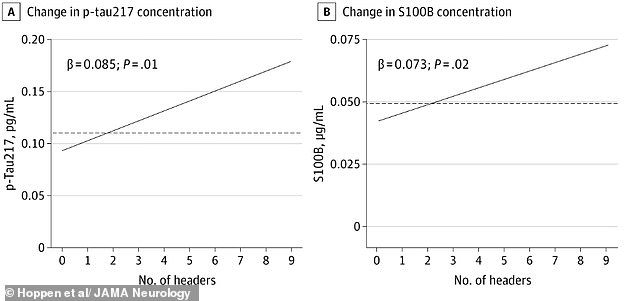
Scientists from Amsterdam UMC conducted a study involving hundreds of amateur football players. They collected blood samples before and after matches to measure specific biomarkers that indicate brain cell damage. The results showed that players who headed the ball more frequently or from greater distances experienced more significant changes in these biomarkers.
Although the elevated levels returned to normal within one to two days, researchers warned that this does not necessarily mean the damage is fully resolved. Lead author Jort Vijverberg explained, “We’re essentially looking at ‘dust clouds’ of damage. When the dust settles, that doesn’t mean the damage has disappeared.”
Biomarkers and Their Significance
The study focused on two key biomarkers: p-tau217 and S100B. P-tau217 is a highly accurate indicator of Alzheimer’s disease, as it detects hallmark changes in the brain. Elevated levels of this protein can predict cognitive decline years in advance. S100B, on the other hand, acts as a marker for brain tissue distress and is used in dementia research to track disease progression.
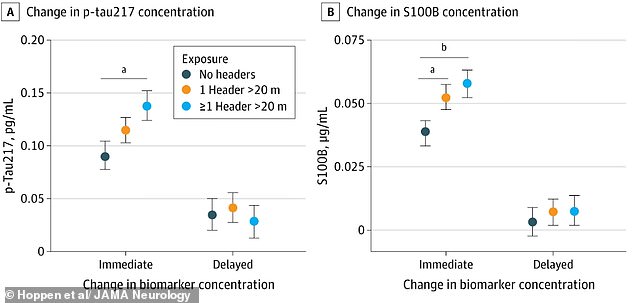
Players who headed the ball had higher levels of these biomarkers immediately after matches compared to those who did not. This suggests that even a single header can have measurable effects on brain health.

Defenders Face Higher Dementia Risk
Experts have long been concerned about the link between playing football and an increased risk of neurodegenerative diseases like Alzheimer’s and Parkinson’s. A 2021 study by Professor Willie Stewart revealed that professional defenders are up to five times more likely to develop such conditions compared to the general population.
Stewart’s research also found that the longer a player’s career, the higher their risk of neurodegenerative disease. However, the era in which they played—whether the 1930s, 60s, 70s, or late 90s—did not affect the risk. Goalkeepers, on the other hand, had a similar dementia risk to the general population.

Intensity of Headers Matters
Neuroscientist Marsh Königs, who worked on the study, noted that the frequency and intensity of headers play a crucial role in brain health. “The more often a player headed the ball and the more forceful the header, the greater the effect measured in the blood,” he said. The largest increase in biomarker levels occurred after high-intensity headers, where the ball traveled more than 20 meters through the air.
While biomarker levels declined and returned to normal within 24 to 48 hours, the researchers emphasized that heading should not be taken lightly, even in amateur football. The study, published in Jama Neurology, stated that repetitive head impacts could acutely affect neural integrity.
Expert Opinions and Public Health Concerns
Dr. Peter Theobald, a reader in biomedical engineering at Cardiff University, commented that the study adds to growing evidence that even modest head impacts can cause negative responses in brain tissue. He noted that even a small number of headers correlated with changes in blood markers post-match.
Some experts have called for footballs to be sold with dementia health warnings to raise awareness about the risks of heading. Professor Willie Stewart argued that while football has many health benefits, it also carries a significant risk of dementia. He suggested that warnings on packaging could help focus public attention on the issue and promote responsible play.
Conclusion
This research underscores the need for further investigation into the long-term effects of heading in football. While the immediate impact may be temporary, repeated exposure could lead to lasting brain damage. As the debate continues, it is clear that both players and governing bodies must take these findings seriously to ensure the safety of athletes at all levels.