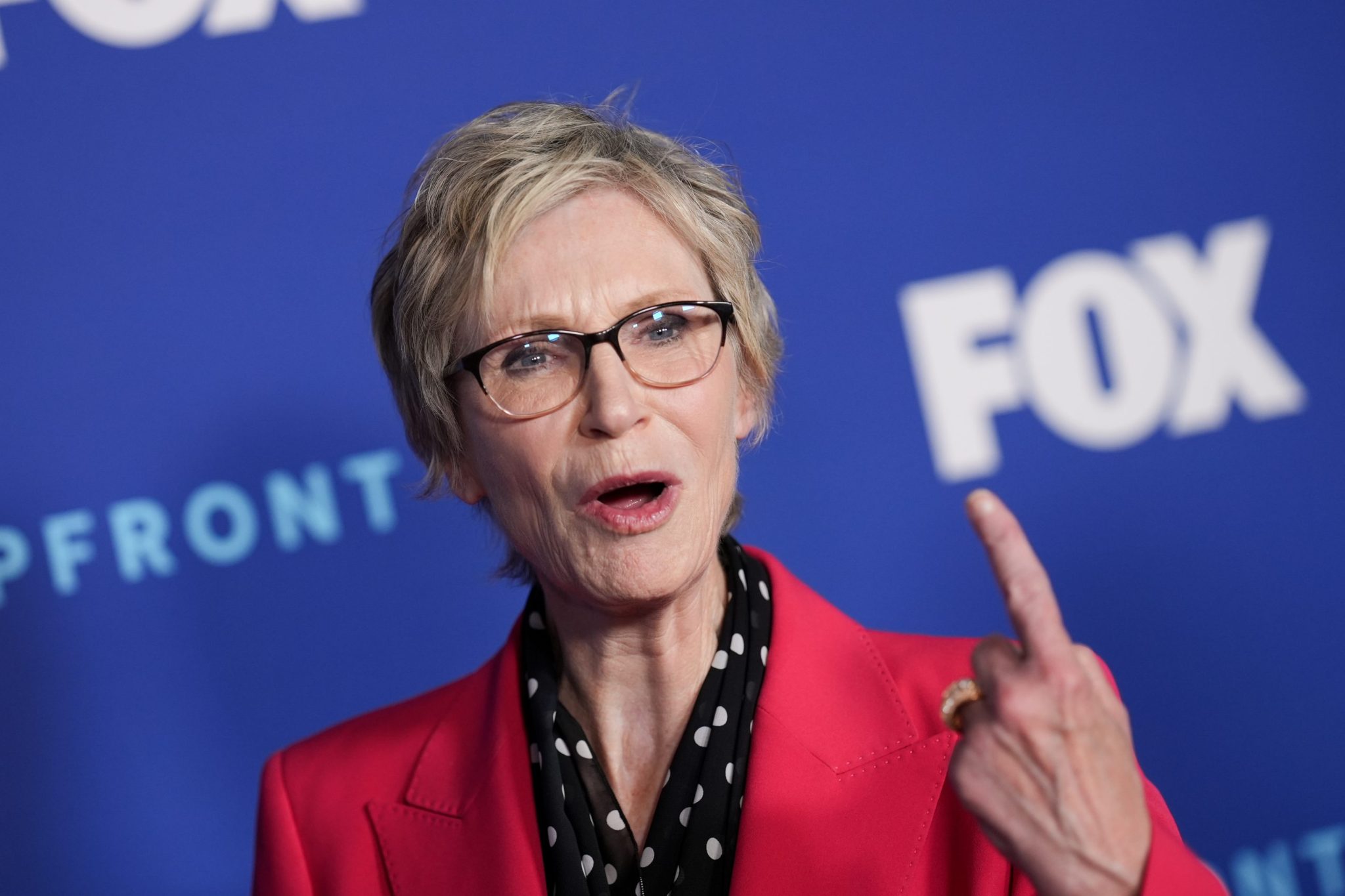
Jane Lynch’s Journey: Embracing the Unplanned Path
Jane Lynch, known for her role in Glee as the fiery cheerleading coach Sue Sylvester, has become a Hollywood mainstay. However, her journey to success was far from linear. At 49, she landed her breakout role, and it wasn’t part of any career plan. In fact, she admitted that she had no clear direction after college and didn’t even think about her future in her 20s.
Lynch shared this insight with students at Cornell University, her alma mater, where she spoke about the importance of not needing to have everything figured out early on. “What I’ve learned is that life itself has a much bigger and better imagination than we do,” she said. “The best things that ever happened to me, without exception, are things I could never have planned.”
This lesson took Lynch years to understand. When she first arrived at Cornell in the 1980s to pursue a master’s degree in fine arts, she felt deeply uncertain about what came next. She described herself as someone “fresh from the corn fields of Central Illinois.” During a discussion about life after graduation, she recalled classmates asking each other where they envisioned themselves in the future.
“When it was my turn, I said, ‘I don’t see myself anywhere, doing anything, because I am paralyzed with fear,’” Lynch said. “And there was silence, and I realized that I had said the quiet part out loud. I went into a fugue state for the rest of that semester.”
Over time, Lynch came to see success as less about mapping out every step and more about staying open to opportunities she couldn’t predict. This perspective feels even more relevant in the age of AI, where the future is constantly shifting.
“Your life and your ultimate joy doesn’t care about your timeline,” Lynch said. “That burst of inspiration, those creative ideas that lead to awesome opportunities—those show up in conversations you weren’t expecting to have. They show up when you finally let go of what you thought you wanted, long enough to notice what’s actually right in front of you.”
Today, Lynch is a five-time Emmy Award winner, and her net worth is estimated at $9 million. Her journey shows that sometimes, the best outcomes come from unexpected paths.
Career Advice from Industry Leaders
Scripting careers? Forget it—according to top business executives, flexibility is key. In times of economic uncertainty, layoffs, and rapid technology change, it’s natural for Gen Z graduates to cling tightly to career plans, hoping that if they map out every step, they can avoid the anxiety of the unknown.
However, Lynch wasn’t alone this year in telling graduates that rather than meticulously scripting every move, career success often comes from staying flexible enough to embrace unexpected turns.
Sheryl Sandberg, former Facebook executive, told Brandeis University graduates that embracing uncertainty was integral to her rise as one of tech’s most influential leaders. “Don’t script your career when the future is uncertain,” Sandberg said. “You don’t need a 10-year plan. If I had one, I would have missed the internet.”
Sandberg began her career in the Treasury Department under President Bill Clinton before pivoting into Silicon Valley after his administration ended—a transition she admitted once felt deeply uncertain. She later joined Google and eventually became Mark Zuckerberg’s longtime second-in-command.
“I wish someone had told me during those many months of fear, the plan was never the life raft,” she said.
Microsoft CFO Amy Hood also took a winding path on her way to the tech C-suite. After leaving her first job—in corporate banking—with no plan, she eventually took a National Park Service internship. However, after getting an unfavorable assignment to work at Alcatraz Island, she quit after one day. Months later, she accepted a job at Microsoft without asking about the salary and missed her first day after underestimating the drive from California to Seattle.
“As you start out, many successful careers are rarely—if ever—a straight line,” Hood told graduates of her alma mater, Duke University, earlier this year. Her advice to a generation under enormous pressure to precisely calculate every move: “Maybe lower your bar a little.”
The message echoed Lynch’s own advice at Cornell: ambition matters, but rigid expectations can get in the way of unexpected opportunities.
“So yes, aim for something, but then loosen your grip,” Lynch said. “Have a little faith.”