A Breakthrough in Radio Signal Detection
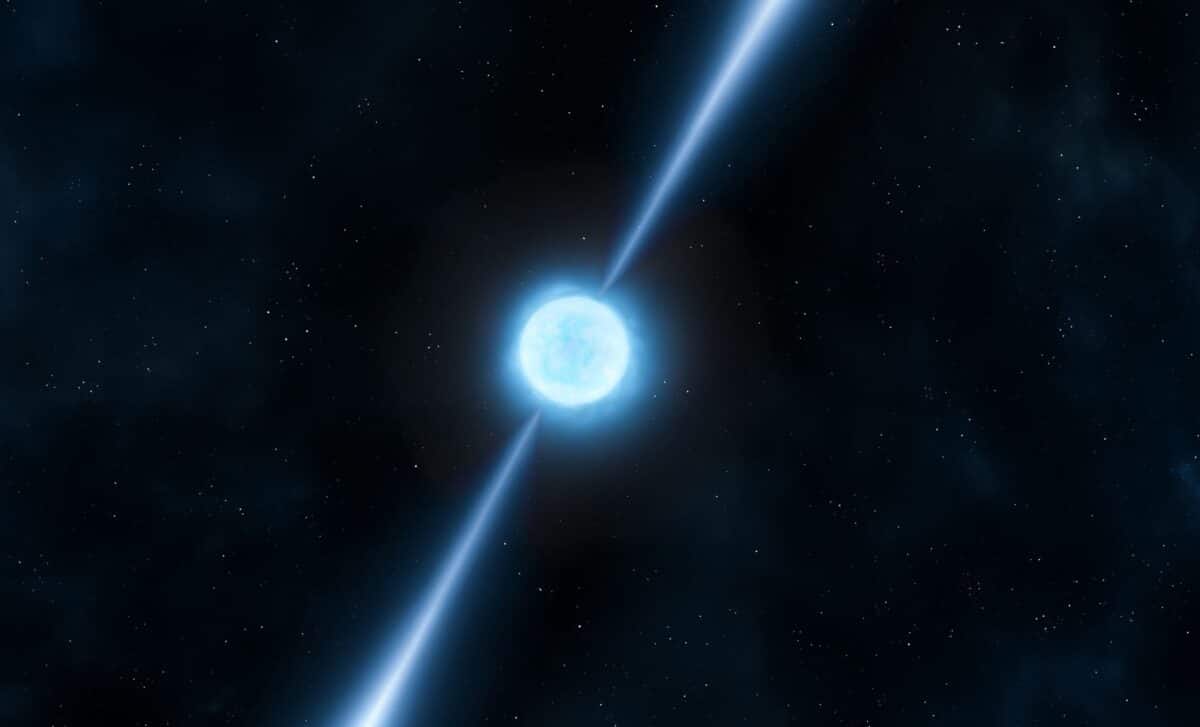
Astronomers have recently discovered faint radio signals from a neutron star that was previously believed to be completely silent. This object, known as 1E 1207.4-5209, is part of a rare group of neutron stars called central compact objects (CCOs). These remnants are found at the centers of supernova debris but, unlike most neutron stars, they have never shown the typical radio pulses that astronomers expect.
Using South Africa’s MeerKAT radio telescope, a team led by Zhang Lei from the National Astronomical Observatories of the Chinese Academy of Sciences managed to detect a signal from this elusive object. The findings, published in Nature Astronomy on June 25, suggest that at least one supposedly silent CCO has been emitting radio waves all along or has only recently started doing so.
A Faint Signal Hidden In Plain Sight
When a massive star explodes as a supernova, its core can collapse into a neutron star. Most newborn neutron stars spin rapidly and generate powerful magnetic fields that produce narrow beams of radio waves. As these beams sweep across Earth, they create the regular flashes that give pulsars their name.
Central compact objects have always been different. Only about a dozen are known, and none had produced detectable radio signals despite years of observations. One theory was that their magnetic fields were too weak to generate radio beams. However, the new observations tell a different story.
MeerKAT detected radio pulses from 1E 1207.4-5209 every 424 milliseconds, exactly matching the object’s known spin period. According to the report in Nature Astronomy, the signal is incredibly faint, which explains why it remained undetected for so long.

The neutron star is located approximately 10,000 light-years from Earth in the Milky Way, at the center of a supernova remnant left behind by an explosion that occurred more than 4,100 years ago.
A Spin Glitch May Hold The Answer
Astronomer Li Di of Tsinghua University gave the neutron star its nickname, the “Blue Eye Pulsar.” The name comes from the way bright X-ray images combine with the newly detected radio emission, giving the object the appearance of a glowing blue eye.
The neutron star already had an unusual history. In 2015, X-ray observations revealed that it had experienced a spin glitch, a brief increase in its rotation rate. These events are thought to occur when material inside the dense neutron star shifts unexpectedly.
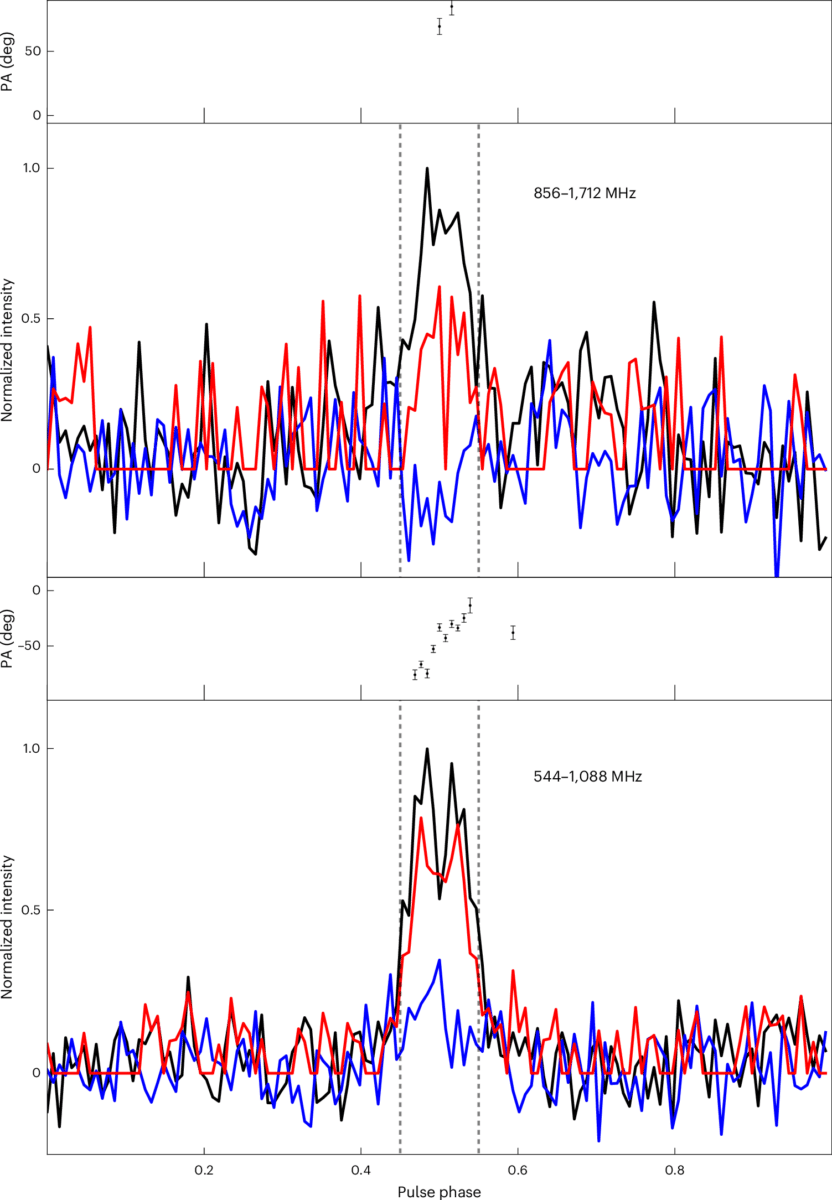
The research team believes that this glitch may have strengthened the object’s magnetic field, changed its orientation, or both. If this happened, it could have turned on the radio emission or simply made an already weak signal visible to today’s instruments.
The authors also note that if the neutron star gradually returns to its earlier rotation rate, the radio signal could fade again. Continued observations should reveal whether this happens.
A New Clue to Missing Pulsars
This discovery has implications beyond a single neutron star. The study suggests there could be many more pulsars in the Milky Way that have gone unnoticed because their radio signals are too weak to detect. It also raises the possibility that some pulsars currently classified as old may actually be much younger objects producing unusually faint radio emission.
The same idea could help explain why some supernova remnants appear to be missing a pulsar altogether. The researchers point to Supernova 1987A in the Large Magellanic Cloud, where indirect evidence strongly suggests that a neutron star exists, even though no radio pulsations have been detected.
The study also shows that at least one central compact object once considered radio silent is capable of producing detectable radio waves. For astronomers searching for hidden neutron stars, that small signal could carry much bigger implications.