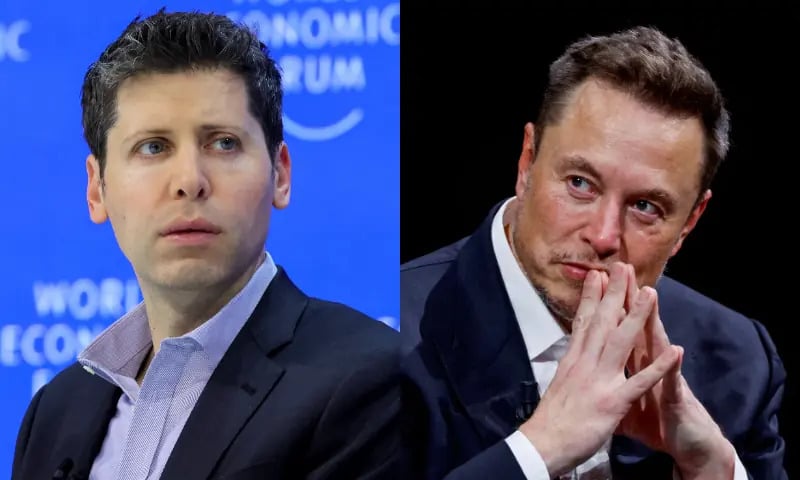
A Legal and Ideological Battle Over the Future of AI
Pakistan, April 26 — Elon Musk has entered a high-stakes courtroom battle against OpenAI, intensifying a legal and ideological dispute over the future of artificial intelligence. This case is significant as it pits one of the world’s richest individuals against a leading AI company over governance, ethics, and control of advanced technology. The outcome could shape how AI companies balance profit motives with public interest.
Musk is suing OpenAI, alleging that the organization abandoned its original non-profit mission in favor of commercial expansion. Jury selection in the case is set to begin on Monday in a court near San Francisco. Musk claims he was misled about the organization’s long-term structure and purpose when he helped fund it in its early stages.
The lawsuit argues that OpenAI shifted away from its founding principles after securing major investments, including significant backing from Microsoft. The company is now valued at hundreds of billions of dollars and is preparing for a public listing. Musk is seeking damages and structural changes, including severing OpenAI’s ties with major corporate partners.
OpenAI has strongly rejected the allegations, calling the lawsuit a competitive and reputational attack. The company says its transition to a hybrid structure was necessary due to the massive costs of developing advanced AI systems. It also argues that Musk’s actions are motivated by control and rivalry in the fast-growing AI industry.
Key Points of the Lawsuit
- Allegations of Misrepresentation: Musk claims he was misled about OpenAI’s long-term goals when he provided initial funding.
- Shift in Mission: The lawsuit accuses OpenAI of abandoning its original non-profit mission in favor of commercial interests.
- Corporate Ties: Musk seeks to sever OpenAI’s relationships with major corporate partners like Microsoft.
- Financial Claims: The lawsuit demands damages for what Musk perceives as financial and ethical violations.
OpenAI’s Response
OpenAI has denied all allegations, emphasizing that its evolution into a hybrid model was driven by practical needs. The company states that the development of advanced AI systems requires substantial investment, which necessitated a shift toward a more sustainable business model.
Additionally, OpenAI argues that Musk’s legal action is not based on genuine concerns but rather on a desire to maintain dominance in the AI sector. The company highlights that the AI landscape is rapidly evolving, and staying competitive requires strategic decisions that may involve partnerships and commercial ventures.
Broader Implications
This trial is more than just a legal dispute; it reflects deeper tensions in the global AI race. Questions of ethics, safety, and commercialization are increasingly colliding as AI technologies become more powerful and pervasive.
The case is expected to draw major attention from the tech industry, regulators, and investors as it unfolds in court. It raises critical questions about the role of AI in society and who should have the power to shape its future.
What’s Next?
As the trial approaches, the focus will be on the evidence presented by both sides. Musk’s team will likely emphasize the original mission of OpenAI and the alleged betrayal of its founding principles. OpenAI, on the other hand, will defend its decision-making process and argue that its actions were necessary for the advancement of AI technology.
The outcome of this case could set a precedent for how AI companies operate and how they balance their missions with the realities of the market. It may also influence how other tech companies approach their own growth strategies and ethical considerations.
In the end, the case is a reflection of the broader challenges facing the AI industry as it navigates the complex interplay between innovation, responsibility, and profitability.