Energy Crisis in Europe: A Repeated Mistake
The ongoing blockade of the Strait of Hormuz has presented Europe with its second major energy shock within four years. Governments have reacted swiftly, but without learning from past mistakes. Pierre Wunsch, Governor of the National Bank of Belgium, emphasized the need for immediate demand reduction, warning that broad energy support measures could be akin to “pouring gasoline” on the problem.
This perspective is accurate, yet most governments are repeating the errors of 2022 with alarming precision, and in some cases, worsening them. The suppression of price signals is prolonging the crisis, as highlighted by a comparative assessment of fiscal measures adopted by Germany, France, Italy, Spain, Poland, and Hungary against the European Central Bank’s (ECB) triple-T framework—targeted, tailored, temporary.
The Triple-T Framework and Its Challenges
The ECB’s triple-T framework is based on simple and unanswerable logic: support should directly assist those who cannot absorb the shock (targeted), preserve the price signal that drives necessary demand adjustment (tailored), and expire before emergency measures become permanent entitlements (temporary). Every euro spent suppressing the price signal is a euro spent prolonging the crisis.
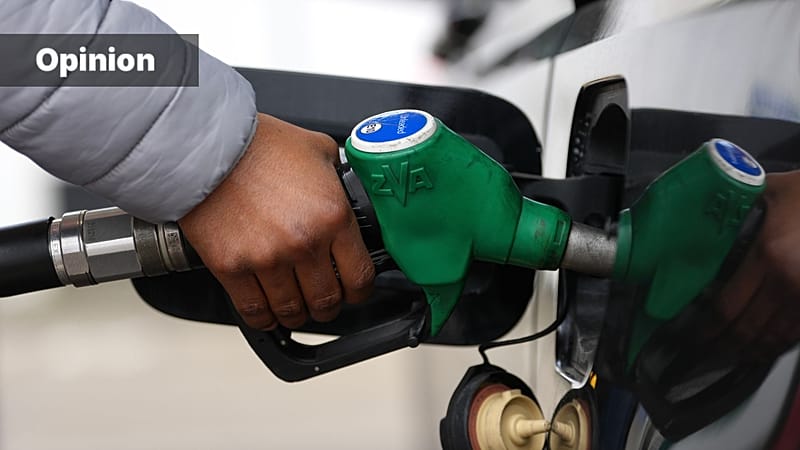
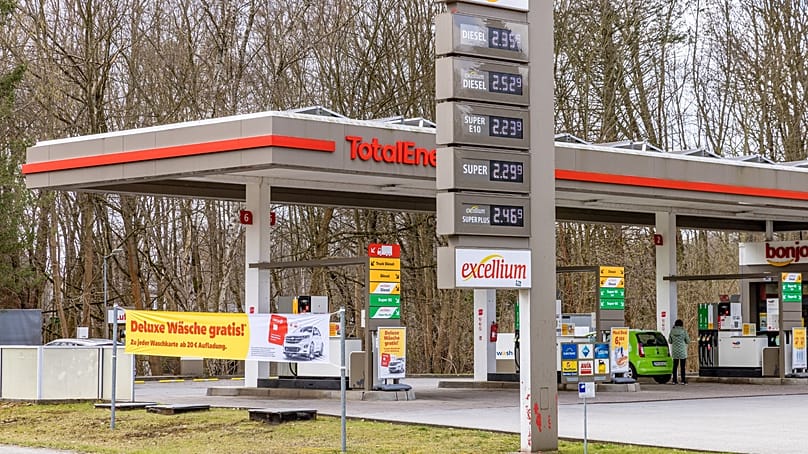
The hierarchy of failure is clear. At the bottom are Hungary and Poland, where direct price caps on petrol and diesel suppress the price signal entirely, benefiting high-consumption households and creating secondary distortions. For instance, Hungary imposed an export ban on crude and refined products, while Poland experienced fuel tourism.
Spain, Italy, and Germany occupy the next level, joined by Hungary and Poland. All five now implement broad Value Added Tax (VAT) or excise duty cuts that fail both targeting and tailoring. These benefits grow with consumption, raising concerns about their compatibility with the VAT Directive, as questioned by the Commission regarding Spain and Poland’s VAT cuts on motor fuels.
Effective Measures and Remaining Issues
Not all measures are poorly designed. Spain’s reinforced thermal voucher—a direct income transfer to vulnerable households—is one of the few that meets all three criteria. Italy’s sectoral tax credits for transport, fisheries, and agriculture do not interfere directly with prices and target sectors with demonstrable exposure. However, these measures remain tied to fuel consumption, which blunts the incentive to adjust demand.
France stands out as the member state closest to the ECB’s benchmark. Despite transport-sector protests, Paris chose not to intervene in pump prices, relying instead on administrative tools such as 500 inspections at petrol stations to detect abusive margins, liquidity support through Bpifrance, and deferrals of tax and social security obligations.

Its €70 million budgetary support for transport, agriculture, and fisheries is the weakest link, still tied to fuel consumption. However, the French approach is at least coherent.
European Levy on Energy Company Profits
Beyond national measures, five governments have turned to the question of who should finance these efforts. On 3 April, the Finance and Economy ministers of Austria, Germany, Italy, Portugal, and Spain sent a joint letter to Commissioner Wopke Hoekstra urging the Commission to develop a European levy on extraordinary profits of energy companies urgently, echoing the solidarity contribution under Regulation 2022/1854.
However, the 2022 levy had two critical flaws, and a second attempt must avoid them. It taxed the wrong base and allowed member states to opt out or design national equivalents without binding standards, fracturing the single market. For example, Spain taxed net turnover, which has nothing to do with windfall gains.
Any new instrument must target genuine economic profit. Even then, a windfall levy should not become a reflex, as the sector’s own tax bases will broaden with higher prices, leading to increased revenues without one.
A Call for Change
Governments must stop treating the price signal as the enemy. Blanket tax cuts and price caps should be replaced immediately with direct income transfers for vulnerable households and liquidity support and non-earmarked tax credits for exposed sectors. Emergency measures should expire not on calendar dates that politicians can quietly extend, but on predefined market triggers that depoliticise the withdrawal decision.
The Commission should also establish an ex ante notification and assessment framework grounded in the ECB’s triple-T criteria. This would help Member States understand the aggregate impact of their measures before adoption, not after.
The alternative—another round of untargeted subsidies that delay adjustment and deepen fiscal holes—is not crisis management. It is crisis prolongation.
Judith Arnal holds a PhD in Economics and is a State Economist in Spain. She is also a Senior Research Fellow at the Centre for European Policy Studies (CEPS), the Elcano Royal Institute, and the Fundación de Estudios de Economía Aplicada (Fedea).