An Intriguing Rogue-Lite
In the world of video games, dying is often seen as a sign of failure. However, in Saros, an action-packed game, death is not just a setback—it’s a gateway to growth and progress. This unique approach transforms what could be a frustrating experience into one that is deeply engaging and rewarding.
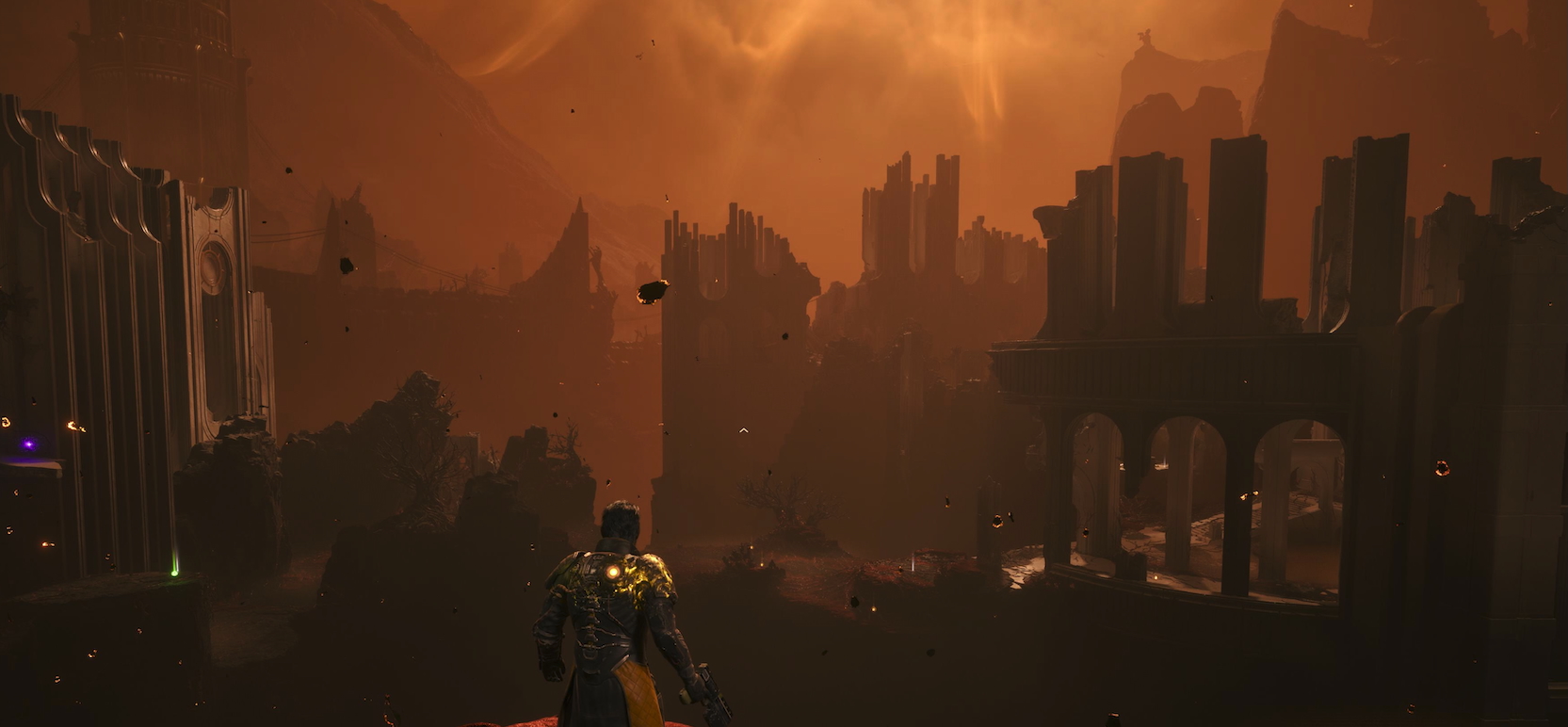
The journey begins with Soltari enforcer Arjun Devraj, who arrives on the alien planet of Carcosa alongside a dwindling group of soldiers. The game doesn’t waste time with lengthy introductions or complex backstories. Instead, it throws you directly into the action, leaving you to quickly learn the rules of this mysterious world.
Devraj is a skilled enforcer, equipped with a range of special abilities. He can dash through beams of energy and access various futuristic weapons, from guns to parasitic canons. His mission is to uncover the mysteries of Carcosa, but he soon discovers a more personal conundrum. In the game’s opening moments, he is obliterated by an eldritch creature with long, tentacle-like limbs, only to be revived on the Soltari home base.
Nobody knows how he returned or where he had been. Devraj doesn’t understand why he returns or why he can’t die. There’s a sense of déjà vu here, reminiscent of films like Edge of Tomorrow and All You Need Is Kill, where the protagonist is caught in a death loop, forced to search for answers while facing alien horrors.
Looping Gameplay That Evolves With Every Run
As Devraj embarks on his second loop, he stumbles upon a further mystery. Carcosa is haunted by an eclipse that seems to transform the landscape around him, making enemies more hostile and encouraging the land to sprout new life. Answers remain elusive as you tackle Carcosa, with each loop adding new layers and twists to the world.
Devraj is chasing after his former crew members and friends, uncovering more about the eclipse and its mysterious power to warp minds. Much of the Soltari crew has vanished into Carcosa at the whims of this power. Through audio logs, the game paints a terrifying picture of what has happened, with each crew member whispering of their fantasy and reverence for a mysterious god-like being or enthusing about the fall of the world.
A World of Great Mystery and Terror
There are so many wonderful sights awaiting on Carcosa. In the tradition of developer Housemarque, led by the creative direction of Australian developer Gregory Louden, Saros is an incredibly good-looking game.
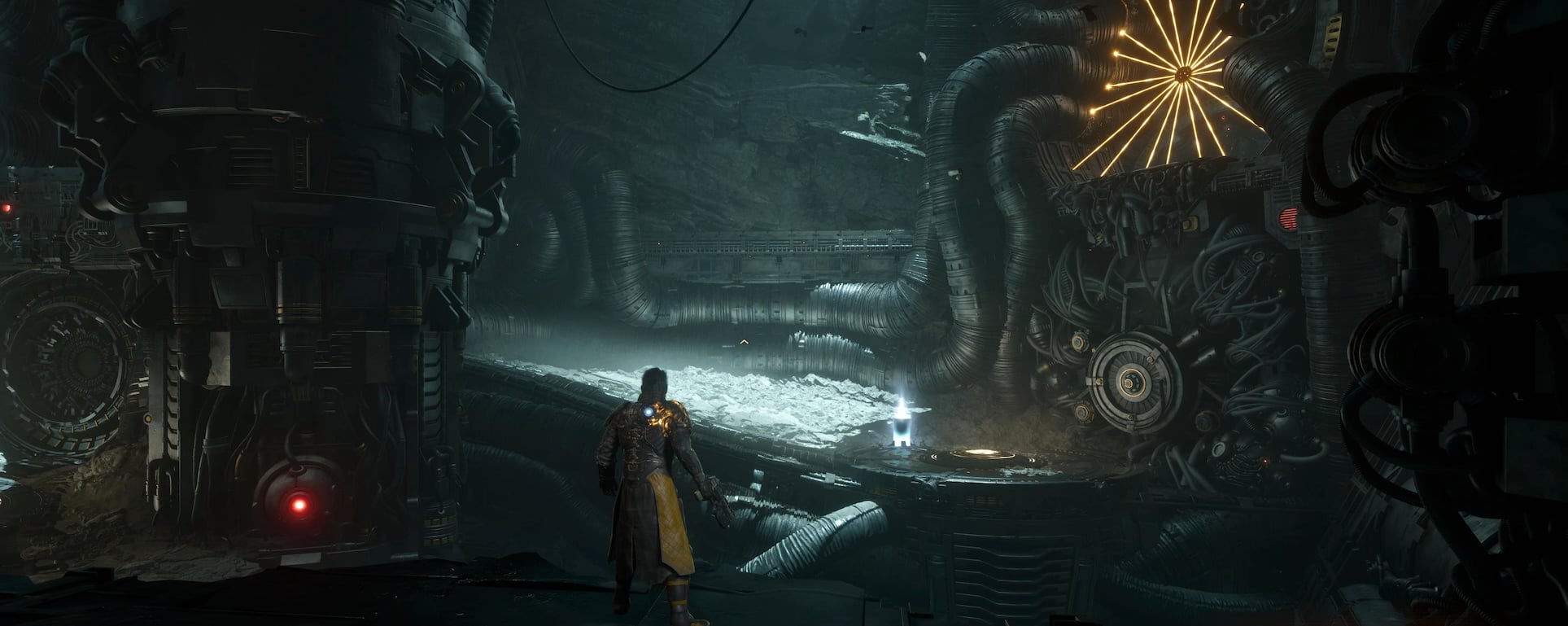
As you travel, you’ll encounter lands twisted by corruption, marked with great beauty. You’ll see strange and uncanny statues twisted around landscapes of blood-red vines and white rock. You’ll visit Giger-like space stations where wires wrap around great monuments like umbilical cords.
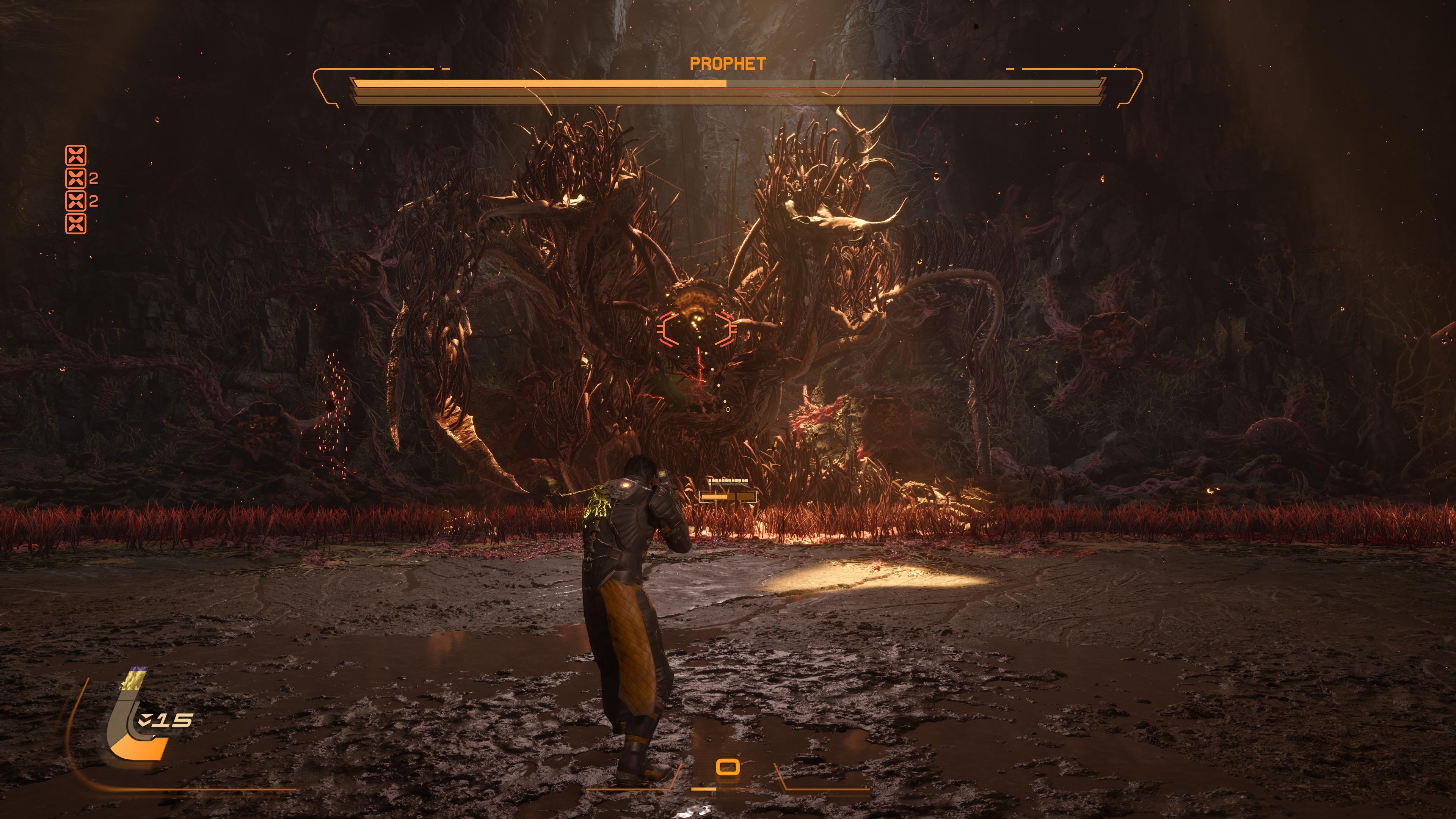
Eventually, you’ll meet a host of bosses that are equal parts horrific and gorgeous, with winding limbs, spreading vines, and all-seeing eyes. It’s mesmerising, and while you’ll need to clear your shock and awe to maintain your focus and sharp reflexes, there’s also time to appreciate just how beautiful the game is.
On the Subject of Difficulty
It’s natural to have some trepidation about Saros, even with this high praise. Housemarque is known for making difficult games, and it did not shy away from outlining Saros as another during pre-release marketing.
This is a difficult game. But it’s also a fair one, with options for those who are less inclined to throw themselves repeatedly at a wall. In Saros, you’ll begin without sea legs. Enemies are incredibly difficult, and require you to combine third-person shooting skills with dashing, dodging, and using an energy-absorbing shield. But eventually, you’ll sink into the game’s rhythm and begin to uncover its unique patterns.
Enemies tend to move with the flow of Carcosa, and eventually, you will recognize how they attack and shoot, and when to deploy your own skills to counter them. It’s like a dance. Even in towering boss battles, you’ll learn a distinct pattern, using all your accumulated skills and abilities to figure out exactly when to make your move.
When you inevitably fall, as a natural part of the game’s loop, you’ll be able to build yourself back up with new unlockable skills, and then try your luck with new items and weapons in the next iteration of Carcosa.
It’s also worth noting the rogue-lite designation here. Yes, there is an element of repetition as you travel through worlds, but each biome is segmented, so once you tackle its trials and move past particular areas—by unlocking gates, defeating monsters, or by other means—you won’t be required to keep revisiting areas you’ve already conquered.
A teleport system allows you to travel to any biome to unlock new secrets, giving you the opportunity to experience new sights in each loop, at your own pace.
It’s this mix of repetition and forward progress that makes Saros so moreish. For those who love a challenge, this is certainly a game that requires focus and quick-thinking. But for those curious about its esoteric, sci-fi vibes and vast, visually-impressive realms, there’s also the opportunity to advance through sheer will and determination, and to eventually get where you’re going by weathering Devraj until he’s able to plow through the alien hordes.
Saros understands exactly what motivates players, and presents all the tools you need to experience the joy of triumph against the odds. Even when it presents a frustrating roadblock, there is always the opportunity to move through it, with persistence key to enjoying the game’s many, ever-twisting challenges.