Community Divided Over Proposed Waste-to-Energy Incinerator
A proposed $1.5 billion waste-to-energy incinerator has sparked a heated debate in a southern Queensland community, with supporters and opponents holding strong views on its potential benefits and risks.
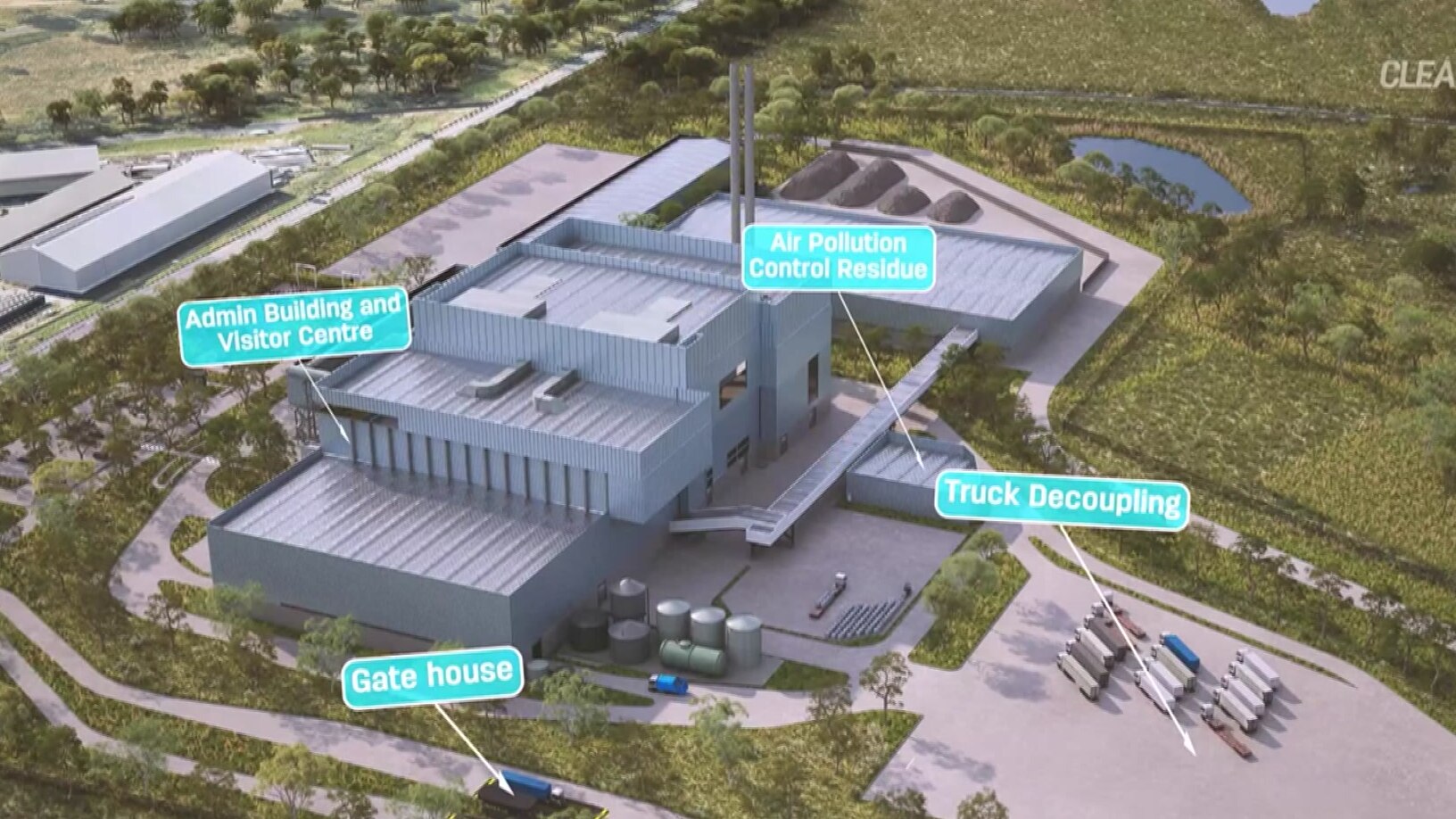
The project, known as the Bromelton Energy and Resource Centre (BERC), is being developed by waste management company Cleanaway. It is planned to be built just outside of Beaudesert on the Scenic Rim, approximately 70 kilometers south of Brisbane. If approved, the facility would process 760,000 tonnes of waste annually, diverting about 12% of Queensland’s waste from landfills.
Cleanaway claims that the plant would generate enough electricity to power around 105,000 homes and businesses. The process involves burning waste to heat a boiler, which then produces steam to drive a turbine and generate electricity. Similar waste-to-energy plants are already operating in Western Australia, while proposals are also under consideration in Parkes, New South Wales, and on the Gold Coast.
Despite these plans, the proposal has caused division within the local community. While some residents see it as a way to bring jobs and investment to the region, others fear the health risks associated with incineration.
Health Concerns and Environmental Fears
Lizz Hills, a member of the community group Keep the Scenic Rim Scenic, initially joined Cleanaway’s community advisory group with an open mind but ultimately decided to oppose the project. She raised concerns about the potential health impacts of pollutants released through the flue.
Hills pointed out that similar technology has been banned in parts of New South Wales, including Sydney and the Australian Capital Territory. “I don’t want them anywhere near my family. I don’t want them anywhere near our schools, my community,” she said. “If we’ve got two major capital cities going ‘let’s not put incinerators here,’ why would we accept one in the Scenic Rim? Are we just outsourcing a city’s waste problem to regional Australia?”
A ‘Safe Alternative to Landfill’
Cleanaway argues that the BERC facility would use advanced combustion controls, flue-gas treatment, and continuous monitoring to ensure emissions meet environmental standards. According to the company, 99.9% of emissions from the facility’s flue stack would consist of gases already present in the atmosphere, such as nitrogen, oxygen, and carbon dioxide.
The waste would burn at around 850 degrees Celsius, which Cleanaway claims would remove harmful compounds. Multiple flue gas treatment processes would further eliminate pollutants. Only 0.1% of emissions would involve compounds requiring close monitoring to ensure they do not exceed human health safety limits.
“The BERC is not an incinerator like we have come to know them from decades past,” Cleanaway stated. “This technology is always improving, and thousands of modern energy from waste facilities around the world prove that this is a safe alternative to landfill.”
The company also pledged to make emissions monitoring data public and to shut down the facility if necessary in response to any incident.
Experts Divided on Health Impacts
Public health experts remain divided on the long-term health effects of waste-to-energy incinerators. Dr. Peter Tait from the Australian Public Health Association noted that older generations of incinerators had been linked to cancers and birth defects. However, he emphasized that newer facilities use advanced technology to reduce harmful emissions.
“With newer incinerators, the claim is that they have technology to remove a lot of the bad stuff out of the emissions that are coming out of the smokestack,” Tait said. “Work we did more recently shows … the incinerators haven’t been in operation for long enough for health impacts to appear, and so it’s too early to be able to make the claim that they have no impacts or minimal impacts.”
On the other hand, Professor Damien Batstone from the University of Queensland’s Australian Centre for Water and Environmental Biotechnology argued that recent reviews of modern waste-to-energy technology found no evidence linking such facilities to cancer. He highlighted that current technologies effectively manage contaminants like dioxins, heavy metals, and polyaromatic hydrocarbons.
Incinerators as a Medium-Term Measure
Batstone described waste-to-energy as an interim solution while Australia transitions toward a circular economy. “Landfill is starting to run out,” he said. “We need better options to manage waste in the long term — that’s where we’re moving towards with society, but it’ll take us a while to get there.”
He acknowledged that while the country is making progress toward a circular economy, it is not yet fully realized. “Over the next 20 to 30 years, we will move in that direction,” he added. “But at the moment there is going to be a substantial stream which can’t be recycled … waste-to-energy offers another opportunity.”
However, Batstone warned that the technology is expensive and that any proposal must address issues like truck movements and local pollution.
Economic Benefits and Future Prospects
Back in Beaudesert, local chamber of commerce president John Powell believes the project could support the region’s growth. “We’ve got 4,000 new homes coming here in the next 15 years, that’s 20,000 extra people,” he said. “A waste-to-energy facility would allow more industry to come here and tap into lower cost electricity and would be just the tonic we need.”
Powell hopes the Bromelton State Development Area, where the facility would be built, could eventually become a broader circular economy precinct, attracting recycling and manufacturing businesses. He believes waste-to-energy should only be used as a “last option” for material that cannot be recycled.
Powell expressed confidence that government agencies would monitor the facility and ensure it meets environmental standards.
Cleanaway submitted a planning application to the Office of the Coordinator-General in March. A decision is expected later this year or in early 2027.