Gabriel’s Headbutt Incident and Panel Decision
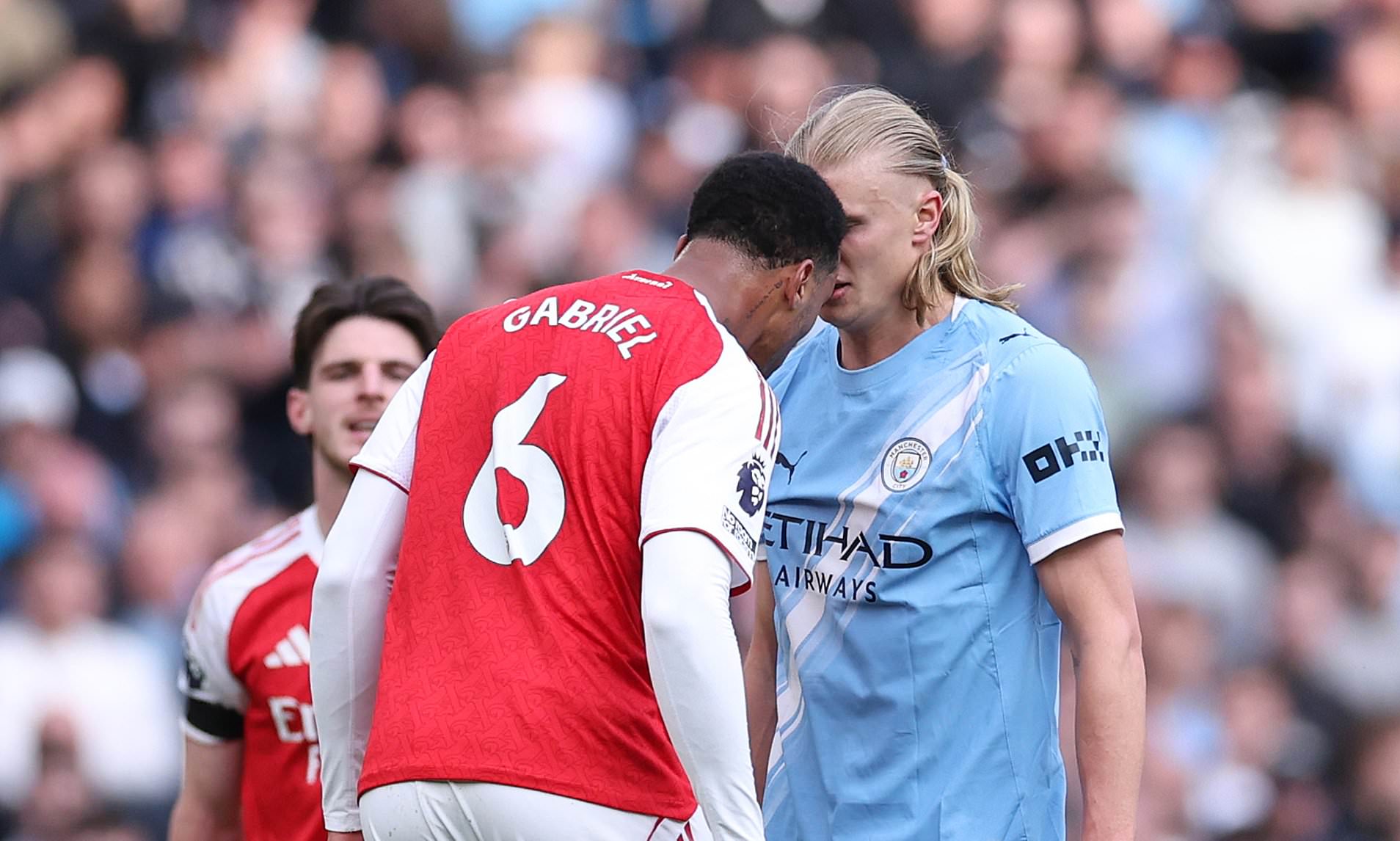
A Premier League panel has concluded that Arsenal defender Gabriel should have received a red card for headbutting Erling Haaland during a recent match at the Etihad. The Brazilian player managed to avoid a dismissal after bumping his forehead into the striker’s face during the clash. Neither referee Anthony Taylor nor the Video Assistant Referee (VAR) John Brooks considered the incident severe enough to warrant a red card, resulting in both players receiving yellow cards.
Brooks determined that the headbutt was not ‘excessively aggressive or violent’, and therefore did not intervene. However, the league’s key match incidents panel disagreed with this decision, voting 3:2 in favor of a dismissal. They argued that ‘the extra head movement forward from Gabriel’ constituted violent conduct. Despite this, the panel voted 4:1 against a VAR intervention, as they felt the incident did not meet the threshold for such an action.
If Gabriel had been sent off, he would have faced a three-match suspension. This decision has sparked significant discussion among fans and pundits alike, with many questioning why the initial decision by the officials did not result in a red card.

When asked whether Arsenal are lucky that Gabriel is available for their crucial title run-in, manager Mikel Arteta responded, ‘I don’t think we’re lucky.’ He also admitted to being surprised by the panel’s verdict that the centre-back should have been sent off, stating, ‘Yes.’
In addition to the Gabriel incident, the panel unanimously ruled that referee Anthony Taylor was correct in not showing a red card to Manchester City’s Abdukodir Khusanov. The incident occurred when Kai Havertz went down under a challenge from Khusanov during the 53rd minute. The panel noted that ‘Havertz is not in control of the ball and Khusanov makes shoulder-to-shoulder contact,’ which they deemed a fair challenge.
This ruling highlights the complexity of on-field decisions and the importance of accurate assessments by both referees and VAR officials. The panel’s decisions often have significant implications for teams, especially during critical periods of the season.
The debate surrounding Gabriel’s incident underscores the ongoing challenges in football officiating. While some may argue that the panel’s decision was a necessary correction, others might question the consistency of such rulings. The role of technology in football continues to be a topic of discussion, with fans and experts alike seeking clarity on how these decisions are made.
As the Premier League season progresses, the focus will remain on the performances of key players and the decisions made by officials. The outcome of these decisions can significantly impact the trajectory of a team’s campaign, making every match crucial.
In conclusion, the panel’s findings serve as a reminder of the high stakes involved in football matches and the importance of accurate and consistent officiating. The discussions around these decisions reflect the passion and dedication of fans, who are always eager to see the game played fairly and competitively.