A Legacy of Education and Controversy
For 50 years, this inner-city primary school has promised a better way of teaching, built around community, firm boundaries, and a personal touch. But now, amid ongoing investigations into alleged regulatory failings, physical harm, and historical sexual assault, former students and parents are speaking out for the first time.
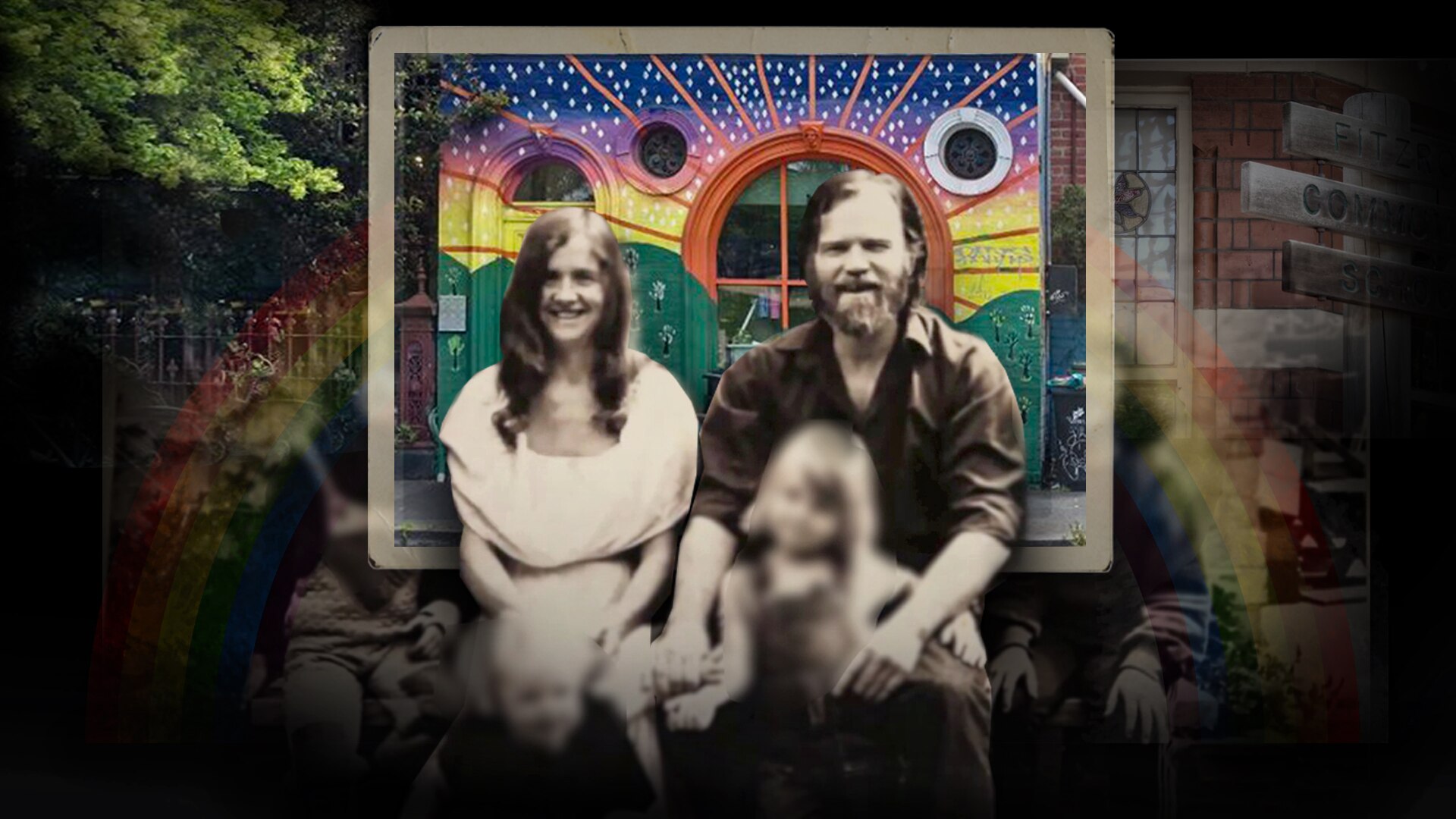
On a busy inner-Melbourne street opposite a lush green park is a pair of Edwardian terraces with a striking facade. A full-scale rainbow mural adorns one half of the building’s brick exterior, stretching across a large window with a hand-built planter box filled with flowers. Three brass plaques engraved with the names of government dignitaries sit next to the front door alongside the school’s motto: “People before things.”
Run for 50 years by the same family, Fitzroy Community School (FCS) has transformed from humble beginnings into a two-campus institution. It now serves about 100 students, offering a “happy, extended-family lifestyle” focused on building resilience and real-life skills. Its founders, Philip O’Carroll and Faye Berryman, have condemned mainstream schools as “day jails” that produce “zombies.”
Some children thrived at FCS. Others did not. A number of former students allege the school’s use of “physical discipline” tipped over into violence. For 50 years, the school’s conviction that it answers to no-one has persisted, even as the questions have grown harder to ignore.
Founding Principles and Ethos
Philip O’Carroll and Faye Berryman founded the school in their family home in 1976. It was a time of counter-culture. Of free love, protests, and a generation determined to do it differently. The school’s student body grew to include the children of a former Supreme Court judge, a federal minister, an international film director, and two of Australia’s biggest philanthropists, with 80 per cent of students in the top quarter of socio-economic status, according to federal data.
But its ethos and approach to education have always been driven by the founding family. In a self-published book, Mr O’Carroll and Ms Berryman described the school as being “created by concerned parents outside government regulations.” Their approach to physical discipline was explicit.
“What do you do with a ‘delinquent’ child? Well, if he hits me for nothing, I hit him back,” they wrote in their memoir, Start Your Own School. “This is perfect education.”
Mr O’Carroll, who has never been a registered teacher, features prominently in the school’s promotional materials. He describes himself as a “former lecturer in logic and linguistics at University of Western Australia.” The university has no record of him ever lecturing there other than a temporary appointment as a tutor in 1971.
Personal Accounts and Allegations
Jenny Lawlor is a retired doctor who sent her son Clancy to FCS in the 1990s. She remembered being drawn to the school’s wholesome atmosphere. “The kids would play in the backyard. At lunchtime, they’d come in and make their own lunch … It felt like a very warm, close, nurturing environment,” she said. Having moved to Melbourne from Canberra, she thought she had found her “village” with the school’s charismatic founders.
But for her son, Clancy Wright, it was anything but special. “It was a place of serious fear and serious hurt,” he said. Mr Wright started at FCS as a four-year-old and attended until he and his family were asked to leave in the middle of 1997. He was 11 years old.
He said that behind closed doors at FCS, he was subjected to physical violence, bullying and humiliation cloaked as “discipline.” Mr Wright said Mr O’Carroll and his stepson, Nick Berryman, doled out physical punishment to him. The ABC has seen a copy of his sworn testimony, which forms part of the VIT’s investigation into the now-suspended teacher.
In one incident, he alleged Mr O’Carroll lunged at his throat and squeezed it before slamming him into a wall. “I can remember that feeling of … he could kill me,” Mr Wright told the ABC. “He just needs to squeeze just a little bit harder, and he’s picked me up off my feet, my feet are dangling in the air, and he’s just slammed me against the wall again.”
Public Concern and Legal Scrutiny
Scott Kinnear’s four children attended the school at the same time as Mr Wright. Mr Kinnear and his then-partner, a registered teacher, threw themselves into the school “with gusto,” eventually teaching a class together on emotional intelligence. It was during a class in July 1997 that he first became concerned for his children’s safety.
When discussing the idea of discipline, Mr Kinnear asked if students who misbehaved should be sent to Philip O’Carroll. “We got a very direct, unanimous, imploring response from the girls mainly at first, ‘Don’t do that’, because Philip … will hurt them,” Mr Kinnear said. “‘Philip will hurt the boys.’ That’s what they told us.”
Mr Kinnear and his former partner were shocked and reported the allegations to police. Mr Kinnear also called other parents, including Ms Lawlor, to share what they had heard. A meeting between Mr Kinnear and other school parents was held at a local yoga studio, which police also spoke at.
Legal and Institutional Responses
After investigating the allegations, Victoria Police told Mr Kinnear it would not pursue criminal charges due to a lack of evidence. Mr Kinnear asked the Victorian Ombudsman to intervene. The ombudsman investigated and ultimately backed the police decision. “The alleged offenders … have either strenuously denied the allegations or provided explanations,” then-ombudsman Barry Perry wrote in a letter to Mr Kinnear in February 1998.
Corporal punishment was not outlawed in Victorian non-government schools until 2006. While modern parenting approaches have shifted, Mr Kinnear maintained his criticism of the ruling. He said it was unconscionable no action was taken at the time.
Current Investigations and Reactions
The FCS has been the subject of several official complaints during its 50-year tenure. In 2020, a parent wrote to then-education minister James Merlino complaining that Nick Berryman emotionally and physically abused their child. They submitted a complaint to the VIT in 2021. In the same year, education watchdog the Victorian Quality and Regulation Authority (VRQA) started its own review.
The ABC understands regulators received four other complaints about Nick Berryman between 2022 and 2025. One of those was from intensive care doctor Mark Collins. Dr Collins said he saw something while walking around an oval opposite the school in 2022 that he considered “unacceptable.” A group of five- and six-year-old kids had gathered for what looked like a sports lesson. A man was aggressively berating a young girl who was visibly upset. He was jabbing his finger at her. He then hurled a football aggressively at a young boy’s chest.
Family Response and Support
The ABC has put detailed questions about the allegations made against them to Philip O’Carroll, Faye Berryman, Tim Berryman and Nick Berryman, but none have responded. The school board, which includes Ms Berryman and her and Mr O’Carroll’s daughter, Catherine O’Carroll, engaged the crisis communications team FMRS Advisory.
In a statement, the board said hundreds of students had enjoyed a “safe and happy school experience where they were set up to thrive.” The board also apologised to families and students “who did not feel fully supported by the school and for that we are deeply sorry.”
Faye Berryman, who has been awarded an Order of Australia for services to education, is the only family member currently teaching at FCS. Atmosphere ‘full of purpose and optimism.’
At Ms Berryman’s request, seven parents contacted the ABC expressing support for the school, including playwright Joanna Murray-Smith. She said her daughter attended the Thornbury campus between 2015 and 2016 and thrived under the “unconventional” approach. “It [physical abuse allegations] surprises me in the sense that it doesn’t tally with my experience of those people, but it doesn’t surprise me in the sense that there have always been rumours about the school.”
Conclusion
Clancy Wright said the impact of his alleged abuse at Fitzroy Community School was significant and long-lasting. He believed that there were other children out there who may have suffered from the school’s policies. He was sharing his story publicly for them. “That ‘flight or fight’ [response] that is on when you’re in the school, that’s taken a very long time to turn off,” Mr Wright said. “All of us, no matter who we are, we’ve all got that little kid version of us inside ourselves somewhere. And mine was really scared. I’m not anymore.”