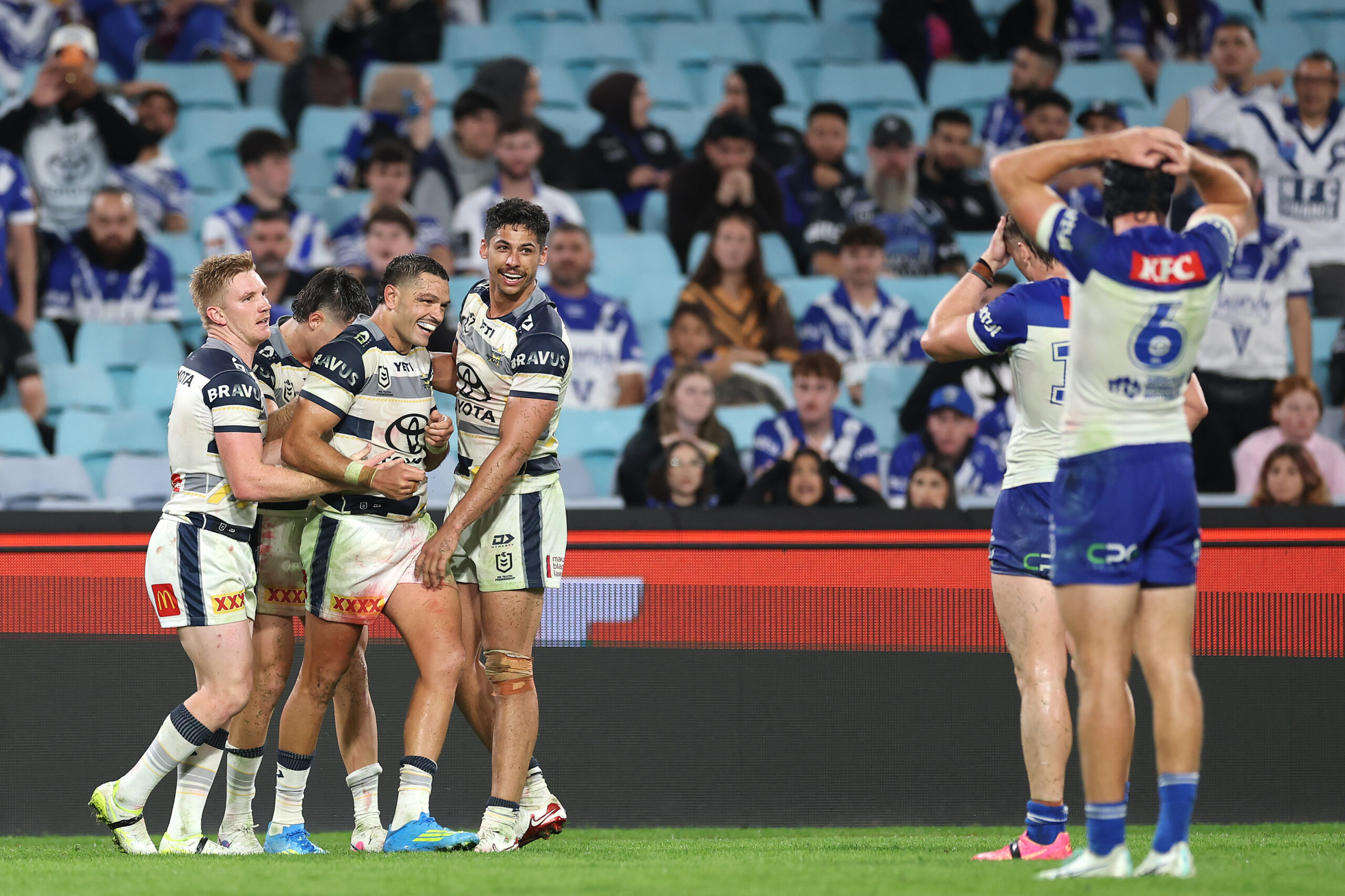
A Disappointing Performance from the Canterbury Bulldogs
The Canterbury Bulldogs, once seen as a strong contender for the premiership during the pre-season, suffered their fifth loss in six matches on Friday evening against the North Queensland Cowboys. The game was marked by a series of disappointing performances, with the Bulldogs struggling to find their rhythm throughout the 80 minutes.
From the start, the Bulldogs faced challenges that were hard to ignore. They had extended periods of possession without scoring, and despite having more than half of the ball and territory, they managed to score just two tries. This lack of efficiency was glaring, especially considering the Cowboys were coming into the match with an average of 26.8 points per game, which increased to over 30 points when excluding their previous game against the St George Illawarra Dragons.
The Cowboys, who had improved their defensive efforts after a poor performance against the Cronulla Sharks, proved to be a tough opponent. Meanwhile, the Bulldogs’ attack was described as pedestrian at best, with several missed opportunities that left fans frustrated.
A Struggling Team and Frustrated Fans
The Bulldogs’ recent form has been concerning, with five losses in their last six games. Looking further back, they have lost 11 of their last 16 matches, raising questions about their overall performance and management. The frustration among fans was evident at the end of the game, with boos echoing through the stadium. This dissatisfaction extended beyond the players, targeting the coaching staff, recruitment team, and director of football Phil Gould.
In the post-match press conference, head coach Cameron Ciraldo pointed the finger at the referee and the current rule set, suggesting that the six-agains the Bulldogs received didn’t provide much benefit. He emphasized the need for the team to focus on internal feedback rather than external criticism.
Despite the Bulldogs winning the penalty count 6-3 and the six-again count 6-2, they ran fewer metres and made fewer line breaks than their opponents. This highlighted the team’s struggles both offensively and defensively.
Defensive Concerns and Personnel Issues
Defensively, the Bulldogs have also shown signs of weakness. While their up-and-in style worked well against the Penrith Panthers, it hasn’t been effective against other teams. The defense has given up almost 24 points per game this season, and the recent trend of conceding 108 points in their last three games is alarming.
The personnel changes have also played a role in the team’s struggles. Lachlan Galvin, while showing effort, has not executed well. His move to halfback has not yielded the desired results. The departure of Reed Mahoney has left a void, and Bailey Hayward has not performed up to expectations. His lack of effectiveness was evident, with Jason Taumalolo repeatedly exploiting his weaknesses.
Other issues include Matt Burton’s decline in performance, Jacob Preston’s placement on the opposite side of the field, and Stephen Crichton’s fitness concerns. Connor Tracey also had a poor game, and Marcelo Montoya’s exclusion from the lineup was justified.
Looking Ahead for the Bulldogs
The Bulldogs’ roster under Phil Gould’s management has raised questions about its suitability for the current season. The decision to sign Adam O’Brien as an attacking coach has not delivered the expected results. To improve, the team needs a controlling half like Sean O’Sullivan, allowing Galvin to play in his preferred position.
The club also needs to address the hooker position, with Jake Turpin’s injury and Bailey Hayward’s inconsistent performance being major concerns. Fixing these issues, along with improving the forward pack, could help turn things around.
With five losses in six games and only two wins against weaker teams, the Bulldogs face a tough road ahead. Their next challenge against the Dolphins will be crucial in determining whether they can recover or continue their downward spiral.
Cameron Ciraldo must take responsibility for the team’s mistakes and work on fixing them. Blaming referees and rules won’t solve the underlying issues. The path forward requires a focused approach and significant improvements in both attack and defense.