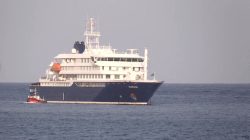
In a post-pandemic world, news of a respiratory virus can trigger heightened concern. A recent outbreak of hantavirus on the MV Hondius cruise ship has reignited fears for some, as passengers and crew face quarantine measures after eight infections and three deaths were reported.
To help clarify the situation, readers were invited to submit their questions, and USA TODAY journalists provided detailed answers. If you have further inquiries, feel free to reach out.
Understanding Hantavirus
Hantavirus is a family of viruses naturally carried by rodents. Over 50 species have been identified, but only a few are known to infect humans. According to the World Health Organization (WHO), the virus is primarily spread through exposure to rat droppings, urine, or saliva. While person-to-person transmission is rare, it can lead to serious illness. Some of the infected passengers aboard the MV Hondius are believed to have contracted the virus from each other.
The WHO has identified the outbreak strain aboard the ship as the Andes virus, which is known to spread between people.
The Case of Gene Hackman and Betsy Arakawa-Hackman
Betsy Arakawa-Hackman’s cause of death was hantavirus pulmonary syndrome (HPS), one of the two conditions caused by the virus. However, Gene Hackman died from natural causes after battling heart disease and complications from Alzheimer’s disease, not hantavirus. The key difference between Arakawa’s infection and that of the cruise passengers lies in the mode of transmission. While Arakawa likely contracted the virus from rat droppings, some passengers on the MV Hondius are believed to have caught it from each other.
Severity and Symptoms of Hantavirus
Hantavirus can cause two serious syndromes: HPS, which affects the lungs, and hemorrhagic fever with renal syndrome (HFRS), which affects the kidneys. According to the Centers for Disease Control and Prevention (CDC), about 38% of those who develop HPS may die without treatment, while HFRS has a fatality rate ranging from 1% to 15%, depending on the virus type and treatment received.
Symptoms can vary but may include fatigue, fever, muscle aches, chills, headache, dizziness, nausea, vomiting, diarrhea, abdominal pain, and respiratory issues such as coughing, chest tightness, and shortness of breath.
Why Are We Concerned Now?
Although hantavirus is not new, concerns have arisen due to the recent COVID-19 pandemic. However, the WHO has assessed the global risk as low. Dr. Maria Van Kerkhove, acting director of epidemic and pandemic management at the WHO, stated that this is not the start of an epidemic or pandemic.
Unlike COVID-19, which spreads through airborne particles, hantavirus is primarily transmitted through contact with rodent droppings, urine, or saliva. The Andes virus is the only known hantavirus that spreads between people, usually through close contact.
U.S. Residents Affected
Passengers from five U.S. states were on board the MV Hondius. These states include Georgia, Arizona, California, Texas, and Virginia. All passengers have since returned to their respective homes.
According to the Georgia Department of Public Health, two residents from Georgia were on the ship, both in good health. In Texas, the CDC notified the Texas Department of State Health Services about two residents who were passengers. They reported no symptoms and no contact with sick individuals. Arizona and California also had residents on the ship, and the Virginia Department of Health is tracking one traveler who returned to the state.
Is There a Cure?
There is no specific treatment or cure for hantavirus, according to the CDC. Patients receive supportive care to manage symptoms, including rest, hydration, and, in severe cases, interventions like intubation or dialysis. Those with HFRS may require hospitalization and dialysis if their kidneys are affected.
Quarantine Measures and Cruise Ship Status
Oceanwide Expeditions, the Netherlands-based cruise operator, stated that the MV Hondius is continuing to monitor progress and sailing toward the Canary Islands. The ship is expected to arrive at the port of Granadilla (Tenerife) in 3-4 days, though it is unclear if it will dock upon arrival. The company is in discussions with authorities regarding quarantine and screening procedures.
Air Travel and Hantavirus Risk
Experts say the risk of catching hantavirus on an airplane is extremely low. Robert Cross, an associate professor at the University of Texas Medical Branch, noted that there is “virtually no risk of transmission on airplanes within the United States.” While the risk remains minimal, wearing an N95 respirator and practicing good hand hygiene are recommended precautions.