In the Ain region, the Dinoplagne site is home to the longest sauropod dinosaur track ever discovered in the world, a 155-meter-long footprints in rock from the Jurassic period. These incredible footprints, nearly 150 million years old, give visitors a chance to step back into the distant past like never before.
Few paleontological sites can compare to Dinoplagne, nestled deep in the Jura mountains. It’s far from the typical museum with its reconstructed skeletons and dioramas. Instead, Dinoplagne is a global standout, offering something far more tangible: real dinosaur footprints preserved in rock.
What makes this site so special is how it challenges the way we think about prehistoric times. Where dinosaurs are often just images in books or documentaries, at Plagne, they become suddenly real, right in front of you. The size of the footprints, their depth, and how perfectly aligned they are in the rock all speak to animals that once roamed these landscapes millions of years ago.
A Geological Treasure from the Jurassic
The Jura mountains, as stated in the online source ScienceDaily, are an exceptional area for footprints, with geological significance that extends far beyond the region’s borders. In fact, it is within this same massif that the Jurassic period, when dinosaurs dominated the planet, got its name. However, the Plagne site stands out from its counterparts due to one rare and valuable element: the remarkable length and clarity of its footprints.
“They have been precisely dated to the early Tithonian (Late Jurassic), when the trackway site was located at the southeastern margin of the carbonate-dominated Jura platform, in a protected littoral mudflat environment,” said the authors.
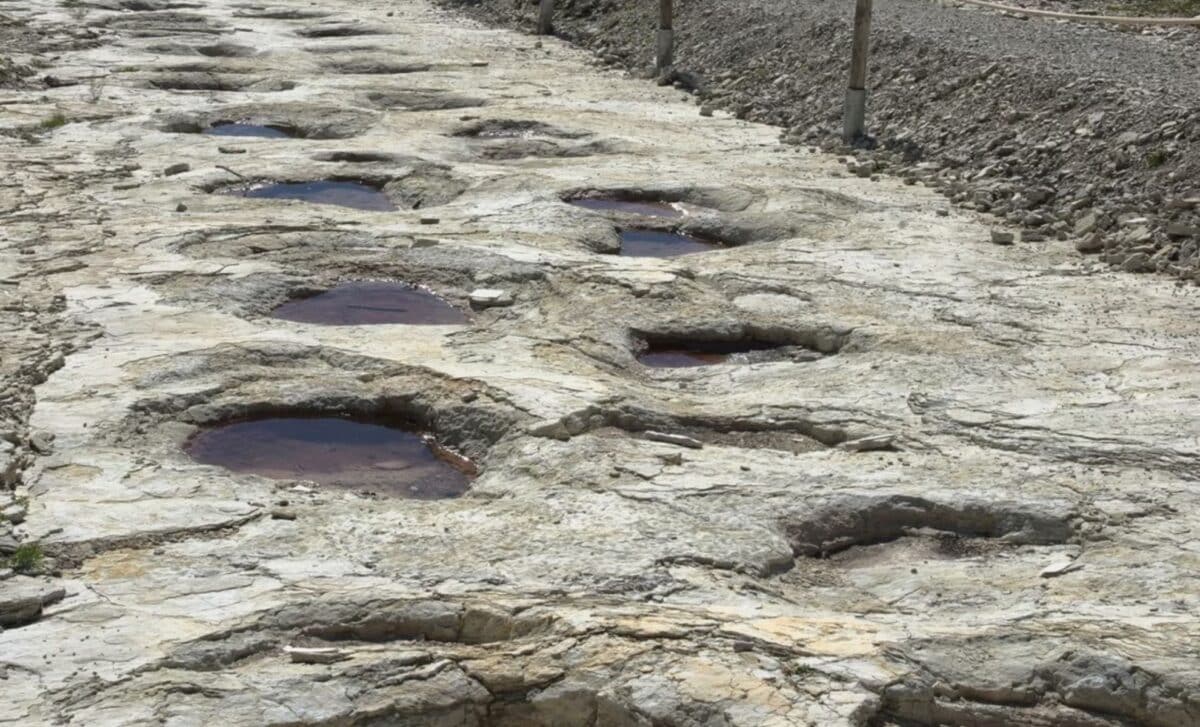
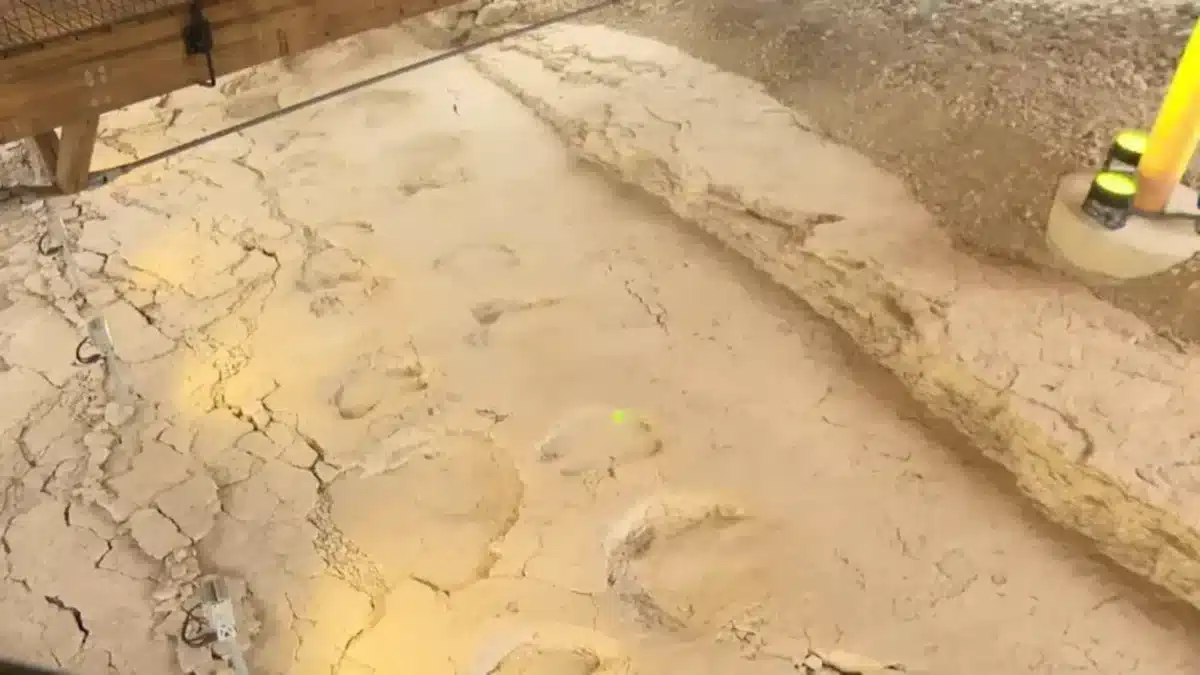
Visitors to the site can see a track that’s remarkably well-preserved. Each fossilized footprint tells the story of a massive animal that once walked through an environment now frozen in stone. The clarity of these footprints is astonishing: the edges are sharp, and the details are so well-defined, it almost feels like the dinosaur just passed by.
A World Record Holder
In 2009, a major discovery made the site even more famous. As noted in the study published in Geobios, it was here that researchers identified the longest track of sauropod dinosaur footprints ever recorded.
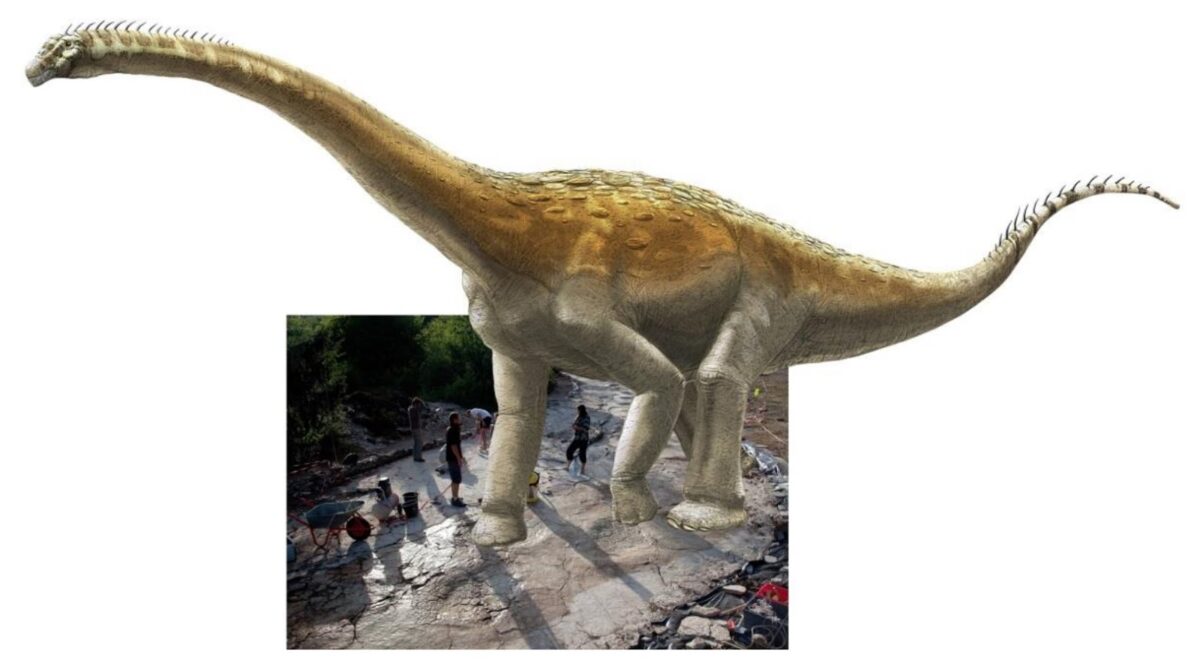
Based on a press release on the CNRS University website, the biometric research revealed the dinosaur that left the track measured at least 35 meters in length, weighed between 35 and 40 tons, had a step length of 2.80 meters, and moved at a speed of 4 km/h.
“This new trackway site, alongside other Early Jurassic Swiss and French tracksites yielding thousands of sauropod and theropod tracks, can be considered as being the largest dinosaur megatracksite in Europe,” the researchers noted.
The track extends over 155 meters, an exceptional distance that redefines the standards for modern paleontological discoveries. It is attributed to a titanosaur, a herbivorous dinosaur with an impressively long neck. For comparison, this animal could reach 30 meters in length, 8 meters in height, and weigh nearly 40 tons.
Incredible Details of the Sauropod Footprints
What’s even more amazing is the detail in the footprints. Some tracks show the dinosaur’s front feet, letting scientists see the structure of its limbs and even how its toes were positioned. These details help researchers understand how these giants moved, how their weight was distributed, and how they interacted with their environment.
” The footprints are preserved to various degrees along the trackways, depending on the initial condition of the sediment of various competences. The best-preserved section of the sauropod trackway allows this specimen to be attributed to Brontopodus plagnensis,” they added.
Today, the site continues to be studied with the utmost scientific rigor, as researchers work to uncover even more details about the ancient creatures that once roamed the area. Despite this ongoing research, the site remains open to the public, allowing visitors to experience firsthand the remarkable history preserved in the rock.