Australian and New Zealand Travellers Quarantined After Hantavirus Outbreak
Australian and New Zealand citizens caught up in a hantavirus outbreak will be placed under a three-week quarantine in a facility located northeast of Perth. This measure is part of the federal government’s compulsory orders to ensure the safety of those affected.
The health minister, Mark Butler, confirmed that four Australian citizens and one permanent resident would be transported from Perth to the Bullsbrook quarantine facility, which is situated near the Pearce air force base. A New Zealand citizen will also be quarantined in Australia as part of this arrangement.
Bullsbrook, located approximately 45km outside Perth, is one of several containment facilities established during the COVID-19 pandemic and is managed by the federal government. None of the passengers currently show symptoms of the virus, which is transmitted by rodents and can lead to severe infections in humans.
During a press briefing on Monday afternoon, Butler emphasized that hantavirus, which has affected passengers on the MV Hondius cruise ship, “is not a virus with pandemic potential.” However, he stressed the need for a careful public health response.
“We have a responsibility to bring these passengers home and to protect them from any risk, no matter how small, of potentially transmitting the virus without knowing it,” Butler said. “These arrangements discharge those responsibilities.”
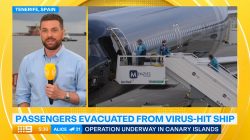
The group includes residents from Queensland and New South Wales. They will be flown on a commercial jet from Tenerife, in the Canary Islands, and undergo regular testing once they arrive in Australia. Testing will be conducted by Melbourne’s Doherty Institute for Infection and Immunity.
Officials from the Department of Foreign Affairs and Trade (Dfat), the federal health department, and the newly established Australian Centre for Disease Control are coordinating the operation in consultation with the states and the New Zealand government.
The flight was scheduled to depart Tenerife at 5pm local time on Monday, marking the last departure from the Canary Islands. Passengers will be accompanied by flight and medical crew wearing full personal protective equipment.
The MV Hondius, carrying 146 people, arrived in Tenerife on Sunday morning after three individuals died from the virus and eight others became ill. Passengers and crew were confined to their cabins to prevent further spread.
Butler mentioned that the initial three-week quarantine period could be extended, but decisions on additional measures are still pending. It is possible that passengers may need to continue their quarantine at home after leaving Western Australia.
He noted that Australians and New Zealanders faced the longest flight home, using the smallest plane available. “They’ve been stuck on this ship for almost two weeks now, with this hanging over them; this has obviously been a really terrible situation for all of them,” he said.
This plan replaces earlier plans to transport passengers to the NSW biocontainment centre at Westmead hospital in Sydney. Butler emphasized the importance of the federal government leading quarantine arrangements. Hantavirus will soon be legally classified as a human disease under the Biosecurity Act to support the government’s response.
“My very strong view, and the view of our government, is that quarantine and return arrangements should be the subject of a national decision, rather than separate state government decisions,” he added.
Dfat has consular officers on the ground in the Canary Islands to coordinate the response for Australians. Affected passengers participated in a phone meeting with Australian officials on Sunday night.
Upon arrival in Perth, the evacuated passengers will be kept away from the general public and directly transported to the quarantine facility. Other countries are implementing similar precautions for repatriated passengers from the cruise.
In France, passengers from the ship will be quarantined in hospitals for 72 hours for a full assessment before being sent home for 45 days of isolation with monitoring in place. This monitoring will include regular follow-ups for six weeks, corresponding to the maximum potential incubation period for hantavirus.
In the UK, passengers will be taken to an isolation facility for similar assessments over 72 hours. Officials will then determine whether they can isolate at home or at another suitable location based on their living conditions.
Hantavirus, a group of viruses carried by rodents, can cause serious infections in humans through contact with infected rodent urine, droppings, or saliva. The World Health Organization (WHO) notes that infection can lead to a range of illnesses, from severe disease to death. However, transmission between humans is rare and typically occurs only in settings with close, prolonged contact.
The WHO recently stated that the threat to the global population remains low, and the Australian Centre for Disease Control confirmed that the risk of a widespread outbreak like COVID-19 or influenza is very low.