Leicester Fainga’anuku’s Impact on the All Blacks’ Strategy
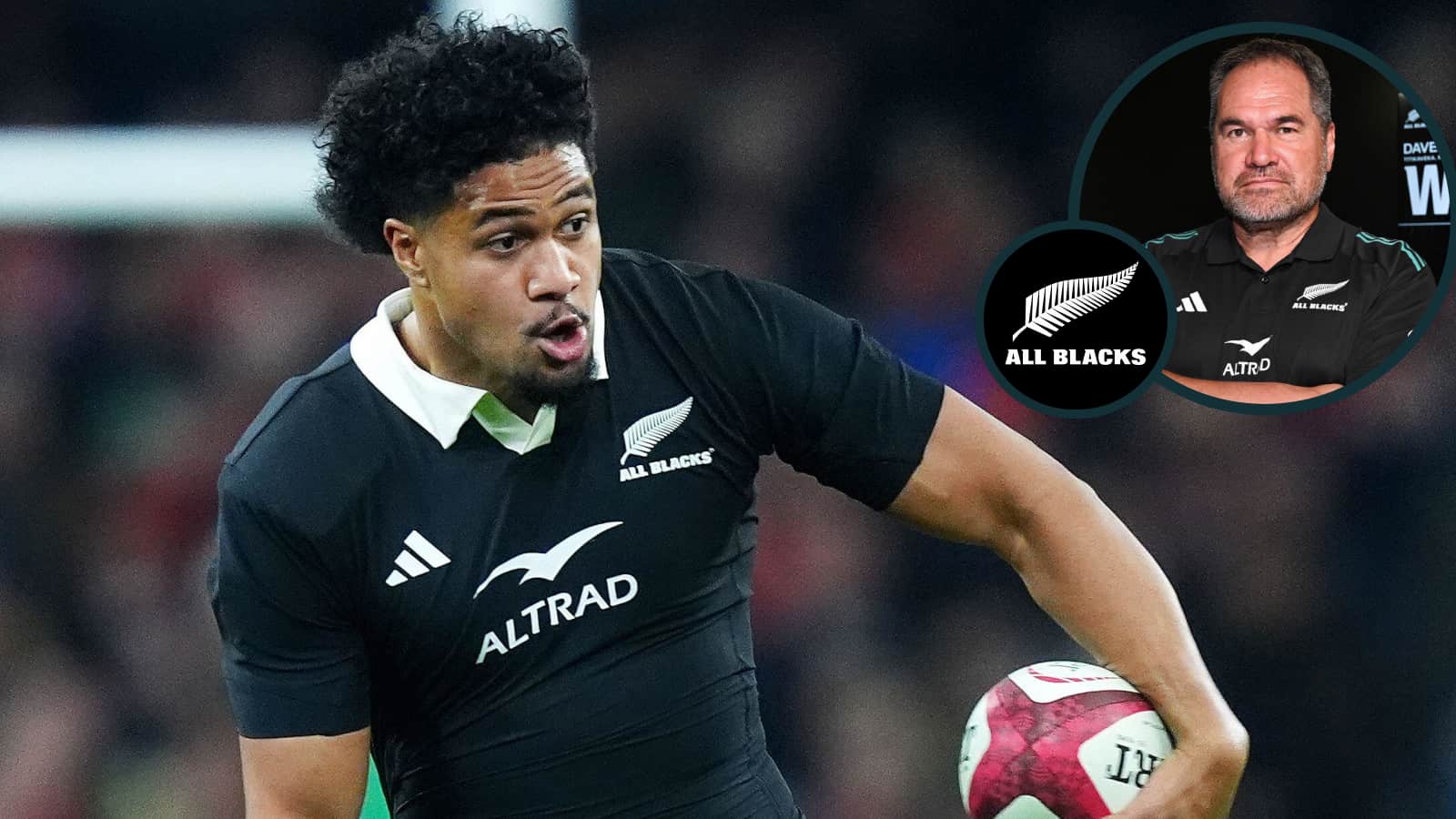
Stephen Donald has highlighted that Leicester Fainga’anuku’s performance as an openside flanker for the Crusaders could give Dave Rennie a new option to avoid simply copying the Springboks’ approach. The All Blacks, once known for their innovation in rugby, have found themselves trailing behind South Africa’s modern methods in recent years.
South Africa has significantly influenced the game by introducing forward-heavy benches, a strategy that many other teams have adopted. However, New Zealand, under Ian Foster and Scott Robertson, has maintained the traditional 5-3 split. Despite the pressure to follow the trend, Fainga’anuku’s recent performances at the back of the pack offer Rennie a different perspective.
A Versatile Option for the All Blacks
Fainga’anuku, who has primarily played as a wing and centre throughout his career, is now being considered for a role off the bench in the Test backline for the Nations Championship. His potential shift to the seven jersey raises questions about whether this change affects his chances of securing a starting position.
Donald noted on The Aftermatch with Kirst and Beav that while there has been much discussion about the 6-2 split and the need to emulate South Africa, Fainga’anuku provides an alternative. “You can have your 5-3 split knowing full well that if you want to do something a little bit different with who you’re covering on the bench with the forwards, you’ve got Leicester there who can cover a couple of those positions.”
Fainga’anuku’s Performance with the Crusaders
Prior to the 2026 Super Rugby Pacific season, Fainga’anuku had never started in the pack. However, he has recently taken on the number seven jersey in three consecutive Crusaders matches. His performance against the Blues on Friday was arguably the best of his career, contributing to a 36-20 victory that boosted the team’s play-off hopes.
Donald praised Fainga’anuku’s versatility, stating that his ability to adapt to different roles adds value to the Crusaders’ pack. “He gives you things no one outside Leicester can do, as far as forwards go – bar Ardie last year for Moana. He does these off the cuff kicks which if a midfielder was doing it you would go, ‘it’s a nice bit of work’, but because he’s doing it with a number seven on his back…”
Why the Transition Has Worked
Fainga’anuku’s success in transitioning to the back-row can be attributed to his strong breakdown work. Donald highlighted that his efforts at the breakdown are comparable to those of other midfielders like Quinn Tupaea and Timoci Tavatavanawai. “When he’s in the seven jersey, he’s close to the action and he gets more opportunities to pick his moments. The very best of them, they pick their moments.”
Fainga’anuku’s unique skill set has sparked conversation within the rugby community. His performances have created new options for the All Blacks and raised expectations about where this unexpected run of form might lead.
Key Takeaways from the Crusaders’ Match
In the match against the Blues, Fainga’anuku stood out as a key player, showcasing his ability to carry the ball effectively and contribute to the team’s overall strategy. His performance not only helped the Crusaders secure a win but also demonstrated the impact of his positional switch.
Donald emphasized that the Crusaders have a strong pack, but Fainga’anuku’s addition has provided a fresh dynamic. “He adds a great ball carrier to that group and takes a little bit of pressure off Lio-Willie, who was essentially the go-to guy on that front.”
As the season progresses, Fainga’anuku’s continued performances will be closely watched, especially by the All Blacks coaching staff. His ability to adapt and excel in different roles highlights his potential to influence the team’s strategy moving forward.