Health Sector Criticizes Budget Cuts as Unrealistic
Health groups in Tasmania have strongly criticized the state government’s decision to cut $700 million from the Tasmanian Health Department, calling the move “completely unrealistic.” The cuts were included in the recent state budget, which was presented by Treasurer Eric Abetz. The budget outlines a plan for $1.47 billion in “operational efficiencies” across the public service over four years, aimed at balancing the state’s finances by the end of the decade.
The Health Department, being the largest department, is tasked with finding $702.61 million in savings over the next four years, including $131.45 million in the upcoming year. This has sparked significant concern among health professionals and organizations.
Dr Michael Lumsden-Steel from the Australian Medical Association (AMA) expressed his frustration, stating that the expenditure targets set in the budget do not reflect the reality of healthcare costs. He emphasized that while efficiency measures are necessary, it is impossible to achieve them without adequate resources to care for patients by 2026.
“We know we need to find efficiencies, but it’s impossible to find efficiencies when we don’t have the resources to care for patients in 2026,” he said. “Every doctor I know that’s involved in the healthcare system that’s got a budget they look at — they laugh at it and they think this is a joke.”
Despite the proposed cuts, the budget indicates that health expenditure will rise from $3.66 billion in 2026-27 to $3.87 billion by 2029-30. However, this increase is lower than the Treasury’s inflation prediction of 11 per cent over the same period. The AMA estimates that inflation in the health sector is higher, ranging between four and eight per cent annually, while demand for health services is growing by six per cent each year.
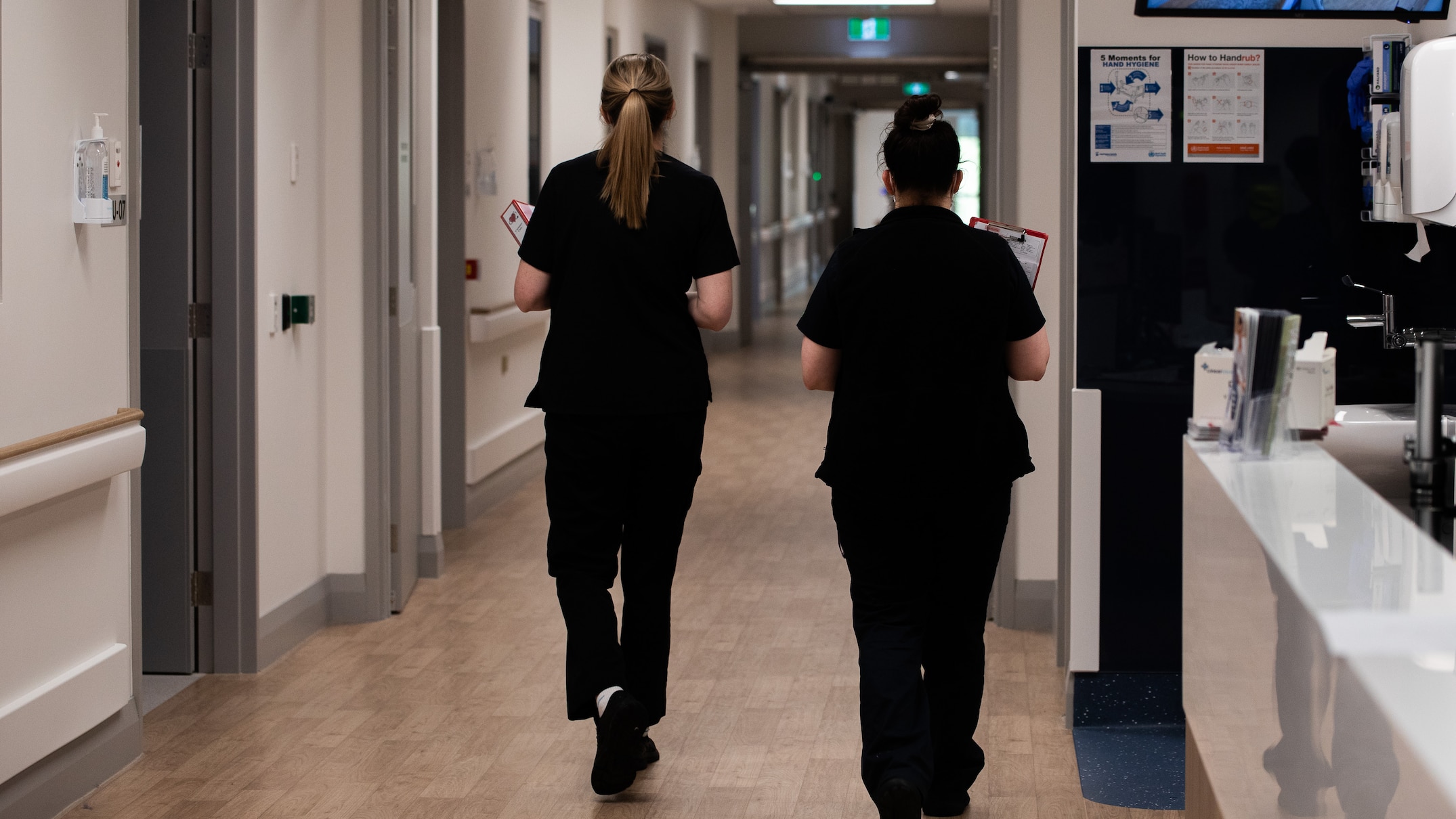
Emily Shepherd, secretary of the Australian Nursing and Midwifery Federation Tasmania, highlighted the disconnect between the current challenges in the health system and the budget. She warned that the savings targets would only increase the workload for nurses and midwives, who are already stretched thin.
Labor Calls for Correction on Health Funding Claims
Health Minister Bridget Archer has claimed that the 2026-27 budget shows continued growth in health funding, asserting “there are no cuts to health.” However, Treasurer Abetz confirmed that the Health Department will be part of the $1.47 billion “operational efficiencies” program, meaning the department must find more than $700 million in savings through program or staff reductions.
Labor has called on Health Minister Archer to correct her statement, arguing that the cuts are clearly outlined in the budget. Sarah Lovell, Labor’s health spokesperson, stated, “Bridget Archer must immediately correct the record after falsely trying to claim there are no cuts to health in the budget.”
Dr Lumsden-Steel described the budget as “a joke,” pointing out that while the Health Department claims to prioritize frontline services, there is no guarantee these services will not be affected. The budget outlines strategies for achieving the savings, including improved cost recovery, enhanced vacancy management, and a revised executive structure. It also mentions building on existing initiatives such as reducing leadership roles and consolidating office space.
Concerns Over Patient Care and Staffing
Dr Lumsden-Steel stressed that any savings found should be reinvested into patient services rather than used to improve the budget position. He highlighted the impact on patients, noting that some wait three years for surgery or 10 weeks for a pathology sample that could change their treatment.
Over the three-year period from 2026-27 to 2028-29, the budget includes $265 million more in new state health spending compared to last November’s Interim Budget. Additionally, the federal government has agreed to contribute an extra $527 million to health under the new National Health Reform Agreement.
However, Dr Lumsden-Steel questions where some of this money has gone. “It seems to be that the states are now pocketing some of that money and diverting it elsewhere to make the budget look better,” he said.
Challenges in Wage Negotiations and Workforce Management
A state government spokesperson noted that the Interim Budget was necessary due to uncertainty about the federal government’s commitment under the National Health Reform Agreement. Meanwhile, concerns persist about the ability of the Health Department to cover wage increases.
Emily Shepherd raised concerns about the potential impact of the cuts on non-frontline positions, warning that it would lead to increased workloads for nurses and midwives. She pointed out that spending on locum nurses has risen 600 per cent in the last five years, reaching $105 million in 2024-25, which is roughly five per cent of the department’s budget.
Tasmania’s lack of nurse-to-patient ratios has made it an outlier, affecting the ability to attract and retain nursing staff. The Health Department faces two separate wage negotiations, with the three-year agreement for nurses and midwives ending on June 30 this year, while doctors signed a one-year deal last year.
Most other wage agreements recently signed by the Tasmanian government include annual pay rises of around three per cent. The budget books state that agencies will need to “absorb” any wage increases above 2.5 per cent through internal savings, service re-prioritisation, or workforce adjustments.