Understanding the Ebola Outbreak and Its Transmission
The ongoing Ebola outbreak in Africa, with nearly 1,000 cases and over 200 deaths, has raised concerns among people. This situation has brought back memories of the COVID-19 pandemic, where fears about viruses becoming airborne were widespread. However, experts have clarified that Ebola is not airborne and does not spread like the SARS-CoV-2 virus.
Why Ebola Spread Is Not Like COVID
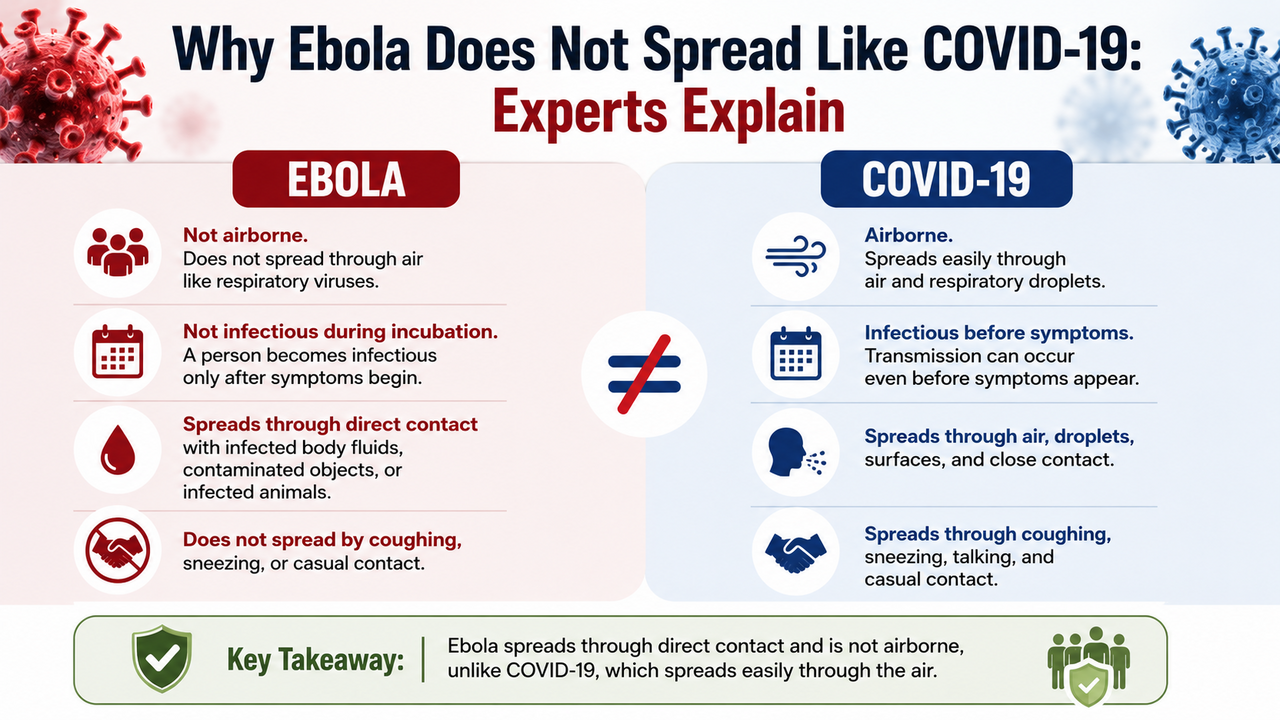
Dr. Ishwar Gilada, Secretary General of the People’s Health Organisation (India), explained that “Ebola is a serious viral hemorrhagic disease.” He emphasized that “Ebola does NOT spread through casual airborne exposure like influenza or COVID-19. Individuals become infectious only after symptoms begin, not during the incubation period.”
The incubation period for Ebola ranges from 2 to 21 days. During this time, an infected person is generally not contagious. Dr. Randeep Guleria, former AIIMS Director, added that Ebola is “a zoonotic infection, mainly originating in bats.” He highlighted that “Ebola does not spread through air like respiratory viruses. It spreads only through direct contact with infected body fluids.”
Experts further explained that Ebola is far more difficult to spread than airborne respiratory viruses such as influenza, COVID-19, measles, and even the Andes strain of hantavirus, which recently caused an outbreak on a cruise ship.
Key Points About Ebola Transmission
Michael T. Osterholm, Director of the Center for Infectious Disease Research and Policy (CIDRAP) at the University of Minnesota, stated, “Ebola is not airborne. There’s no evidence of that at all. To be infected, you’ve got to have body fluid contact with someone who is quite ill.”
Peter Hotez, Dean of the National School of Tropical Medicine at Baylor College of Medicine, noted that people with Ebola do not spread the virus before developing symptoms. The experts reiterated that during Ebola’s incubation period, which ranges from 2–21 days, an infected person is generally not contagious, unlike COVID-19, where transmission can occur before symptoms appear.
Moreover, even early Ebola symptoms such as fever, sore throat, headache, and body aches are less likely to spread the virus compared to respiratory infections. Ebola does not spread through coughing, sneezing, or casual contact like shaking hands.
Captain Satish K. Pillai, Incident Manager for Ebola Response at the US Centers for Disease Control and Prevention (CDC), explained, “You cannot get Ebola from passing someone in an airport, sitting near someone freely, or through other casual contacts.”
How Ebola Spreads
Ebola spreads through:
- Direct contact with infected blood or bodily fluids
- Contact with contaminated surfaces or medical equipment
- Unsafe caregiving exposure
- Traditional burial practices involving direct contact
- Certain zoonotic animal exposures
Common Symptoms Of Ebola
Common symptoms include:
- Sudden fever
- Severe weakness and fatigue
- Headache
- Muscle and body pain
- Sore throat
- Abdominal pain
- Vomiting and diarrhoea
- Rash
Severe illness may involve:
- Bleeding manifestations
- Shock
- Multi-organ dysfunction
Historical case fatality rates have ranged from 25% to 90%, depending on the virus strain, outbreak conditions, and access to timely medical care.
How You Can Stay Safe
To protect yourself from Ebola, consider the following steps:
- Washing your hands often
- Avoiding contact with bodily fluids
- Avoiding contact with individuals who appear ill or who have a fever
- Avoiding objects that have come in contact with an infected individual, such as bedding, clothing or medical equipment
- Not handling someone who has died from Ebola
- Avoiding contact with bats and nonhuman primates, and raw meat from these animals
- Avoiding seeking medical care at hospitals where patients are being treated for Ebola
- Paying attention to your health for 21 days after returning from a country where Ebola has been found
- Seeking medical attention immediately if you experience any Ebola symptoms
How To Prepare Healthcare Systems
Dr. Gilada stressed the importance of:
- Immediate isolation protocols for suspected cases
- PPE readiness across designated hospitals
- Emergency infection control drills and refresher training for healthcare workers
- Laboratory diagnostic preparedness with safe specimen handling
- Contact tracing systems
- Central and state public health coordination
The expert also urged authorities to strengthen “science, surveillance, preparedness, and infection control” to curb the spread of the disease.
Dr. Guleria called for stricter infection control, timely isolation, and avoiding direct contact with infected persons remain key preventive measures. They also noted that Ebola outbreaks have largely remained confined to Africa due to effective containment efforts.