Archaeologists have uncovered evidence that challenges long-held assumptions about ancient construction techniques. Two shallow fire pits, dug side by side nearly 9,000 years ago in the Judean Hills, are revealing a level of technological sophistication previously attributed to Roman engineering. One pit burned limestone, while the other burned dolomite—a stubborn stone that requires precise heat control.
The people who tended these fires were not using metal tools or written instructions. They were Neolithic craftspeople solving complex materials-science problems thousands of years before any recorded recipes existed. At the site of Motza, located about five kilometers west of Jerusalem, researchers found evidence that Pre-Pottery Neolithic B communities produced dolomite-based plaster, a material stronger and more water-resistant than ordinary lime plaster. This discovery, published in the Journal of Archaeological Science, pushes back the earliest known use of pyrogenic dolomite in construction by roughly 8,000 years.
Previously, the benchmark for the use of dolomite in construction was the Roman period, when the architect Vitruvius described suitable stones for lime in the first century BC. The introduction of dolomite-based plaster was always thought to be a Roman innovation. However, the findings at Motza now rewrite that timeline.
A Settlement Built on Plaster Floors
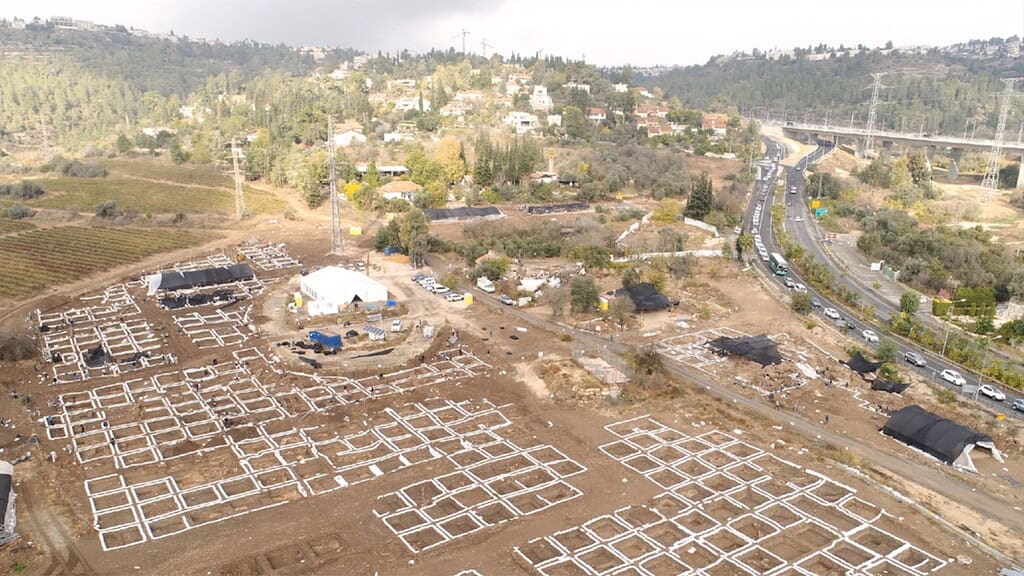
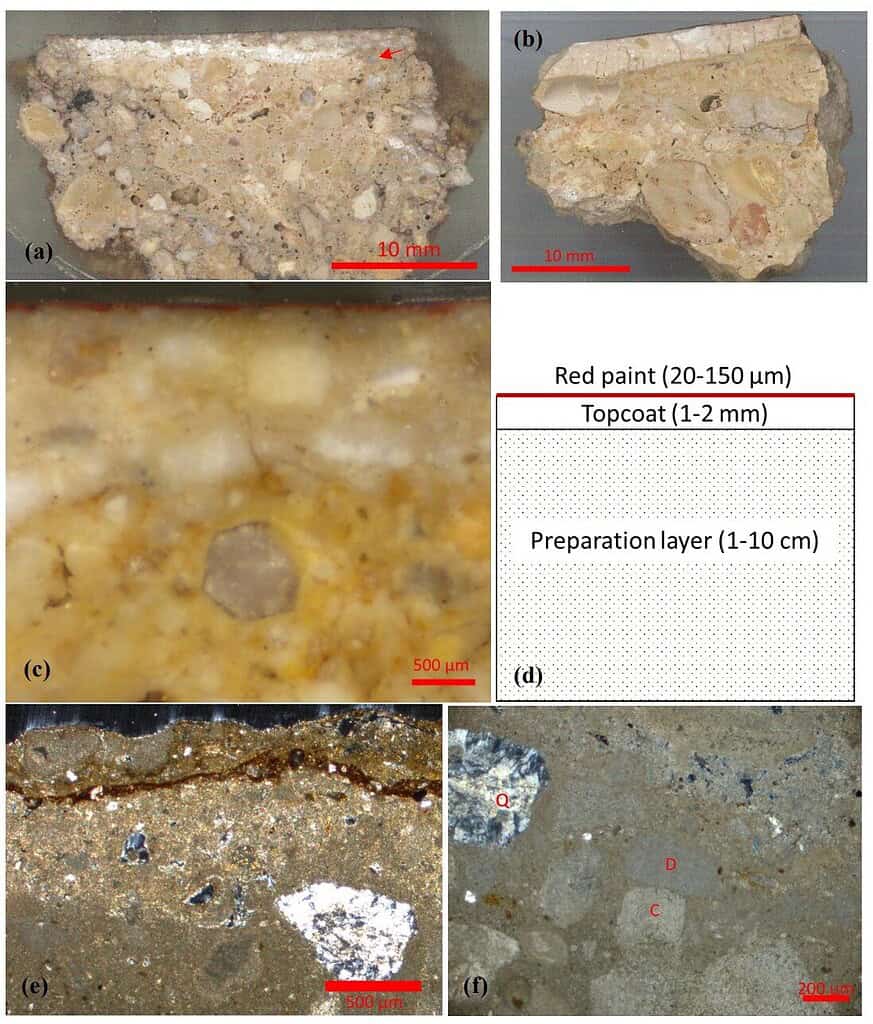
The finds emerged from large salvage excavations carried out between 2015 and 2021 ahead of highway construction. Beneath later occupation layers, archaeologists uncovered a sprawling Neolithic settlement dated mainly to about 7100–6700 BC. The site yielded more than 100 plastered floors. Some earlier floors were well preserved and stained with red pigment. Later examples were thinner, crumblier, and more porous.
Most ancient lime plaster came from limestone, which is rich in calcite. Dolomite is different—it contains both calcium and magnesium carbonate and can burn at a lower temperature than calcite. When processed correctly, it produces a tougher, more water-resistant surface. But the process is demanding. Dolomite must be heated under controlled conditions, typically below about 900 degrees Celsius. Too much heat, too little heat, the wrong fuel arrangement, or the wrong amount of water during slaking can ruin the material.
That technical difficulty is why dolomitic lime seemed to enter the archaeological record much later. Motza upends that assumption.
Two Kilns, Two Recipes
The clearest evidence for deliberate technical control came from two shallow fire pits found side by side. Each measured roughly 1.5 to 2.6 meters across and about half a meter deep. One had been used to burn limestone. The other had been used for dolomite. The split was intentional. Limestone and dolomite change differently under fire, and the Motza craftspeople adjusted their firing process for each stone.
In some floors, dolomite appeared as aggregate, crushed stone mixed into the plaster. In others, it served a deeper role as part of the binder that held the floor together.
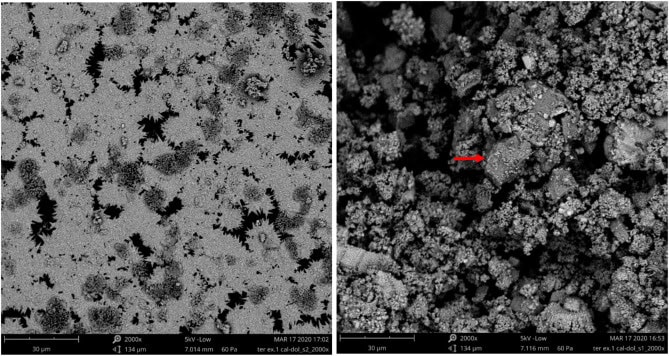
The research team analyzed kiln remains and plaster samples using infrared spectroscopy, X-ray diffraction, thermogravimetry, scanning electron microscopy, and light microscopy. These methods allowed them to identify minerals, study heat-driven changes, and inspect microscopic structures inside the plaster. What they found was unexpected. In typical dolomitic lime, the original stone does not return after firing. It breaks down and sets into a mix of magnesium-rich minerals and other compounds. The Motza plaster was different. It was dominated by dolomite and calcite, leading the team to argue that some of the dolomite had re-formed after the stone was burned.
The authors concluded that the Motza craftspeople may have made dolomitic plaster in which dolomite fully recrystallized alongside calcite. That combination, they wrote, has not been observed anywhere else.
The Dolomite Problem
The finding links the archaeological discovery to a larger geological puzzle known as the dolomite problem. Dolomite is abundant in ancient rocks but difficult to grow under ordinary laboratory conditions. Scientists still do not fully understand all the ways it forms. A plaster that appears to complete a full dolomite-lime cycle, re-forming the mineral after decarbonization, sits at the center of that open question.
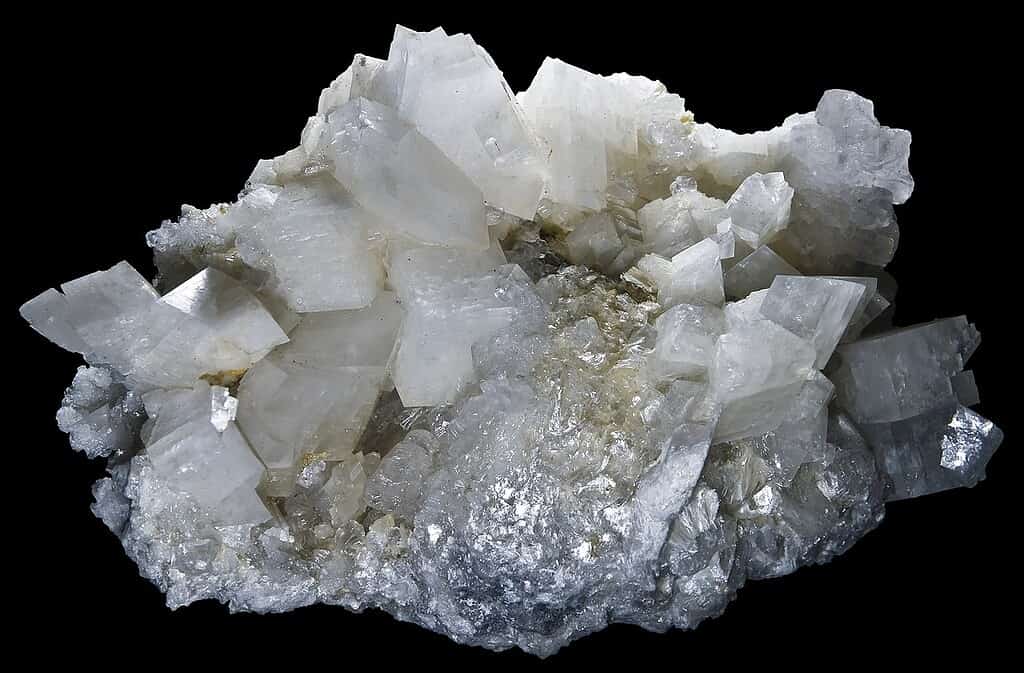
The results suggest a technology lost to history that allowed a complete dolomite-lime cycle, similar to the known calcite-lime cycle, the study authors wrote.
A Craft Tradition Without a Manual
The Motza floors preserve decisions made around a kiln roughly 9,000 years ago. Their makers left no inscriptions, equations, or manuals. They left a surface underfoot, built mineral by mineral. Someone had to know which stones to collect, how to keep the fire within a narrow temperature range, how to avoid ruining the lime with too much water, and how to turn the paste into a durable floor. That craft knowledge likely passed through trial and error within a disciplined tradition.