A Life-Saving Service Under Threat
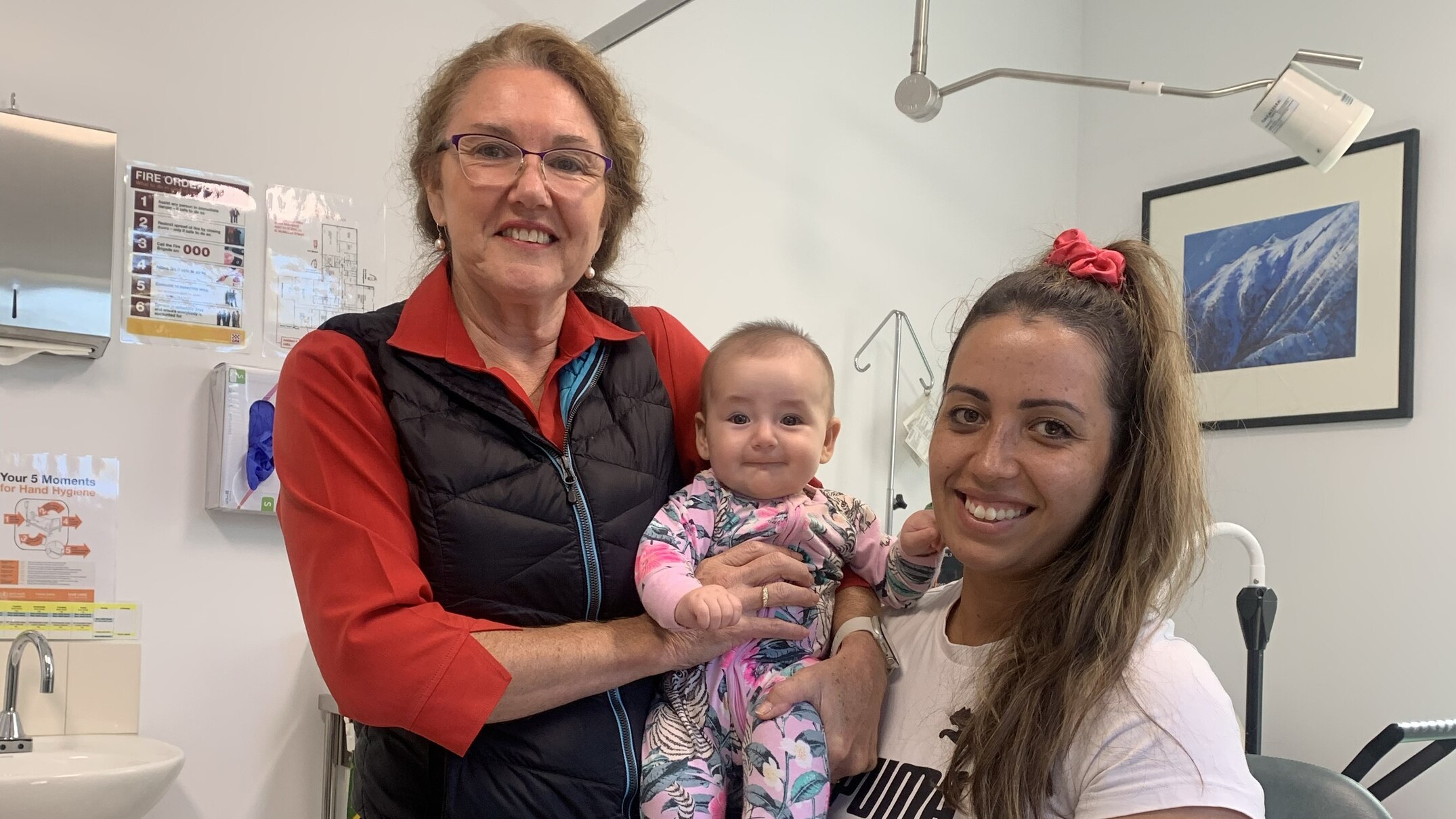
When Deborah Martinez began experiencing heavy bleeding late at night in the small town of Swifts Creek, located in Victoria’s High Country, the only person she could turn to was the bush nurse. At 36 weeks pregnant, Ms. Martinez’s water broke around 10:30 PM, and with her condition deteriorating, nurse Sue Carroll quickly realized the situation was critical.
Ms. Martinez was suffering from a placental abruption, where the placenta had separated from the uterine wall, causing severe internal bleeding. “We were both in danger,” she recalled. Despite the urgency, the service that provided this vital care will no longer offer out-of-hours support due to insufficient funding from Victoria’s Department of Health.
The recent pay rise for public sector nurses and midwives under their enterprise bargaining agreement (EBA) has led to the centre’s funding being unable to cover overtime and penalty rates. The Victorian government currently funds the Swifts Creek Bush Nursing Centre to provide care between 9 AM and 5 PM, Monday to Friday.
During her time at home, nurse Sue Carroll coordinated with the local hospital and ambulance service to arrange transport as Ms. Martinez’s condition worsened. However, ambulance shortages in the High Country meant she had to wait a long time while hemorrhaging before eventually meeting paramedics halfway to Bairnsdale Hospital.
“It’s lifesaving,” Ms. Martinez said. “We were so lucky to be able to access support so far away.”
A Legacy of Care
The Swifts Creek Bush Nursing Centre has been delivering nurse-led healthcare since 1918 and is now a locally supported not-for-profit organization that serves the remote community. Tony Skelton, one of many locals who rely on the centre for emergency healthcare, shared his own experience.
“I pulled a tree down on myself and broke five ribs and split my kidney in half. I couldn’t have been taken by road. That shows how isolated we are,” he said. “I thought I was going to bleed to death.”
At 75 years old and still working, Mr. Skelton is concerned about the health outcomes for the region’s aging population. “We’re a forgotten area when it comes to medical,” he said. “There are a lot of people in their 80s and 90s up there, and it’s critical that we have access to a bush nurse 24 hours a day, seven days a week.”
A Call for Better Funding
Eddie Mauger, president of the Bush Nursing Centre board, emphasized the need for rural communities to fight for their health services. “Our health services need to be funded appropriately,” he said. “So we’re not relying on burning out staff who are getting run off their feet. It’s important that the funding stays consistent with the EBA across all services for rural Victoria.”
In addition to public funding, the centre also relies on grants and community donations to provide additional services. While ambulance community officers service the area for 38 hours a week, residents remain worried about the gap in emergency care.
Nurse Sue Carroll, who has been providing relief nursing at the centre for nearly 29 years, explained that emergencies don’t follow a nine-to-five schedule. “We’ve had someone come in with anaphylaxis and had to treat them immediately because that’s a severe condition that can be fatal if not treated,” she said. “Recently, we had a young man who had a heart attack, and we started transporting him down, then he was given a clot buster and transferred out by Helimed.”
Community members fear the hour-long drive along the winding Great Alpine Road to seek emergency healthcare could put lives at risk.
Virtual Solutions and Their Limitations
As overnight services are scaled back, health authorities are increasingly turning to virtual care options. A Royal Flying Doctor Service virtual healthcare pod is being trialled in Swifts Creek, delivered alongside local health services and the Victorian Virtual Emergency Department (VVED). The pilot aims to expand to other rural areas.
The pod is a box that patients sit inside, connecting them to a clinician at the VVED at any time of day. It can measure heart rate, oxygen levels, and blood pressure before offering medical advice.
However, deputy chair of the Royal Australian College of General Practitioners Rural Faculty, Christie Rodda, argues that nothing can replace face-to-face care. “Telehealth is valuable but works best when it supports local systems,” she said. “It’s not a replacement for someone who knows you and your family well.”
Dr. Rodda noted that telehealth and virtual solutions are becoming more common in rural areas to address workforce shortages and distance. “When these services are lost, it’s terrifying for communities and a significant loss,” she said.