The Rise of Trump’s Monumental Legacy
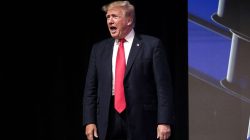
President Donald Trump has embarked on an ambitious campaign to immortalize his name through a series of monuments and renamed institutions. This move is not just about legacy, but also about asserting control over public spaces and symbols while he is still in power. Unlike previous presidents, who were often honored posthumously, Trump is taking steps to ensure his name is etched into the American landscape during his lifetime.
One of the most notable examples is the renaming of the John F. Kennedy Center for the Performing Arts. While it remains unofficial, the center now bears the title “Donald J. Trump and the John F. Kennedy Memorial Center for the Performing Arts.” Similarly, the U.S. Institute of Peace has been rebranded as the Donald J. Trump Institute of Peace. These changes reflect a broader trend of associating Trump’s name with significant cultural and civic institutions.
Trump has also been involved in discussions about renaming Penn Station in New York City. During negotiations over federal funding for a tunnel between New York and New Jersey, the president reportedly suggested renaming the station after himself. This idea, while not yet realized, highlights his desire to leave a lasting mark on public infrastructure.
A Trend Among Republicans
Trump is not the only one engaging in this practice. In 2024, House Republicans introduced legislation to rename Washington Dulles International Airport as the “Donald J. Trump International Airport.” This move was met with mixed reactions, with some viewing it as a tribute to Trump and others seeing it as a political gesture.
In addition, Florida State Rep. Meg Weinberger proposed a bill to rename the Palm Beach International Airport as another “Donald J. Trump International Airport.” While these proposals may seem excessive, they underscore a growing trend among some politicians to associate themselves with major landmarks.
The Cost of Ego
The pursuit of recognition has also led to extravagant investments. A group of crypto investors spent $300,000 to install a two-story tall statue of Trump on his Doral, Florida golf course. Described as “vulgar and excessive,” the statue is seen as a reflection of Trump’s personality. However, it is also viewed as a way to satisfy his ego, with the investors hoping to gain favor by creating a monument that honors him.
This kind of investment raises questions about the motivations behind such projects. As noted by Windsor Mann, the way to Trump’s heart is through his ego, and nothing satisfies it more than a graven image made in his image and at someone else’s expense.
The Historical Context
Historically, monuments and memorials have been erected after a president’s death, allowing time for public opinion and historians to assess their contributions. Landmarks like the Washington Monument, the Lincoln Memorial, and the Jefferson Memorial were built years after their namesakes passed away. This approach ensures that the legacy of a president is evaluated before being commemorated.
However, Trump is rushing to create a legacy during his lifetime. This urgency may be driven by concerns about how history will judge him. As Mann points out, what if a future president is revealed to have ties to controversial figures or attempted to undermine democracy? It would be costly and difficult to remove a monument once it is built. By creating multiple monuments, Trump may be trying to secure his place in history before any negative revelations emerge.
Conclusion
The trend of naming public spaces and investing in monuments reflects a broader shift in how leaders seek to shape their legacies. For Trump, this effort is not just about recognition but also about control and influence. Whether these monuments will stand the test of time remains to be seen, but for now, they serve as a testament to his ambition and the unique era in which he has led.