The Legal Battle Over the Kennedy Center
A recent court ruling has put an end to President Donald Trump’s attempt to rename the John F. Kennedy Center for the Performing Arts after himself. The decision, made by US District Court Judge Christopher R. Cooper, was based on the congressional laws that originally established the institution. According to the judge, the name of the center is “abundantly clear” and cannot be altered without the approval of Congress.
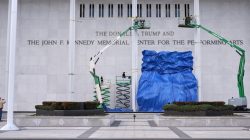
In his 94-page opinion, Judge Cooper emphasized that Congress took specific steps to ensure that no other memorial-like dedication would be placed in the public spaces of the Kennedy Center. He stated that the board’s decision to rename the center and affix Trump’s name to its façade violates the explicit mandate set by Congress. The judge further noted that only Congress has the authority to change the name of the center.
The ruling also addressed the possibility of the center being renamed as the “Trump-Kennedy Center,” even if it were a nickname or unofficial name. Judge Cooper clarified that such a move would still violate the law, as the statute clearly prohibits any alternative naming.
A Violation of Statutory Direction
Judge Cooper went on to criticize Trump’s decision to close the Kennedy Center for two years, calling it “a dereliction of common law duty of prudence.” This criticism was echoed by legal expert and Trump opponent Norm Eisen, who celebrated the ruling for his colleagues at the litigation group Democracy Defenders Action. Eisen described the ruling as a “one-two-punch,” as both the renaming and the closure of the Kennedy Center were enjoined.
Former prosecutor Joyce Vance also expressed her approval, stating that the ruling is a “stinging blow” for the president. She highlighted that Trump has shown a clear personal stake in the rebranding and remodeling of the Kennedy Center.
Public Reaction and Concerns
The ruling came on what would have been President Kennedy’s 109th birthday, adding symbolic weight to the decision. The reaction from the public was mixed, with some questioning how quickly Trump’s name must be removed from the center. Others expressed concern that Trump might order the building to be bulldozed, especially after he had previously taken down the East Wing of the White House.
One grandfather even offered to help remove the sign, showing the level of public engagement with the issue. Some people commented that while Trump may get away with certain actions in the short term, courts tend to overturn his decisions 9 times out of 10. One individual said, “Today he got walloped over his Kennedy Center antics.”
Another person joked about the potential consequences of the ruling, saying, “If this is the thing that finally causes him to stroke out, I will sing the entirety of Les Misérables on the Kennedy Center steps.”
Criticism and Reflection
Writer Aaron Von Dorn found it “wild” that Trump shamelessly put his name on a Kennedy memorial. He expressed confusion about the “raw need” that drove Trump to do so.
The ruling has sparked discussions about the broader implications of Trump’s actions. Related articles highlight various aspects of the controversy, including claims that Trump allies are looting the Kennedy Center, the surprise of his handpicked board regarding the closure, and the backlash against his strategy.
This case underscores the importance of legal boundaries and the role of the judiciary in upholding statutory mandates. It also highlights the ongoing scrutiny of political figures and their attempts to influence cultural institutions.