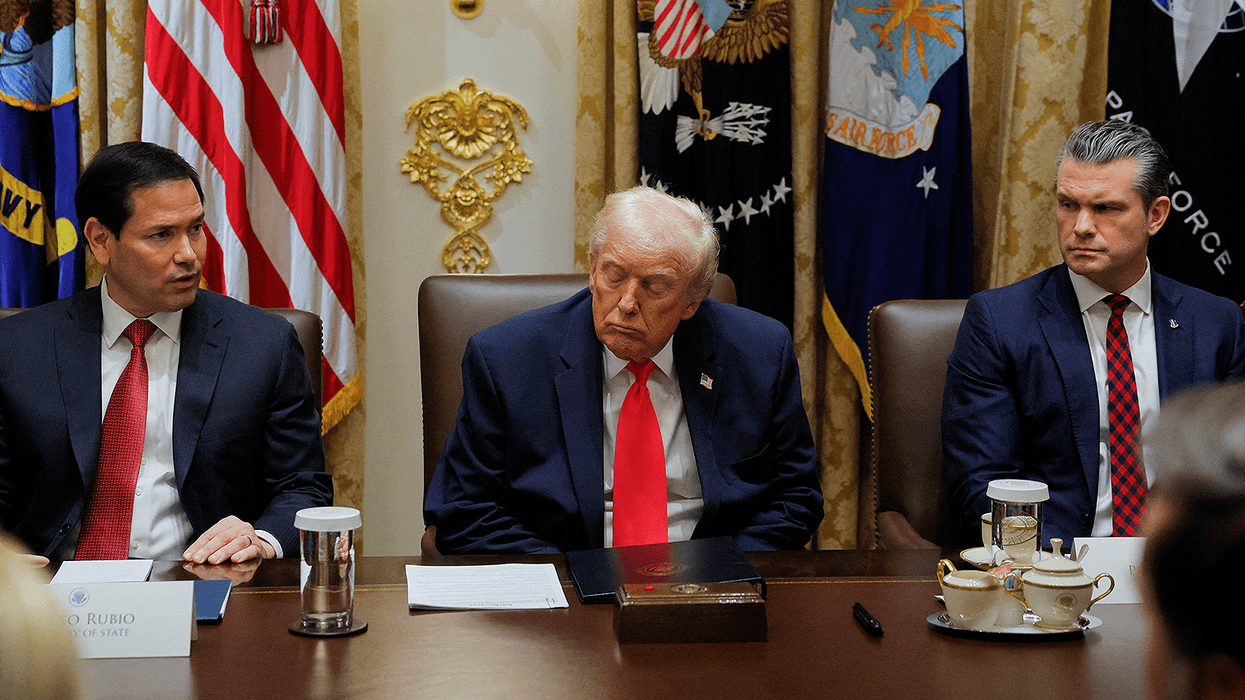
A growing concern among some experts and commentators is that President Donald Trump’s recent interview with NBC News’ Kristen Welker has raised questions about his mental fitness. Jonathan V. Last, a conservative commentator for The Bulwark, has highlighted several troubling aspects of Trump’s behavior during the interview. He noted that Trump, who will turn 80 next week, frequently falls asleep in public and shows signs of physical decline, including severe bruising on both hands, swollen legs, and a neck rash. Last also pointed out that Trump’s physicians have been accused of misrepresenting his health, making it difficult to trust their assessments.
Last analyzed three statements made by Trump during the interview that he found alarming. The first was when Trump was asked if America is at war with Iran. His response included claims that Iran’s military capabilities have been significantly reduced and that the situation is a “military exercise.” He also mentioned a ceasefire requested by “very fine people,” particularly from Pakistan. Last observed that Trump struggled to make a coherent point and seemed to be searching for the right words.
Dr. Henry Abraham, a psychiatrist formerly of Tufts University, has repeatedly raised concerns about Trump’s mental state. He has written a public letter to Trump’s doctor and has expressed worries about Trump’s declining cognitive abilities. When presented with Trump’s statements and Last’s analysis, Abraham offered a different perspective but still shared concerns about Trump’s suitability for the presidency. He described Trump’s statements as distorted and grandiose, though not necessarily indicative of a mental illness.
Another concerning moment occurred when Trump was asked about the new Supreme Leader of Iran, Mojtaba Khamenei. Trump struggled to recall the name and instead referred to him as “part of it” before digressing about how the Iranian people pay homage to their leader. Last found this exchange odd, noting that Trump seemed unable to provide a clear answer and instead resorted to vague statements.
Abraham acknowledged that while Trump’s responses may seem like typical political evasions, they were illogical and did not meet the standards of a normal mental status exam. He emphasized that Trump’s inability to recall basic information, such as the name of a foreign leader, was troubling and suggested either poor foreign policy knowledge or an inability to retain complex names.
In another part of the interview, Trump addressed the issue of promising no new wars but later invading Venezuela and Iran. He claimed that these actions were necessary and justified, citing the success of his military strategies. Last interpreted this as either typical Trump behavior or the ramblings of someone experiencing cognitive decline. He noted the repetition of certain phrases and the lack of coherent reasoning behind Trump’s claims.
Abraham argued that while Trump’s behavior may not indicate a mental illness, it does suggest a profound ignorance of history and strategic thinking. He expressed concern about Trump’s potential to consider using nuclear weapons, which he deemed disqualifying for the presidency.
Last month, Abraham led a group of 36 top physicians and mental health experts who warned in a letter to Congress that Trump shows signs of cognitive decline, posing a danger due to his access to nuclear weapons. The group cited Trump’s bizarre behavior, rambling digressions, factual confusions, and impaired judgment as reasons for their concern.
In subsequent letters, the group added that Trump has exhibited grandiosity, paranoia, impulsivity, and uncontrollable rage. They called for political solutions, such as invoking the 25th Amendment, impeachment, or convincing Trump to resign. They noted that while these steps are challenging, public awareness of the dangers posed by Trump is growing.
The concerns raised by these experts highlight the need for vigilance and careful consideration of the president’s mental and physical fitness. As the public becomes more aware of these issues, the political landscape may shift towards addressing the challenges posed by a leader whose capabilities are increasingly questioned.