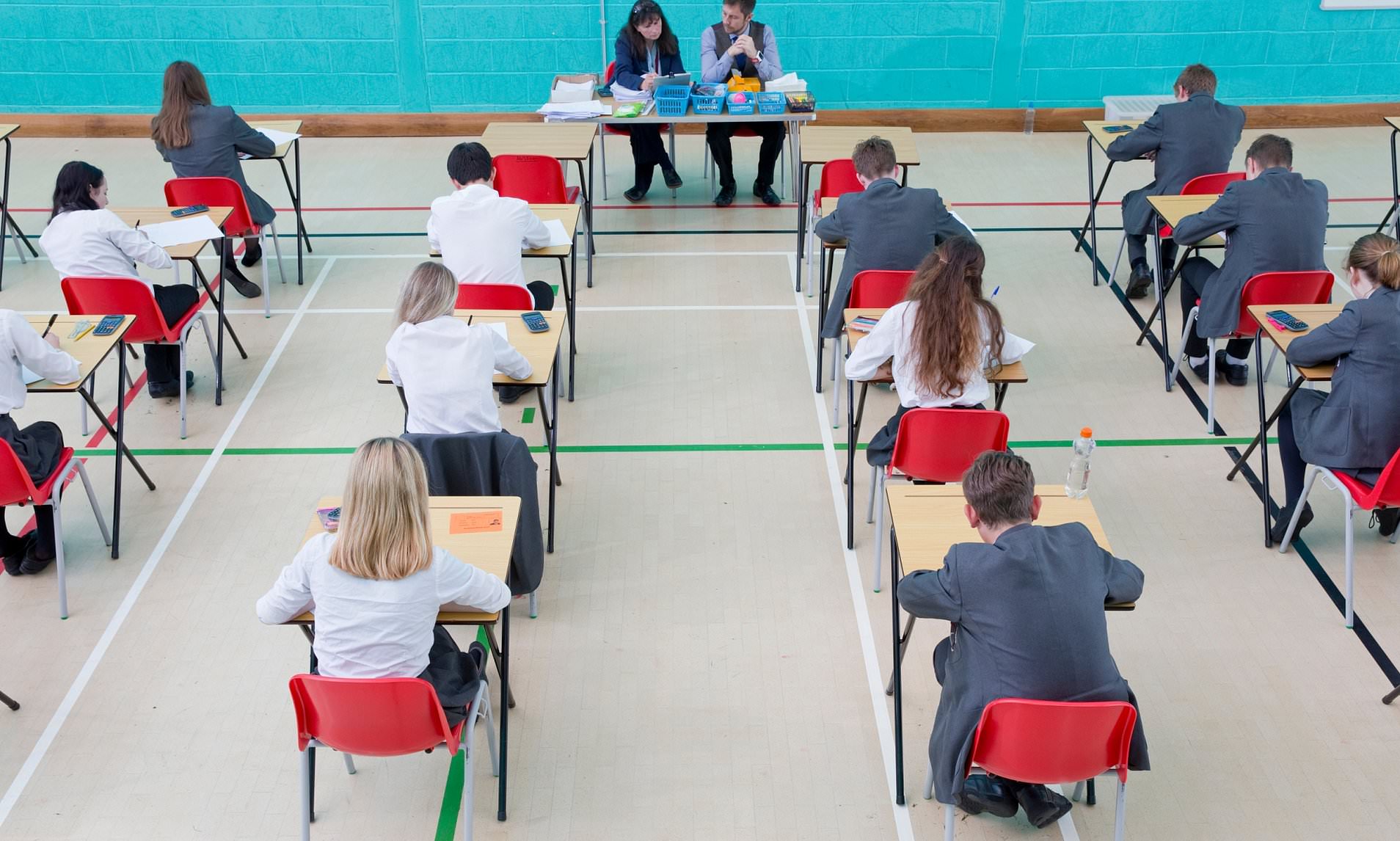
A-Level Maths Exam Sparks Outrage: Thousands Demand Review Over ‘War Crime’ Paper
A recent A-level Maths paper has ignited a firestorm of controversy, with distressed students likening the exam to a “war crime” and a petition demanding a review due to its extreme difficulty gathering over 19,000 signatures. The Pearson Edexcel Maths 1 paper, administered on a Wednesday, has been met with widespread criticism from students who claim it was significantly harder than past papers and previous assessments, leaving them feeling utterly “overwhelmed” and “uncertain” about their futures.
The petition, launched in the immediate aftermath of the exam, highlights “widespread concern among students, teachers, tutors and schools” that the test “exceeded what many candidates reasonably anticipated based on the specification and past examination series.” It clarifies that the aim is not to shirk responsibility for performance or to advocate for easier exams, but rather to request that Pearson Edexcel scrutinise the proportionality of the paper’s challenge level and consider adjusting grade boundaries to ensure fairness for all candidates.
Students have reported that the exam’s difficulty was not isolated to a few challenging questions at the end, but was pervasive throughout large sections of the assessment. According to pupils, the test demanded “multiple layers of reasoning, extended algebraic manipulation, and unfamiliar approaches” that went beyond the scope of expectations set by previous exams. Specific topics reported to have caused significant distress included trigonometric identities, solving a circular segment using the Newton-Raphson method, harmonic form, and complex integrals.
The emotional toll on students is palpable, with many sharing their experiences in comments on the petition. One student described the exam as “not accessible,” while another labelled it “atrocious.” The raw emotion of one commenter paints a stark picture: “Walking out that exam hall, I couldn’t feel any of my senses, couldn’t see properly because of the tears rolling down my face, couldn’t hear properly because of the trauma warping my hearing. All I could feel was sadness and rage.”
Impact on University Admissions
The gravity of the situation extends to university applications. One parent, identifying herself as Karen, expressed her dismay: “My son has studied so hard for this exam and came home so deflated by the content and difficulty in the exam. This will have an impact on Uni offers.” This sentiment underscores the high stakes associated with these examinations and the potential for a single, unusually difficult paper to derail students’ carefully laid plans.
Regulatory Oversight and Pearson’s Response
Ofqual, the independent qualifications regulator for England, has acknowledged the growing concerns. A spokesperson stated that they are “aware of the concerns and will ‘closely’ monitor Pearson’s approach to marking the exam.” The priority, Ofqual emphasised, is to ensure that students’ grades “reliably indicate what they know, understand and can do.”
A spokesperson for Pearson, Caroline Darrington, assured that students will “receive results that fairly reflect their performance.” She explained the rigorous process involved in paper development: “Every paper is developed with input from experienced senior examiners and rigorously checked to ensure it reflects the course and meets required standards.”
Darrington further elaborated on the process of setting grade boundaries: “If a paper is found to be more difficult than previous years, grade boundaries will be set to reflect that. When setting grade boundaries, we review a range of evidence, including statistical data and expert judgment. This process ensures students receive results that fairly reflect their performance and are comparable across exam series.”

Despite Pearson’s assurances, the student outcry and the significant number of petition signatures suggest a deep-seated dissatisfaction with the Maths 1 paper. The situation highlights the delicate balance required in setting challenging yet fair examinations, and the crucial role of robust regulatory oversight in maintaining public confidence in the examination system. As the marking process unfolds, all eyes will be on Pearson and Ofqual to see how these widespread concerns are addressed and whether the grade boundaries will indeed be adjusted to account for the extraordinary difficulty encountered by these students.